Which Auxiliary Equipment Is Included in a Boiler Room?
Industrial boiler room auxiliary equipment typically includes the burner or fuel system, feedwater pumps, feedwater tank or deaerator, water-treatment system, economizer, chimney or stack, condensate-return system, blowdown equipment, control cabinet, valves and instrumentation.
Depending on the boiler type and local requirements, the system may also require air preheaters, gas trains, biomass feeding and ash-handling equipment, emission-control systems and other project-specific components.
However, not every boiler quotation includes all of this equipment. Buyers should always confirm the supplier’s exact scope of supply.
Quick Answer: What Equipment Is Needed in an Industrial Boiler Room?
A typical industrial steam boiler installation may include:
| Auxiliary Equipment |
Main Function |
| Burner or fuel system |
Supplies and controls fuel for combustion |
| Feedwater pump |
Delivers water to the boiler |
| Feedwater tank |
Stores and supplies boiler feedwater |
| Deaerator |
Helps remove dissolved gases from feedwater |
| Water-treatment system |
Controls feedwater quality |
| Economizer |
Recovers heat from flue gas |
| Condensate-return system |
Returns usable condensate to the boiler plant |
| Blowdown system |
Manages boiler-water discharge |
| Chimney or stack |
Discharges flue gas |
| Control cabinet |
Controls and monitors boiler operation |
| Valves and instrumentation |
Measure, isolate and control system conditions |
| Emissions-control equipment |
Helps meet applicable emission requirements |
| Fuel-handling equipment |
Stores, prepares or delivers fuel where required |
The actual configuration depends on boiler capacity, pressure, fuel, water conditions, plant layout, emissions requirements and the required level of automation.
1. Burner and Fuel Supply System
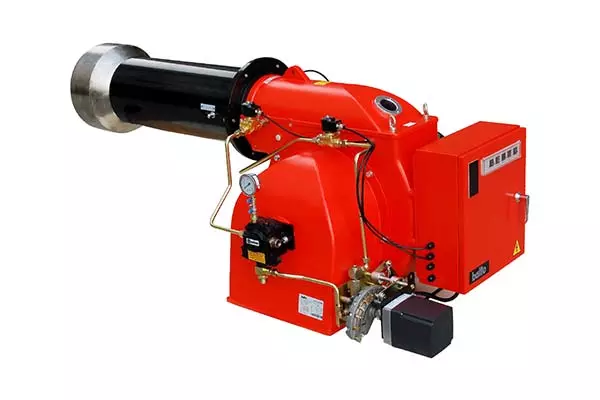
For combustion boilers, the burner or fuel-feeding system is one of the most important boiler auxiliary equipment groups.
A gas-fired system may include a burner, gas train, valves, pressure-control devices and associated combustion controls.
Oil-fired systems can require fuel storage, pumps, filters and fuel-conditioning equipment.
Biomass installations may require more extensive fuel-handling equipment such as:
- fuel storage;
- conveyors;
- feeding systems;
- and related fuel-control equipment.
The exact fuel-system configuration should therefore be selected according to the specified fuel rather than boiler capacity alone.
2. Feedwater Pumps
Feedwater pumps move treated feedwater from the feedwater system into the boiler.
Pump selection must match the required flow and pressure conditions of the boiler system.
Industrial projects may also specify standby or redundant pumps where continuous steam production is important.
The pump itself should not be evaluated separately from the complete feedwater arrangement.
3. Feedwater Tank and Deaerator
A feedwater tank provides a controlled water supply for the boiler.
Depending on the project, a deaerator may also be used to reduce dissolved gases in boiler feedwater and support water-management requirements.
The appropriate arrangement depends on:
- boiler operating pressure;
- feedwater conditions;
- condensate return;
- make-up water;
- water-treatment strategy;
- and plant operating requirements.
A deaerator should therefore be specified as part of the complete feedwater system rather than automatically assumed to be included with every boiler.
4. Boiler Water-Treatment Equipment
Water quality directly affects boiler reliability, heat transfer and maintenance.
A boiler room may require water-treatment equipment such as:
- water softeners;
- chemical-dosing equipment;
- filtration;
- reverse osmosis where appropriate;
- water-quality monitoring;
- and other pretreatment equipment.
The required treatment system depends on the incoming water analysis and the boiler manufacturer’s water-quality requirements.
Water-treatment equipment should therefore be selected after reviewing actual site water conditions.
5. Economizer and Heat-Recovery Equipment
An economizer recovers heat from boiler flue gas and uses it to preheat feedwater or another suitable water stream.
Depending on operating conditions, additional heat-recovery equipment may include:
- blowdown heat recovery;
- combustion-air preheating;
- condensate recovery;
- and other project-specific heat-recovery systems.
The U.S. Department of Energy Steam Systems resources identify feedwater economizers, condensate return and blowdown heat recovery among the measures that can improve industrial steam-system energy performance.
Whether an economizer should be included depends on boiler design, fuel, flue-gas conditions, feedwater temperature, operating hours and the expected economic benefit.
6. Condensate-Return System
Steam used by industrial processes may condense into hot water.
Where condensate quality and process conditions allow it to be reused, a condensate-return system can send this water back toward the boiler feedwater system.
A condensate system may include:
- condensate tanks;
- pumps;
- piping;
- level controls;
- valves;
- and monitoring equipment.
Condensate recovery can influence both the plant’s water balance and the energy required to heat boiler feedwater.
7. Boiler Blowdown Equipment
Boiler blowdown removes a portion of boiler water to help manage dissolved solids and water chemistry.
Depending on the installation, associated equipment may include:
- blowdown valves;
- automatic blowdown controls;
- blowdown tanks;
- flash vessels;
- and heat-recovery equipment.
The exact configuration should follow the boiler design, operating pressure, water-treatment strategy and local discharge requirements.
8. Chimney and Flue-Gas System
Combustion boilers require a suitable path for flue-gas discharge.
The complete system may include:
- chimney or stack;
- flue ducts;
- dampers;
- supports;
- insulation where required;
- and connections to emissions-control equipment.
Chimney dimensions and materials should be determined from the actual boiler, fuel, flue-gas conditions, draft requirements and installation environment.
9. Boiler Control Cabinet and Instrumentation
Modern industrial boiler rooms use control and monitoring equipment to coordinate boiler operation and auxiliary systems.
Depending on the automation level, the system may include:
- PLC;
- HMI;
- pressure transmitters;
- temperature sensors;
- water-level controls;
- flow meters;
- fuel controls;
- alarms;
- safety interlocks;
- and communication interfaces.
A control cabinet may coordinate the burner, pumps, water level, pressure control and other boiler room equipment.
When comparing quotations, buyers should confirm exactly which controls, sensors and communication functions are included.
10. Emissions-Control Equipment
Required emissions equipment depends strongly on fuel, boiler capacity and installation location.
Depending on applicable regulations and project conditions, equipment may include:
- low-NOx combustion systems;
- flue-gas recirculation;
- particulate-control equipment;
- dust collectors;
- and other emissions-control systems.
Biomass and solid-fuel installations can require substantially different flue-gas treatment and ash-handling arrangements from gas-fired boilers.
Emission requirements should therefore be confirmed before the final boiler room configuration is selected.
11. Valves, Piping and Other Boiler Room Accessories
A complete boiler installation also requires valves, instrumentation and piping connections.
These can include:
- steam valves;
- feedwater valves;
- check valves;
- pressure gauges;
- temperature instruments;
- flow meters;
- drain connections;
- sampling connections;
- and other required fittings.
Some of these items may be classified as steam boiler components, boiler trim or site piping rather than auxiliary equipment.
This distinction matters during procurement because different suppliers may divide the quotation scope differently.
Is All Auxiliary Equipment Included When You Buy a Boiler?
Not necessarily.
“Boiler price” and “complete boiler room price” can represent very different scopes.
One supplier may quote the boiler, burner, pumps, economizer and controls, while another quotation may cover only the boiler and basic combustion equipment.
Before comparing prices, request a detailed equipment list showing:
- included equipment;
- excluded equipment;
- quantity;
- model or specification;
- manufacturer where required;
- electrical requirements;
- installation responsibility;
- commissioning responsibility;
- and buyer-supplied items.
For this reason, the equipment list should be normalized before comparing different boiler quotations.
How Do You Determine Which Auxiliary Equipment Your Boiler Needs?
Start with the actual process and installation requirements.
A boiler manufacturer normally needs to know:
- steam capacity;
- working pressure;
- steam temperature;
- fuel type and specification;
- operating hours;
- feedwater temperature and quality;
- condensate-return conditions;
- installation country;
- emissions requirements;
- available electrical supply;
- automation requirements;
- site and boiler-room restrictions.
These parameters help determine which auxiliary systems are necessary and how they should be sized.
An Industrial Steam Boiler Buying Guide can also help buyers define capacity, pressure, fuel, water conditions, automation and project scope before requesting a complete boiler quotation.
FAQ About Boiler Room Auxiliary Equipment
What is boiler auxiliary equipment?
Boiler auxiliary equipment refers to supporting equipment required for boiler operation, water treatment, fuel supply, heat recovery, control, condensate recovery, blowdown and flue-gas handling. The exact equipment varies by boiler type and project requirements.
What are the main auxiliaries of a steam boiler?
Common steam boiler auxiliaries include the burner, feedwater pumps, feedwater tank or deaerator, water-treatment system, economizer, condensate system, blowdown equipment, chimney, controls, valves and instrumentation.
Does a steam boiler include a water-treatment system?
Not always. Water-treatment equipment may be included in a complete steam plant quotation or supplied separately. The required system should be selected according to the actual feedwater analysis and boiler water-quality requirements.
Does every boiler need an economizer?
No. Whether an economizer is appropriate depends on boiler design, fuel, exhaust conditions, feedwater temperature, operating profile and project economics.
Is a deaerator required for every industrial boiler?
Not necessarily. Deaerator requirements depend on boiler operating conditions, feedwater quality, condensate return, treatment strategy and the boiler manufacturer’s requirements.
Is the chimney included with an industrial boiler?
It depends on the supplier’s quotation scope. Buyers should confirm whether the chimney, flue ducting, supports and associated connections are included or must be supplied locally.
What auxiliary equipment is needed for a gas-fired boiler?
A gas-fired boiler installation can require a burner, gas train, feedwater pumps, feedwater system, water treatment, economizer, chimney, control system, blowdown equipment, condensate system and instrumentation. The final configuration depends on the actual project.
What auxiliary equipment is needed for a biomass boiler?
In addition to common feedwater and control equipment, a biomass boiler may require fuel storage, conveying and feeding systems, ash handling, dust collection and other flue-gas treatment equipment.
Why should auxiliary equipment be listed separately in a boiler quotation?
Because two boilers with similar rated capacity can have very different scopes of supply. Listing auxiliaries separately makes it easier to compare equipment, identify exclusions and evaluate the complete project cost instead of comparing boiler price alone.



View Reviews of our Customer
"Fangkuai's steam generators are excellent. They are very easy to use and require minimal maintenance. The customer service at Fangkuai is also exceptional. They are very responsive and always willing to help. The energy efficiency of the steam generators is also remarkable, which has helped me save money on my energy bills. I highly recommend Fangkuai's steam generators."
Maria
Spain"The hot water boiler from Fangkuai is amazing. It heats up quickly and efficiently, and the water stays hot for a long time. We have never had any issues with it and it has made a significant improvement in our daily operations. The installation process was also very smooth and the customer service was excellent. I highly recommend Fangkuai's hot water boilers."
Sarah
Canada"Fangkuai's auxiliary equipment has made my boiler system even better. The quality of the equipment is exceptional and the prices are very reasonable. The equipment has helped improve the efficiency and performance of my boiler system, which has led to significant cost savings. I highly recommend Fangkuai's auxiliary equipment to anyone in need of high-quality boiler accessories."
Maryk
UK"I am very impressed with the quality of Fangkuai's hot water boiler. It is built to last and has exceeded my expectations. The installation process was also very smooth and the customer service was excellent. The hot water boiler is very easy to operate and maintain, and the energy efficiency is remarkable. I highly recommend Fangkuai's hot water boilers."
Jack
Australia"I purchased a Fangkuai steam boiler for my factory and it has been working flawlessly for months now. The quality of the materials and the construction of the boiler are impressive. It is also very energy efficient, which has helped us save money on our energy bills. I highly recommend Fangkuai's products to anyone in need of reliable and efficient heating solutions."
John
USA"The customer service at Fangkuai is top-notch. They helped me choose the perfect boiler for my needs and provided great support throughout the process. The installation process was also very smooth and the boiler has exceeded my expectations. It is very easy to use and maintain, and the energy efficiency is remarkable. I highly recommend Fangkuai's products to anyone in need of reliable and efficient heating solutions."
Juan
Mexico"The thermal oil boiler from Fangkuai is very easy to operate and maintain. It has helped us save time and money on maintenance, which has led to significant cost savings. The quality of the materials and the construction of the boiler are exceptional. It is also very energy efficient, which has helped us save money on our energy bills. I highly recommend Fangkuai's thermal oil boiler ."
Allen
Brazil"I am very impressed with the quality of Fangkuai's hot water boiler. It is built to last and has exceeded my expectations. The installation process was also very smooth and the customer service was excellent. The hot water boiler is very easy to operate and maintain, and the energy efficiency is remarkable. I highly recommend Fangkuai's hot water boilers."
Jack
Australia"The steam generator from Fangkuai is perfect for my small business. It is very easy to use and requires minimal maintenance. It is also very energy efficient, which has helped me save money on my energy bills. The customer service at Fangkuai is also excellent. They are very responsive and always willing to help. I highly recommend Fangkuai's steam generators."
Ahmed
Egypt