Introduction
A coal fired boiler works by burning coal in a furnace to generate heat, which is then transferred to water inside boiler tubes to produce steam or hot water for industrial use. The basic process involves coal feeding, combustion, heat transfer, steam generation, and flue gas exhaust. These systems remain widely used in industries that require large and stable heat output, such as power generation, steel manufacturing, and chemical processing.
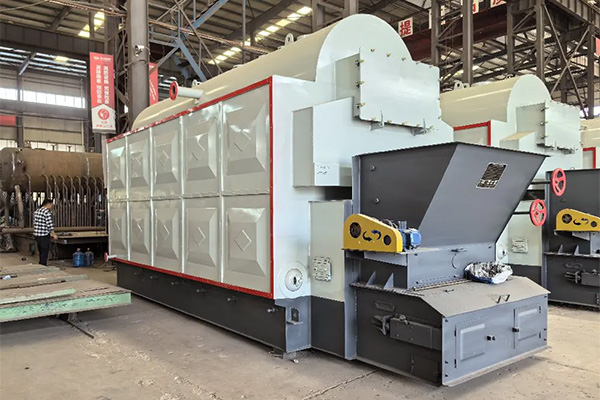
In this guide, we will clearly explain how a coal fired boiler works, the key components of an industrial coal boiler system, and the complete combustion and heat transfer process. We will also examine the types of coal boilers, their industrial applications, efficiency factors, and modern emission control technologies. Understanding these fundamentals can help engineers, plant operators, and decision-makers optimize boiler performance, reduce operating costs, and meet environmental regulations.
What Is a Coal Fired Boiler?
A coal fired boiler is a type of industrial heating system that uses coal as its primary fuel to generate thermal energy. The heat produced during coal combustion is transferred to water inside the boiler, producing steam or hot water that can be used for various industrial processes.
Coal fired boilers have been used for more than a century and remain important in industries that require large-scale and continuous energy supply.
Types of Coal Fired Boilers
Different industrial applications require different coal combustion technologies. The most common types of coal fired boilers include the following.
| Boiler Type |
Combustion Method |
Typical Efficiency |
Common Applications |
| Pulverized Coal Boiler |
Finely ground coal burned in suspension |
High |
Power plants |
| Chain Grate Boiler |
Coal burned on a moving grate |
Medium–High |
Industrial heating |
| Fluidized Bed Boiler |
Coal suspended in hot air and sand mixture |
High |
Power generation, chemical plants |
| Stoker-Fired Boiler |
Mechanical feeding of coal onto grate |
Medium |
Medium industrial facilities |
How Does a Coal Fired Boiler Work?
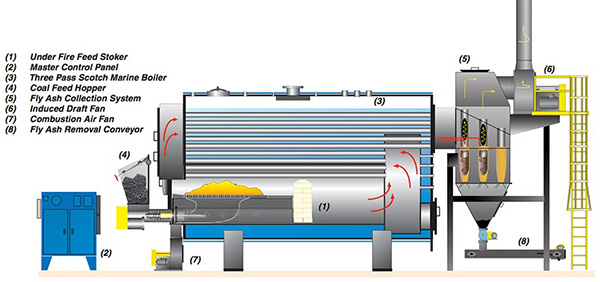
The operation of a coal fired boiler follows a structured sequence that converts chemical energy in coal into thermal energy used to produce steam or hot water.
Step 1: Coal Feeding System
The process begins with the coal feeding system, which transports coal from storage to the boiler furnace. This system typically includes:
- Coal storage bunker
- Coal conveyor or feeder
- Crushing or pulverizing equipment (in some systems)
The purpose of this stage is to ensure a consistent and controlled fuel supply for efficient combustion.
Step 2: Combustion in the Furnace
Once the coal enters the furnace, it mixes with air supplied by the forced draft fan. The oxygen in the air supports combustion, causing the coal to burn and release large amounts of heat.
The combustion process generates temperatures that can exceed 1000°C (1832°F), providing the energy required to heat the boiler tubes.
Proper air–fuel ratio control is essential at this stage to achieve complete combustion and minimize emissions.
Step 3: Heat Transfer to Boiler Tubes
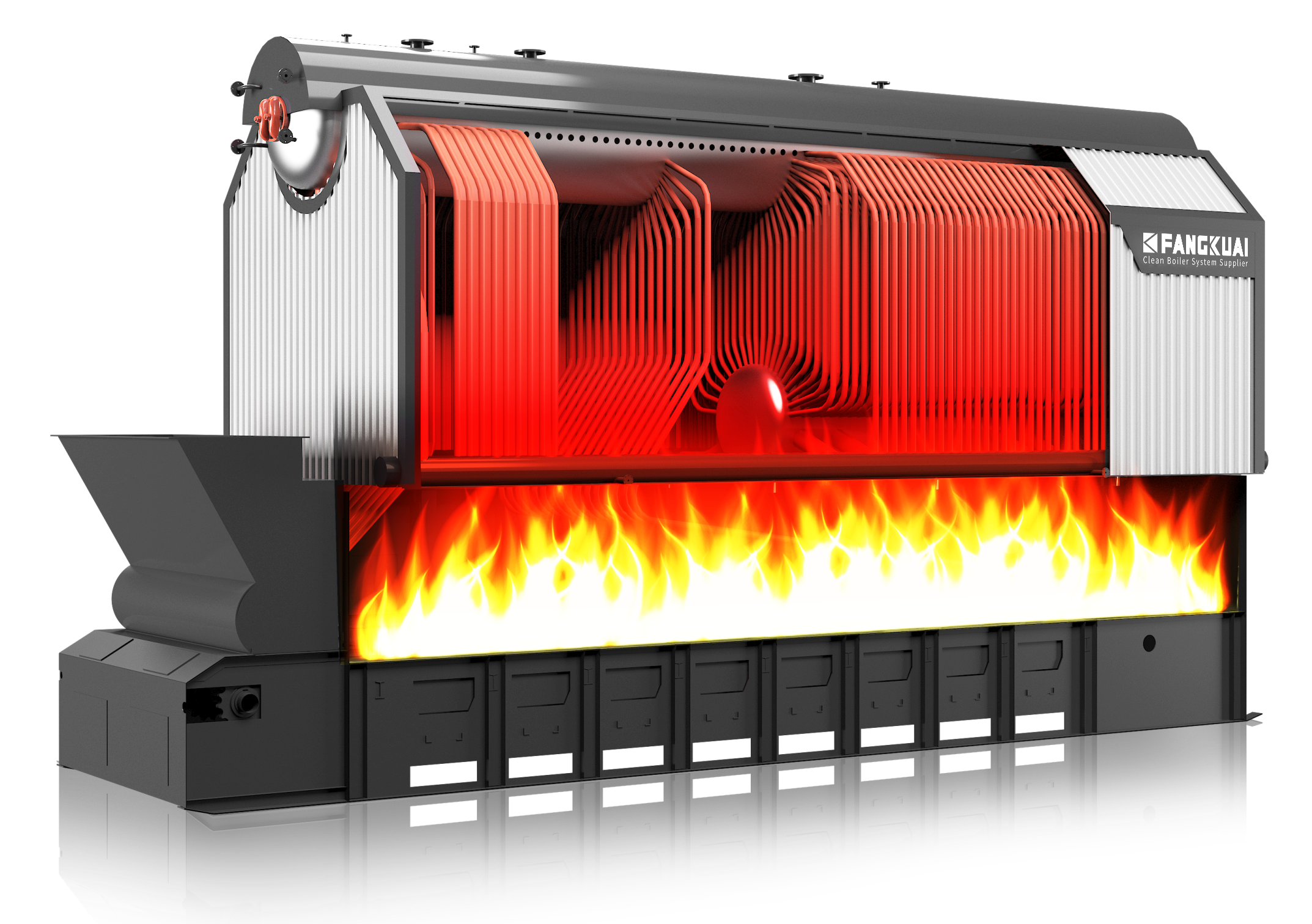
The heat produced in the furnace is transferred to water through the boiler’s heat exchange surfaces. There are two primary heat transfer mechanisms:
Radiation heat transfer
Heat is directly radiated from the flame to the surrounding boiler tubes.
Convection heat transfer
Hot flue gases flow across additional heat exchanger surfaces, transferring heat to water inside the tubes.
This process allows the system to capture as much energy as possible from the burning coal.
Step 4: Steam or Hot Water Generation
As water absorbs heat from the boiler tubes, it gradually increases in temperature until it becomes steam or hot water depending on the boiler design.
In steam boilers, the generated steam is collected in the steam drum and then distributed to industrial equipment such as:
- Turbines
- Heat exchangers
- Industrial processing systems
Maintaining proper pressure and temperature levels is critical to ensure safe and efficient operation.
Step 5: Flue Gas and Exhaust System
After heat transfer occurs, the remaining combustion gases—known as flue gas—move through the boiler exhaust system.
Modern coal fired boiler systems include several components to manage these gases:
- Economizers for heat recovery
- Dust collectors or electrostatic precipitators
- Flue gas desulfurization systems
- Chimneys for safe exhaust release
These technologies help improve overall efficiency while reducing environmental emissions.
Main Components of an Industrial Coal Fired Boiler
| Component |
Function |
| Furnace |
Burns coal to produce heat |
| Boiler Drum |
Separates steam from water and maintains pressure |
| Water Tubes |
Transfer heat from combustion gases to water |
| Air Supply System |
Provides oxygen for combustion |
| Economizer |
Recovers heat from flue gases to improve efficiency |
| Ash Handling System |
Removes ash generated during combustion |
Advantages of Coal Fired Boilers in Industry
Low Fuel Cost
Coal remains one of the most affordable fuel sources in many regions, making it attractive for industries with high energy consumption.
High Energy Output
Coal boilers can generate large volumes of steam, making them suitable for heavy industrial applications and power generation.
Stable Fuel Supply
Coal is widely available globally and can be stored easily, providing reliable energy supply even during fuel market fluctuations.
Suitable for Large Industrial Demand
Many industries require continuous high-temperature heat, which coal-fired systems can provide effectively.
Industrial Applications of Coal Fired Boilers
| Industry |
Typical Boiler Application |
| Power Generation |
Steam for electricity generation |
| Steel Manufacturing |
High-temperature process heating |
| Chemical Industry |
Process steam and heat |
| Textile Industry |
Dyeing and fabric processing |
| Paper Mills |
Pulp processing and drying |
| Food Processing |
Sterilization and cooking processes |
Coal Fired Boiler Efficiency Factors
Coal Quality
Higher-quality coal with greater calorific value produces more heat and improves overall boiler performance.
Combustion Control
Proper control of air supply and combustion conditions helps maximize fuel utilization while reducing emissions.
Boiler Design
Modern boiler designs incorporate improved heat exchanger surfaces and optimized airflow to increase efficiency.
Heat Recovery Systems
Installing economizers or air preheaters can recover heat from exhaust gases, reducing fuel consumption.
Environmental Impact and Emission Control
Coal combustion can produce emissions such as particulate matter, sulfur dioxide, and nitrogen oxides. To address environmental concerns, modern coal boilers often include advanced emission control technologies.
- Electrostatic precipitators for dust removal
- Flue gas desulfurization units for sulfur reduction
- Selective catalytic reduction systems for nitrogen oxide control
These technologies allow many industrial facilities to comply with modern environmental regulations while continuing to use coal-based energy systems.
How to Improve Coal Fired Boiler Performance
- Perform regular boiler maintenance and inspections
- Optimize the air-to-fuel ratio during combustion
- Use higher-quality coal with consistent calorific value
- Install heat recovery systems such as economizers
- Monitor combustion conditions with modern control systems
Coal Fired Boiler vs Other Industrial Boilers
| Boiler Type |
Fuel |
Typical Efficiency |
Emissions Level |
| Coal Fired Boiler |
Coal |
Medium |
High |
| Gas Fired Boiler |
Natural Gas |
High |
Low |
| Biomass Boiler |
Biomass Fuel |
Medium–High |
Low |
| Electric Boiler |
Electricity |
Very High |
Very Low |
Conclusion
A coal fired boiler operates by burning coal to generate heat, transferring that heat to water inside boiler tubes, and producing steam or hot water for industrial applications. The process involves several key stages, including coal feeding, combustion, heat transfer, steam generation, and flue gas treatment.
Although alternative energy technologies are becoming more common, coal boilers continue to play an important role in industries that require large-scale, reliable, and cost-effective energy production. By understanding how these systems work and implementing proper efficiency and emission control measures, industrial facilities can improve performance while meeting modern environmental standards.
If you have any needs, please contact us in your convenience.
FAQ
What fuel is used in a coal fired boiler?
Coal fired boilers typically use different types of coal, including bituminous coal, anthracite, and lignite. The specific fuel type depends on regional availability and boiler design.
What is the typical efficiency of a coal fired boiler?
Industrial coal fired boilers usually operate at efficiency levels between 70% and 90%, depending on boiler technology, combustion control, and heat recovery systems.
Are coal fired boilers still used today?
Yes. Coal fired boilers are still widely used in industries such as power generation, steel production, and chemical manufacturing, particularly in regions where coal remains an affordable and accessible energy source.



View Reviews of our Customer
"I am very impressed with the quality of Fangkuai's hot water boiler. It is built to last and has exceeded my expectations. The installation process was also very smooth and the customer service was excellent. The hot water boiler is very easy to operate and maintain, and the energy efficiency is remarkable. I highly recommend Fangkuai's hot water boilers."
Jack
Australia"Fangkuai's steam generators are excellent. They are very easy to use and require minimal maintenance. The customer service at Fangkuai is also exceptional. They are very responsive and always willing to help. The energy efficiency of the steam generators is also remarkable, which has helped me save money on my energy bills. I highly recommend Fangkuai's steam generators."
Maria
Spain"The steam generator from Fangkuai is perfect for my small business. It is very easy to use and requires minimal maintenance. It is also very energy efficient, which has helped me save money on my energy bills. The customer service at Fangkuai is also excellent. They are very responsive and always willing to help. I highly recommend Fangkuai's steam generators."
Ahmed
Egypt"We have been using the Fangkuai thermal oil boiler for our chemical plant for years and it has never let us down. The boiler is very durable and can withstand harsh conditions. It is also very easy to operate and maintain, which has helped us save time and money on maintenance. Fangkuai's thermal oil boilers are top-notch and I highly recommend them to anyone in need of reliable heating solutions."
Chang
China"The thermal oil boiler from Fangkuai is very easy to operate and maintain. It has helped us save time and money on maintenance, which has led to significant cost savings. The quality of the materials and the construction of the boiler are exceptional. It is also very energy efficient, which has helped us save money on our energy bills. I highly recommend Fangkuai's thermal oil boiler ."
Allen
Brazil"The hot water boiler from Fangkuai is amazing. It heats up quickly and efficiently, and the water stays hot for a long time. We have never had any issues with it and it has made a significant improvement in our daily operations. The installation process was also very smooth and the customer service was excellent. I highly recommend Fangkuai's hot water boilers."
Sarah
Canada"I am very impressed with the quality of Fangkuai's hot water boiler. It is built to last and has exceeded my expectations. The installation process was also very smooth and the customer service was excellent. The hot water boiler is very easy to operate and maintain, and the energy efficiency is remarkable. I highly recommend Fangkuai's hot water boilers."
Jack
Australia"The hot water boiler from Fangkuai is amazing. It heats up quickly and efficiently, and the water stays hot for a long time. We have never had any issues with it and it has made a significant improvement in our daily operations. The installation process was also very smooth and the customer service was excellent. I highly recommend Fangkuai's hot water boilers."
Sarah
Canada"Fangkuai's steam generators are excellent. They are very easy to use and require minimal maintenance. The customer service at Fangkuai is also exceptional. They are very responsive and always willing to help. The energy efficiency of the steam generators is also remarkable, which has helped me save money on my energy bills. I highly recommend Fangkuai's steam generators."
Maria
Spain