
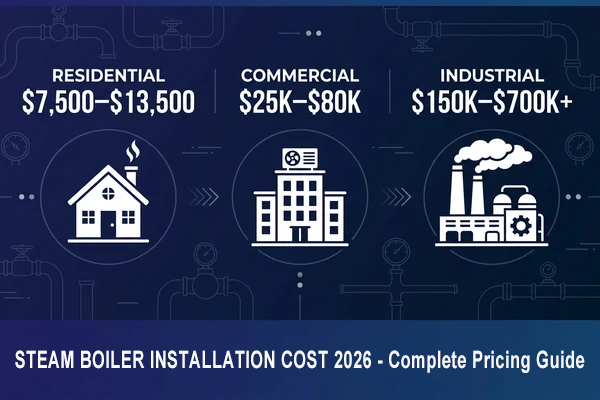
Costo di installazione per segmento in breve
| Segmento | Costo dell'attrezzatura | Costo del lavoro | Gamma di installazione totale |
|---|---|---|---|
| Residenziale (≤ 200 MBH) | $3,000 - $9,000 | $2,500 - $5,000 | $7,500 - $13,500 |
| Commerciale leggero (150–300 CV) | $15,000 - $50,000 | $8,000 - $20,000 | $25,000 - $80,000 |
| Industriale (500–2.000 CV) | $80,000 - $400,000 | $40,000 - $120,000 | $150,000 - $700,000 |
| Grande industriale (2,000+ HP) | $200,000 - $800,000 | $100,000 - $300,000 | $700,000 - $1,500,000+ |
Sezione 1: Costo di installazione della caldaia a vapore per segmento
1.1 Costo di installazione della caldaia a vapore residenziale
Impianti a vapore residenziali, mentre meno comune di quello idronico (Acqua calda) loop, rimangono un punto fermo nelle case storiche del nord-est e del Midwest degli Stati Uniti. Il costo totale tipico dell'installazione è compreso tra $7,500 E $13,500, attrezzature di copertura, manodopera locale, e tubazioni essenziali vicino alla caldaia.
- Livello di budget ($7,500 - $9,500): Si applica alle sostituzioni drop-in dirette e simili in cui le intestazioni di fornitura e restituzione esistenti sono in condizioni perfette, e nessun materiale pericoloso (amianto) sono presenti.
- Livello di fascia media ($9,500 - $11,500): Prevede la parziale bonifica delle tubazioni vicine alla caldaia, installazione aggiornata, percorsi di ventilazione conformi alla normativa, e tariffe standard per i permessi residenziali.
- Livello di fascia alta ($11,500 - $13,500): Necessario quando non è negoziabile una sostituzione completa del sistema di tubazioni vicino alla caldaia. Ciò include spesso l'abbattimento dell'amianto e il complesso di navigazione, percorsi di ventilazione a più piani.
Il fattore di costo finale nei progetti residenziali è la qualità del tubazioni vicine alla caldaia. Perché il vapore si espande rapidamente, dimensioni dei tubi errate, rilasciare le intestazioni, o scelte sbagliate del passo possono causare gravi colpi d'ariete, ciclo breve sistemico, e guasto prematuro della caldaia.
Quanto costa sostituire una caldaia a vapore residenziale?
In 2026, il costo medio nazionale per sostituire una caldaia a vapore residenziale è $10,500. Questo obiettivo di riferimento include una caldaia a vapore standard a bassa pressione e a media efficienza, rimozione meccanica completa della vecchia nave, permessi di conformità al codice standard, e aggiornamenti essenziali alle tubazioni del collettore immediate vicino alla caldaia per garantire l'erogazione di vapore secco.
1.2 Costo di installazione commerciale leggera
Operazioni commerciali leggere, compresi complessi di appartamenti plurifamiliari, scuole primarie, e siti di produzione boutique: fanno affidamento su caldaie che vanno da 150 A 300 Potenza della caldaia (HP). I costi totali di installazione variano da $25,000 A $80,000.
- Assegnazione delle attrezzature: $15,000 A $50,000 per il gruppo corpo nudo della caldaia e bruciatore.
- Manodopera di installazione: $8,000 A $20,000 per l'attrezzatura, posizionamento, e collegamenti di tubi.
- Permessi & Conformità: $1,500 A $6,000 a seconda dei codici ambientali e di sicurezza comunali locali.
- Preparazione del sito: $3,000 A $12,000 per aggiustamenti della linea del carburante e piccole modifiche strutturali.
1.3 Costo di installazione della caldaia a vapore industriale
Costo totale installato industriale (TIC) richiede un impegno di capitale massiccio, generalmente scappando da $150,000 verso l'alto $1,500,000+.
- Sistemi di medie dimensioni (500–2.000 CV): I costi medi del progetto si collocano senza intoppi nel mezzo $300,000 E $700,000.
- Grande, Sistemi ad alta pressione: Impianti complessi che richiedono forti pressioni elevate (>150 PSIG) insieme a configurazioni ausiliarie complete scalano da $700,000 A $1,500,000+.
I principali sottocosti industriali comprendono l'assemblaggio meccanico specializzato e le tubazioni strutturali ($20,000–$ 30.000), integrazione elettrica multitensione ($15,000–$25.000), isolamento termico ($4,000–$6.000), e rigorosi protocolli di messa in servizio ($5,000–$10.000).
Caso di studio: 10-Progetto di caldaia a vapore ton/ora (Impianto di lavorazione alimentare)
- Attrezzatura primaria: $180,000
- Sistemi ausiliari (Bruciatore, Economizzatore, Acqua di alimentazione): $65,000
- Installazione meccanica & Tubazioni sul campo: $85,000
- Conformità, Ispezioni & Messa in servizio: $32,000
- TIC finale totale: $362,000
Sezione 2: Ripartizione completa dei costi di installazione: riga per riga
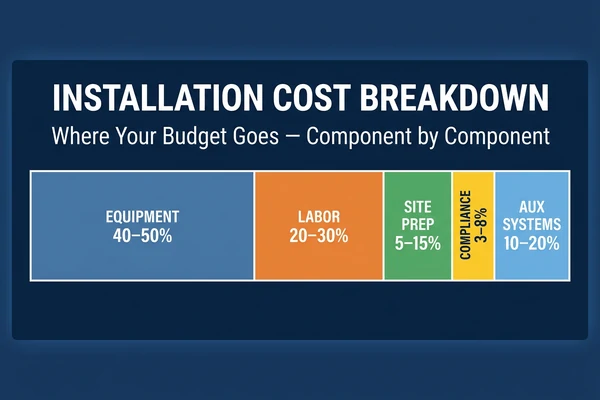
Per evitare deviazioni di budget impreviste, i project manager devono tenere traccia delle otto distinte categorie di costi che costituiscono un progetto di installazione completo di caldaie a vapore.
2.1 Costo dell'attrezzatura (40% - 50% del TIC)
Rappresenta il prezzo di acquisto hardware dei principali sistemi meccanici:
- Il recipiente a pressione primario (tubo da fumo, tubo dell'acqua, o ad alta capacità caldaia elettrica).
- Il gruppo bruciatore (spesso acquistati separatamente dal corpo della caldaia per soddisfare i precisi criteri di riduzione delle emissioni di NOx).
- Un integrato economizzatore o recuperatore di calore, che riduce la spesa per il carburante a lungo termine 5% A 15% tramite il recupero del calore dei fumi.
- Infrastruttura per l'acqua di alimentazione: il serbatoio del disaeratore, pompe di alimentazione multistadio ad alta pressione, e sistema di ritorno della condensa.
- Il pannello di controllo principale, utilizzando l'automazione PLC avanzata o un sistema di gestione dell'edificio senza soluzione di continuità (BMS) interfacce.
- [Collegamento interno: Vedi il nostro Prezzo della caldaia a vapore industriale Confronto dei prezzi delle apparecchiature in base alla capacità HP esatta.]
2.2 Costo del lavoro (20% - 30% del TIC)
Il lavoro sul campo coinvolge artigiani altamente qualificati che lavorano con precise tolleranze meccaniche:
- Assemblaggio meccanico & Sartiame: $15,000 A $45,000 sulle impronte industriali.
- Fabbricazione di tubazioni vicino alla caldaia: $8,000 A $30,000 per la saldatura e la filettatura di acciai al carbonio di grosso spessore.
- Isolamento termico: $4,000 A $6,000 per isolare le principali condotte del vapore e il corpo principale della caldaia.
- Cablaggio elettrico & Strumentazione: $10,000 A $25,000 per il routing dell'alimentazione di campo.
- Controlla la programmazione: $5,000 A $15,000 per test di sequenza e sintonizzazione del loop.
- Benchmark del lavoro: I meccanici HVAC/caldaie standard richiedono $ 65– $ 120 / ora, mentre gli operai sindacalizzati nelle giurisdizioni complesse hanno una media di $ 95-$ 160 / ora.
2.3 Preparazione del sito (5% - 15% del TIC)
Prima che arrivi la nuova attrezzatura, lo spazio fisico deve rispettare rigorose linee guida spaziali e civili:
- Rinforzo strutturale: $5,000 A $25,000 per piattaforme di calcestruzzo in grado di sopportare un peso operativo elevato.
- Estensione della linea del gas naturale: $1,200 A $8,000 per fornire volume e pressione adeguati.
- Aggiornamenti dell'infrastruttura elettrica: $3,000 A $12,000 (come l'implementazione dell'alimentazione trifase da 480 V).
- Modifiche idrauliche: $2,000 A $8,000 per le linee dell'acqua di alimentazione e il drenaggio dello scarico ad alta temperatura.
- Canna fumaria di scarico & Installazione dello stack: $3,000 A $15,000 per una corretta disposizione della culatta.
- Abbattimento dell'amianto: $1,500 A $8,000 negli scantinati di vecchi impianti residenziali o industriali.
2.4 Permessi e conformità (3% - 8% del TIC)
Trascurare la supervisione normativa fermerà le operazioni e rischierà gravi violazioni del codice:
- Edificio locale & Permessi meccanici: $150 A $3,000, ridimensionato in base alla capacità totale di BTU.
- ASME Sezione I “S” Verifica del timbro: $1,200 A $5,000 per la convalida dell'ispettore autorizzato.
- Test sulle emissioni dello stack EPA: $650 A $3,500 verificare il rigoroso rispetto dei parametri locali di qualità dell’aria.
- NFPA 85 Revisione della conformità: $2,000 A $8,000 per la sicurezza dei bruciatori industriali e la protezione della fiamma.
- Certificato di ispezione statale: $300 A $1,500 per il registro operativo obbligatorio iniziale.
Quali permessi sono necessari per l'installazione della caldaia a vapore?
- Permesso meccanico/costruttivo locale: Concede all'autorità comunale la modifica degli spazi utili e strutturali.
- Rapporto sui dati del produttore ASME: Certifica l'integrità strutturale e di saldatura del recipiente a pressione.
- Autorizzazione operativa EPA/Qualità dell'aria: Obbligatorio per i bruciatori di combustibili fossili ad alto input per garantire il mantenimento dei limiti di emissione.
- Registrazione al consiglio nazionale/statale: Inserisce il recipiente a pressione nel database statale delle ispezioni di sicurezza obbligatorie.
2.5 Sistemi ausiliari (10% - 20% del TIC)
Una caldaia non può funzionare efficacemente da sola; richiede una solida rete di attrezzature di supporto:
- Ricevitori di condensa: $3,000 A $12,000 per una raccolta efficiente dell’acqua.
- Skid per il dosaggio di prodotti chimici: $1,500 A $6,000 per prevenire incrostazioni interne e vaiolature dovute all'ossigeno.
- Valvole di sicurezza & Regolatori: $800 A $3,000.
- Misurazione del flusso di vapore: $2,000 A $8,000 per il monitoraggio in tempo reale dell’efficienza termica.
- Recipienti di scarico: $3,000 A $10,000 per raffreddare in sicurezza l'acqua scaricata prima dello scarico.
2.6 Test, Messa in servizio & Avvio (2% - 5% del TIC)
- Test idrostatico: Verifica il contenimento delle tubazioni senza perdite a pressioni elevate (generalmente coperti dai costi di ispezione iniziale).
- Sintonizzazione del bruciatore & Analisi della combustione: $800 A $3,500 per ottimizzare i rapporti carburante-aria.
- Controlla la verifica del circuito: $2,000 A $5,000 per testare tutti gli interblocchi di sicurezza automatici.
- Protocolli di formazione degli operatori: $1,500 A $4,000 per l'onboarding del personale operativo guidato dagli OEM.
- Test di accettazione delle prestazioni: $2,000 A $6,000 per confermare i parametri di produzione del vapore sulla targhetta.
2.7 Trasporto e sartiame (1% - 3% del TIC)
- Trasporto pesante industriale: $3,000 A $15,000 a seconda della distanza e delle normative sul carico ampio.
- Equipaggi specializzati in gru e manovre: $2,000 A $10,000 per manovre strutturali complesse.
- Fabbricazione di skid modulari personalizzati: $5,000 A $20,000 per preconfezionati, posizionamento sul campo drop-in.
2.8 Contingenza del progetto (10% Raccomandato)
Un appartamento 10% linea di contingenza dovrebbe essere sempre mantenuto. I fattori più comuni di spesa non mappata includono le linee di condensa del sottopavimento corrose, rete comunale del gas sottodimensionata, e degrado strutturale nascosto del calcestruzzo.
Sezione 3: Fattori chiave che determinano il costo di installazione
3.1 Capacità e pressione nominale della caldaia
All'aumentare della capacità, la dimensione richiesta dei componenti ausiliari e delle infrastrutture di tubazioni cresce proporzionalmente. Sistemi a vapore ad alta pressione progettati per il funzionamento di cui sopra 15 Lo PSIG deve rispettare rigorosamente Codice ASME per caldaie e recipienti a pressione (Sezione I). Questo test rigoroso, saldatura, e il paradigma di certificazione aggiunge un immediato 15% A 25% premio rispetto alle soluzioni a bassa pressione.
Regola pratica: Budget 1.5 × a 2.0 × il costo dell'attrezzatura per l'installazione se la pressione supera 15 PSIG.
3.2 Impatto del tipo di carburante sui costi di installazione
| Tipo di carburante | Installa Premium | Fattore di costo chiave |
|---|---|---|
| Gas naturale | Linea di base | Prolungamento linea gas + regolatore. Il percorso di installazione più conveniente. |
| Propano | +5% - 10% | Posizionamento dedicato del serbatoio esterno ($1,500–$4.000) + controlli di modulazione della pressione. |
| Olio riscaldante / #2 | +8% - 15% | Serbatoi di stoccaggio a doppio contenuto + pompe dell'olio dedicate e circuiti di contenimento ambientale. |
| Biomassa / Combustibile solido | +25% - 50% | Silos di stoccaggio automatizzati, alimentazioni complesse di trasportatori meccanici, e sistemi di movimentazione delle ceneri. |
| Elettrico | -10% - 15% | Nessun gas di scarico, zero ventilazione, e un ingombro strutturale semplificato, ma presenta costi di utilità correnti elevati. |
3.3 Nuova installazione vs. Retrofit vs. Sostituzione
- Nuova costruzione (Campo verde): Costi di inizializzazione elevati, come tutti i lavori strutturali di supporto, principali circuiti di distribuzione, e i punti di servizio delle utenze devono essere costruiti da zero.
- Modifica (Locale Caldaia Esistente): 20% A 40% più conveniente rispetto alle configurazioni greenfield, sfruttando le reti distributive preesistenti, punti di sfogo, e strutture fondative.
- Sostituzione simile: Il percorso di spesa in conto capitale più basso, tipicamente in esecuzione 30% A 50% di una nuovissima installazione, a condizione che i collettori circostanti e gli elementi delle tubazioni rimangano strutturalmente sani.
3.4 Localizzazione e mercato del lavoro locale
Le dinamiche del lavoro possono alterare drasticamente le proiezioni finanziarie. Progetti con personale meccanico sindacalizzato in ambienti metropolitani (per esempio., il nord-est degli Stati Uniti o la California) incorrere in un $20 A $40 premio orario oltre rurale, regioni a negozio aperto. Inoltre, la conformità con le normative ambientali locali, come gli standard Ultra-Low NOx della California o la legge locale 97 di New York, aggiunge notevoli costi di progettazione e controllo della conformità.
Sezione 4: La sequenza temporale dell'installazione della caldaia a vapore a 6 fasi
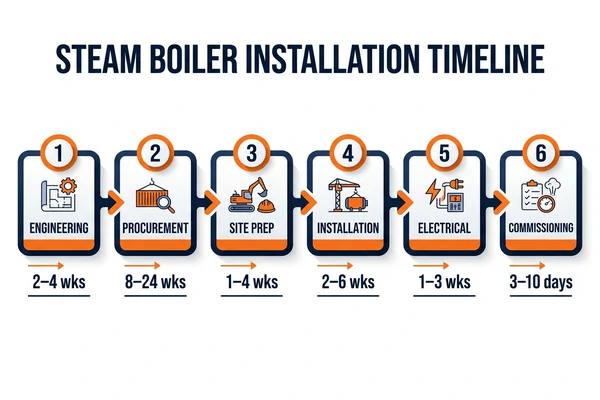
Una sequenza temporale del progetto ben pianificata limita i tempi di inattività operativa e aiuta a coordinare le attività commerciali sequenziali.
- Fase 1: Ispezione del sito & Ingegneria (2–4 settimane)
Verifica del carico meccanico, P&Redazione di documenti d'identità, dimensionamento finale del vaso, e ingegneria spaziale. Allocazione stimata: $3,000 - $12,000. - Fase 2: Appalti & Tempi di consegna dalla fabbrica (8–24 settimane)
La finestra principale in cui viene costruito e testato il recipiente a pressione. Mentre le sostituzioni residenziali standard richiedono solo 2-4 settimane, le apparecchiature industriali richiedono normalmente 12-24 settimane. Ciò segna la pietra miliare principale del pagamento del capitale. - Fase 3: Opere Civili & Preparazione del sito (1–4 settimane)
Colata di piastre di calcestruzzo ad alta resistenza, aggiornamento della rete di utilità in ingresso, e l'installazione di strutture di culatta pesanti. Allocazione stimata: $5,000 - $25,000. - Fase 4: Assemblaggio meccanico & Sartiame (2–6 settimane)
Posizionamento del vaso primario, saldatura dei collettori di vapore principali vicino alla caldaia, e completare i collegamenti del sistema ausiliario. Ciò rappresenta la finestra di picco della spesa per il lavoro. - Fase 5: Elettrico & Integrazione dei controlli (1–3 settimane)
Instradamento dell'alimentazione di campo, cablaggio dello strumento, Configurazione del collegamento BMS, e l'implementazione di interblocchi di sicurezza antifiamma. Allocazione stimata: $10,000 - $25,000. - Fase 6: Messa in servizio, Test & Devolvere (3–10 giorni)
Esecuzione del test idrostatico ufficiale, eseguire l'analisi della combustione, condurre corsi di formazione sulla sicurezza del personale, e garantire l'approvazione finale degli ispettori. Allocazione stimata: $3,000 - $12,000.
Sezione 5: Come ridurre al minimo i costi di installazione della caldaia a vapore
5.1 Scrivere un ambito di lavoro definitivamente documentato
Non avvicinarsi ai fornitori meccanici con parametri vaghi. Dichiara esplicitamente la potenza operativa richiesta, configurazioni del carburante, Pressione di esercizio massima consentita (MAWP), limiti di emissione, e sono richiesti i timbri ASME. Definire se le intestazioni verranno riutilizzate o completamente fabbricate di nuovo garantisce bilanciamento delle offerte "mele-a-mele". ed elimina gli ordini di modifica a metà progetto.
5.2 Esegui la regola delle tre offerte
Acquisisci un minimo di tre offerte dettagliate: uno da un team sul campo autorizzato dall'OEM, uno da uno specialista regionale indipendente e affermato, e uno da un'importante azienda appaltatrice meccanica. Richiedi il monitoraggio dei costi linea per linea anziché preventivi forfettari aggregati. Qualsiasi offerta che ottiene 20% sotto la mediana dovrebbe essere esaminato attentamente, poiché in genere omette le necessarie autorizzazioni, messa in servizio, o dettagli delle tubazioni.
5.3 Sfruttare i tempi di approvvigionamento strategico
Pianificare l'approvvigionamento di attrezzature per il quarto trimestre (Ottobre-dicembre). I produttori di caldaie industriali offrono spesso promozioni sui volumi di fine anno, riducendo i costi delle apparecchiature 8% A 15%. Fondamentalmente, evitare di attendere un guasto imprevisto del sistema; le installazioni di emergenza comportano tariffe di manodopera maggiorate e tariffe di trasporto accelerate che possono aumentare i costi 20% A 35%.
5.4 Installazione in bundle con un contratto di manutenzione preventiva
La negoziazione di un contratto di manutenzione preventiva di 3 anni durante la fase di installazione iniziale può garantire un risultato immediato $2,000 A $6,000 riduzione nelle tariffe dei servizi in corso. Questo approccio garantisce l'invio prioritario sul campo e preserva la garanzia strutturale OEM estesa.
5.5 Massimizzare il potenziale di riutilizzo dei componenti
Se la tubazione esistente vicino alla caldaia è sotto 10 anni, correttamente configurato, e privo di ridimensionamento interno, tenerlo può salvare $4,000 A $15,000 nei costi di fabbricazione. Allo stesso modo, i camini di scarico esistenti possono essere mantenuti se la potenza in BTU della tua nuova caldaia rientra nei limiti 20% dei parametri dell’apparecchiatura precedente.
Sezione 6: I costi nascosti spesso mancano agli acquirenti
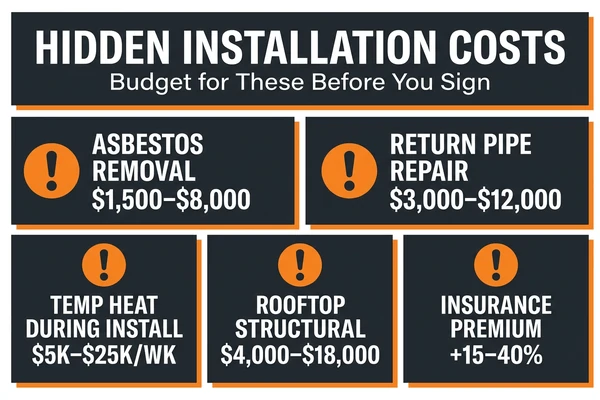
6.1 Abbattimento dell'amianto
Locali caldaie costruiti prima 1980 spesso presentano isolamenti in amianto ad alta densità attorno alle vecchie linee. Le leggi statali e federali impongono il contenimento completo e la rimozione certificata prima che inizi qualsiasi lavoro di sostituzione, aggiungendo $1,500 A $8,000 al budget del progetto.
6.2 Bonifica delle tubazioni di ritorno
Corroso, scalato, o le linee di ritorno della condensa scarsamente inclinate sono il principale problema nascosto nelle reti a vapore più vecchie. La correzione dei problemi di layout strutturale a valle può costare tra $3,000 E $12,000, ma il mancato rispetto di questi problemi causerà scarse prestazioni di riscaldamento e una riduzione della durata delle apparecchiature.
6.3 Vapore temporaneo / Ridondanza di produzione
Per gli ospedali, robot da cucina, e operazioni chimiche, sospendere la produzione durante una sostituzione non è un'opzione. Il noleggio di un sistema a vapore temporaneo montato su rimorchio comporta dei costi $5,000 A $25,000 a settimana. Pianificare l'installazione in concomitanza con le chiusure annuali dell'impianto può ridurre al minimo o eliminare questa spesa.
6.4 Ingegneria strutturale specializzata
Il posizionamento delle apparecchiature in spazi ristretti richiede un'attenta progettazione. I posizionamenti sul tetto necessitano di una revisione strutturale certificata e dell'accesso con gru, costo $4,000 A $18,000. Possono essere aggiunte installazioni strette nel seminterrato che richiedono manovre strutturali attraverso le aperture delle fondamenta $3,000 A $10,000.
6.5 Impatto sul premio assicurativo a lungo termine
Non rispettare gli standard di sicurezza come NFPA 85 o NFPA 99 può portare ad a 15% A 40% aumento nei premi assicurativi sulle strutture. Garantire che la tua installazione sia pienamente conforme fin dal primo giorno protegge la tua struttura e mantiene prevedibili i costi assicurativi.
Sezione 7: FAQ: domande frequenti
Q1: Quanto costa l'installazione di una caldaia a vapore 2026?
I costi di installazione della caldaia a vapore vanno da $7,500 A $13,500 per impianti residenziali, mentre i sistemi industriali vanno da $150,000 a finire $700,000+. La media nazionale di sostituzione residenziale è pari a $10,500, comprensivo di attrezzatura, lavoro, aggiornamenti delle tubazioni vicine alla caldaia, e permessi standard.
Q2: Cosa è incluso nel costo di installazione della caldaia a vapore?
Un'installazione completa include l'attrezzatura principale (corpo caldaia e bruciatore), fabbricazione di tubazioni vicino alla caldaia, manodopera specializzata, preparazione del sito (sfogo, utilità), autorizzazioni regolamentari, configurazioni ausiliarie (acqua di alimentazione, condensa), e messa in servizio finale. Citazioni che elencano solo “attrezzatura + lavoro” spesso manca 30% A 50% del costo reale del progetto.
Q3: Quanto tempo richiede l'installazione della caldaia a vapore?
Le installazioni residenziali richiedono 2 A 5 giorni se la tubazione viene riutilizzata, E 1 A 2 settimane per una revisione completa dell'intestazione. I progetti industriali richiedono 3 A 8 mesi totale, guidato dai tempi di consegna delle apparecchiature di 8 A 24 settimane. Per ridurre al minimo i tempi di inattività, ordina la tua attrezzatura prima di iniziare la preparazione del sito.
Q4: Ho bisogno di un permesso per installare una caldaia a vapore?
SÌ, in quasi tutte le giurisdizioni è richiesto un permesso meccanico, costo $150 A $3,000 in base alla capacità BTU. I sistemi industriali richiedono anche ispezioni ASME, Test dello stack EPA, e registrazione statale della caldaia. Operare senza questi permessi può invalidare le polizze assicurative sulla proprietà.
Q5: Come posso ridurre i costi di installazione della caldaia a vapore?
È possibile ridurre i costi riutilizzando le tubazioni esistenti vicino alla caldaia se sono in buone condizioni, ordinare attrezzature nel quarto trimestre per assicurarsi sconti sui volumi di fabbrica, e ottenere tre offerte dettagliate per evitare che l'ambito venga ampliato. Inoltre, la programmazione del lavoro durante i fermi impianto programmati evita la necessità di noleggiare provvisoriamente le caldaie.
Q6: Qual è la parte più costosa dell'installazione di una caldaia a vapore?
Per progetti residenziali, la rielaborazione delle tubazioni vicine alla caldaia rappresenta spesso il costo imprevisto più grande ($3,000–$ 15.000). Per progetti industriali, l'approvvigionamento di attrezzature rappresenta la voce singola più importante (40% A 50% del TIC), seguito dal lavoro meccanico (20% A 30% del TIC).
Conclusione & Passaggi successivi
La gestione dell'installazione di una caldaia a vapore richiede il bilanciamento di più voci interconnesse anziché il monitoraggio di una singola spesa fissa. Il maggior successo, i progetti che rientrano nel budget sono quelli che rappresentano tutte le otto categorie di costi ben prima che venga firmato il primo preventivo.
Per mantenere il tuo progetto in carreggiata, definire chiaramente il proprio ambito operativo, garantire tre offerte dettagliate, mantenere un 10% contingenza finanziaria, e scegli un appaltatore in base a credenziali e referenze verificate.
Che tu stia sostituendo un'unità obsoleta o allestendo una nuova struttura, investire nella giusta caldaia a vapore può offrire vantaggi a lungo termine. Se non sei sicuro di quale sia il sistema adatto alle tue esigenze, è meglio consultare un termotecnico qualificato o un esperto di caldaie, WhatsApp +86 132-1322-2805.


vVisualizza le recensioni dei nostri clienti
"I generatori di vapore di Fangkuai sono eccellenti. Sono molto facili da usare e richiedono una manutenzione minima. Anche il servizio clienti di Fangkuai è eccezionale. Sono molto reattivi e sempre disposti ad aiutare. Notevole anche l'efficienza energetica dei generatori di vapore, che mi ha aiutato a risparmiare sulle mie bollette energetiche. Consiglio vivamente i generatori di vapore di Fangkuai."
Maria
Spagna"Utilizziamo da anni la caldaia ad olio diatermico Fangkuai per il nostro impianto chimico e non ci ha mai deluso. La caldaia è molto resistente e può resistere a condizioni difficili. È anche molto facile da usare e mantenere, che ci ha aiutato a risparmiare tempo e denaro per la manutenzione. Le caldaie ad olio diatermico Fangkuai sono di prim'ordine e le consiglio vivamente a chiunque necessiti di soluzioni di riscaldamento affidabili."
Chang
Cina"La caldaia ad olio diatermico di Fangkuai è molto facile da usare e manutenere. Ci ha aiutato a risparmiare tempo e denaro sulla manutenzione, che ha portato a notevoli risparmi sui costi. La qualità dei materiali e la costruzione della caldaia sono eccezionali. È anche molto efficiente dal punto di vista energetico, che ci ha aiutato a risparmiare sulle nostre bollette energetiche. Consiglio vivamente la caldaia a olio diatermico di Fangkuai ."
Allen
Brasile"La caldaia per l'acqua calda di Fangkuai è fantastica. Si riscalda in modo rapido ed efficiente, e l'acqua rimane calda per molto tempo. Non abbiamo mai avuto problemi e ha apportato un miglioramento significativo alle nostre operazioni quotidiane. Anche il processo di installazione è stato molto fluido e il servizio clienti è stato eccellente. Consiglio vivamente le caldaie ad acqua calda di Fangkuai."
Sara
Canada"Ho acquistato una caldaia a vapore Fangkuai per la mia fabbrica e funziona perfettamente da mesi ormai. La qualità dei materiali e la costruzione della caldaia sono impressionanti. È anche molto efficiente dal punto di vista energetico, che ci ha aiutato a risparmiare sulle nostre bollette energetiche. Consiglio vivamente i prodotti Fangkuai a chiunque necessiti di soluzioni di riscaldamento affidabili ed efficienti."
John
Stati Uniti d'America"L'attrezzatura ausiliaria di Fangkuai ha reso il mio sistema di caldaie ancora migliore. La qualità dell'attrezzatura è eccezionale ei prezzi sono molto ragionevoli. L'apparecchiatura ha contribuito a migliorare l'efficienza e le prestazioni del mio sistema di caldaie, che ha portato a notevoli risparmi sui costi. Consiglio vivamente l'attrezzatura ausiliaria di Fangkuai a chiunque necessiti di accessori per caldaie di alta qualità."
Maryk
UK"Utilizziamo da anni la caldaia ad olio diatermico Fangkuai per il nostro impianto chimico e non ci ha mai deluso. La caldaia è molto resistente e può resistere a condizioni difficili. È anche molto facile da usare e mantenere, che ci ha aiutato a risparmiare tempo e denaro per la manutenzione. Le caldaie ad olio diatermico Fangkuai sono di prim'ordine e le consiglio vivamente a chiunque necessiti di soluzioni di riscaldamento affidabili."
Chang
Cina"Ho acquistato una caldaia a vapore Fangkuai per la mia fabbrica e funziona perfettamente da mesi ormai. La qualità dei materiali e la costruzione della caldaia sono impressionanti. È anche molto efficiente dal punto di vista energetico, che ci ha aiutato a risparmiare sulle nostre bollette energetiche. Consiglio vivamente i prodotti Fangkuai a chiunque necessiti di soluzioni di riscaldamento affidabili ed efficienti."
John
Stati Uniti d'America"Il generatore di vapore di Fangkuai è perfetto per la mia piccola impresa. È molto facile da usare e richiede una manutenzione minima. È anche molto efficiente dal punto di vista energetico, che mi ha aiutato a risparmiare sulle mie bollette energetiche. Anche il servizio clienti di Fangkuai è eccellente. Sono molto reattivi e sempre disposti ad aiutare. Consiglio vivamente i generatori di vapore di Fangkuai."
Ahmad
Egitto