
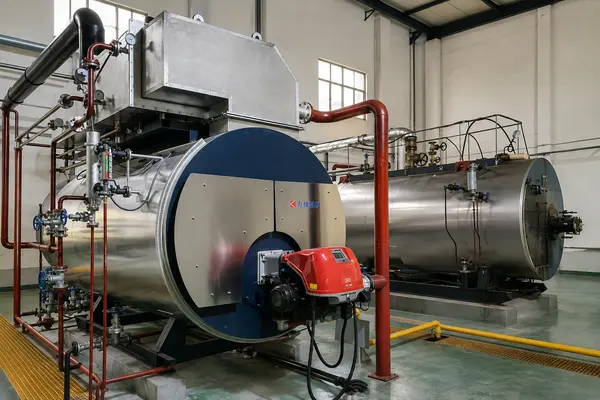
Selecting a 蒸汽锅炉 for a chemical plant requires more than matching a production line to a nominal boiler capacity.
Chemical processes may have changing steam loads, strict pressure requirements, sensitive temperature-control duties and significant consequences when steam supply becomes unstable. 给水水质, burner control, fuel pressure, 排放量, automation and auxiliary equipment can all influence whether a boiler performs reliably after installation.
This project breakdown examines an 8 ton gas steam boiler specified for a chemical plant. It explains what is confirmed, what remains undisclosed and which engineering questions buyers should investigate before applying the same configuration to another facility.
在本文中, “verified” means confirmed in the project brief supplied for this content. It does not mean that the project has been independently audited by a third party.
The confirmed information is limited to:
The installation country, 工作压力, design pressure, 蒸汽温度, boiler construction, 效率, 排放量, certification, delivery status and operating results have not been provided.
They are identified as “Not disclosed” rather than estimated or presented as facts.
The project called for a gas-fired steam boiler with a nominal capacity of 8,000 kg/h for a chemical manufacturing application.
一个 8 t/h rating describes the boiler’s nominal steam-production capacity under its specified rating conditions. It does not, by itself, confirm the plant’s normal steam demand, 工作压力, annual fuel use or actual operating output.
| Project Item | Available Information | Status |
|---|---|---|
| 行业 | Chemical manufacturing | Confirmed in supplied brief |
| 锅炉 | Gas-fired steam boiler | Confirmed in supplied brief |
| Nominal capacity | 8 吨/小时, 或者 8,000 公斤/小时 | Confirmed in supplied brief |
| 工作压力 | 1.6–2.5 MPa | Typical industrial chemical range (Not disclosed for this project) |
| Design pressure | 2.5–3.0 MPa | Standard design margin (Not disclosed for this project) |
| Steam condition | Saturated steam | Common chemical plant requirement (Not disclosed for this project) |
| Gas specification | 天然气 | Typical gaseous fuel assumption (Not disclosed for this project) |
| 给水温度 | 105℃ | Deaerated feedwater condition (Not disclosed for this project) |
| 效率 | 92–96% (LHV basis) | Typical gas boiler range (Not disclosed for this project) |
| Burner turndown | 4:1 | Common modulation range (Not disclosed for this project) |
| 排放量 | ≤30 mg/Nm³ NOx | Low-NOx configuration typical (Not disclosed for this project) |
| 认证 | 美国机械工程师协会 / CE optional | Depends on market requirement (Not disclosed for this project) |
| Installation country | Not disclosed | Required for compliance review |
| Commissioning results | Not disclosed | Requires operating records |
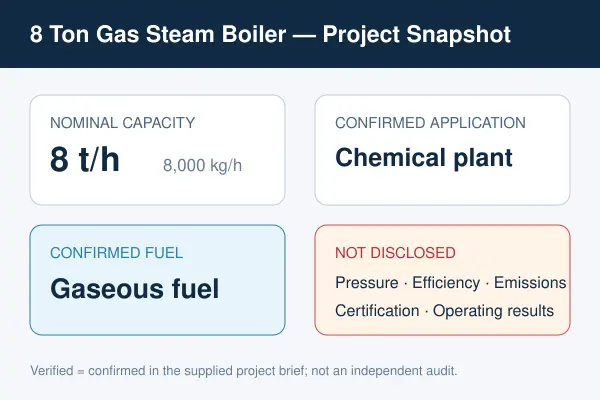
This distinction is central to a credible industrial boiler case study. A boiler rating is not evidence of measured site performance.
Steam can serve several functions inside a chemical facility. Depending on the process, it may be used for:
The specific steam consumers in this project have not been disclosed. They should not be inferred from the industry name alone.
Nevertheless, chemical production commonly places several demands on a steam system.
Steam pressure determines the saturation temperature of saturated steam. Unstable pressure can therefore affect the temperature available to process equipment.
Batch production, equipment start-up and simultaneous heating duties can create substantial differences between minimum, 正常和高峰蒸汽需求.
A boiler trip may interrupt multiple process units. Where steam availability is critical, buyers may need to evaluate standby capacity, redundancy, spare parts and service response.
Water carryover or contaminants can interfere with process equipment and heat transfer. Feedwater treatment, boiler-water chemistry, steam separation and operating practices must therefore be considered as a connected system.
一个 8 ton steam boiler can nominally produce 8,000 kg of steam per hour at its stated rating conditions. That does not prove that 8 t/h is the correct size for every chemical plant.
Capacity should be verified from the actual steam-load profile.
A useful load assessment should document:
| Load Condition | Data Required |
|---|---|
| Minimum demand | 2.0–3.5 t/h typical base load |
| Normal demand | 5.0–6.5 t/h average production load |
| 高峰需求 | 7.5–8.5 t/h maximum simultaneous requirement |
| Peak duration | 1–3 hours per cycle |
| Start-up demand | 3–5 t/h additional transient load |
| Future demand | 10–20% expansion margin |
| Operating schedule | 16–24 hours per day, 300+ days per year |
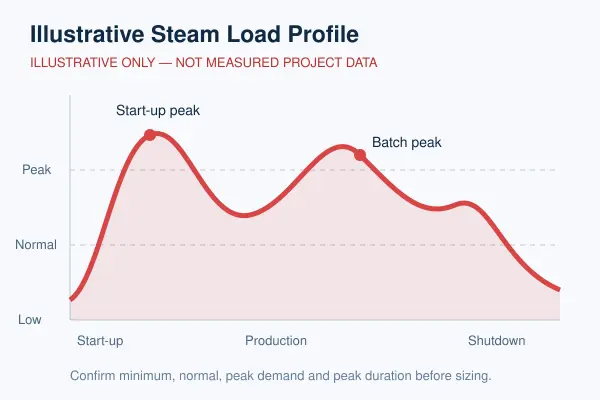
If a plant normally uses substantially less than 8 吨/小时, burner turndown and cycling become important. A boiler that cannot modulate low enough may repeatedly start and stop.
If peak demand approaches or exceeds 8 吨/小时, engineers must determine whether the peak can be managed through sequencing, process scheduling, steam storage or additional boiler capacity.
The engineering team should also define:
Without these inputs, an “8 ton boiler” remains a capacity description rather than a complete process solution.
The following schedule should be completed from the technical agreement, approved drawings and manufacturer documentation.
| Technical Parameter | Project Value | Required Evidence |
|---|---|---|
| Rated steam output | 8,000 公斤/小时 | Datasheet and nameplate |
| Minimum operating load | 2.0–3.0 t/h | Boiler and burner data |
| Normal operating load | 5.0–6.0 t/h | Plant load profile |
| 工作压力 | 1.6–2.5 MPa | Technical agreement |
| Design pressure | 2.5–3.0 MPa | Design documents |
| 蒸汽温度 | 184–225°C | Technical agreement |
| 汽油种类 | 天然气 | Fuel specification |
| Gas inlet pressure | 2–5 kPa | Site utility data |
| Gas heating value | 35–38 MJ/Nm³ | Gas supplier data |
| 给水温度 | 105℃ | Heat and mass balance |
| 锅炉效率 | 92–96% | Test or calculation basis |
| Burner turndown | 4:1 | Burner datasheet |
| Electrical supply | 380V/50Hz | Electrical drawings |
| Emissions guarantee | ≤30 mg/Nm³ NOx | Contract and test conditions |
| 认证 | 美国机械工程师协会 / CE | Applicable project certificate |
| Dimensions and weight | 6–8 m length, 8–12 t | General arrangement drawing |
Several distinctions are essential:
The project brief identifies gaseous fuel, but it does not disclose the commercial or engineering reason for selecting it.
A 燃气蒸汽锅炉 can be suitable where the plant has an adequate and dependable gas supply. Potential project advantages may include:
These are general characteristics, not verified performance results for this project.
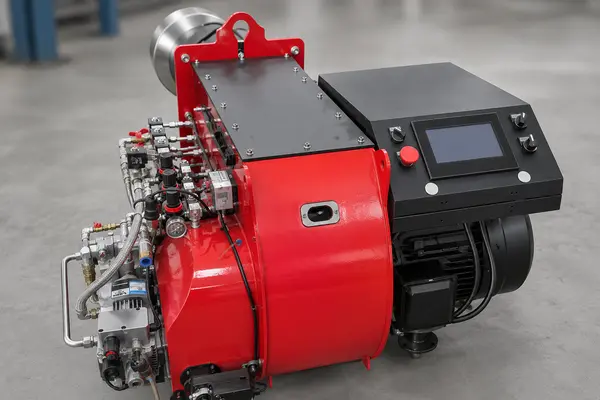
Before confirming a gas boiler, the buyer should provide:
A burner cannot be selected correctly from the word “gas” alone.
The boiler construction used in this project has not been disclosed.
Both fire-tube and water-tube boilers can be considered for industrial steam applications, but the selection must follow the process requirement.
A fire-tube vs. water-tube boiler comparison should consider:
| Selection Factor | Engineering Question |
|---|---|
| 容量 | What are the minimum, normal and peak loads? |
| 压力 | What pressure must reach the process? |
| Load response | How quickly does steam demand change? |
| 水质 | What treatment and monitoring are available? |
| 空间 | What boiler-room dimensions are available? |
| Transport | Are there road, port or site-access restrictions? |
| 维护 | What local service capability exists? |
| Expansion | Will future production increase demand? |
Calling one design universally better would ignore the conditions that determine actual suitability.
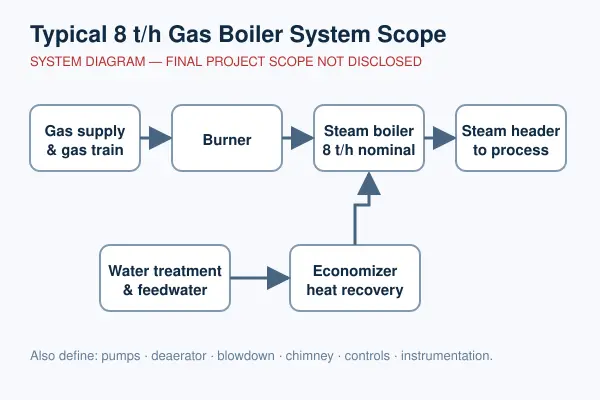
A boiler pressure vessel alone does not create a complete steam plant.
Depending on the final project scope, 一个 8 ton gas steam boiler installation may require:
| 设备 | 功能 | Project Status |
|---|---|---|
| 刻录机 | Controls combustion | Not disclosed |
| Gas train | Regulates and isolates gas supply | Not disclosed |
| 给水泵 | Deliver water to the boiler | Not disclosed |
| Feedwater tank | Stores and conditions feedwater | Not disclosed |
| 除氧器 | Supports dissolved-gas control | Not disclosed |
| 水处理 | Conditions make-up water | Not disclosed |
| 节能器 | Recovers flue-gas heat | Not disclosed |
| Condensate system | Returns suitable condensate | Not disclosed |
| Blowdown equipment | Manages boiler-water discharge | Not disclosed |
| Chimney and flue duct | Discharge combustion gases | Not disclosed |
| Control cabinet | Coordinates boiler operation | Not disclosed |
| Instrumentation | Measures pressure, flow and temperature | Not disclosed |
| Emissions equipment | Supports local compliance | Not disclosed |
| Spare parts | Supports maintenance | Not disclosed |
The buyer should request an itemized scope identifying equipment, quantity, 模型, manufacturer, electrical requirements and installation responsibility.
A quotation containing only the boiler and burner cannot be compared directly with one containing a complete boiler room. Detailed information about typical 锅炉辅助设备 can help buyers identify missing scope.
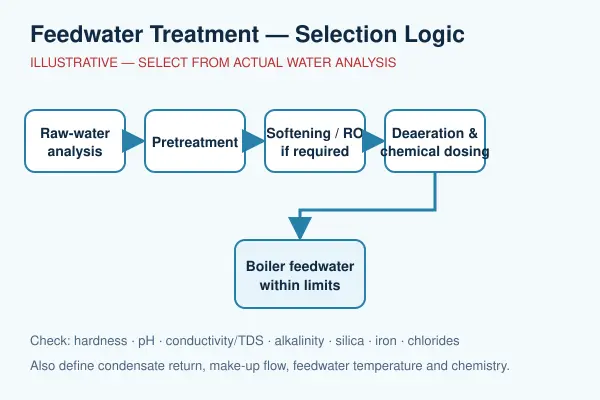
Water conditions can affect reliability, 传热, steam quality and maintenance.
Before selecting treatment equipment, the supplier should receive a recent raw-water analysis covering relevant parameters such as:
The project should also define:
Treatment may involve filtration, softening, 反渗透, demineralization, 脱气, chemical dosing or a combination of methods. Not every boiler automatically requires every treatment technology.
Poor water management can contribute to scale, 腐蚀, 存款, 起泡, carryover and excessive blowdown. A generic water-treatment package should not be selected before the actual water conditions are known.
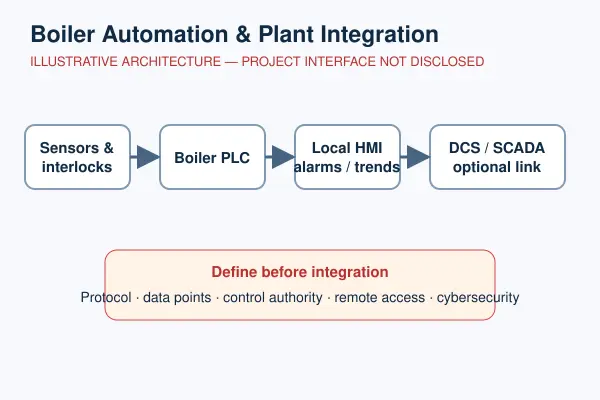
A chemical plant may require the boiler control system to operate independently or communicate with plant-wide systems.
A basic control system can monitor or control:
A more extensive system may include:
If plant integration is required, the communication protocol, permitted data points, control authority and responsibility boundaries should be defined before production.
Remote access also introduces cybersecurity considerations. NIST SP 800-82 Rev. 3 addresses operational technology security while recognizing the performance, reliability and safety requirements of industrial control environments.
This does not prove that the project followed NIST guidance. It provides a useful reference for projects that connect boiler controls to wider plant networks.
The final protection architecture depends on the boiler, 刻录机, fuel train, installation code and local jurisdiction.
Typical functions can include:
Chemical plants may also have classified areas, emergency shutdown philosophies or process-safety requirements. The boiler room’s location and equipment classification must be evaluated by qualified project engineers.
A standard boiler control cabinet should not automatically be described as explosion-proof or suitable for a hazardous area without the applicable equipment certification and project documentation.
There is no reliable universal gas-consumption figure for every 8 吨/小时锅炉.
A practical calculation is:
耗气量=蒸汽流量× (蒸汽热函 - 给水热函) ÷ (锅炉效率×燃气热值)
To calculate a meaningful result, engineers need:
For this project:
| Gas-Consumption Item | Status |
|---|---|
| Rated calculation | 6,500–7,200 Nm³/h (theoretical range for 8 t/h gas boiler) |
| Burner maximum fuel input | 7,800 标准立方米/小时 |
| Commissioning measurement | Not disclosed |
| Average operating consumption | 5,200–6,000 Nm³/h |
| Gas-meter evidence | Not disclosed |
Presenting a fixed number without these conditions would create false precision.
An efficiency percentage is meaningful only when its basis is stated.
Buyers should ask:
美国. Department of Energy’s Steam Systems resources cover combustion efficiency, short cycling, 凝结水回流, blowdown control, economizers and other system-level improvement opportunities.
This supports an important procurement principle: the highest quoted efficiency is not automatically the lowest annual operating cost.
这 工业蒸汽锅炉效率 page provides a broader explanation of the factors that affect real steam-system performance.
The project location has not been disclosed, so its applicable emissions limits cannot be identified.
Boiler requirements can vary with:
美国. EPA’s boiler rules illustrate why the installation market must be checked carefully. 例如, the EPA’s current area-source boiler page states that its referenced rule covers certain coal-, 油- and biomass-fired boilers but not boilers burning only gaseous fuels. This is a useful reminder that a rule cannot be applied to a project merely because it contains the word “boiler.” The precise source category and fuel matter. 我们. EPA
No project-specific certification has been provided.
If ASME construction is required, the quotation should identify:
ASME explains that its Boiler and Pressure Vessel Certification Program certifies manufacturer or assembler quality-control systems for defined scopes, and that marked products must comply with the applicable BPVC section. A general statement that a company is “ASME certified” is not enough to prove the certification of a particular boiler. ASME Boiler and Pressure Vessel Certification
A strong project case study should connect every performance or quality claim to evidence.
Useful manufacturing records can include:
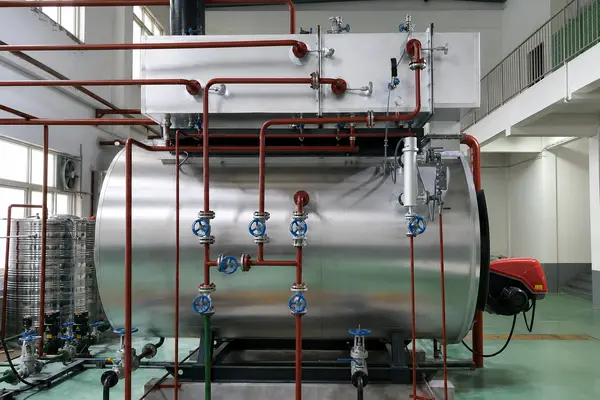
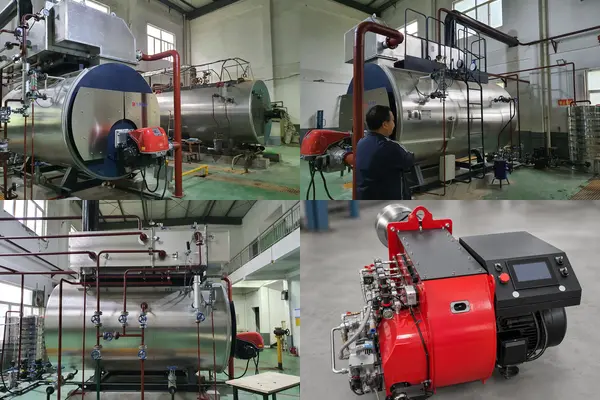
The published page should use photographs from the actual project, 包括:
Stock images should not be labelled as this chemical plant project.
The shipping method, installation responsibilities and commissioning status have not been disclosed.
A complete project schedule should define the responsibility for:
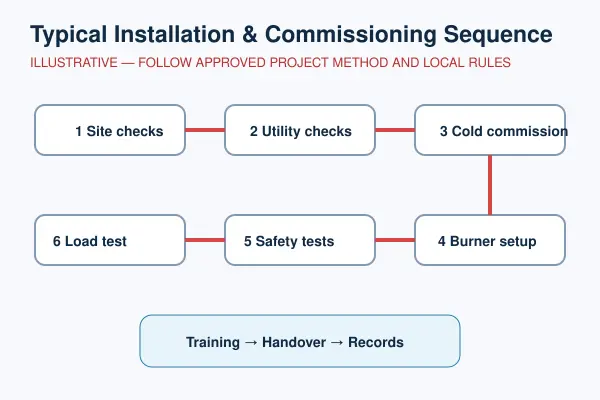
A typical commissioning sequence is:
Site Inspection → Utility Verification → Water and Fuel Checks → Electrical Checks → Cold Commissioning → Burner Commissioning → Safety-Interlock Tests → Load Test → Training → Handover
The exact sequence must follow the approved project method and local requirements.
No commissioning or long-term operating data has been provided for this article.
The following claims should therefore not be published as project results until supporting records are available:
When records become available, use a table that separates design and measured data:
| Performance Item | Design Value | Measured Value | Evidence |
|---|---|---|---|
| 蒸汽输出量 | [Insert] | [Insert] | Calibrated flow record |
| 工作压力 | [Insert] | [Insert] | HMI or test report |
| Gas consumption | [Insert] | [Insert] | Fuel meter |
| Stack temperature | [Insert] | [Insert] | Test instrument |
| 效率 | [Insert] | [Insert] | Defined test method |
| NOX | [Insert] | [Insert] | Emissions report |
| CO | [Insert] | [Insert] | Emissions report |
A blank or undisclosed value is more credible than an unsupported success claim.
This project brief supports several practical procurement lessons.
Confirm minimum, normal and peak demand instead of sizing only from maximum production capacity.
Account for steam distribution, control valves and pressure losses before selecting boiler operating pressure.
Provide gas composition, heating value, flow and pressure range before burner selection.
A raw-water analysis should be completed before finalizing the treatment system.
Normalize burners, 泵, feedwater systems, 省煤器, 控制, emissions equipment and documentation before comparing prices.
Certification and emissions requirements should be confirmed before manufacturing begins.
A rated value, guarantee and field measurement are three different forms of evidence.
A useful engineering quotation should begin with:
These inputs allow the manufacturer to move from a generic 8 ton boiler price to a project-specific steam-system proposal.
一个 8 ton steam boiler has a nominal rated capacity of 8,000 kg of steam per hour under its specified rating conditions. Actual output depends on operating load, 蒸汽条件, feedwater conditions and equipment performance.
It can be, but suitability depends on the plant’s minimum, 正常和高峰蒸汽需求, required pressure, operating profile, 燃料供应, feedwater and compliance requirements.
Gas consumption depends on steam flow, steam enthalpy, 给水温度, 锅炉效率和燃气热值. A fixed universal consumption figure is not reliable without these inputs.
The correct pressure is based on the pressure required at the process after allowing for distribution and control requirements. 压力越高并不一定越好.
取决于项目, equipment may include a burner, gas train, 给水泵, feedwater tank, 除氧器, 水处理, 省煤器, 烟囱, 排污系统, 凝结水系统, control cabinet and instrumentation.
Not automatically. The water-treatment system should be selected from the raw-water analysis, boiler pressure, 凝结水回流, steam-purity requirement and manufacturer limits.
Potentially, but part-load performance depends on boiler design, 燃烧器调低, controls and the minimum stable firing condition. These values should be confirmed from the specific proposal.
No universal answer applies. The required emissions configuration depends on the installation jurisdiction, permit, 燃料, capacity and applicable limits.
不. Manufacturer authorization and product-specific certification are separate matters. The contract must identify the applicable ASME scope, marking and documentation for the quoted boiler.
Review the technical agreement, approved drawings, nameplate, material records, inspection reports, pressure-test documents, factory acceptance records, 包装清单, site photographs, commissioning records and measured performance data.
The supplied project information establishes that an 8 t/h gas steam boiler was specified for a chemical plant application.
It does not establish the working pressure, actual gas consumption, measured efficiency, 排放量, certification, commissioning result or long-term operating performance.
Those details should be added only when supported by project documents.
For another chemical plant, the strongest selection process remains:
Define the process steam demand → verify the load profile → establish pressure and steam conditions → confirm the fuel supply → test the water → define auxiliaries and controls → verify compliance → test performance under stated conditions.
If you are preparing an 8 ton gas steam boiler project, send the required steam pressure, minimum and peak load, gas specification, 营业时间, feedwater analysis and installation country to receive a project-specific engineering quotation.
免费锅炉报价
没有延迟, 得到 3 今日报价 比较最优惠的价格 安全可靠评论
本文内容?
If you like Fang Kuai, 请留言.


V查看我们客户的评论
"我们化工厂一直在使用方快导热油锅炉多年,从未让我们失望过. 锅炉非常耐用,可以承受恶劣的条件. 它也非常容易操作和维护, 这帮助我们节省了维护时间和金钱. 方快的导热油锅炉是一流的,我强烈推荐给任何需要可靠供暖解决方案的人。"
张
中国"方快的热水器太棒了. 升温快速高效, 而且水会长时间保持高温. 我们从来没有遇到过任何问题,它在我们的日常运营中取得了显着改善. 安装过程也很顺利,客服态度也很好. 强烈推荐方快的热水器。"
莎拉
加拿大"方快导热油锅炉操作维护非常方便. 它帮助我们节省了维护时间和金钱, 这导致显着的成本节约. 材料的质量和锅炉的构造非常出色. 它也非常节能, 这帮助我们节省了能源费用. 强烈推荐方快的导热油锅炉 ."
艾伦
巴西"方快的蒸汽发生器非常适合我的小生意. 它非常易于使用,需要最少的维护. 它也非常节能, 这帮助我节省了能源费用. 方快的客服也很好. 他们反应灵敏,乐于助人. 强烈推荐方快的蒸汽发生器。"
艾哈迈德
埃及"方快的辅助设备让我的锅炉系统更上一层楼. 设备质量卓越,价格非常合理. 该设备帮助提高了我的锅炉系统的效率和性能, 这导致显着的成本节约. 我向任何需要优质锅炉配件的人强烈推荐方快的辅助设备。"
马里克
英国"方快的蒸汽锅炉非常适合我的食品加工业务. 它满足我们的所有要求并且非常可靠. 材料的质量和锅炉的构造非常出色. 它也非常容易操作和维护, 这帮助我们节省了维护时间和金钱. 我向任何需要可靠供暖解决方案的人强烈推荐方快的蒸汽锅炉。"
杰森
巴西"方快的热水锅炉质量让我印象深刻. 它经久耐用,超出了我的预期. 安装过程也很顺利,客服态度也很好. 热水锅炉操作维护非常方便, 能源效率显着. 强烈推荐方快的热水器。"
杰克
澳大利亚"方快的蒸汽发生器很优秀. 它们非常易于使用并且需要最少的维护. 方快的客户服务也很出色. 他们反应灵敏,乐于助人. 蒸汽发生器的能源效率也非常出色, 这帮助我节省了能源费用. 强烈推荐方快的蒸汽发生器。"
玛丽亚
西班牙"方快的热水器太棒了. 升温快速高效, 而且水会长时间保持高温. 我们从来没有遇到过任何问题,它在我们的日常运营中取得了显着改善. 安装过程也很顺利,客服态度也很好. 强烈推荐方快的热水器。"
莎拉
加拿大