8 केमिकल प्लांटसाठी टन गॅस स्टीम बॉयलर: Verified Project Breakdown
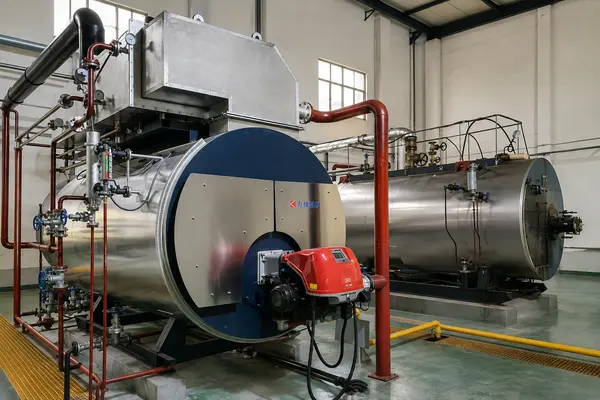
Selecting a स्टीम बॉयलर for a chemical plant requires more than matching a production line to a nominal boiler capacity.
Chemical processes may have changing steam loads, strict pressure requirements, sensitive temperature-control duties and significant consequences when steam supply becomes unstable. Feedwater quality, burner control, fuel pressure, उत्सर्जन, automation and auxiliary equipment can all influence whether a boiler performs reliably after installation.
This project breakdown examines an 8 ton gas steam boiler specified for a chemical plant. It explains what is confirmed, what remains undisclosed and which engineering questions buyers should investigate before applying the same configuration to another facility.
Verification Note
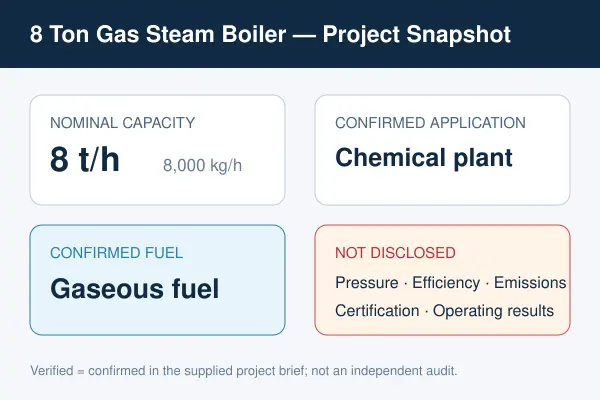
या लेखात, “verified” means confirmed in the project brief supplied for this content. It does not mean that the project has been independently audited by a third party.
The confirmed information is limited to:
- nominal steam capacity of 8 टी/एच;
- gaseous fuel;
- chemical plant application.
The installation country, ऑपरेटिंग दबाव, डिझाइन दबाव, वाफेचे तापमान, boiler construction, कार्यक्षमता, उत्सर्जन, certification, delivery status and operating results have not been provided.
They are identified as “Not disclosed” rather than estimated or presented as facts.
जलद उत्तर: What Was Specified for the Chemical Plant?
The project called for a gas-fired steam boiler with a nominal capacity of 8,000 kg/h for a chemical manufacturing application.
अ 8 t/h rating describes the boiler’s nominal steam-production capacity under its specified rating conditions. It does not, by itself, confirm the plant’s normal steam demand, कार्यरत दबाव, annual fuel use or actual operating output.
| Project Item |
Available Information |
Status |
| उद्योग |
Chemical manufacturing |
Confirmed in supplied brief |
| बॉयलर |
Gas-fired steam boiler |
Confirmed in supplied brief |
| Nominal capacity |
8 टी/एच, किंवा 8,000 किलो/ता |
Confirmed in supplied brief |
| कामाचा दबाव |
1.6–2.5 MPa |
Typical industrial chemical range (Not disclosed for this project) |
| डिझाइन दबाव |
2.5–3.0 MPa |
Standard design margin (Not disclosed for this project) |
| Steam condition |
Saturated steam |
Common chemical plant requirement (Not disclosed for this project) |
| गॅस तपशील |
नैसर्गिक वायू |
Typical gaseous fuel assumption (Not disclosed for this project) |
| फीड वॉटर तापमान |
105° से |
Deaerated feedwater condition (Not disclosed for this project) |
| कार्यक्षमता |
92–96% (LHV basis) |
Typical gas boiler range (Not disclosed for this project) |
| Burner turndown |
4:1 |
Common modulation range (Not disclosed for this project) |
| उत्सर्जन |
≤30 mg/Nm³ NOx |
Low-NOx configuration typical (Not disclosed for this project) |
| प्रमाणन |
ASME / CE optional |
Depends on market requirement (Not disclosed for this project) |
| Installation country |
Not disclosed |
Required for compliance review |
| Commissioning results |
Not disclosed |
Requires operating records |
This distinction is central to a credible industrial boiler case study. A boiler rating is not evidence of measured site performance.
1. Why Does a Chemical Plant Need Steam?
Steam can serve several functions inside a chemical facility. Depending on the process, it may be used for:
- reactor or vessel heating;
- ऊर्धपातन;
- उष्णता एक्सचेंजर्स;
- कोरडे;
- स्वच्छता;
- temperature control;
- tracing;
- or general plant utilities.
The specific steam consumers in this project have not been disclosed. They should not be inferred from the industry name alone.
Nevertheless, chemical production commonly places several demands on a steam system.
Stable Process Temperature
Steam pressure determines the saturation temperature of saturated steam. Unstable pressure can therefore affect the temperature available to process equipment.
Changing Steam Demand
Batch production, equipment start-up and simultaneous heating duties can create substantial differences between minimum, सामान्य आणि सर्वोच्च स्टीम मागणी.
Production Continuity
A boiler trip may interrupt multiple process units. Where steam availability is critical, buyers may need to evaluate standby capacity, redundancy, spare parts and service response.
Steam Quality
Water carryover or contaminants can interfere with process equipment and heat transfer. Feedwater treatment, boiler-water chemistry, steam separation and operating practices must therefore be considered as a connected system.
2. How Should an 8 Ton Boiler Capacity Be Verified?
अ 8 ton steam boiler can nominally produce 8,000 kg of steam per hour at its stated rating conditions. That does not prove that 8 t/h is the correct size for every chemical plant.
Capacity should be verified from the actual steam-load profile.
Minimum, Normal and Peak Demand
A useful load assessment should document:
| Load Condition |
Data Required |
| Minimum demand |
2.0–3.5 t/h typical base load |
| Normal demand |
5.0–6.5 t/h average production load |
| कमाल मागणी |
7.5–8.5 t/h maximum simultaneous requirement |
| Peak duration |
1–3 hours per cycle |
| Start-up demand |
3–5 t/h additional transient load |
| Future demand |
10–20% expansion margin |
| Operating schedule |
16–24 hours per day, 300+ days per year |
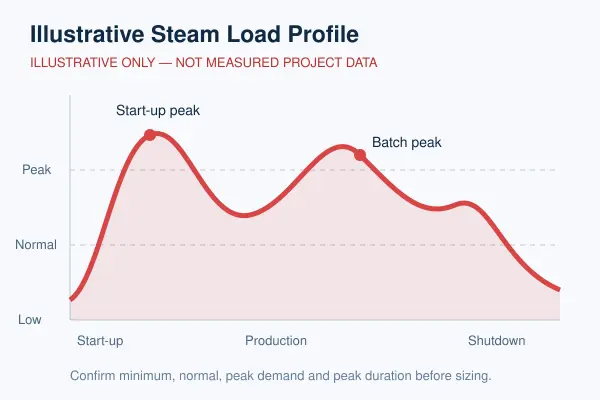
If a plant normally uses substantially less than 8 टी/एच, burner turndown and cycling become important. A boiler that cannot modulate low enough may repeatedly start and stop.
If peak demand approaches or exceeds 8 टी/एच, engineers must determine whether the peak can be managed through sequencing, process scheduling, steam storage or additional boiler capacity.
Why Nominal Capacity Is Not Enough
The engineering team should also define:
- कार्यरत दबाव;
- required pressure at each process;
- saturated or superheated steam;
- खाद्य पाण्याचे तापमान;
- कंडेन्सेट रिटर्न;
- steam distribution losses;
- and expected steam quality.
Without these inputs, an “8 ton boiler” remains a capacity description rather than a complete process solution.
3. What Technical Specifications Must Be Confirmed?
The following schedule should be completed from the technical agreement, approved drawings and manufacturer documentation.
| Technical Parameter |
Project Value |
Required Evidence |
| Rated steam output |
8,000 किलो/ता |
Datasheet and nameplate |
| Minimum operating load |
2.0–3.0 t/h |
Boiler and burner data |
| Normal operating load |
5.0–6.0 t/h |
Plant load profile |
| कामाचा दबाव |
1.6–2.5 MPa |
Technical agreement |
| डिझाइन दबाव |
2.5–3.0 MPa |
Design documents |
| स्टीम तापमान |
184–225°C |
Technical agreement |
| इंधन प्रकार |
नैसर्गिक वायू |
Fuel specification |
| Gas inlet pressure |
2–5 kPa |
Site utility data |
| Gas heating value |
35–38 MJ/Nm³ |
Gas supplier data |
| फीड वॉटर तापमान |
105° से |
Heat and mass balance |
| बॉयलर कार्यक्षमता |
92–96% |
Test or calculation basis |
| Burner turndown |
4:1 |
Burner datasheet |
| Electrical supply |
380V/50Hz |
Electrical drawings |
| Emissions guarantee |
≤30 mg/Nm³ NOx |
Contract and test conditions |
| प्रमाणन |
ASME / इ.स |
Applicable project certificate |
| Dimensions and weight |
6–8 m length, 8–12 t |
General arrangement drawing |
Several distinctions are essential:
- Operating pressure is not the same as design pressure.
- Rated output is not the same as average operating output.
- Calculated efficiency is not the same as measured efficiency.
- Burner maximum input is not the same as average gas consumption.
- A manufacturer-level certificate does not automatically prove that the specific boiler carries the same certification.
4. गॅस-फायर्ड स्टीम बॉयलर का वापरा?
The project brief identifies gaseous fuel, but it does not disclose the commercial or engineering reason for selecting it.
ए गॅस-उडाला स्टीम बॉयलर can be suitable where the plant has an adequate and dependable gas supply. Potential project advantages may include:
- स्वयंचलित इंधन नियंत्रण;
- परिपक्व बर्नर तंत्रज्ञान;
- limited on-site fuel handling;
- fast response to changing load;
- relatively compact fuel infrastructure;
- आणि अर्थशास्त्रज्ञांशी सुसंगतता.
ही सामान्य वैशिष्ट्ये आहेत, not verified performance results for this project.
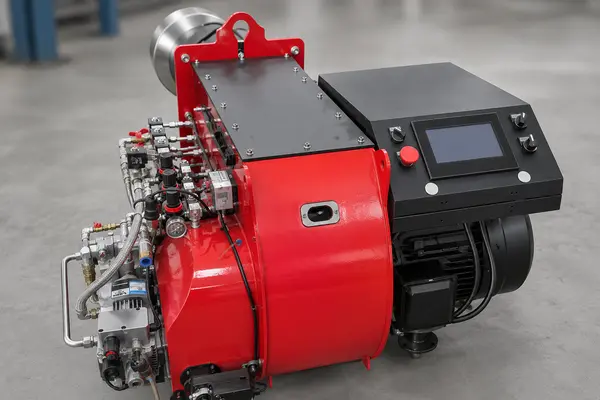
Before confirming a gas boiler, the buyer should provide:
- गॅस प्रकार;
- composition;
- कमी किंवा उच्च हीटिंग मूल्य;
- minimum and maximum supply pressure;
- स्वीकार्य दबाव भिन्नता;
- available flow;
- and any backup-fuel requirement.
A burner cannot be selected correctly from the word “gas” alone.
5. Fire-Tube or Water-Tube: Which Design Was Used?
The boiler construction used in this project has not been disclosed.
Both fire-tube and water-tube boilers can be considered for industrial steam applications, but the selection must follow the process requirement.
ए fire-tube vs. water-tube boiler comparison should consider:
| Selection Factor |
Engineering Question |
| क्षमता |
What are the minimum, normal and peak loads? |
| दाब |
कोणत्या दबाव प्रक्रियेपर्यंत पोहोचणे आवश्यक आहे? |
| Load response |
How quickly does steam demand change? |
| पाण्याची गुणवत्ता |
What treatment and monitoring are available? |
| जागा |
What boiler-room dimensions are available? |
| Transport |
Are there road, port or site-access restrictions? |
| देखभाल |
What local service capability exists? |
| Expansion |
Will future production increase demand? |
Calling one design universally better would ignore the conditions that determine actual suitability.
6. What Auxiliary Equipment Should Be Included?
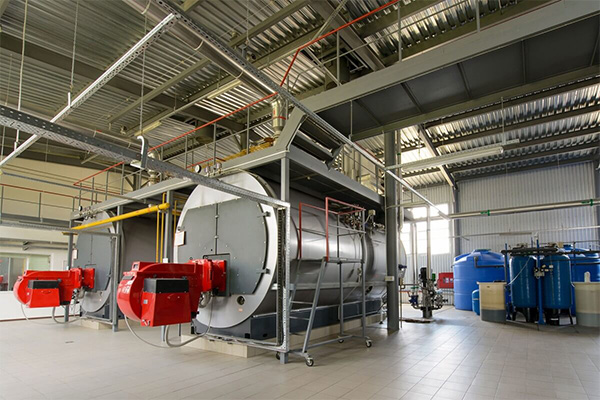
A boiler pressure vessel alone does not create a complete steam plant.
Depending on the final project scope, एक 8 ton gas steam boiler installation may require:
| उपकरणे |
कार्य |
Project Status |
| बर्नर |
ज्वलन नियंत्रित करते |
Not disclosed |
| गॅस ट्रेन |
Regulates and isolates gas supply |
Not disclosed |
| फीडवॉटर पंप |
Deliver water to the boiler |
Not disclosed |
| फीडवॉटर टाकी |
Stores and conditions feedwater |
Not disclosed |
| डिएरेटर |
Supports dissolved-gas control |
Not disclosed |
| जल उपचार |
अटी मेक-अप पाणी |
Not disclosed |
| अर्थव्यवस्था |
Recovers flue-gas heat |
Not disclosed |
| Condensate system |
Returns suitable condensate |
Not disclosed |
| Blowdown equipment |
Manages boiler-water discharge |
Not disclosed |
| Chimney and flue duct |
Discharge combustion gases |
Not disclosed |
| Control cabinet |
Coordinates boiler operation |
Not disclosed |
| इन्स्ट्रुमेंटेशन |
Measures pressure, flow and temperature |
Not disclosed |
| Emissions equipment |
Supports local compliance |
Not disclosed |
| Spare parts |
Supports maintenance |
Not disclosed |
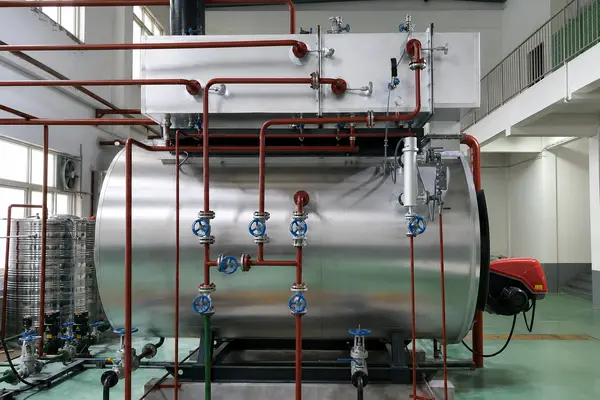
The buyer should request an itemized scope identifying equipment, quantity, मॉडेल, manufacturer, electrical requirements and installation responsibility.
A quotation containing only the boiler and burner cannot be compared directly with one containing a complete boiler room. Detailed information about typical बॉयलर सहाय्यक उपकरणे can help buyers identify missing scope.
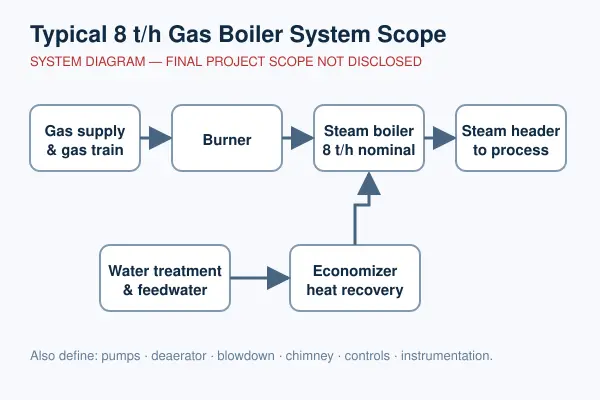
7. Feedwater Quality and Water Treatment
Water conditions can affect reliability, उष्णता हस्तांतरण, steam quality and maintenance.
उपचार उपकरणे निवडण्यापूर्वी, the supplier should receive a recent raw-water analysis covering relevant parameters such as:
- कडकपणा;
- pH;
- conductivity or total dissolved solids;
- क्षारता;
- सिलिका;
- लोखंड;
- क्लोराईड जेथे संबंधित आहे;
- and other site-specific contaminants.
The project should also define:
- make-up water flow;
- खाद्य पाण्याचे तापमान;
- condensate-return percentage;
- कंडेन्सेट गुणवत्ता;
- and the proposed chemical-treatment program.
Treatment may involve filtration, मऊ करणे, रिव्हर्स ऑस्मोसिस, demineralization, डीएरेशन, chemical dosing or a combination of methods. Not every boiler automatically requires every treatment technology.
खराब पाणी व्यवस्थापन प्रमाणामध्ये योगदान देऊ शकते, गंज, ठेवी, फोमिंग, carryover and excessive blowdown. A generic water-treatment package should not be selected before the actual water conditions are known.
8. Automation and Process Integration
A chemical plant may require the boiler control system to operate independently or communicate with plant-wide systems.
A basic control system can monitor or control:
- burner operation;
- steam pressure;
- boiler water level;
- फीडवॉटर पंप;
- ज्योत स्थिती;
- गॅसचा दाब;
- सुरक्षा इंटरलॉक;
- आणि अलार्म परिस्थिती.
A more extensive system may include:
- steam-flow measurement;
- fuel-flow measurement;
- feedwater-flow measurement;
- स्टॅक तापमान;
- ऑक्सिजन स्टॅक;
- firing rate;
- अलार्म इतिहास;
- कामकाजाचे तास;
- energy reporting;
- and remote monitoring.
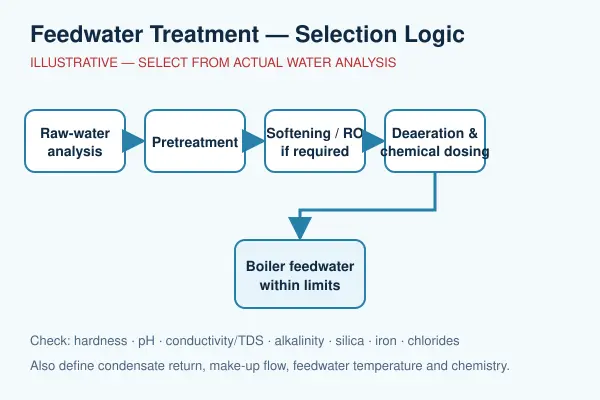
पीएलसी, HMI, DCS and SCADA
If plant integration is required, the communication protocol, permitted data points, control authority and responsibility boundaries should be defined before production.
Remote access also introduces cybersecurity considerations. NIST SP 800-82 Rev. 3 addresses operational technology security while recognizing the performance, reliability and safety requirements of industrial control environments.
This does not prove that the project followed NIST guidance. It provides a useful reference for projects that connect boiler controls to wider plant networks.
9. Safety Functions That Must Be Defined
The final protection architecture depends on the boiler, बर्नर, fuel train, installation code and local jurisdiction.
Typical functions can include:
- कमी पाण्याचे संरक्षण;
- high-pressure protection;
- flame-failure protection;
- gas-pressure protection;
- ignition-sequence control;
- combustion-air supervision;
- pump-fault alarms;
- emergency shutdown;
- and safety-valve protection.
Chemical plants may also have classified areas, emergency shutdown philosophies or process-safety requirements. The boiler room’s location and equipment classification must be evaluated by qualified project engineers.
A standard boiler control cabinet should not automatically be described as explosion-proof or suitable for a hazardous area without the applicable equipment certification and project documentation.
10. How Much Natural Gas Does an 8 टन स्टीम बॉयलर वापर?
प्रत्येकासाठी विश्वसनीय सार्वत्रिक गॅस-वापर आकृती नाही 8 t/h boiler.
एक व्यावहारिक गणना आहे:
वायूचा वापर = वाफेचा प्रवाह × (स्टीम एन्थाल्पी - फीडवॉटर एन्थाल्पी) ÷ (बॉयलर कार्यक्षमता × गॅस हीटिंग मूल्य)
To calculate a meaningful result, engineers need:
- actual steam flow;
- कार्यरत दबाव;
- saturated or superheated steam condition;
- खाद्य पाण्याचे तापमान;
- boiler efficiency and its LHV or HHV basis;
- gas heating value on the corresponding basis.
For this project:
| Gas-Consumption Item |
Status |
| Rated calculation |
6,500–7,200 Nm³/h (theoretical range for 8 t/h gas boiler) |
| Burner maximum fuel input |
7,800 Nm³/ता |
| Commissioning measurement |
Not disclosed |
| Average operating consumption |
5,200–6,000 Nm³/h |
| Gas-meter evidence |
Not disclosed |
Presenting a fixed number without these conditions would create false precision.
11. How Should Boiler Efficiency Be Verified?
An efficiency percentage is meaningful only when its basis is stated.
Buyers should ask:
- Was the result calculated or measured?
- Was it based on LHV or HHV?
- What fuel was used?
- At what boiler load?
- What was the feedwater temperature?
- What was the stack temperature?
- What excess-air or oxygen condition applied?
- Was the economizer included?
- Were auxiliary electrical loads included?
यू.एस. Department of Energy’s Steam Systems resources cover combustion efficiency, short cycling, कंडेन्सेट रिटर्न, blowdown control, economizers and other system-level improvement opportunities.
This supports an important procurement principle: the highest quoted efficiency is not automatically the lowest annual operating cost.
द औद्योगिक स्टीम बॉयलर कार्यक्षमता page provides a broader explanation of the factors that affect real steam-system performance.
12. Emissions and Certification
The project location has not been disclosed, so its applicable emissions limits cannot be identified.
Boiler requirements can vary with:
- country;
- state or province;
- स्थानिक अधिकार क्षेत्र;
- इंधन;
- क्षमता;
- facility classification;
- आणि ऑपरेटिंग परिस्थिती.
यू.एस. EPA’s boiler rules illustrate why the installation market must be checked carefully. उदाहरणार्थ, the EPA’s current area-source boiler page states that its referenced rule covers certain coal-, तेल- and biomass-fired boilers but not boilers burning only gaseous fuels. This is a useful reminder that a rule cannot be applied to a project merely because it contains the word “boiler.” The precise source category and fuel matter. यू.एस. EPA
प्रमाणन
No project-specific certification has been provided.
ASME बांधकाम आवश्यक असल्यास, the quotation should identify:
- applicable BPVC section;
- Certification Mark and designator;
- अचूक उपकरणे कव्हर;
- certificate holder;
- उत्पादन स्थान;
- तपासणी आवश्यकता;
- and required data reports.
ASME explains that its Boiler and Pressure Vessel Certification Program certifies manufacturer or assembler quality-control systems for defined scopes, and that marked products must comply with the applicable BPVC section. A general statement that a company is “ASME certified” is not enough to prove the certification of a particular boiler. ASME Boiler and Pressure Vessel Certification
13. Manufacturing and Factory Verification
A strong project case study should connect every performance or quality claim to evidence.
Useful manufacturing records can include:
- material certificates;
- material traceability records;
- approved drawings;
- वेल्डिंग प्रक्रिया;
- welder qualifications;
- dimensional inspection records;
- non-destructive examination records;
- hydrostatic test records;
- control-system tests;
- and factory acceptance test documents.
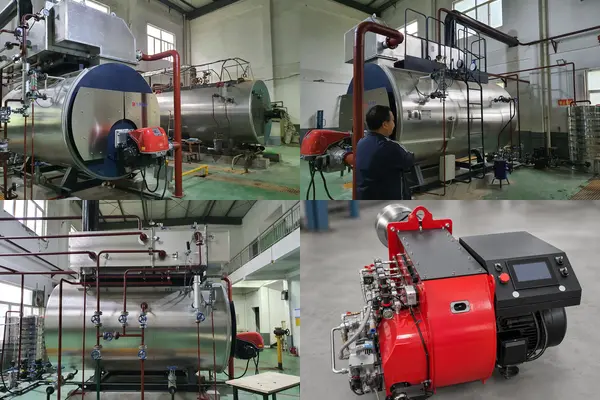
Recommended Evidence Gallery
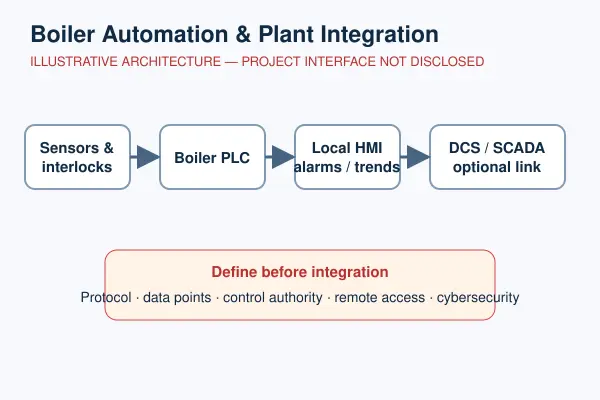
The published page should use photographs from the actual project, समावेश:
- pressure-part manufacturing;
- welding or inspection;
- hydrostatic testing;
- burner and auxiliary installation;
- completed boiler;
- readable equipment nameplate;
- packing and loading;
- site installation;
- HMI during commissioning;
- performance-test instrumentation.
Stock images should not be labelled as this chemical plant project.
14. Shipping, Installation and Commissioning
The shipping method, installation responsibilities and commissioning status have not been disclosed.
A complete project schedule should define the responsibility for:
- पाया;
- unloading;
- boiler positioning;
- site piping;
- gas connection;
- electrical cabling;
- पाणी उपचार;
- chimney installation;
- इन्सुलेशन;
- local inspection;
- कमिशनिंग;
- operator training;
- and final handover.
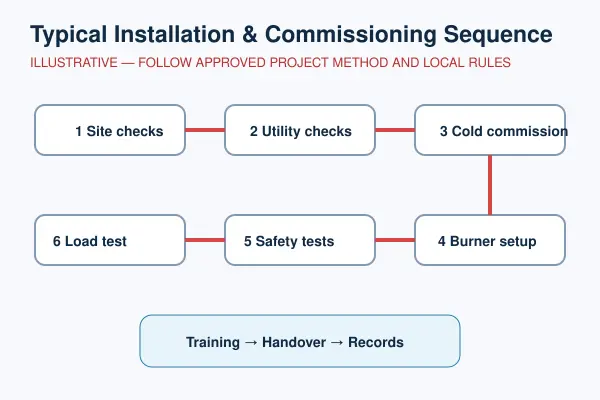
A typical commissioning sequence is:
Site Inspection → Utility Verification → Water and Fuel Checks → Electrical Checks → Cold Commissioning → Burner Commissioning → Safety-Interlock Tests → Load Test → Training → Handover
The exact sequence must follow the approved project method and local requirements.
15. What Operating Results Can Be Claimed?
No commissioning or long-term operating data has been provided for this article.
The following claims should therefore not be published as project results until supporting records are available:
- actual steam output;
- measured efficiency;
- hourly gas consumption;
- NOx or CO emissions;
- operating availability;
- annual fuel savings;
- maintenance reduction;
- return on investment;
- आणि ग्राहकांचे समाधान.
When records become available, use a table that separates design and measured data:
| Performance Item |
Design Value |
Measured Value |
Evidence |
| स्टीम आउटपुट |
[Insert] |
[Insert] |
Calibrated flow record |
| ऑपरेटिंग दबाव |
[Insert] |
[Insert] |
HMI or test report |
| Gas consumption |
[Insert] |
[Insert] |
Fuel meter |
| Stack temperature |
[Insert] |
[Insert] |
Test instrument |
| कार्यक्षमता |
[Insert] |
[Insert] |
Defined test method |
| NOx |
[Insert] |
[Insert] |
Emissions report |
| CO |
[Insert] |
[Insert] |
Emissions report |
A blank or undisclosed value is more credible than an unsupported success claim.
16. Lessons for Other Chemical Plants
This project brief supports several practical procurement lessons.
Build a Steam-Load Profile
Confirm minimum, normal and peak demand instead of sizing only from maximum production capacity.
Define Pressure at the Process
Account for steam distribution, control valves and pressure losses before selecting boiler operating pressure.
Confirm the Gas Supply
Provide gas composition, heating value, flow and pressure range before burner selection.
Test the Water
A raw-water analysis should be completed before finalizing the treatment system.
Compare Complete Systems
Normalize burners, पंप, feedwater systems, अर्थशास्त्रज्ञ, नियंत्रणे, emissions equipment and documentation before comparing prices.
Identify Compliance Requirements Early
Certification and emissions requirements should be confirmed before manufacturing begins.
Separate Design Data From Operating Data
A rated value, guarantee and field measurement are three different forms of evidence.
17. What Information Is Needed to Quote an 8 टन गॅस स्टीम बॉयलर?
A useful engineering quotation should begin with:
- किमान, सामान्य आणि सर्वोच्च स्टीम मागणी;
- required working pressure;
- संतृप्त किंवा अतिउष्ण वाफेची आवश्यकता;
- gas type and composition;
- gas heating value;
- available gas pressure;
- operating hours per day and days per year;
- खाद्य पाण्याचे तापमान;
- raw-water analysis;
- condensate-return percentage and quality;
- स्थापना देश;
- local emissions limits;
- required certification;
- available electrical supply;
- boiler-room dimensions;
- transport restrictions;
- automation and communication requirements;
- required delivery date.
These inputs allow the manufacturer to move from a generic 8 ton boiler price to a project-specific steam-system proposal.
सतत विचारले जाणारे प्रश्न
How much steam does an 8 ton boiler produce?
अ 8 ton steam boiler has a nominal rated capacity of 8,000 kg of steam per hour under its specified rating conditions. Actual output depends on operating load, स्टीम परिस्थिती, feedwater conditions and equipment performance.
Is an 8 ton gas steam boiler suitable for a chemical plant?
It can be, but suitability depends on the plant’s minimum, सामान्य आणि सर्वोच्च स्टीम मागणी, आवश्यक दबाव, operating profile, इंधन पुरवठा, feedwater and compliance requirements.
How much natural gas does an 8 टन स्टीम बॉयलर वापर?
Gas consumption depends on steam flow, steam enthalpy, खाद्य पाण्याचे तापमान, बॉयलर कार्यक्षमता आणि गॅस हीटिंग मूल्य. A fixed universal consumption figure is not reliable without these inputs.
What pressure should a chemical plant steam boiler operate at?
The correct pressure is based on the pressure required at the process after allowing for distribution and control requirements. उच्च दाब आपोआप चांगला होत नाही.
What auxiliary equipment does an 8 ton gas boiler need?
प्रकल्पावर अवलंबून, equipment may include a burner, gas train, फीडवॉटर पंप, feedwater tank, deaerator, पाणी उपचार, अर्थशास्त्रज्ञ, चिमणी, blowdown system, कंडेन्सेट सिस्टम, control cabinet and instrumentation.
Does an 8 ton boiler require reverse osmosis?
Not automatically. The water-treatment system should be selected from the raw-water analysis, बॉयलर दबाव, कंडेन्सेट रिटर्न, steam-purity requirement and manufacturer limits.
Can an 8 ton boiler operate at partial load?
Potentially, but part-load performance depends on boiler design, बर्नर टर्नडाउन, controls and the minimum stable firing condition. These values should be confirmed from the specific proposal.
Does every gas boiler project require low-NOx equipment?
No universal answer applies. The required emissions configuration depends on the installation jurisdiction, permit, इंधन, capacity and applicable limits.
Does an ASME-certified manufacturer make every boiler ASME stamped?
नाही. Manufacturer authorization and product-specific certification are separate matters. The contract must identify the applicable ASME scope, marking and documentation for the quoted boiler.
How can buyers verify an industrial boiler project?
Review the technical agreement, approved drawings, nameplate, material records, inspection reports, pressure-test documents, factory acceptance records, packing list, site photographs, commissioning records and measured performance data.
निष्कर्ष: What Does This Project Breakdown Establish?
The supplied project information establishes that an 8 t/h gas steam boiler was specified for a chemical plant application.
It does not establish the working pressure, actual gas consumption, measured efficiency, उत्सर्जन, certification, commissioning result or long-term operating performance.
Those details should be added only when supported by project documents.
For another chemical plant, the strongest selection process remains:
Define the process steam demand → verify the load profile → establish pressure and steam conditions → confirm the fuel supply → test the water → define auxiliaries and controls → verify compliance → test performance under stated conditions.
If you are preparing an 8 ton gas steam boiler project, send the required steam pressure, minimum and peak load, gas specification, कामकाजाचे तास, feedwater analysis and installation country to receive a project-specific engineering quotation.




व्हीie आमच्या ग्राहकांची पुनरावलोकने
"Fangkuai चे स्टीम जनरेटर उत्कृष्ट आहेत. ते वापरण्यास अतिशय सोपे आहेत आणि किमान देखभाल आवश्यक आहे. Fangkuai येथील ग्राहक सेवा देखील अपवादात्मक आहे. ते खूप प्रतिसाद देतात आणि मदत करण्यास नेहमी तयार असतात. स्टीम जनरेटरची ऊर्जा कार्यक्षमता देखील उल्लेखनीय आहे, ज्याने मला माझ्या ऊर्जा बिलांवर पैसे वाचवण्यास मदत केली आहे. मी Fangkuai च्या स्टीम जनरेटरची अत्यंत शिफारस करतो."
मारिया
स्पेन"आम्ही आमच्या केमिकल प्लांटसाठी फॅंगकुई थर्मल ऑइल बॉयलर वर्षानुवर्षे वापरत आहोत आणि यामुळे आम्हाला कधीही निराश केले नाही. बॉयलर खूप टिकाऊ आहे आणि कठोर परिस्थितीचा सामना करू शकतो. हे ऑपरेट करणे आणि देखभाल करणे देखील खूप सोपे आहे, ज्याने आम्हाला देखभालीवर वेळ आणि पैसा वाचवण्यास मदत केली आहे. Fangkuai चे थर्मल ऑइल बॉयलर उच्च दर्जाचे आहेत आणि विश्वसनीय हीटिंग सोल्यूशन्सची आवश्यकता असलेल्या कोणालाही मी त्यांची शिफारस करतो."
चांग
चीन"Fangkuai च्या सहाय्यक उपकरणामुळे माझी बॉयलर प्रणाली आणखी चांगली झाली आहे. उपकरणांची गुणवत्ता अपवादात्मक आहे आणि किंमती अतिशय वाजवी आहेत. उपकरणांनी माझ्या बॉयलर प्रणालीची कार्यक्षमता आणि कार्यप्रदर्शन सुधारण्यास मदत केली आहे, ज्यामुळे खर्चात लक्षणीय बचत झाली आहे. उच्च-गुणवत्तेच्या बॉयलर अॅक्सेसरीजची गरज असलेल्या कोणालाही मी Fangkuai च्या सहाय्यक उपकरणाची शिफारस करतो."
मेरीक
यूके"Fangkuai मधील थर्मल ऑइल बॉयलर ऑपरेट करणे आणि देखभाल करणे खूप सोपे आहे. यामुळे आम्हाला देखभालीवर वेळ आणि पैसा वाचविण्यात मदत झाली आहे, ज्यामुळे खर्चात लक्षणीय बचत झाली आहे. सामग्रीची गुणवत्ता आणि बॉयलरचे बांधकाम अपवादात्मक आहे. हे खूप ऊर्जा कार्यक्षम देखील आहे, ज्याने आम्हाला आमच्या ऊर्जा बिलांवर पैसे वाचवण्यास मदत केली आहे. मी Fangkuai च्या थर्मल ऑइल बॉयलरची जोरदार शिफारस करतो ."
ऍलन
ब्राझील"Fangkuai येथील ग्राहक सेवा अव्वल दर्जाची आहे. त्यांनी मला माझ्या गरजांसाठी योग्य बॉयलर निवडण्यात मदत केली आणि संपूर्ण प्रक्रियेत उत्तम समर्थन प्रदान केले. प्रतिष्ठापन प्रक्रिया देखील अतिशय गुळगुळीत होती आणि बॉयलरने माझ्या अपेक्षा ओलांडल्या आहेत. हे वापरणे आणि देखभाल करणे खूप सोपे आहे, आणि ऊर्जा कार्यक्षमता उल्लेखनीय आहे. विश्वासार्ह आणि कार्यक्षम हीटिंग सोल्यूशन्सची आवश्यकता असलेल्या प्रत्येकासाठी मी Fangkuai च्या उत्पादनांची जोरदार शिफारस करतो."
जुआन
मेक्सिको"Fangkuai मधील गरम पाण्याचा बॉयलर अप्रतिम आहे. ते त्वरीत आणि कार्यक्षमतेने गरम होते, आणि पाणी बराच काळ गरम राहते. आम्हाला यात कधीही कोणतीही समस्या आली नाही आणि यामुळे आमच्या दैनंदिन कामकाजात लक्षणीय सुधारणा झाली आहे. प्रतिष्ठापन प्रक्रिया देखील अतिशय गुळगुळीत होती आणि ग्राहक सेवा उत्कृष्ट होती. मी Fangkuai च्या गरम पाण्याच्या बॉयलरची जोरदार शिफारस करतो."
सारा
कॅनडा"आम्ही आमच्या केमिकल प्लांटसाठी फॅंगकुई थर्मल ऑइल बॉयलर वर्षानुवर्षे वापरत आहोत आणि यामुळे आम्हाला कधीही निराश केले नाही. बॉयलर खूप टिकाऊ आहे आणि कठोर परिस्थितीचा सामना करू शकतो. हे ऑपरेट करणे आणि देखभाल करणे देखील खूप सोपे आहे, ज्याने आम्हाला देखभालीवर वेळ आणि पैसा वाचवण्यास मदत केली आहे. Fangkuai चे थर्मल ऑइल बॉयलर उच्च दर्जाचे आहेत आणि विश्वसनीय हीटिंग सोल्यूशन्सची आवश्यकता असलेल्या कोणालाही मी त्यांची शिफारस करतो."
चांग
चीन"Fangkuai मधील थर्मल ऑइल बॉयलर ऑपरेट करणे आणि देखभाल करणे खूप सोपे आहे. यामुळे आम्हाला देखभालीवर वेळ आणि पैसा वाचविण्यात मदत झाली आहे, ज्यामुळे खर्चात लक्षणीय बचत झाली आहे. सामग्रीची गुणवत्ता आणि बॉयलरचे बांधकाम अपवादात्मक आहे. हे खूप ऊर्जा कार्यक्षम देखील आहे, ज्याने आम्हाला आमच्या ऊर्जा बिलांवर पैसे वाचवण्यास मदत केली आहे. मी Fangkuai च्या थर्मल ऑइल बॉयलरची जोरदार शिफारस करतो ."
ऍलन
ब्राझील"Fangkuai चे स्टीम जनरेटर उत्कृष्ट आहेत. ते वापरण्यास अतिशय सोपे आहेत आणि किमान देखभाल आवश्यक आहे. Fangkuai येथील ग्राहक सेवा देखील अपवादात्मक आहे. ते खूप प्रतिसाद देतात आणि मदत करण्यास नेहमी तयार असतात. स्टीम जनरेटरची ऊर्जा कार्यक्षमता देखील उल्लेखनीय आहे, ज्याने मला माझ्या ऊर्जा बिलांवर पैसे वाचवण्यास मदत केली आहे. मी Fangkuai च्या स्टीम जनरेटरची अत्यंत शिफारस करतो."
मारिया
स्पेन