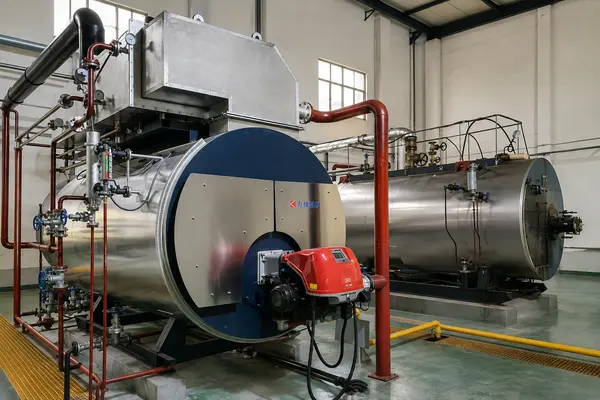
Selecting a caldaia a vapore for a chemical plant requires more than matching a production line to a nominal boiler capacity.
Chemical processes may have changing steam loads, strict pressure requirements, sensitive temperature-control duties and significant consequences when steam supply becomes unstable. Qualità dell'acqua di alimentazione, burner control, fuel pressure, emissioni, automation and auxiliary equipment can all influence whether a boiler performs reliably after installation.
This project breakdown examines an 8 ton gas steam boiler specified for a chemical plant. It explains what is confirmed, what remains undisclosed and which engineering questions buyers should investigate before applying the same configuration to another facility.
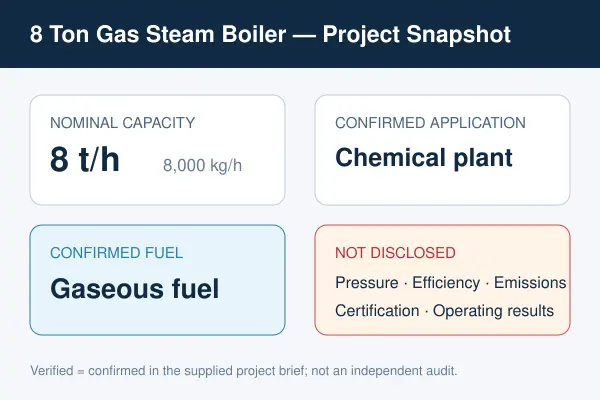
In questo articolo, "verificato" significa confermato nel brief di progetto fornito per questo contenuto. Ciò non significa che il progetto sia stato verificato in modo indipendente da una terza parte.
Le informazioni confermate sono limitate a:
Il paese di installazione, pressione operativa, pressione di progetto, temperatura del vapore, costruzione di caldaie, efficienza, emissioni, certificazione, non sono stati forniti lo stato di consegna e i risultati operativi.
Sono identificati come "Non divulgati" piuttosto che stimati o presentati come fatti.
Il progetto richiedeva una caldaia a vapore alimentata a gas con una capacità nominale di 8,000 kg/h per un'applicazione di produzione chimica.
UN 8 Il valore t/h descrive la capacità nominale di produzione di vapore della caldaia nelle condizioni nominali specificate. Non è così, da solo, confermare la normale richiesta di vapore dell’impianto, Pressione di lavoro, consumo annuo di carburante o produzione operativa effettiva.
| Elemento del progetto | Informazioni disponibili | Stato |
|---|---|---|
| Industria | Produzione chimica | Confermato nel brief fornito |
| Caldaia | Caldaia a vapore alimentata a gas | Confermato nel brief fornito |
| Capacità nominale | 8 t/h, O 8,000 kg/h | Confermato nel brief fornito |
| Pressione di esercizio | 1.6–2,5MPa | Tipica gamma di prodotti chimici industriali (Non divulgato per questo progetto) |
| Pressione di progetto | 2.5–3,0MPa | Margine di progettazione standard (Non divulgato per questo progetto) |
| Condizione di vapore | Vapore saturo | Requisiti comuni degli impianti chimici (Non divulgato per questo progetto) |
| Specifica del gas | Gas naturale | Tipico presupposto del combustibile gassoso (Non divulgato per questo progetto) |
| Temperatura dell'acqua di alimentazione | 105° C. | Condizioni dell'acqua di alimentazione disaerata (Non divulgato per questo progetto) |
| Efficienza | 92–96% (Base LHV) | Gamma tipica di caldaie a gas (Non divulgato per questo progetto) |
| Spegnimento del bruciatore | 4:1 | Gamma di modulazione comune (Non divulgato per questo progetto) |
| Emissioni | ≤30 mg/Nm³NOx | Configurazione tipica a basso contenuto di NOx (Non divulgato per questo progetto) |
| Certificazione | COME ME / CE opzionale | Dipende dalle esigenze del mercato (Non divulgato per questo progetto) |
| Paese di installazione | Non divulgato | Necessario per la revisione della conformità |
| Risultati della messa in servizio | Non divulgato | Richiede registrazioni operative |
Questa distinzione è fondamentale per un caso di studio credibile sulle caldaie industriali. La valutazione della caldaia non costituisce la prova delle prestazioni misurate del sito.
Il vapore può svolgere diverse funzioni all'interno di un impianto chimico. A seconda del processo, può essere utilizzato per:
Gli specifici consumatori di vapore in questo progetto non sono stati resi noti. Non dovrebbero essere dedotti solo dal nome del settore.
Tuttavia, la produzione chimica pone comunemente diverse esigenze a un sistema a vapore.
La pressione del vapore determina la temperatura di saturazione del vapore saturo. Una pressione instabile può quindi influenzare la temperatura disponibile per le apparecchiature di processo.
Produzione in lotti, l'avvio delle apparecchiature e le operazioni di riscaldamento simultanee possono creare differenze sostanziali tra i valori minimi, richiesta di vapore normale e di punta.
Un intervento della caldaia può interrompere più unità di processo. Dove la disponibilità di vapore è fondamentale, gli acquirenti potrebbero dover valutare la capacità di standby, ridondanza, pezzi di ricambio e risposta al servizio.
Trasportamenti di acqua o contaminanti possono interferire con le apparecchiature di processo e il trasferimento di calore. Trattamento dell'acqua di alimentazione, chimica dell'acqua di caldaia, la separazione del vapore e le pratiche operative devono quindi essere considerate come un sistema connesso.
UN 8 tonnellata di caldaia a vapore può nominalmente produrre 8,000 kg di vapore all'ora alle condizioni nominali indicate. Ciò non lo dimostra 8 t/h è la dimensione corretta per ogni impianto chimico.
La capacità deve essere verificata in base al profilo effettivo del carico di vapore.
Dovrebbe essere documentata un'utile valutazione del carico:
| Condizione di carico | Dati obbligatori |
|---|---|
| Domanda minima | 2.0–Carico base tipico di 3,5 t/h |
| Domanda normale | 5.0–Carico produttivo medio di 6,5 t/h |
| Picco della domanda | 7.5– Fabbisogno simultaneo massimo di 8,5 t/h |
| Durata del picco | 1–3 ore per ciclo |
| La domanda di avvio | 3–5 t/h carico transitorio aggiuntivo |
| Domanda futura | 10–20% margine di espansione |
| Programma operativo | 16–24 ore al giorno, 300+ giorni all'anno |
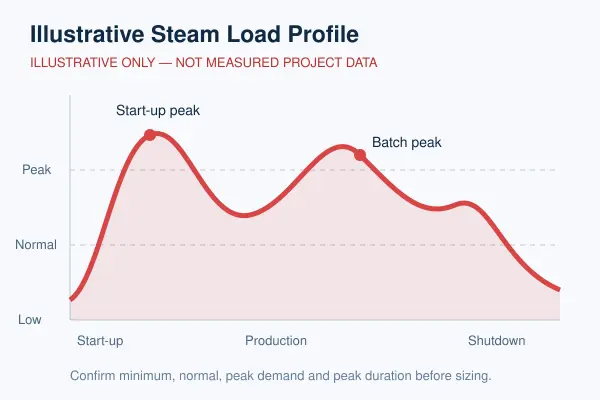
Se un impianto normalmente utilizza sostanzialmente meno di 8 t/h, lo spegnimento e il ciclo del bruciatore diventano importanti. Una caldaia che non riesce a modulare a un livello sufficientemente basso può avviarsi e arrestarsi ripetutamente.
Se il picco della domanda si avvicina o supera 8 t/h, gli ingegneri devono determinare se il picco può essere gestito tramite il sequenziamento, pianificazione dei processi, stoccaggio del vapore o capacità della caldaia aggiuntiva.
Anche il team di ingegneri dovrebbe definire:
Senza questi input, una “caldaia da 8 tonnellate” rimane una descrizione della capacità piuttosto che una soluzione di processo completa.
Il seguente programma dovrebbe essere completato dall'accordo tecnico, disegni approvati e documentazione del produttore.
| Parametro tecnico | Valore del progetto | Prove richieste |
|---|---|---|
| Produzione di vapore nominale | 8,000 kg/h | Scheda tecnica e targhetta |
| Carico operativo minimo | 2.0–3,0 t/h | Dati caldaia e bruciatore |
| Carico operativo normale | 5.0–6,0 t/ora | Profilo di carico dell'impianto |
| Pressione di esercizio | 1.6–2,5MPa | Accordo tecnico |
| Pressione di progetto | 2.5–3,0MPa | Documenti di progettazione |
| Temperatura del vapore | 184–225°C | Accordo tecnico |
| Tipo di carburante | Gas naturale | Specifica del carburante |
| Pressione di ingresso del gas | 2–5kPa | Dati di utilità del sito |
| Potere calorifico del gas | 35–38 MJ/Nm³ | Dati dei fornitori di gas |
| Temperatura dell'acqua di alimentazione | 105° C. | Bilancio di massa e calore |
| Efficienza della caldaia | 92–96% | Base di prova o di calcolo |
| Spegnimento del bruciatore | 4:1 | Scheda tecnica del bruciatore |
| Alimentazione elettrica | 380V/50 Hz | Disegni elettrici |
| Garanzia sulle emissioni | ≤30 mg/Nm³NOx | Condizioni contrattuali e di prova |
| Certificazione | COME ME / CE | Certificato di progetto applicabile |
| Dimensioni e peso | 6–8 metri di lunghezza, 8–12 t | Disegno di disposizione generale |
Sono essenziali diverse distinzioni:
Il brief del progetto identifica il combustibile gassoso, ma non rivela il motivo commerciale o ingegneristico della sua scelta.
UN caldaia a vapore alimentata a gas può essere adatto laddove l'impianto dispone di una fornitura di gas adeguata e affidabile. I potenziali vantaggi del progetto possono includere:
These are general characteristics, not verified performance results for this project.
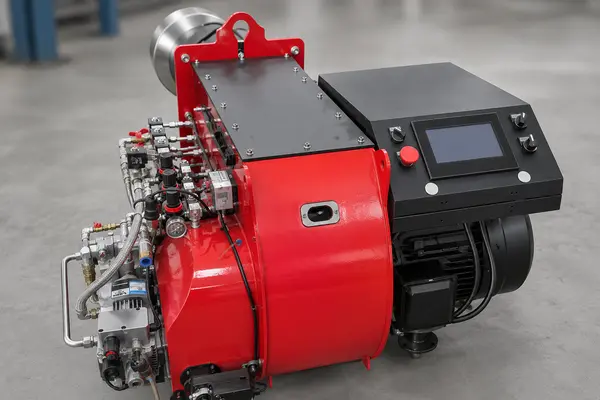
Before confirming a gas boiler, the buyer should provide:
A burner cannot be selected correctly from the word “gas” alone.
The boiler construction used in this project has not been disclosed.
Both fire-tube and water-tube boilers can be considered for industrial steam applications, but the selection must follow the process requirement.
UN fire-tube vs. water-tube boiler comparison should consider:
| Selection Factor | Engineering Question |
|---|---|
| Capacità | What are the minimum, normal and peak loads? |
| Pressione | Quale pressione deve raggiungere il processo? |
| Load response | How quickly does steam demand change? |
| Qualità dell'acqua | What treatment and monitoring are available? |
| Spazio | What boiler-room dimensions are available? |
| Transport | Are there road, port or site-access restrictions? |
| Manutenzione | What local service capability exists? |
| Expansion | Will future production increase demand? |
Calling one design universally better would ignore the conditions that determine actual suitability.
A boiler pressure vessel alone does not create a complete steam plant.
Depending on the final project scope, UN 8 ton gas steam boiler installation may require:
| Attrezzatura | Funzione | Project Status |
|---|---|---|
| Bruciatore | Controls combustion | Non divulgato |
| Gas train | Regulates and isolates gas supply | Non divulgato |
| Pompe per l'acqua di alimentazione | Deliver water to the boiler | Non divulgato |
| Feedwater tank | Stores and conditions feedwater | Non divulgato |
| Disaeratore | Supporta il controllo del gas disciolto | Non divulgato |
| Trattamento delle acque | Condiziona l'acqua di reintegro | Non divulgato |
| Economizzatore | Recupera il calore dei fumi | Non divulgato |
| Sistema di condensa | Restituisce condensa adeguata | Non divulgato |
| Attrezzatura per lo spurgo | Gestisce lo scarico dell'acqua della caldaia | Non divulgato |
| Camino e canna fumaria | Scaricare i gas di combustione | Non divulgato |
| Armadio di controllo | Coordina il funzionamento della caldaia | Non divulgato |
| Strumentazione | Misura la pressione, flusso e temperatura | Non divulgato |
| Apparecchiature per le emissioni | Supporta la conformità locale | Non divulgato |
| Pezzi di ricambio | Supporta la manutenzione | Non divulgato |
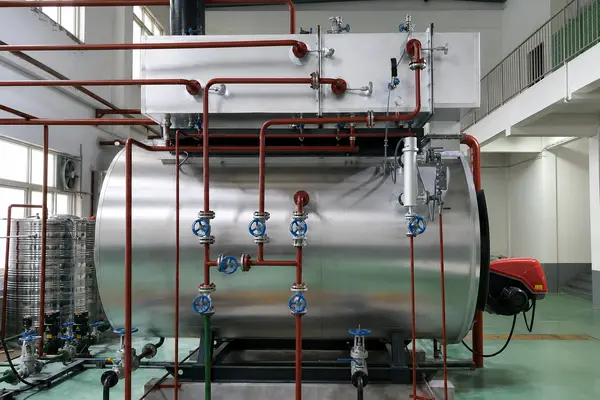
L'acquirente deve richiedere un ambito dettagliato che identifichi l'attrezzatura, quantità, modello, produttore, requisiti elettrici e responsabilità di installazione.
Un preventivo contenente solo caldaia e bruciatore non è direttamente paragonabile ad un preventivo contenente il locale caldaia completo. Informazioni dettagliate sui tipici apparecchiature ausiliarie della caldaia può aiutare gli acquirenti a identificare l'ambito mancante.
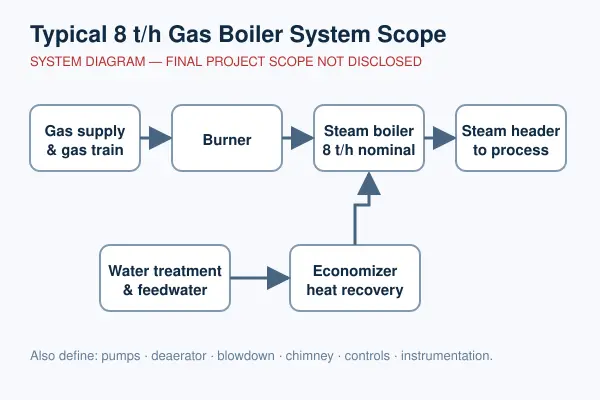
Le condizioni dell'acqua possono influire sull'affidabilità, trasferimento di calore, steam quality and maintenance.
Before selecting treatment equipment, the supplier should receive a recent raw-water analysis covering relevant parameters such as:
The project should also define:
Treatment may involve filtration, ammorbidente, reverse osmosis, demineralization, deareazione, chemical dosing or a combination of methods. Not every boiler automatically requires every treatment technology.
Una cattiva gestione dell’acqua può contribuire all’aumento di scala, corrosione, deposits, schiumoso, carryover and excessive blowdown. A generic water-treatment package should not be selected before the actual water conditions are known.
Un impianto chimico può richiedere che il sistema di controllo della caldaia funzioni in modo indipendente o comunichi con i sistemi a livello di impianto.
Un sistema di controllo di base può monitorare o controllare:
Un sistema più ampio può includere:
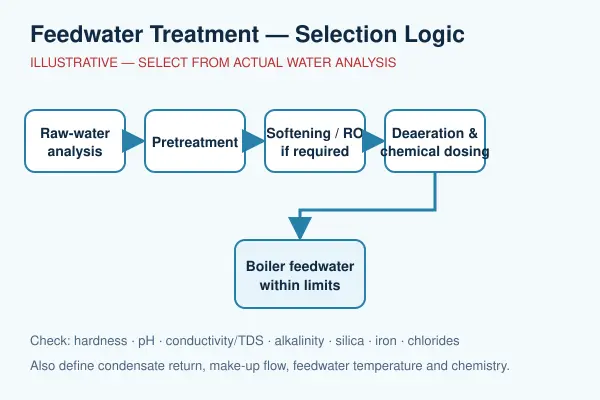
Se è necessaria l'integrazione dell'impianto, il protocollo di comunicazione, punti dati consentiti, l’autorità di controllo e i limiti di responsabilità dovrebbero essere definiti prima della produzione.
L’accesso remoto introduce anche considerazioni sulla sicurezza informatica. NISTSP 800-82 Rev. 3 affronta la sicurezza della tecnologia operativa riconoscendo le prestazioni, requisiti di affidabilità e sicurezza degli ambienti di controllo industriale.
Ciò non prova che il progetto abbia seguito le linee guida del NIST. Fornisce un utile riferimento per progetti che collegano i controlli delle caldaie a reti di impianti più ampie.
L'architettura di protezione finale dipende dalla caldaia, bruciatore, treno di carburante, codice di installazione e giurisdizione locale.
Le funzioni tipiche possono includere:
Anche gli stabilimenti chimici possono avere aree classificate, filosofie di arresto di emergenza o requisiti di sicurezza del processo. L'ubicazione del locale caldaia e la classificazione delle apparecchiature devono essere valutate da ingegneri progettisti qualificati.
Un quadro elettrico standard per caldaie non dovrebbe essere automaticamente descritto come antideflagrante o adatto ad un'area pericolosa senza la certificazione dell'apparecchiatura e la documentazione di progetto applicabili.
Non esiste un dato universale affidabile sul consumo di gas per ciascuno 8 caldaia t/h.
Un calcolo pratico è:
Consumo di gas = Flusso di vapore × (Entalpia del vapore − Entalpia dell'acqua di alimentazione) ÷ (Efficienza della caldaia x potere calorifico del gas)
Per calcolare un risultato significativo, gli ingegneri hanno bisogno:
Per questo progetto:
| Voce Consumo Gas | Stato |
|---|---|
| Calcolo nominale | 6,500–7.200 Nm³/h (intervallo teorico per 8 caldaia a gas t/h) |
| Portata massima di combustibile del bruciatore | 7,800 Nm³/h |
| Misurazione della messa in servizio | Non divulgato |
| Consumo operativo medio | 5,200–6.000 Nm³/h |
| Prove del contatore del gas | Non divulgato |
Presenting a fixed number without these conditions would create false precision.
An efficiency percentage is meaningful only when its basis is stated.
Gli acquirenti dovrebbero chiedere:
Gli Stati Uniti. Department of Energy’s Steam Systems resources cover combustion efficiency, ciclismo breve, ritorno della condensa, controllo dello spurgo, economizers and other system-level improvement opportunities.
This supports an important procurement principle: the highest quoted efficiency is not automatically the lowest annual operating cost.
IL efficienza delle caldaie a vapore industriali page provides a broader explanation of the factors that affect real steam-system performance.
L'ubicazione del progetto non è stata resa nota, pertanto non è possibile identificare i limiti di emissione applicabili.
I requisiti della caldaia possono variare con:
Gli Stati Uniti. Le norme sulle caldaie dell’EPA illustrano perché il mercato degli impianti deve essere controllato attentamente. Per esempio, l'attuale pagina delle caldaie di origine territoriale dell'EPA afferma che la sua norma di riferimento copre alcuni tipi di carbone, olio- e caldaie alimentate a biomassa, ma non caldaie che bruciano solo combustibili gassosi. Questo è un utile promemoria del fatto che una regola non può essere applicata a un progetto semplicemente perché contiene la parola "caldaia". La categoria precisa della fonte e il carburante sono importanti. NOI. APE
Non è stata fornita alcuna certificazione specifica per il progetto.
Se è richiesta la costruzione ASME, la citazione dovrebbe identificare:
ASME explains that its Boiler and Pressure Vessel Certification Program certifies manufacturer or assembler quality-control systems for defined scopes, and that marked products must comply with the applicable BPVC section. A general statement that a company is “ASME certified” is not enough to prove the certification of a particular boiler. ASME Boiler and Pressure Vessel Certification
A strong project case study should connect every performance or quality claim to evidence.
Useful manufacturing records can include:
La pagina pubblicata dovrebbe utilizzare fotografie del progetto reale, Compreso:
Le immagini stock non devono essere etichettate come questo progetto di impianto chimico.
Il metodo di spedizione, le responsabilità di installazione e lo stato di messa in servizio non sono stati resi noti.
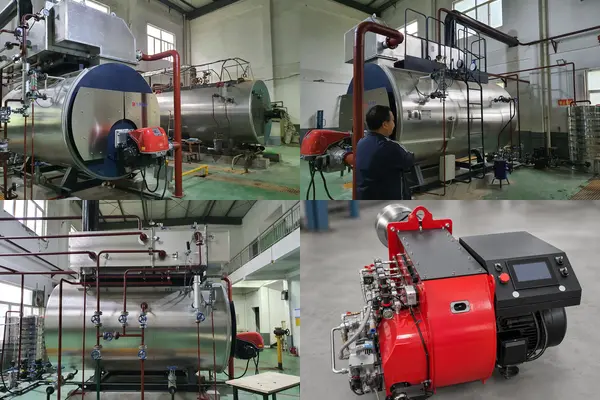
Un programma completo del progetto dovrebbe definire la responsabilità di:
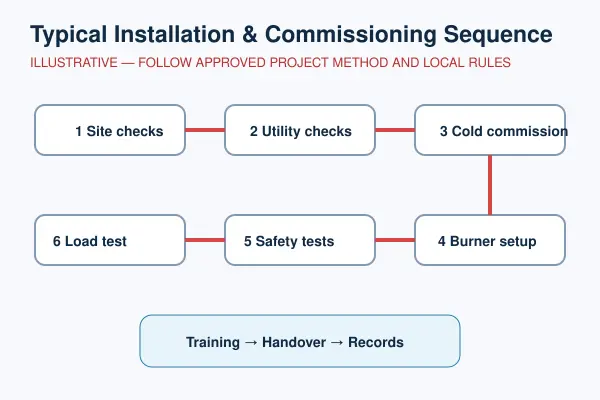
Una tipica sequenza di messa in servizio è:
Ispezione del sito → Verifica dell'utenza → Controlli dell'acqua e del combustibile → Controlli elettrici → Messa in servizio a freddo → Messa in servizio del bruciatore → Test di interblocco di sicurezza → Test di carico → Formazione → Consegna
La sequenza esatta deve seguire il metodo di progetto approvato e i requisiti locali.
Per questo articolo non sono stati forniti dati sulla messa in servizio o sul funzionamento a lungo termine.
Le seguenti affermazioni pertanto non dovrebbero essere pubblicate come risultati del progetto finché non saranno disponibili documenti di supporto:
Quando i record diventano disponibili, use a table that separates design and measured data:
| Performance Item | Design Value | Measured Value | Evidence |
|---|---|---|---|
| Uscita vapore | [Insert] | [Insert] | Calibrated flow record |
| Pressione di esercizio | [Insert] | [Insert] | HMI or test report |
| Gas consumption | [Insert] | [Insert] | Fuel meter |
| Stack temperature | [Insert] | [Insert] | Test instrument |
| Efficienza | [Insert] | [Insert] | Defined test method |
| NOx | [Insert] | [Insert] | Emissions report |
| CO | [Insert] | [Insert] | Emissions report |
A blank or undisclosed value is more credible than an unsupported success claim.
This project brief supports several practical procurement lessons.
Confirm minimum, normal and peak demand instead of sizing only from maximum production capacity.
Account for steam distribution, control valves and pressure losses before selecting boiler operating pressure.
Provide gas composition, heating value, flow and pressure range before burner selection.
Prima di finalizzare il sistema di trattamento è necessario completare un'analisi delle acque non depurate.
Normalizza i bruciatori, pompe, sistemi di acqua di alimentazione, economizzatori, controlli, apparecchiature e documentazione sulle emissioni prima di confrontare i prezzi.
I requisiti di certificazione e di emissioni dovrebbero essere confermati prima dell’inizio della produzione.
Un valore nominale, la garanzia e la misurazione sul campo sono tre diverse forme di prova.
Un'utile citazione di ingegneria dovrebbe iniziare con:
These inputs allow the manufacturer to move from a generic 8 ton boiler price to a project-specific steam-system proposal.
UN 8 ton steam boiler has a nominal rated capacity of 8,000 kg of steam per hour under its specified rating conditions. Actual output depends on operating load, condizioni di vapore, feedwater conditions and equipment performance.
It can be, but suitability depends on the plant’s minimum, richiesta di vapore normale e di punta, required pressure, operating profile, fornitura di carburante, feedwater and compliance requirements.
Gas consumption depends on steam flow, steam enthalpy, temperatura dell'acqua di alimentazione, efficienza della caldaia e potere calorifico del gas. A fixed universal consumption figure is not reliable without these inputs.
La pressione corretta si basa sulla pressione richiesta nel processo dopo aver tenuto conto dei requisiti di distribuzione e controllo. Una pressione più alta non è automaticamente migliore.
A seconda del progetto, l'attrezzatura può includere un bruciatore, treno di gas, pompe dell'acqua di alimentazione, serbatoio dell'acqua di alimentazione, disaeratore, trattamento dell'acqua, economizzatore, camino, sistema di spurgo, sistema di condensa, armadio di controllo e strumentazione.
Non automaticamente. Il sistema di trattamento dell'acqua dovrebbe essere selezionato dall'analisi dell'acqua non depurata, pressione della caldaia, ritorno della condensa, requisiti di purezza del vapore e limiti del produttore.
Potenzialmente, ma le prestazioni a carico parziale dipendono dal design della caldaia, spegnimento del bruciatore, controlli e la condizione di accensione minima stabile. Questi valori dovrebbero essere confermati dalla proposta specifica.
Non esiste una risposta universale. La configurazione delle emissioni richiesta dipende dalla giurisdizione di installazione, permesso, carburante, capacità e limiti applicabili.
NO. L'autorizzazione del produttore e la certificazione specifica del prodotto sono questioni separate. Il contratto deve identificare l'ambito ASME applicabile, marcatura e documentazione della caldaia citata.
Rivedere l'accordo tecnico, approved drawings, targhetta, registrazioni materiali, rapporti di ispezione, documenti di prova di pressione, registri di accettazione in fabbrica, lista imballaggio, fotografie del sito, registrazioni di messa in servizio e dati sulle prestazioni misurate.
Le informazioni di progetto fornite stabiliscono che an 8 La caldaia a vapore a gas t/h è stata specificata per un'applicazione in un impianto chimico.
Non stabilisce la pressione di esercizio, consumo effettivo di gas, efficienza misurata, emissioni, certificazione, risultato della messa in servizio o prestazioni operative a lungo termine.
Tali dettagli dovrebbero essere aggiunti solo se supportati dai documenti di progetto.
Per un altro impianto chimico, rimane il processo di selezione più forte:
Definire la richiesta di vapore di processo → verificare il profilo di carico → stabilire le condizioni di pressione e vapore → confermare la fornitura di combustibile → testare l'acqua → definire ausiliari e controlli → verificare la conformità → testare le prestazioni nelle condizioni stabilite.
Se stai preparando un 8 progetto di caldaia a vapore a gas da tonnellata, inviare la pressione di vapore richiesta, carico minimo e di punta, specifica del gas, orari di funzionamento, analisi dell'acqua di alimentazione e paese di installazione per ricevere a preventivo tecnico specifico per il progetto.
PREVENTIVI CALDAIE GRATUITI
Nessun ritardo, Ottenere 3 citazioni oggi Confronta per i migliori prezzi Sicuro e affidabileRECENSIONI
COSA C'È IN QUESTO ARTICOLO?
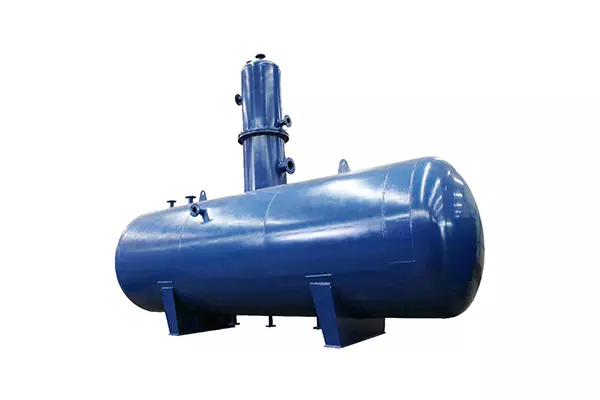
Disaeratore caldaia: La soluzione efficiente per i sistemi a vapore
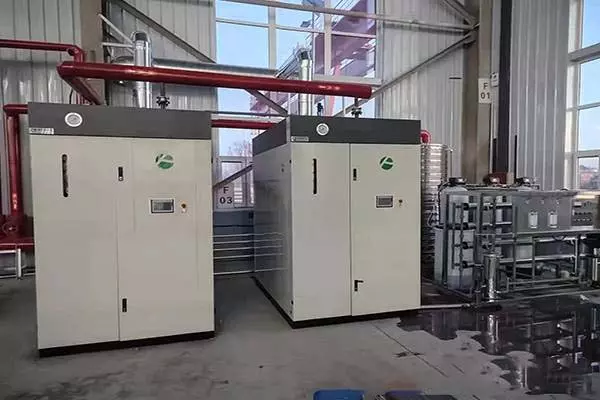
Generatore di vapore a biomassa - Soluzione energetica efficiente e sostenibile
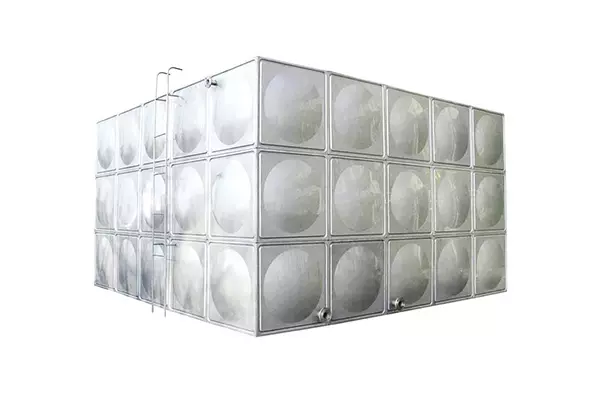
Serbatoio acqua calda caldaia | Soluzione affidabile e conveniente per le esigenze di acqua calda
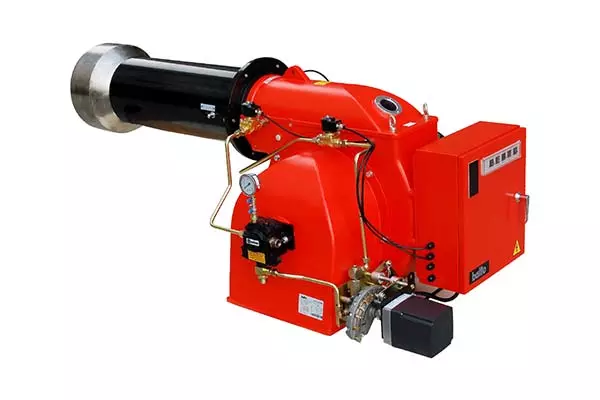
Bruciatore della caldaia di Fangkuai: La soluzione definitiva per alta efficienza e basse emissioni

Se ti piace Fang Kuai, per favore lascia il tuo messaggio.


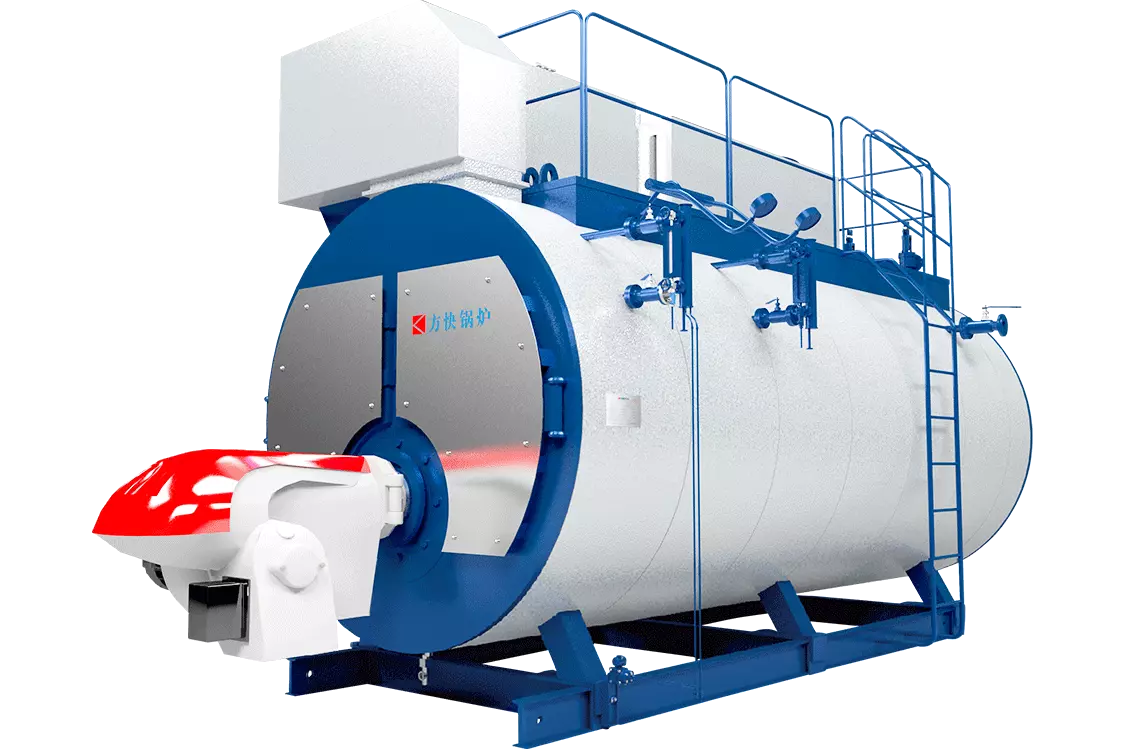
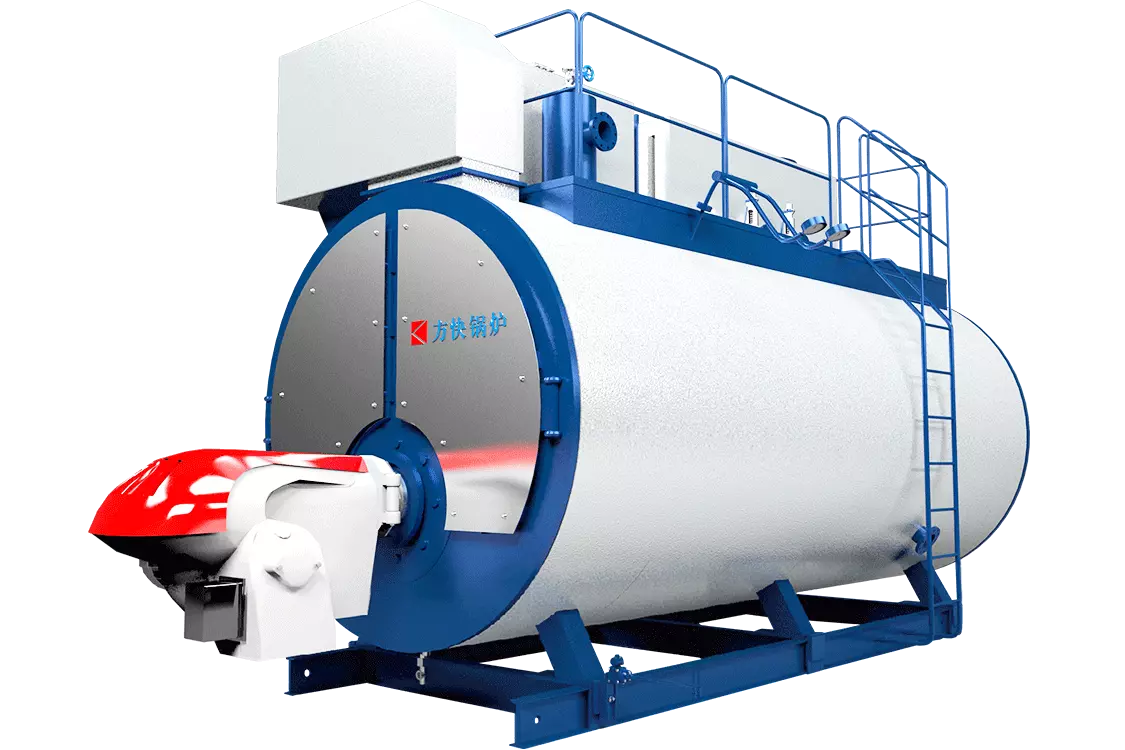


vVisualizza le recensioni dei nostri clienti
"Il servizio clienti di Fangkuai è di prim'ordine. Mi hanno aiutato a scegliere la caldaia perfetta per le mie esigenze e mi hanno fornito un grande supporto durante tutto il processo. Anche il processo di installazione è stato molto fluido e la caldaia ha superato le mie aspettative. È molto facile da usare e mantenere, e l'efficienza energetica è notevole. Consiglio vivamente i prodotti Fangkuai a chiunque necessiti di soluzioni di riscaldamento affidabili ed efficienti."
Giovanni
Messico"Il generatore di vapore di Fangkuai è perfetto per la mia piccola impresa. È molto facile da usare e richiede una manutenzione minima. È anche molto efficiente dal punto di vista energetico, che mi ha aiutato a risparmiare sulle mie bollette energetiche. Anche il servizio clienti di Fangkuai è eccellente. Sono molto reattivi e sempre disposti ad aiutare. Consiglio vivamente i generatori di vapore di Fangkuai."
Ahmad
Egitto"La caldaia per l'acqua calda di Fangkuai è fantastica. Si riscalda in modo rapido ed efficiente, e l'acqua rimane calda per molto tempo. Non abbiamo mai avuto problemi e ha apportato un miglioramento significativo alle nostre operazioni quotidiane. Anche il processo di installazione è stato molto fluido e il servizio clienti è stato eccellente. Consiglio vivamente le caldaie ad acqua calda di Fangkuai."
Sara
Canada"Sono rimasto molto colpito dalla qualità della caldaia per l'acqua calda di Fangkuai. È costruito per durare e ha superato le mie aspettative. Anche il processo di installazione è stato molto fluido e il servizio clienti è stato eccellente. La caldaia per l'acqua calda è molto facile da usare e manutenere, e l'efficienza energetica è notevole. Consiglio vivamente le caldaie ad acqua calda di Fangkuai."
Jack
Australia"I generatori di vapore di Fangkuai sono eccellenti. Sono molto facili da usare e richiedono una manutenzione minima. Anche il servizio clienti di Fangkuai è eccezionale. Sono molto reattivi e sempre disposti ad aiutare. Notevole anche l'efficienza energetica dei generatori di vapore, che mi ha aiutato a risparmiare sulle mie bollette energetiche. Consiglio vivamente i generatori di vapore di Fangkuai."
Maria
Spagna"L'attrezzatura ausiliaria di Fangkuai ha reso il mio sistema di caldaie ancora migliore. La qualità dell'attrezzatura è eccezionale ei prezzi sono molto ragionevoli. L'apparecchiatura ha contribuito a migliorare l'efficienza e le prestazioni del mio sistema di caldaie, che ha portato a notevoli risparmi sui costi. Consiglio vivamente l'attrezzatura ausiliaria di Fangkuai a chiunque necessiti di accessori per caldaie di alta qualità."
Maryk
UK"Sono rimasto molto colpito dalla qualità della caldaia per l'acqua calda di Fangkuai. È costruito per durare e ha superato le mie aspettative. Anche il processo di installazione è stato molto fluido e il servizio clienti è stato eccellente. La caldaia per l'acqua calda è molto facile da usare e manutenere, e l'efficienza energetica è notevole. Consiglio vivamente le caldaie ad acqua calda di Fangkuai."
Jack
Australia"Il generatore di vapore di Fangkuai è perfetto per la mia piccola impresa. È molto facile da usare e richiede una manutenzione minima. È anche molto efficiente dal punto di vista energetico, che mi ha aiutato a risparmiare sulle mie bollette energetiche. Anche il servizio clienti di Fangkuai è eccellente. Sono molto reattivi e sempre disposti ad aiutare. Consiglio vivamente i generatori di vapore di Fangkuai."
Ahmad
Egitto"La caldaia per l'acqua calda di Fangkuai è fantastica. Si riscalda in modo rapido ed efficiente, e l'acqua rimane calda per molto tempo. Non abbiamo mai avuto problemi e ha apportato un miglioramento significativo alle nostre operazioni quotidiane. Anche il processo di installazione è stato molto fluido e il servizio clienti è stato eccellente. Consiglio vivamente le caldaie ad acqua calda di Fangkuai."
Sara
Canada