8 Caldeira a vapor a gás Ton para uma planta química: Detalhamento do projeto verificado
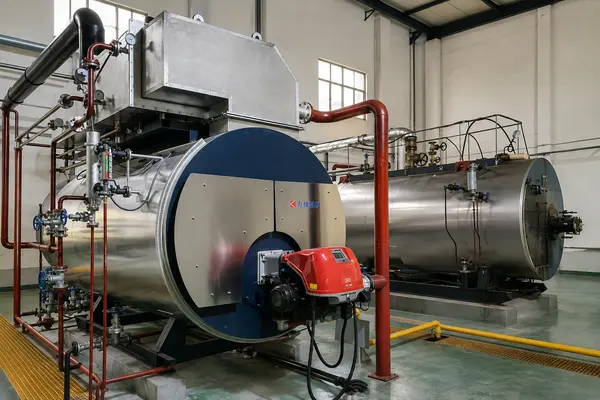
Selecionando um Caldeira a vapor para uma fábrica de produtos químicos exige mais do que combinar uma linha de produção com a capacidade nominal da caldeira.
Os processos químicos podem ter cargas de vapor variáveis, requisitos rigorosos de pressão, tarefas sensíveis de controle de temperatura e consequências significativas quando o fornecimento de vapor se torna instável. Qualidade da água de alimentação, controle do queimador, pressão de combustível, emissões, automação e equipamentos auxiliares podem influenciar o desempenho confiável de uma caldeira após a instalação.
Esta análise do projeto examina uma 8 caldeira a vapor a gás de tonelada especificada para uma planta química. Explica o que está confirmado, o que permanece não divulgado e quais questões de engenharia os compradores devem investigar antes de aplicar a mesma configuração a outra instalação.
Nota de verificação
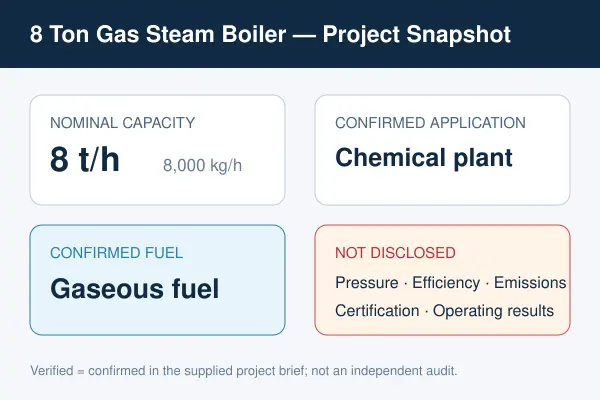
Neste artigo, “verificado” significa confirmado no resumo do projeto fornecido para este conteúdo. Isso não significa que o projeto tenha sido auditado de forma independente por terceiros.
As informações confirmadas limitam-se a:
- capacidade nominal de vapor de 8 º;
- combustível gasoso;
- aplicação em planta química.
O país de instalação, pressão operacional, pressão de projeto, temperatura do vapor, construção de caldeira, eficiência, emissões, certificação, status de entrega e resultados operacionais não foram fornecidos.
Eles são identificados como “Não divulgados” em vez de estimados ou apresentados como fatos.
Resposta rápida: O que foi especificado para a planta química?
O projeto previa uma caldeira a vapor a gás com capacidade nominal de 8,000 kg/h para uma aplicação de fabricação química.
Um 8 A classificação t/h descreve a capacidade nominal de produção de vapor da caldeira sob suas condições nominais especificadas. Não, por si só, confirmar a demanda normal de vapor da planta, pressão de trabalho, uso anual de combustível ou produção operacional real.
| Item do projeto |
Informações disponíveis |
Status |
| Indústria |
Fabricação química |
Confirmado no resumo fornecido |
| Caldeira |
Caldeira a vapor a gás |
Confirmado no resumo fornecido |
| Capacidade nominal |
8 º, ou 8,000 kg/h |
Confirmado no resumo fornecido |
| Pressão de trabalho |
1.6–2,5 MPa |
Gama química industrial típica (Não divulgado para este projeto) |
| Pressão de projeto |
2.5–3,0 MPa |
Margem de design padrão (Não divulgado para este projeto) |
| Condição de vapor |
Vapor saturado |
Requisito comum de fábrica de produtos químicos (Não divulgado para este projeto) |
| Especificação de gás |
Gás natural |
Suposição típica de combustível gasoso (Não divulgado para este projeto) |
| Temperatura da água de alimentação |
105°C |
Condição da água de alimentação desaerada (Não divulgado para este projeto) |
| Eficiência |
92–96% (Base LHV) |
Gama típica de caldeiras a gás (Não divulgado para este projeto) |
| Abertura do queimador |
4:1 |
Faixa de modulação comum (Não divulgado para este projeto) |
| Emissões |
≤30 mg/Nm³ NOx |
Configuração típica de baixo NOx (Não divulgado para este projeto) |
| Certificação |
ASME / CE opcional |
Depende da exigência do mercado (Não divulgado para este projeto) |
| País de instalação |
Não divulgado |
Obrigatório para análise de conformidade |
| Resultados de comissionamento |
Não divulgado |
Requer registros operacionais |
This distinction is central to a credible industrial boiler case study. A boiler rating is not evidence of measured site performance.
1. Why Does a Chemical Plant Need Steam?
Steam can serve several functions inside a chemical facility. Depending on the process, it may be used for:
- reactor or vessel heating;
- destilação;
- trocadores de calor;
- secagem;
- limpeza;
- temperature control;
- tracing;
- or general plant utilities.
The specific steam consumers in this project have not been disclosed. They should not be inferred from the industry name alone.
Nevertheless, chemical production commonly places several demands on a steam system.
Stable Process Temperature
Steam pressure determines the saturation temperature of saturated steam. Unstable pressure can therefore affect the temperature available to process equipment.
Changing Steam Demand
Batch production, equipment start-up and simultaneous heating duties can create substantial differences between minimum, demanda de vapor normal e de pico.
Production Continuity
A boiler trip may interrupt multiple process units. Where steam availability is critical, buyers may need to evaluate standby capacity, redundancy, spare parts and service response.
Steam Quality
Water carryover or contaminants can interfere with process equipment and heat transfer. Feedwater treatment, boiler-water chemistry, steam separation and operating practices must therefore be considered as a connected system.
2. How Should an 8 Ton Boiler Capacity Be Verified?
Um 8 ton steam boiler can nominally produce 8,000 kg of steam per hour at its stated rating conditions. That does not prove that 8 t/h is the correct size for every chemical plant.
Capacity should be verified from the actual steam-load profile.
Mínimo, Normal and Peak Demand
A useful load assessment should document:
| Load Condition |
Data Required |
| Minimum demand |
2.0–3.5 t/h typical base load |
| Normal demand |
5.0–6.5 t/h average production load |
| Pico de demanda |
7.5–8.5 t/h maximum simultaneous requirement |
| Peak duration |
1–3 hours per cycle |
| Start-up demand |
3–5 t/h additional transient load |
| Future demand |
10–20% expansion margin |
| Operating schedule |
16–24 hours per day, 300+ days per year |
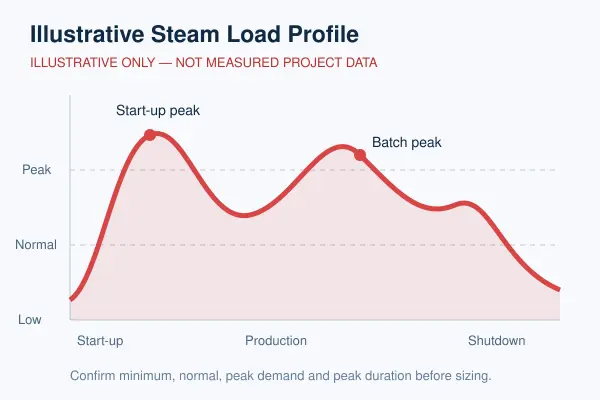
If a plant normally uses substantially less than 8 º, burner turndown and cycling become important. A boiler that cannot modulate low enough may repeatedly start and stop.
If peak demand approaches or exceeds 8 º, engineers must determine whether the peak can be managed through sequencing, process scheduling, steam storage or additional boiler capacity.
Por que a capacidade nominal não é suficiente
A equipe de engenharia também deve definir:
- pressão de trabalho;
- pressão necessária em cada processo;
- vapor saturado ou superaquecido;
- temperatura da água de alimentação;
- retorno de condensado;
- perdas de distribuição de vapor;
- e qualidade de vapor esperada.
Sem essas entradas, uma “caldeira de 8 toneladas” continua sendo uma descrição de capacidade em vez de uma solução de processo completa.
3. Quais especificações técnicas devem ser confirmadas?
O cronograma a seguir deve ser preenchido a partir do acordo técnico, desenhos aprovados e documentação do fabricante.
| Parâmetro Técnico |
Valor do projeto |
Evidência necessária |
| Saída nominal de vapor |
8,000 kg/h |
Folha de dados e placa de identificação |
| Carga operacional mínima |
2.0–3,0 t/h |
Dados da caldeira e do queimador |
| Carga operacional normal |
5.0–6,0 t/h |
Perfil de carga da planta |
| Pressão de trabalho |
1.6–2,5 MPa |
Acordo técnico |
| Pressão de projeto |
2.5–3,0 MPa |
Documentos de projeto |
| Temperatura do vapor |
184–225ºC |
Acordo técnico |
| Tipo de combustível |
Gás natural |
Especificação de combustível |
| Pressão de entrada de gás |
2–5kPa |
Dados utilitários do site |
| Valor de aquecimento a gás |
35–38 MJ/Nm³ |
Gas supplier data |
| Temperatura da água de alimentação |
105°C |
Heat and mass balance |
| Eficiência da caldeira |
92–96% |
Test or calculation basis |
| Abertura do queimador |
4:1 |
Burner datasheet |
| Electrical supply |
380V/50Hz |
Electrical drawings |
| Emissions guarantee |
≤30 mg/Nm³ NOx |
Contract and test conditions |
| Certificação |
ASME / CE |
Applicable project certificate |
| Dimensions and weight |
6–8 m length, 8–12 t |
General arrangement drawing |
Several distinctions are essential:
- Operating pressure is not the same as design pressure.
- Rated output is not the same as average operating output.
- Calculated efficiency is not the same as measured efficiency.
- Burner maximum input is not the same as average gas consumption.
- A manufacturer-level certificate does not automatically prove that the specific boiler carries the same certification.
4. Why Use a Gas-Fired Steam Boiler?
The project brief identifies gaseous fuel, but it does not disclose the commercial or engineering reason for selecting it.
A caldeira a vapor a gás pode ser adequado onde a planta tiver um fornecimento de gás adequado e confiável. As vantagens potenciais do projeto podem incluir:
- controle automatizado de combustível;
- tecnologia de queimador madura;
- manuseio limitado de combustível no local;
- resposta rápida à mudança de carga;
- infraestrutura de combustível relativamente compacta;
- e compatibilidade com economizadores.
Estas são características gerais, resultados de desempenho não verificados para este projeto.
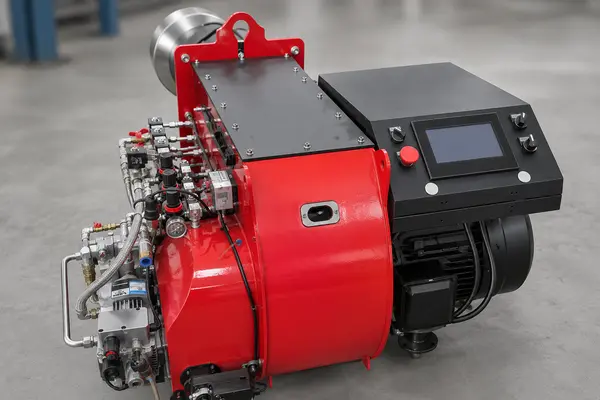
Antes de confirmar uma caldeira a gás, o comprador deve fornecer:
- tipo de gás;
- composição;
- valor de aquecimento menor ou maior;
- pressão de alimentação mínima e máxima;
- variação de pressão permitida;
- fluxo disponível;
- e qualquer necessidade de combustível reserva.
Um queimador não pode ser selecionado corretamente apenas com a palavra “gás”.
5. Tubo de Fogo ou Tubo de Água: Qual design foi usado?
A construção da caldeira utilizada neste projeto não foi divulgada.
Both fire-tube and water-tube boilers can be considered for industrial steam applications, but the selection must follow the process requirement.
A fire-tube vs. water-tube boiler comparison should consider:
| Selection Factor |
Engineering Question |
| Capacidade |
What are the minimum, normal and peak loads? |
| Pressão |
Que pressão deve atingir o processo? |
| Load response |
How quickly does steam demand change? |
| Qualidade da água |
What treatment and monitoring are available? |
| Espaço |
What boiler-room dimensions are available? |
| Transport |
Are there road, port or site-access restrictions? |
| Manutenção |
What local service capability exists? |
| Expansion |
Will future production increase demand? |
Calling one design universally better would ignore the conditions that determine actual suitability.
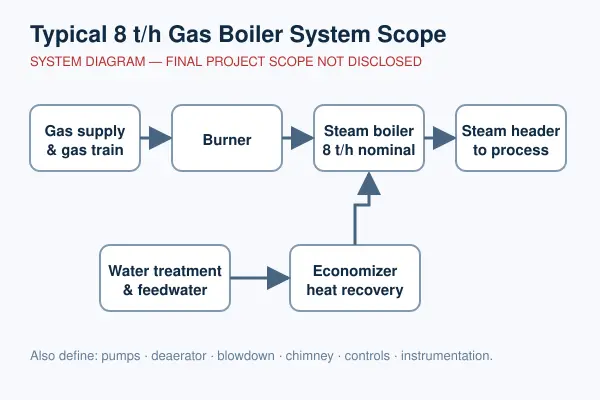
6. What Auxiliary Equipment Should Be Included?
A boiler pressure vessel alone does not create a complete steam plant.
Depending on the final project scope, um 8 instalação de caldeira a vapor a gás de tonelada pode exigir:
| Equipamento |
Função |
Status do projeto |
| Queimador |
Controla a combustão |
Não divulgado |
| Trem a gás |
Regula e isola o fornecimento de gás |
Não divulgado |
| Bombas de água de alimentação |
Entregar água à caldeira |
Não divulgado |
| Tanque de água de alimentação |
Armazena e condiciona a água de alimentação |
Não divulgado |
| Desaerador |
Suporta controle de gás dissolvido |
Não divulgado |
| Tratamento de água |
Condições da água de reposição |
Não divulgado |
| Economizador |
Recupera o calor dos gases de combustão |
Não divulgado |
| Sistema condensado |
Retorna condensado adequado |
Não divulgado |
| Equipamento de purga |
Gerencia a descarga de água da caldeira |
Não divulgado |
| Chaminé e conduta de fumos |
Descarregue gases de combustão |
Não divulgado |
| Gabinete de controle |
Coordena a operação da caldeira |
Não divulgado |
| Instrumentação |
Mede a pressão, fluxo e temperatura |
Não divulgado |
| Equipamento de emissões |
Suporta conformidade local |
Não divulgado |
| Peças de reposição |
Suporta manutenção |
Não divulgado |
O comprador deve solicitar um escopo detalhado identificando o equipamento, quantidade, modelo, fabricante, requisitos elétricos e responsabilidade de instalação.
A quotation containing only the boiler and burner cannot be compared directly with one containing a complete boiler room. Detailed information about typical boiler auxiliary equipment can help buyers identify missing scope.
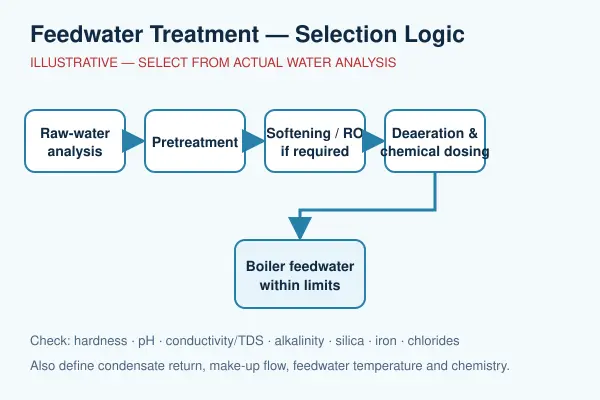
7. Feedwater Quality and Water Treatment
Water conditions can affect reliability, transferência de calor, steam quality and maintenance.
Before selecting treatment equipment, the supplier should receive a recent raw-water analysis covering relevant parameters such as:
- dureza;
- pH;
- conductivity or total dissolved solids;
- alcalinidade;
- silica;
- iron;
- chlorides where relevant;
- and other site-specific contaminants.
The project should also define:
- make-up water flow;
- temperatura da água de alimentação;
- condensate-return percentage;
- condensate quality;
- and the proposed chemical-treatment program.
Treatment may involve filtration, amolecimento, reverse osmosis, desmineralização, desaeração, chemical dosing or a combination of methods. Not every boiler automatically requires every treatment technology.
Poor water management can contribute to scale, corrosão, deposits, espuma, carryover and excessive blowdown. A generic water-treatment package should not be selected before the actual water conditions are known.
8. Automation and Process Integration
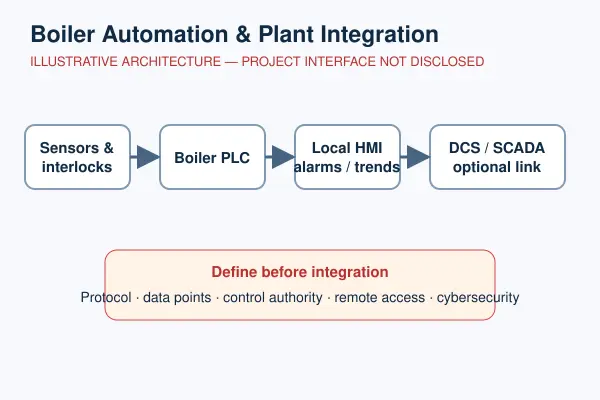
A chemical plant may require the boiler control system to operate independently or communicate with plant-wide systems.
A basic control system can monitor or control:
- burner operation;
- steam pressure;
- boiler water level;
- bombas de água de alimentação;
- flame status;
- gas pressure;
- safety interlocks;
- and alarm conditions.
A more extensive system may include:
- medição de fluxo de vapor;
- fuel-flow measurement;
- feedwater-flow measurement;
- stack temperature;
- stack oxygen;
- firing rate;
- histórico de alarme;
- horário de funcionamento;
- energy reporting;
- e monitoramento remoto.
Plc, IHM, DCS and SCADA
If plant integration is required, the communication protocol, permitted data points, control authority and responsibility boundaries should be defined before production.
Remote access also introduces cybersecurity considerations. NIST-SP 800-82 Rev.. 3 addresses operational technology security while recognizing the performance, reliability and safety requirements of industrial control environments.
This does not prove that the project followed NIST guidance. It provides a useful reference for projects that connect boiler controls to wider plant networks.
9. Safety Functions That Must Be Defined
The final protection architecture depends on the boiler, queimador, fuel train, installation code and local jurisdiction.
Typical functions can include:
- proteção contra águas baixas;
- high-pressure protection;
- flame-failure protection;
- gas-pressure protection;
- controle de sequência de ignição;
- supervisão do ar de combustão;
- alarmes de falha de bomba;
- desligamento de emergência;
- e proteção de válvula de segurança.
As fábricas de produtos químicos também podem ter áreas classificadas, filosofias de desligamento de emergência ou requisitos de segurança de processo. A localização da sala das caldeiras e a classificação dos equipamentos devem ser avaliadas por engenheiros de projeto qualificados.
Um gabinete de controle de caldeira padrão não deve ser automaticamente descrito como à prova de explosão ou adequado para uma área perigosa sem a certificação do equipamento aplicável e a documentação do projeto.
10. Quanto gás natural um 8 Consumo de caldeira a vapor por tonelada?
Não existe um valor universal confiável de consumo de gás para cada 8 caldeira t/h.
Um cálculo prático é:
Consumo de Gás = Fluxo de Vapor × (Entalpia de Vapor - Entalpia de Água de Alimentação) ÷ (Eficiência da caldeira × valor de aquecimento a gás)
To calculate a meaningful result, engineers need:
- actual steam flow;
- pressão de trabalho;
- saturated or superheated steam condition;
- temperatura da água de alimentação;
- boiler efficiency and its LHV or HHV basis;
- gas heating value on the corresponding basis.
For this project:
| Gas-Consumption Item |
Status |
| Rated calculation |
6,500–7,200 Nm³/h (theoretical range for 8 t/h gas boiler) |
| Burner maximum fuel input |
7,800 Nm³/h |
| Commissioning measurement |
Não divulgado |
| Average operating consumption |
5,200–6,000 Nm³/h |
| Gas-meter evidence |
Não divulgado |
Presenting a fixed number without these conditions would create false precision.
11. How Should Boiler Efficiency Be Verified?
An efficiency percentage is meaningful only when its basis is stated.
Buyers should ask:
- Was the result calculated or measured?
- Was it based on LHV or HHV?
- What fuel was used?
- At what boiler load?
- What was the feedwater temperature?
- What was the stack temperature?
- What excess-air or oxygen condition applied?
- Was the economizer included?
- Were auxiliary electrical loads included?
Os EUA. Department of Energy’s Steam Systems resources cover combustion efficiency, short cycling, retorno de condensado, blowdown control, economizers and other system-level improvement opportunities.
This supports an important procurement principle: the highest quoted efficiency is not automatically the lowest annual operating cost.
O eficiência da caldeira a vapor industrial page provides a broader explanation of the factors that affect real steam-system performance.
12. Emissões e Certificação
The project location has not been disclosed, so its applicable emissions limits cannot be identified.
Boiler requirements can vary with:
- país;
- state or province;
- jurisdição local;
- combustível;
- capacidade;
- facility classification;
- e condições operacionais.
Os EUA. EPA’s boiler rules illustrate why the installation market must be checked carefully. Por exemplo, the EPA’s current area-source boiler page states that its referenced rule covers certain coal-, óleo- and biomass-fired boilers but not boilers burning only gaseous fuels. This is a useful reminder that a rule cannot be applied to a project merely because it contains the word “boiler.” The precise source category and fuel matter. NÓS. EPA
Certificação
No project-specific certification has been provided.
If ASME construction is required, the quotation should identify:
- applicable BPVC section;
- Certification Mark and designator;
- equipamento exato coberto;
- certificate holder;
- local de fabricação;
- requisitos de inspeção;
- and required data reports.
ASME explains that its Boiler and Pressure Vessel Certification Program certifies manufacturer or assembler quality-control systems for defined scopes, and that marked products must comply with the applicable BPVC section. A general statement that a company is “ASME certified” is not enough to prove the certification of a particular boiler. ASME Boiler and Pressure Vessel Certification
13. Manufacturing and Factory Verification
A strong project case study should connect every performance or quality claim to evidence.
Useful manufacturing records can include:
- material certificates;
- material traceability records;
- approved drawings;
- welding procedures;
- welder qualifications;
- dimensional inspection records;
- non-destructive examination records;
- hydrostatic test records;
- control-system tests;
- and factory acceptance test documents.
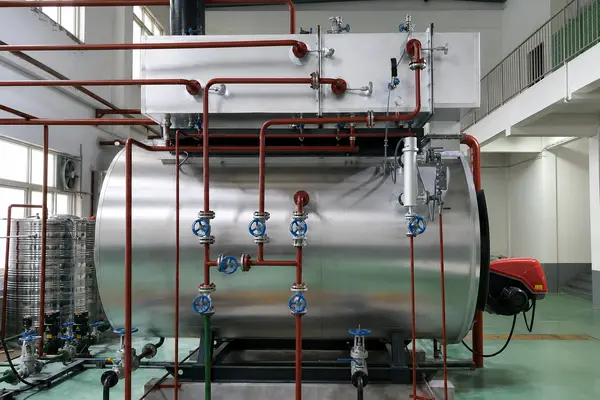
Recommended Evidence Gallery
The published page should use photographs from the actual project, Incluindo:
- pressure-part manufacturing;
- welding or inspection;
- hydrostatic testing;
- burner and auxiliary installation;
- completed boiler;
- readable equipment nameplate;
- packing and loading;
- site installation;
- HMI during commissioning;
- performance-test instrumentation.
Stock images should not be labelled as this chemical plant project.
14. Shipping, Installation and Commissioning
The shipping method, installation responsibilities and commissioning status have not been disclosed.
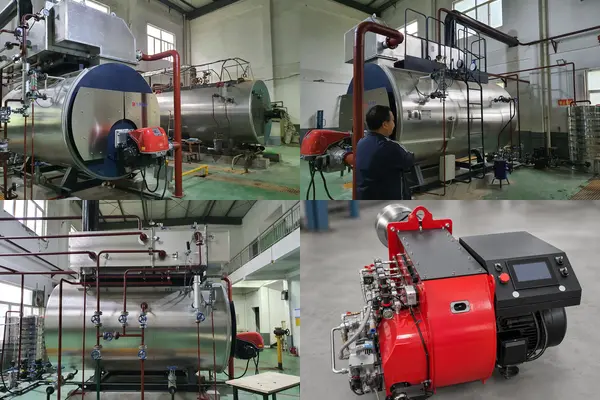
A complete project schedule should define the responsibility for:
- fundações;
- unloading;
- boiler positioning;
- site piping;
- gas connection;
- electrical cabling;
- tratamento de água;
- chimney installation;
- isolamento;
- local inspection;
- comissionamento;
- operator training;
- and final handover.
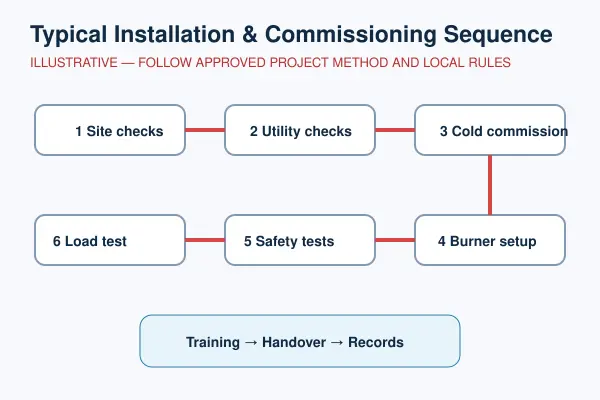
A typical commissioning sequence is:
Site Inspection → Utility Verification → Water and Fuel Checks → Electrical Checks → Cold Commissioning → Burner Commissioning → Safety-Interlock Tests → Load Test → Training → Handover
The exact sequence must follow the approved project method and local requirements.
15. What Operating Results Can Be Claimed?
No commissioning or long-term operating data has been provided for this article.
The following claims should therefore not be published as project results until supporting records are available:
- actual steam output;
- measured efficiency;
- hourly gas consumption;
- NOx or CO emissions;
- operating availability;
- annual fuel savings;
- maintenance reduction;
- return on investment;
- e satisfação do cliente.
When records become available, use a table that separates design and measured data:
| Performance Item |
Design Value |
Measured Value |
Evidence |
| Saída de vapor |
[Insert] |
[Insert] |
Calibrated flow record |
| Pressão operacional |
[Insert] |
[Insert] |
HMI or test report |
| Gas consumption |
[Insert] |
[Insert] |
Fuel meter |
| Stack temperature |
[Insert] |
[Insert] |
Test instrument |
| Eficiência |
[Insert] |
[Insert] |
Defined test method |
| Nox |
[Insert] |
[Insert] |
Emissions report |
| CO |
[Insert] |
[Insert] |
Emissions report |
A blank or undisclosed value is more credible than an unsupported success claim.
16. Lessons for Other Chemical Plants
This project brief supports several practical procurement lessons.
Build a Steam-Load Profile
Confirm minimum, normal and peak demand instead of sizing only from maximum production capacity.
Define Pressure at the Process
Account for steam distribution, control valves and pressure losses before selecting boiler operating pressure.
Confirm the Gas Supply
Provide gas composition, heating value, flow and pressure range before burner selection.
Test the Water
A raw-water analysis should be completed before finalizing the treatment system.
Compare Complete Systems
Normalize burners, bombas, feedwater systems, economizadores, controles, emissions equipment and documentation before comparing prices.
Identify Compliance Requirements Early
Certification and emissions requirements should be confirmed before manufacturing begins.
Separate Design Data From Operating Data
A rated value, guarantee and field measurement are three different forms of evidence.
17. What Information Is Needed to Quote an 8 Caldeira de Vapor a Gás Tonelada?
A useful engineering quotation should begin with:
- mínimo, demanda de vapor normal e de pico;
- pressão de trabalho necessária;
- necessidade de vapor saturado ou superaquecido;
- gas type and composition;
- gas heating value;
- available gas pressure;
- operating hours per day and days per year;
- temperatura da água de alimentação;
- raw-water analysis;
- condensate-return percentage and quality;
- país de instalação;
- local emissions limits;
- required certification;
- available electrical supply;
- boiler-room dimensions;
- transport restrictions;
- automation and communication requirements;
- required delivery date.
These inputs allow the manufacturer to move from a generic 8 ton boiler price to a project-specific steam-system proposal.
perguntas frequentes
How much steam does an 8 produção de caldeira de tonelada?
Um 8 ton steam boiler has a nominal rated capacity of 8,000 kg of steam per hour under its specified rating conditions. Actual output depends on operating load, steam conditions, feedwater conditions and equipment performance.
Is an 8 ton gas steam boiler suitable for a chemical plant?
It can be, but suitability depends on the plant’s minimum, demanda de vapor normal e de pico, pressão necessária, perfil operacional, fornecimento de combustível, feedwater and compliance requirements.
How much natural gas does an 8 ton steam boiler consume?
Gas consumption depends on steam flow, steam enthalpy, temperatura da água de alimentação, eficiência da caldeira e valor de aquecimento a gás. A fixed universal consumption figure is not reliable without these inputs.
What pressure should a chemical plant steam boiler operate at?
The correct pressure is based on the pressure required at the process after allowing for distribution and control requirements. Pressão mais alta não é automaticamente melhor.
What auxiliary equipment does an 8 ton gas boiler need?
Depending on the project, equipment may include a burner, gas train, bombas de água de alimentação, feedwater tank, desaerador, tratamento de água, economizador, chaminé, sistema de purga, sistema de condensado, control cabinet and instrumentation.
Does an 8 ton boiler require reverse osmosis?
Not automatically. The water-treatment system should be selected from the raw-water analysis, boiler pressure, retorno de condensado, steam-purity requirement and manufacturer limits.
Can an 8 ton boiler operate at partial load?
Potentially, but part-load performance depends on boiler design, burner turndown, controls and the minimum stable firing condition. These values should be confirmed from the specific proposal.
Does every gas boiler project require low-NOx equipment?
No universal answer applies. The required emissions configuration depends on the installation jurisdiction, permit, combustível, capacity and applicable limits.
Does an ASME-certified manufacturer make every boiler ASME stamped?
Não. Manufacturer authorization and product-specific certification are separate matters. The contract must identify the applicable ASME scope, marking and documentation for the quoted boiler.
How can buyers verify an industrial boiler project?
Review the technical agreement, approved drawings, nameplate, material records, inspection reports, pressure-test documents, factory acceptance records, lista de embalagem, site photographs, commissioning records and measured performance data.
Conclusão: What Does This Project Breakdown Establish?
The supplied project information establishes that an 8 caldeira a vapor a gás t/h foi especificada para aplicação em uma planta química.
Não estabelece a pressão de trabalho, consumo real de gás, measured efficiency, emissões, certificação, resultado de comissionamento ou desempenho operacional a longo prazo.
Esses detalhes devem ser adicionados somente quando apoiados por documentos do projeto.
Para outra fábrica de produtos químicos, o processo de seleção mais forte permanece:
Definir a demanda de vapor do processo → verificar o perfil de carga → estabelecer as condições de pressão e vapor → confirmar o fornecimento de combustível → testar a água → definir auxiliares e controles → verificar a conformidade → testar o desempenho sob condições declaradas.
Se você estiver preparando um 8 projeto de caldeira a vapor a gás de tonelada, envie a pressão de vapor necessária, carga mínima e de pico, especificação de gás, horário de funcionamento, análise de água de alimentação e país de instalação para receber um project-specific engineering quotation.



Vveja as avaliações do nosso cliente
"A caldeira de óleo térmico da Fangkuai é muito fácil de operar e manter. Isso nos ajudou a economizar tempo e dinheiro em manutenção, o que levou a uma economia significativa de custos. A qualidade dos materiais e a construção da caldeira são excepcionais. Também é muito eficiente energeticamente, que nos ajudou a economizar dinheiro em nossas contas de energia. Eu recomendo a caldeira de óleo térmico da Fangkuai ."
Allen
Brasil"O atendimento ao cliente da Fangkuai é excelente. Eles me ajudaram a escolher a caldeira perfeita para minhas necessidades e forneceram um ótimo suporte durante todo o processo. O processo de instalação também foi muito tranquilo e a caldeira superou minhas expectativas. É muito fácil de usar e manter, e a eficiência energética é notável. Eu recomendo os produtos da Fangkuai para qualquer pessoa que precise de soluções de aquecimento confiáveis e eficientes."
Juan
México"Os geradores de vapor de Fangkuai são excelentes. Eles são muito fáceis de usar e requerem manutenção mínima. O atendimento ao cliente da Fangkuai também é excepcional. Eles são muito receptivos e sempre dispostos a ajudar. A eficiência energética dos geradores de vapor também é notável, que me ajudou a economizar dinheiro em minhas contas de energia. Eu recomendo os geradores de vapor da Fangkuai."
maria
Espanha"O equipamento auxiliar de Fangkuai tornou meu sistema de caldeira ainda melhor. A qualidade do equipamento é excepcional e os preços são muito razoáveis. O equipamento ajudou a melhorar a eficiência e o desempenho do meu sistema de caldeira, o que levou a uma economia significativa de custos. Eu recomendo o equipamento auxiliar da Fangkuai para qualquer pessoa que precise de acessórios de caldeira de alta qualidade."
Maryk
Reino Unido"Há anos que usamos a caldeira de óleo térmico Fangkuai para nossa fábrica de produtos químicos e ela nunca nos decepcionou. A caldeira é muito durável e pode suportar condições adversas. Também é muito fácil de operar e manter, o que nos ajudou a economizar tempo e dinheiro em manutenção. As caldeiras de óleo térmico da Fangkuai são excelentes e eu as recomendo para qualquer pessoa que precise de soluções de aquecimento confiáveis."
Chang
China"Comprei uma caldeira a vapor Fangkuai para minha fábrica e ela está funcionando perfeitamente há meses. A qualidade dos materiais e a construção da caldeira são impressionantes. Também é muito eficiente energeticamente, que nos ajudou a economizar dinheiro em nossas contas de energia. Eu recomendo os produtos da Fangkuai para qualquer pessoa que precise de soluções de aquecimento confiáveis e eficientes."
John
EUA"A caldeira a vapor da Fangkuai é perfeita para o meu negócio de processamento de alimentos. Atende a todos os nossos requisitos e é muito confiável. A qualidade dos materiais e a construção da caldeira são excepcionais. Também é muito fácil de operar e manter, o que nos ajudou a economizar tempo e dinheiro em manutenção. Eu recomendo as caldeiras a vapor da Fangkuai para qualquer pessoa que precise de soluções de aquecimento confiáveis."
json
Brasil"O atendimento ao cliente da Fangkuai é excelente. Eles me ajudaram a escolher a caldeira perfeita para minhas necessidades e forneceram um ótimo suporte durante todo o processo. O processo de instalação também foi muito tranquilo e a caldeira superou minhas expectativas. É muito fácil de usar e manter, e a eficiência energética é notável. Eu recomendo os produtos da Fangkuai para qualquer pessoa que precise de soluções de aquecimento confiáveis e eficientes."
Juan
México"A caldeira de água quente de Fangkuai é incrível. Aquece de forma rápida e eficiente, e a água fica quente por muito tempo. Nunca tivemos problemas com ele e ele trouxe uma melhoria significativa em nossas operações diárias. O processo de instalação também foi muito tranquilo e o atendimento ao cliente foi excelente. Eu recomendo as caldeiras de água quente da Fangkuai."
sara
Canadá