2 Caldeira a vapor a gás Ton para processamento farmacêutico: Lista de verificação de validação
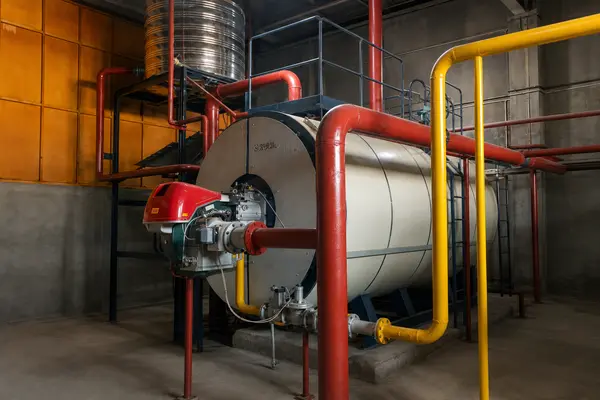
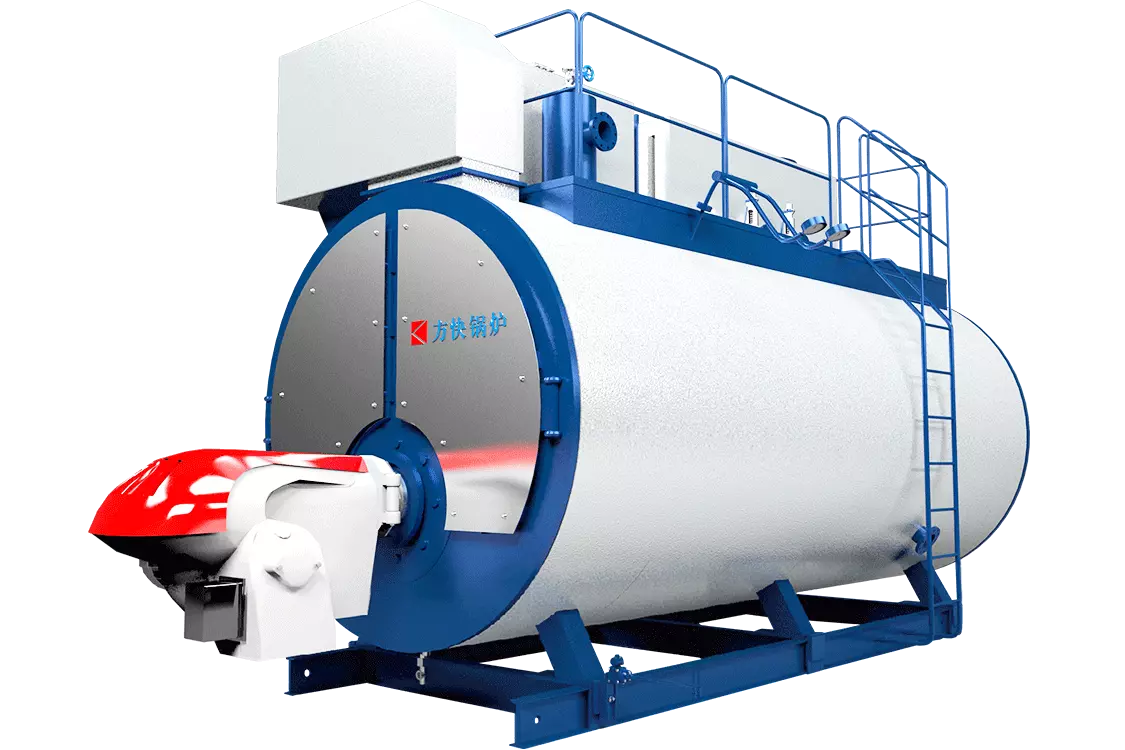
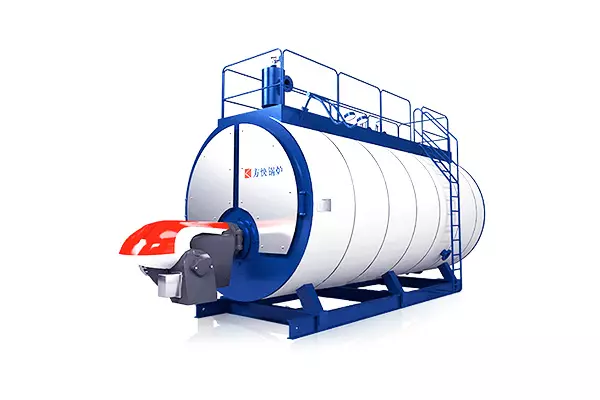
Selecionando um 2 ton gas steam boiler for pharmaceutical processing involves much more than confirming that the boiler can produce 2,000 kg de vapor por hora.
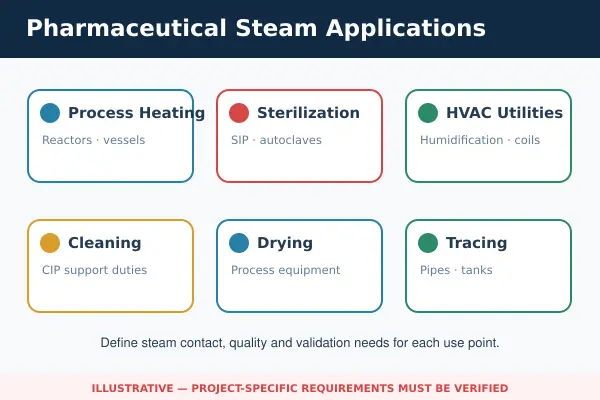
A pharmaceutical facility may use steam for reactor heating, hot-water generation, HVAC humidification, equipment cleaning, sterilization or steam-in-place operations. These applications do not necessarily require the same steam quality.
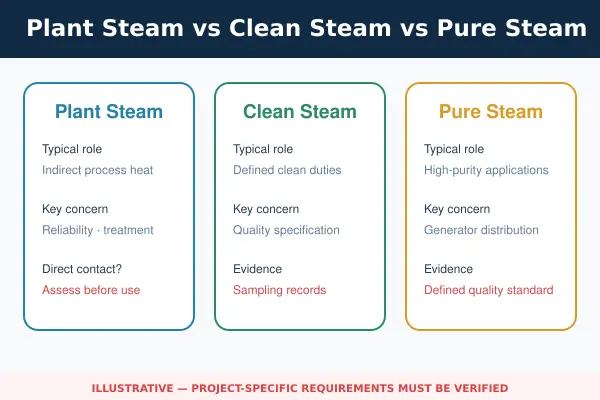
Plant steam may be suitable for indirect heating and general utilities. Clean or pure steam may be required when steam directly contacts products, materials or critical product-contact surfaces.
The correct selection process must therefore answer four questions:
- É 2 t/h the correct capacity for the facility’s actual steam-load profile?
- What steam pressure and quality are required at each point of use?
- Can the proposed boiler, queimador, water treatment and control system meet the User Requirement Specification?
- What evidence is needed to qualify and validate the complete steam system?
This guide provides a practical validation checklist covering process requirements, boiler sizing, qualidade do vapor, tratamento de água, gas consumption, segurança, automação, supplier documentation, FAT, SAT, DQ, QI, OQ e PQ.
It does not establish that a specific boiler complies with GMP, FDA, ASME, CE or another requirement. Compliance must be demonstrated using project-specific documents, qualification records and applicable installation-market requirements.
Resposta rápida: What Must Be Validated for a 2 Ton Pharmaceutical Steam Boiler?
A 2 ton gas steam boiler for pharmaceutical processing should be validated against the actual steam application, minimum and peak demand, pressão de trabalho, required steam category, especificação de gás, feedwater quality, sistema de condensado, materiais, automação, safety functions, emissions rules and qualification-document requirements.
If steam directly contacts products or critical product-contact surfaces, a conventional industrial boiler may only provide plant steam to a separate clean or pure steam generator.
| Validation Area |
Key Question |
Evidence Required |
| Capacidade |
Does 2,000 kg/h match actual demand? |
Steam-load profile |
| Pressão |
What pressure must reach each user? |
Process specification |
| Steam grade |
Is plant, clean or pure steam required? |
URS and risk assessment |
| Gas supply |
Can the fuel system support full load? |
Especificação de gás |
| Água de alimentação |
Is treatment appropriate? |
Raw-water analysis |
| Qualidade do vapor |
Could moisture or contaminants reach the process? |
Steam-quality plan |
| Controles |
Can critical operation and alarms be recorded? |
Control narrative and I/O list |
| Segurança |
Have protective functions been tested? |
Interlock test records |
| Conformidade |
Which codes apply at the installation site? |
Compliance matrix |
| Qualification |
Are DQ, QI, OQ and PQ defined? |
Approved protocols |
| Performance |
Has actual output been measured? |
Commissioning report |
The key procurement principle is:
Validate the complete steam system—not only the boiler pressure vessel.
1. Where Is Steam Used in Pharmaceutical Processing?
Steam can perform several functions inside a pharmaceutical facility. The point of use determines the required pressure, availability and steam quality.
Reactor and Vessel Heating
Steam is commonly supplied to jackets, coils and heat exchangers used for:
- reactor heating;
- mixing-vessel temperature control;
- solution preparation;
- ingredient dissolution;
- secagem;
- and process-temperature maintenance.
Where steam remains physically separated from the product by a suitable heat-transfer surface, plant steam may be acceptable. The facility should still evaluate the consequences of tube leakage, jacket failure or condensate contamination.
Cleaning and Hot-Water Generation
Steam may supply energy to:
- hot-water generators;
- equipment-washing stations;
- tank-cleaning systems;
- clean-in-place systems;
- sanitation processes;
- and general cleaning utilities.
The steam category depends on whether steam, condensate or treatment chemicals could cross the product-contact boundary.
HVAC Heating and Humidification
Pharmaceutical facilities may use steam for air heating or humidification.
Humidification requires careful assessment because boiler-water treatment chemicals or entrained contaminants may enter the air-handling system. The facility should determine whether ordinary plant steam is acceptable or whether a higher-quality steam source is required.
Sterilization and Steam-in-Place
Sterilization and SIP applications can have stricter steam-quality requirements than ordinary process heating.
EU GMP Annex 1 states that feedwater for pure-steam generators should be appropriately purified. It also states that pure-steam generators should be designed, qualified and operated to meet defined chemical and endotoxin requirements. Steam used as a direct sterilizing agent should be of suitable quality and should not contain additives at levels that could contaminate products or equipment. European Commission—EU GMP Annex 1
General Plant Utilities
Other uses may include:
- aquecimento ambiente;
- laundry operations;
- warehouse heating;
- domestic hot-water production;
- non-critical cleaning;
- and indirect utility heating.
The engineering team should prepare a complete steam-consumer list before confirming that a 2 ton gas steam boiler is suitable.
2. Plant Steam vs. Clean Steam vs. Pure Steam
The distinction between plant steam, clean steam and pure steam is central to pharmaceutical steam-system design.
Terminology can vary between companies and markets. Each category should therefore be defined in the project URS instead of being accepted as a marketing label.
What Is Plant Steam?
Plant steam is normally generated in a conventional industrial boiler using treated feedwater and a controlled boiler-water chemistry program.
It is commonly used for:
- indirect process heating;
- building heating;
- hot-water generation;
- non-critical cleaning;
- and general plant utilities.
Plant steam may contain approved boiler-water treatment chemicals. It should not automatically be accepted for direct product contact, critical humidification or direct sterilization.
What Is Clean Steam?
Clean steam generally refers to steam produced under more controlled conditions for applications with stricter contamination requirements.
A clean-steam specification may define:
- feedwater quality;
- generator design;
- materiais;
- treatment-chemical restrictions;
- chemical limits;
- sampling locations;
- monitoring frequency;
- condensate quality;
- and microbial or endotoxin requirements where applicable.
The expression “clean steam” alone does not confirm that a system meets a pharmaceutical application’s actual requirements.
What Is Pure Steam?
Pure steam is generally associated with higher-criticality pharmaceutical and biotechnology applications.
Its required quality should be defined from:
- the intended use;
- product-contact risk;
- sterilization requirements;
- applicable pharmacopoeia;
- facility quality standards;
- and regulatory expectations.
EU GMP Annex 1 uses the wording “pure steam (clean steam),” which demonstrates why each project should define its own technical terminology and acceptance criteria.
Can a Standard Gas Boiler Generate Clean or Pure Steam?
A standard industrial gas boiler normally produces plant steam.
For a critical application, the system may use the following arrangement:
Gas-Fired Steam Boiler → Plant Steam → Clean/Pure Steam Generator → Critical Process
In this arrangement, the industrial boiler provides thermal energy to a secondary generator. The secondary generator uses appropriately selected feedwater to produce the required higher-grade steam.
This arrangement is not automatically necessary for every pharmaceutical facility. Its use depends on the steam application and contamination-risk assessment.
| Pharmaceutical Application |
Possible Steam Category |
Main Validation Concern |
| Space heating |
Plant steam |
Pressure and reliability |
| Indirect vessel heating |
Often plant steam |
Leakage risk |
| Hot-water generation |
Dependente do aplicativo |
System boundary |
| HVAC humidification |
Project-dependent |
Chemical additives and air quality |
| CIP heating |
Dependente do aplicativo |
Product-contact boundary |
| SIP |
Clean or pure steam may be required |
Qualidade do vapor |
| Direct sterilization |
Clean or pure steam may be required |
Purity and condensate quality |
| Direct product contact |
Project-specific high-purity steam |
Contamination control |
3. É um 2 Ton Steam Boiler the Correct Capacity?
A 2 ton steam boiler has a nominal capacity of 2,000 kg of steam per hour under its specified rating conditions.
This rating does not prove that the boiler is correctly sized for a particular pharmaceutical plant.
Build a Steam-Load Profile
The load assessment should document:
- minimum sustained demand;
- normal production demand;
- maximum simultaneous demand;
- peak duration;
- batch-process demand;
- cleaning demand;
- sterilization demand;
- equipment start-up;
- daily operating hours;
- production schedules;
- seasonal changes;
- and future expansion.
| Load Condition |
Required Information |
| Minimum demand |
Lowest sustained facility consumption |
| Normal demand |
Typical consumption during production |
| Pico de demanda |
Maximum simultaneous requirement |
| Peak duration |
Length of high-demand condition |
| Batch demand |
Aquecimento, cleaning or sterilization cycle |
| Start-up demand |
Steam required during plant start-up |
| Future demand |
Credible expansion requirement |
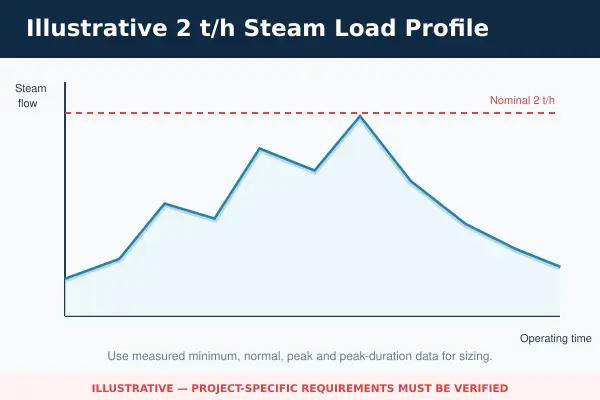
A detailed steam boiler capacity calculation should account for simultaneous demand, batch peaks, operating hours and future production expansion.
Why Pharmaceutical Loads Can Be Difficult to Size
A pharmaceutical plant may combine continuous users with short batch loads.
Por exemplo, normal steam demand may remain well below 2 t/h for most of the day but increase rapidly when several vessels, cleaning systems or sterilizers operate simultaneously.
Sizing from the total connected load can produce an oversized boiler. Sizing from average consumption can leave the plant without sufficient steam during a critical peak.
Risks of Oversizing
An oversized boiler may experience:
- ciclismo frequente do queimador;
- inefficient low-load operation;
- unnecessary standby losses;
- unstable pressure;
- increased control-component wear;
- and excessive capital cost.
Burner turndown should therefore be evaluated with capacity.
Buyers who are still comparing capacity, pressão, fuel and lifecycle cost can use this industrial steam boiler buying guide to prepare a more complete project specification.
Risks of Undersizing
An undersized boiler may:
- fail to maintain pressure;
- increase heating time;
- delay cleaning cycles;
- extend sterilization cycles;
- restrict simultaneous equipment operation;
- and limit production capacity.
Where steam continuity is critical, the buyer should also compare one 2 t/h boiler with multiple smaller boilers or a duty/standby arrangement.
4. What Steam Pressure and Temperature Are Required?
Boiler pressure should be derived from the pressure required at the process.
Pressure is lost through:
- steam mains;
- branch piping;
- acessórios;
- separadores;
- filtros;
- válvulas de controle;
- pressure-reducing stations;
- e equipamentos de processo.
The boiler operating pressure may therefore be higher than the pressure available at a reactor, sterilizer or heat exchanger.
This guide to selecting industrial steam boiler pressure explains how process demand, pressure reduction and distribution losses affect the final operating pressure.
Boiler Operating Pressure vs. Design Pressure
These are separate parameters.
- Pressão operacional is the pressure normally maintained during use.
- Pressão de projeto is used for the pressure-equipment design and allowable operating envelope.
The technical agreement should identify both values.
Saturated vs. Superheated Steam
Many pharmaceutical heating and sterilization applications use saturated steam because its temperature is related to pressure and it releases latent heat as it condenses.
Superheated steam should only be specified when required by the process. It should not be selected merely because its temperature is higher.
Why Pressure Stability Matters
Unstable pressure can affect:
- process temperature;
- heating time;
- control-valve performance;
- sterilization cycles;
- batch repeatability;
- and downstream steam quality.
Pressure verification may require:
- an approved P&ID;
- piping calculations;
- calibrated pressure instruments;
- control-loop testing;
- safety-valve records;
- and load-test data.
5. Technical Specifications That Must Be Confirmed
The following schedule should be completed before final equipment approval.
| Parâmetro Técnico |
Valor do projeto |
Evidência necessária |
| Saída nominal de vapor |
2,000 kg/h |
Folha de dados e placa de identificação |
| Minimum stable output |
To be confirmed |
Dados da caldeira e do queimador |
| Carga operacional normal |
To be confirmed |
Perfil de carga da planta |
| Pressão de trabalho |
To be confirmed |
Acordo técnico |
| Pressão de projeto |
To be confirmed |
Documentos de projeto |
| Temperatura do vapor |
To be confirmed |
Requisito de processo |
| Steam category |
To be confirmed |
URS and risk assessment |
| Gas type |
To be confirmed |
Especificação de combustível |
| Gas pressure |
To be confirmed |
Dados utilitários do site |
| Valor de aquecimento a gás |
To be confirmed |
Gas-supplier data |
| Temperatura da água de alimentação |
To be confirmed |
Heat balance |
| Condensate return |
To be confirmed |
System calculation |
| Eficiência da caldeira |
To be confirmed |
Defined test basis |
| Abertura do queimador |
To be confirmed |
Burner datasheet |
| Electrical supply |
To be confirmed |
Electrical drawings |
| Emissões |
To be confirmed |
Guarantee and test basis |
| Certificação |
To be confirmed |
Product-specific documents |
If the boiler construction has not yet been selected, compare the project requirements using this fire-tube vs. water-tube boiler guide.
Important distinctions include:
- Rated output is not average operating output.
- Working pressure is not design pressure.
- Maximum burner input is not average fuel consumption.
- Calculated efficiency is not measured efficiency.
- Plant steam is not automatically clean steam.
- Manufacturer certification does not automatically prove product-specific certification.
6. Why Use a Gas-Fired Steam Boiler?
A caldeira a vapor a gás may be suitable where a pharmaceutical facility has a stable and adequately sized gas supply.
Potential advantages can include:
- controle automatizado de combustível;
- tecnologia de queimador madura;
- fast load response;
- manuseio de combustível relativamente simples;
- compact fuel infrastructure;
- alto potencial de automação;
- e compatibilidade com economizadores.
Estas são características gerais, not guaranteed results for every project.
Gas Data Required for Burner Selection
The burner supplier should receive:
- tipo de gás;
- gas composition;
- valor de aquecimento menor ou maior;
- minimum gas pressure;
- maximum gas pressure;
- variação de pressão permitida;
- available gas flow;
- and backup-fuel requirements.
The word “gas” alone is not sufficient for burner selection.
Gas-Train Validation
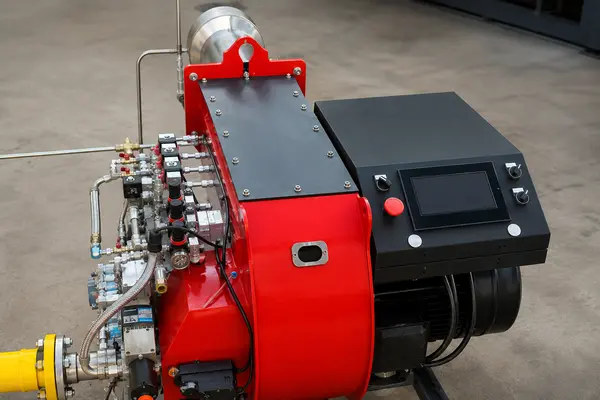
Depending on the applicable design and jurisdiction, the gas train may include:
- manual isolation;
- filtration;
- pressure regulation;
- automatic shutoff valves;
- high- and low-pressure protection;
- valve proving;
- leak detection;
- pressure indication;
- and emergency isolation.
The final configuration must follow the selected burner, local code and approved safety design.
7. How Much Natural Gas Does a 2 Consumo de caldeira a vapor por tonelada?
Não existe um valor universal confiável de consumo de gás para cada 2 t/h steam boiler.
Um cálculo prático é:
Gas consumption = Steam flow × (Steam enthalpy − Feedwater enthalpy) ÷ (Boiler efficiency × Gas heating value)
For a step-by-step example, see this guide to calculating natural gas consumption for a steam boiler.
The calculation requires:
- actual steam flow;
- steam pressure;
- saturated or superheated steam condition;
- temperatura da água de alimentação;
- boiler efficiency and its LHV or HHV basis;
- gas heating value on the same basis.
Actual gas consumption is also affected by:
- carga da caldeira;
- burner modulation;
- excess air;
- stack temperature;
- retorno de condensado;
- blowdown;
- isolamento;
- dimensionamento;
- fouling;
- e manutenção.
| Gas-Consumption Data |
Evidência necessária |
| Calculated rated consumption |
Formula and assumptions |
| Maximum burner input |
Burner datasheet |
| Commissioning consumption |
Calibrated gas meter |
| Average operating consumption |
Long-term operating records |
| Gas per ton of steam |
Gas and steam-flow measurements |
A fixed gas-consumption value without these conditions creates false precision.
8. Feedwater Quality and Pharmaceutical Water Risk
Feedwater quality influences boiler reliability, transferência de calor, corrosão, steam quality and service life.
Before selecting treatment equipment, obtain a recent raw-water analysis covering relevant parameters such as:
- dureza;
- pH;
- conductivity;
- total dissolved solids;
- alcalinidade;
- silica;
- iron;
- chlorides;
- and site-specific contaminants.
Possible Water-Treatment Technologies
Depending on the analysis and operating conditions, treatment may include:
- filtration;
- amolecimento;
- reverse osmosis;
- desmineralização;
- desaeração;
- oxygen scavenging;
- dosagem química;
- condensate monitoring;
- and automatic blowdown.
Not every boiler automatically requires reverse osmosis. The correct treatment process must follow the water analysis, boiler pressure and manufacturer’s limits.
Treatment Chemicals and Steam Purity
Chemicals suitable for an industrial plant-steam system may not be acceptable for direct product contact, critical humidification or sterilization.
The quality-risk assessment should determine whether boiler chemicals or contaminants could reach:
- the pharmaceutical product;
- raw materials;
- cleanroom air;
- product-contact surfaces;
- a sterilizer;
- or a clean/pure steam generator.
Retorno Condensado
Returning suitable condensate can reduce:
- consumo de combustível;
- make-up water;
- chemical use;
- and thermal losses.
No entanto, condensate should only be returned after evaluating potential contamination from process leaks, cleaning chemicals or other utilities.
Monitoring may include:
- conductivity;
- temperatura;
- route identification;
- automatic rejection;
- and scheduled laboratory testing.
| Water-System Item |
Validation Question |
Evidence |
| Raw water |
What contaminants are present? |
Laboratory report |
| Treated water |
Does it meet boiler limits? |
Water-test results |
| Água de alimentação |
Are temperature and chemistry controlled? |
Operating records |
| Condensate |
Is it safe to return? |
Risk assessment |
| Chemical dosing |
Is dosage controlled? |
SOP and dosing records |
| Explosão |
Is dissolved-solid concentration managed? |
Conductivity data |
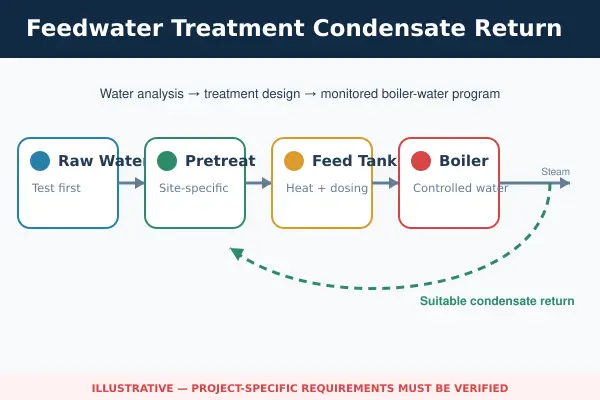
The required treatment process should be selected from the actual analysis and the applicable steam boiler feedwater-quality requirements.
9. Steam Quality and Contamination Control
Steam quality is not determined by pressure alone.
Steam Dryness
Excessive moisture can contribute to:
- unstable heat transfer;
- water hammer;
- wet loads;
- poor temperature distribution;
- and reduced sterilization performance.
The distribution system may require suitable:
- pipe sizing;
- pipe slope;
- isolamento;
- steam separation;
- drainage;
- and steam trapping.
Boiler-Water Carryover
Carryover may result from:
- high boiler-water concentration;
- espuma;
- excessive water level;
- rapid load changes;
- poor steam separation;
- or inappropriate chemical treatment.
Nível de água, boiler chemistry and blowdown should therefore operate as an integrated control system.
Clean or Pure Steam Testing
Where a higher steam category is required, the validation plan may need to address:
- condensate quality;
- non-condensable gases;
- superheat;
- dryness;
- chemical contamination;
- endotoxin;
- microbiological risk;
- sampling locations;
- and sampling frequency.
The exact tests and acceptance limits should come from the intended use, applicable pharmacopoeia and approved quality-risk assessment.
10. What Auxiliary Equipment Does the Boiler Need?
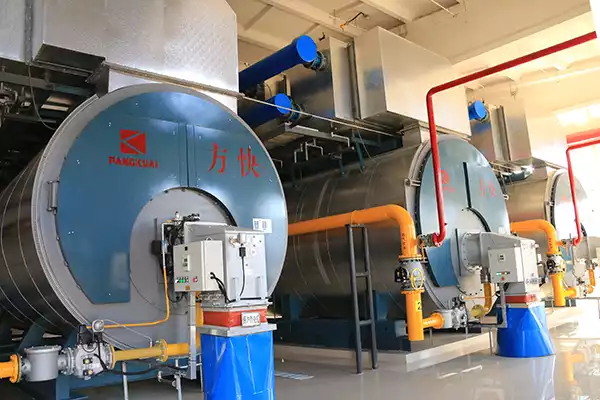
A boiler pressure vessel alone does not constitute a complete pharmaceutical steam plant.
| Equipamento |
Função |
Validation Point |
| Queimador |
Controla a combustão |
Model and turndown |
| Trem a gás |
Conditions gas supply |
Pressure and safety |
| Bombas de água de alimentação |
Supply boiler water |
Capacity and redundancy |
| Tanque de água de alimentação |
Stores feedwater |
Volume and temperature |
| Desaerador |
Reduces dissolved gases |
Operating performance |
| Tratamento de água |
Condições da água de reposição |
Test evidence |
| Economizador |
Recupera o calor dos gases de combustão |
Design and bypass |
| Sistema condensado |
Returns usable condensate |
Contamination control |
| Blowdown system |
Controls boiler-water solids |
Conductivity strategy |
| Chaminé |
Discharges flue gas |
Draft and local rules |
| Gabinete de controle |
Coordena a operação da caldeira |
Logic and access |
| Instrumentação |
Measures process variables |
Calibration |
| Clean-steam generator |
Produces higher-grade steam |
If required |
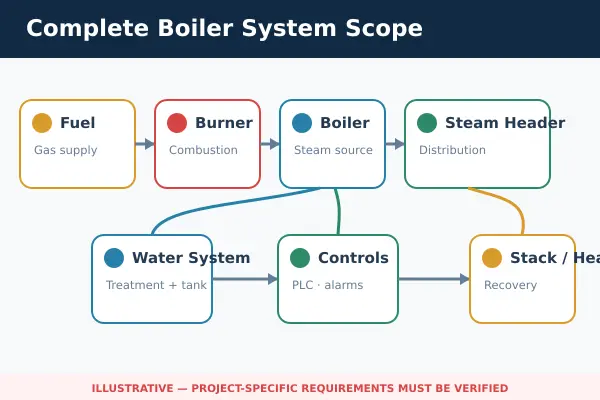
Buyers should request a clear itemized scope identifying:
- quantidade;
- modelo;
- fabricante;
- material;
- electrical requirement;
- documentação;
- responsabilidade de instalação;
- e responsabilidade de comissionamento.
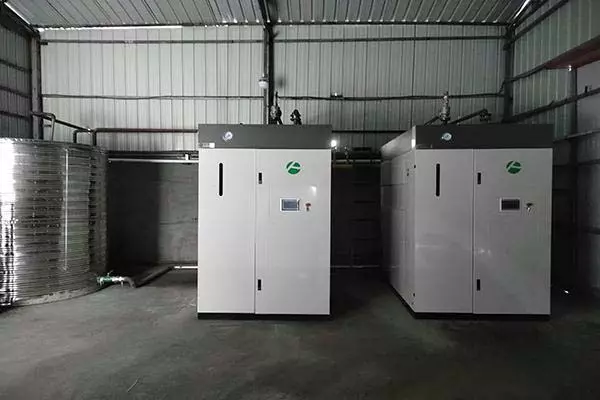
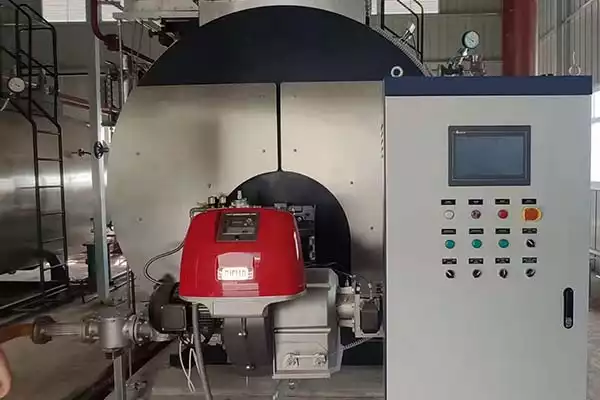
A quotation for a boiler and burner cannot be compared directly with a quotation for a complete boiler room. This overview of typical boiler auxiliary equipment can help buyers identify missing equipment and compare quotation scopes more accurately.
11. Materiais, Hygienic Design and System Boundaries
A pharmaceutical project should clearly separate:
- the industrial boiler;
- the plant-steam network;
- the clean/pure steam generator;
- the higher-purity steam network;
- and the product-contact equipment.
An ordinary industrial boiler should not automatically be described as a sanitary or hygienic component.
For a clean or pure steam system, the project may need to define:
- product-contact materials;
- internal surface requirements;
- welding procedures;
- weld inspection;
- drainability;
- pipe slope;
- dead-leg control;
- passivation;
- limpeza;
- and documentation.
These requirements should be applied to the correct system boundary rather than copied indiscriminately to every boiler-room component.
12. Automação, Data Integrity and Alarm Management
A basic boiler control system may monitor or control:
- steam pressure;
- nível da água;
- burner firing;
- flame status;
- bombas de água de alimentação;
- gas pressure;
- safety interlocks;
- and alarm conditions.
A more advanced system may collect:
- fluxo de vapor;
- fluxo de gás;
- feedwater flow;
- temperatura da água de alimentação;
- stack temperature;
- stack oxygen;
- taxa de disparo do queimador;
- blowdown data;
- horário de funcionamento;
- histórico de alarme;
- e consumo de energia.
Plc, IHM, DCS and SCADA Integration
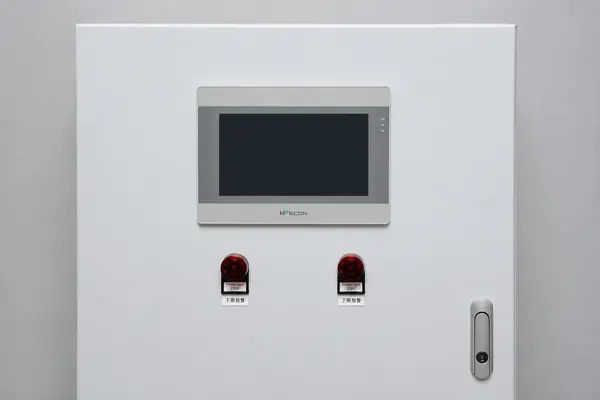
Before integration, define:
- communication protocol;
- required data points;
- read/write permissions;
- control authority;
- user accounts;
- time synchronization;
- alarm management;
- data retention;
- backup;
- and remote access.
Does the Boiler Need 21 CFR Part 11 Conformidade?
A boiler PLC should not automatically be marketed as “21 CFR Part 11 compliant.”
FDA guidance explains that Part 11 applies to electronic records maintained or submitted under FDA record requirements. Whether boiler data falls within that scope depends on how the pharmaceutical company uses the records and which underlying requirements apply. FDA—Part 11 Scope and Application
If boiler or steam-system data support quality decisions, the user may need to assess:
- record accuracy;
- access control;
- audit trails where applicable;
- modification control;
- backup and retrieval;
- record retention;
- and electronic signatures where applicable.
A PLC, HMI or SCADA platform should only be described as Part 11 compliant after a project-specific assessment of the complete computerized system.
13. Safety and Risk Assessment
Typical boiler safety functions may include:
- proteção contra águas baixas;
- high-pressure protection;
- flame-failure protection;
- high and low gas-pressure protection;
- supervisão do ar de combustão;
- controle de sequência de ignição;
- pump-failure alarms;
- desligamento de emergência;
- e proteção de válvula de segurança.
The final protection architecture depends on the boiler, queimador, gas train, installation code and local jurisdiction.
Pharmaceutical Production Risks
The facility should also evaluate:
- the effect of a boiler trip on production;
- interruption of sterilization;
- interruption of cleaning;
- pressure loss at critical users;
- chemical carryover;
- contaminated condensate;
- gas leakage;
- restart requirements;
- and product disposition after a utility failure.
Redundancy
Redundancy may be justified where steam interruption creates significant production or product-quality consequences.
Possible arrangements include:
- two smaller boilers;
- one duty and one standby boiler;
- redundant feedwater pumps;
- backup fuel;
- critical spare parts;
- or alternative production scheduling.
The decision should follow a documented risk assessment rather than a general rule.
14. Codes, Certification and GMP Requirements
There is no single worldwide certification or emissions standard for every 2 caldeira a vapor a gás de tonelada.
Requirements can depend on:
- país de instalação;
- jurisdição local;
- boiler category;
- pressão de projeto;
- combustível;
- emissions permit;
- and facility classification.
Pressure-Equipment Certification
If ASME construction is required, the quotation should identify:
- applicable BPVC section;
- Certification Mark and designator;
- certificate holder;
- local de fabricação;
- equipamento exato coberto;
- requisitos de inspeção;
- and required data reports.
ASME states that its BPVC Certification Program evaluates manufacturer or assembler quality-control systems for defined scopes. Products bearing the applicable ASME Certification Mark must comply with the relevant BPVC section. A general statement that a company is “ASME certified” does not prove that a specific boiler will receive the required mark. ASME Boiler and Pressure Vessel Certification
For EU projects, the applicable Pressure Equipment Directive requirements and conformity-assessment scope should be identified before production.
Is a Boiler GMP Certified?
GMP applies to pharmaceutical manufacturing facilities, utilitários, processes, documentation and quality systems.
A boiler cannot make an entire pharmaceutical facility GMP-compliant by itself.
Instead of accepting a general “GMP boiler” claim, ask:
- Which GMP-related user requirement is addressed?
- Which system boundary is included?
- What materials are supplied?
- What documents are included?
- What qualification support is available?
- What performance is guaranteed?
- Who is responsible for validation?
Emissões
The burner and emissions configuration should be selected for the installation market.
Potential regulated emissions include:
- Nox;
- CO;
- SOx;
- material particulado;
- and other jurisdiction-specific pollutants.
A low-NOx claim should identify:
- guaranteed value;
- combustível;
- carga da caldeira;
- reference oxygen;
- and test method.
15. Supplier and Documentation Validation
Pharmaceutical utility projects normally require more documentation than a generic industrial boiler purchase.
Engineering Documents
Request, as applicable:
- ficha técnica;
- desenho de arranjo geral;
- diagrama de fluxo de processo;
- P&ID;
- heat and mass balance;
- utility-consumption schedule;
- desenhos elétricos;
- control narrative;
- alarm list;
- Lista de E/S;
- component specifications;
- and compliance matrix.
Manufacturing Records
Useful quality records may include:
- material certificates;
- rastreabilidade de materiais;
- welding procedures;
- welder qualifications;
- non-destructive examination;
- dimensional inspection;
- hydrostatic testing;
- safety-valve records;
- control-system testing;
- and factory acceptance records.
Operating Documents
The handover package may include:
- manual de operação;
- manual de manutenção;
- lista de peças de reposição recomendadas;
- calibration certificates;
- training materials;
- troubleshooting procedures;
- garantia;
- and final as-built drawings.
Supplier Claim Verification
| Reivindicação do fornecedor |
Evidence to Request |
| Alta eficiência |
Combustível, carregar, feedwater temperature and test basis |
| Baixo NOx |
Guaranteed value and reference conditions |
| Fully automatic |
Control narrative and I/O list |
| Vapor limpo |
Generator design and quality-test protocol |
| GMP suitable |
Requirement-by-requirement evidence |
| ASME or CE |
Exact product and document scope |
| Low gas consumption |
Calculation and operating conditions |
| Pharmaceutical grade |
Defined system boundary and specification |
16. URS, DQ, QI, OQ and PQ Validation Checklist
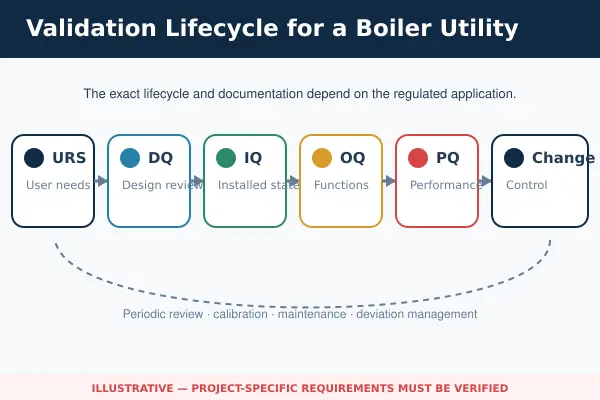
EU GMP Annex 15 sets out lifecycle principles for qualification and validation, including user requirements and equipment qualification. The extent of qualification should be justified through documented risk assessment. European Commission—EU GMP Annex 15
User Requirement Specification—URS
The URS defines what the pharmaceutical user needs the steam system to do.
It should address:
- steam applications;
- required steam category;
- mínimo, demanda normal e de pico;
- peak duration;
- pressão de trabalho;
- disponibilidade;
- água de alimentação;
- retorno de condensado;
- materiais;
- automação;
- segurança;
- emissões;
- documentação;
- qualification support;
- and acceptance criteria.
The URS should ideally be approved before supplier selection.
Design Qualification—DQ
DQ verifies that the proposed design satisfies the approved URS.
Review:
- capacity calculations;
- burner turndown;
- working and design pressure;
- steam category;
- gas-supply conditions;
- tratamento de água;
- condensate strategy;
- system materials;
- piping arrangement;
- control architecture;
- alarm philosophy;
- safety functions;
- conformidade;
- maintenance access;
- and document scope.
Installation Qualification—IQ
IQ verifies that equipment has been supplied and installed according to the approved design.
Typical IQ checks include:
- fabricante;
- modelo;
- serial number;
- equipment location;
- foundation;
- boiler orientation;
- piping connections;
- gas train;
- conexões elétricas;
- instrumentation;
- component materials;
- utility identification;
- calibration status;
- drawing accuracy;
- and document availability.
Operational Qualification—OQ
OQ demonstrates that the boiler and associated systems operate as intended within the defined operating range.
Possible OQ tests include:
- normal start-up;
- normal shutdown;
- proteção contra águas baixas;
- high-pressure shutdown;
- flame failure;
- high and low gas-pressure trips;
- combustion-air failure;
- pump failure;
- desligamento de emergência;
- alarm generation;
- control-loop operation;
- burner modulation;
- automatic sequencing;
- communication;
- user access;
- and data recording.
Performance Qualification—PQ
PQ evaluates the steam system under actual or representative operating conditions.
Dependendo do aplicativo, it may include:
- saída de vapor;
- pressure stability;
- resposta de carga;
- gas consumption;
- continuous-operation capability;
- batch-cycle performance;
- qualidade do vapor;
- point-of-use performance;
- condensate quality;
- and clean/pure steam tests where applicable.
Validation Responsibility Matrix
| Qualification Stage |
Pharmaceutical User |
Boiler Supplier |
Installer |
Validation Team |
| URS |
Leads and approves |
Provides technical input |
Reviews interfaces |
Reviews |
| DQ |
Approves |
Supplies design |
Supports |
Verifies |
| QI |
Verifies installation |
Supplies documents |
Installs |
Executes/reviews |
| OQ |
Witnesses and approves |
Tests and supports |
Supports |
Executes/reviews |
| PQ |
Owns process acceptance |
Provides support |
Supports |
Executes/reviews |
Final responsibilities should be defined in the contract and validation plan.
17. FAT, SAT and Commissioning
Factory Acceptance Test
A FAT may include:
- equipment configuration;
- dimensões;
- component models;
- nameplate;
- fabrication records;
- hydrostatic-test records;
- control-system operation;
- alarm simulation;
- safety-interlock simulation;
- document review;
- and packing-scope verification.
Not every performance condition can necessarily be tested at the factory. The FAT protocol should clearly identify test limitations and items deferred to site commissioning.
Site Acceptance Test
A SAT may verify:
- installation condition;
- gas pressure;
- feedwater quality;
- electrical supply;
- tubulação;
- chaminé;
- instrumentation;
- calibration;
- communication;
- sistemas de segurança;
- and site-specific interfaces.
Typical Commissioning Sequence
Site inspection → Utility verification → Water-system check → Gas-system check → Electrical check → Cold commissioning → Burner commissioning → Safety-interlock testing → Load test → Training → Handover
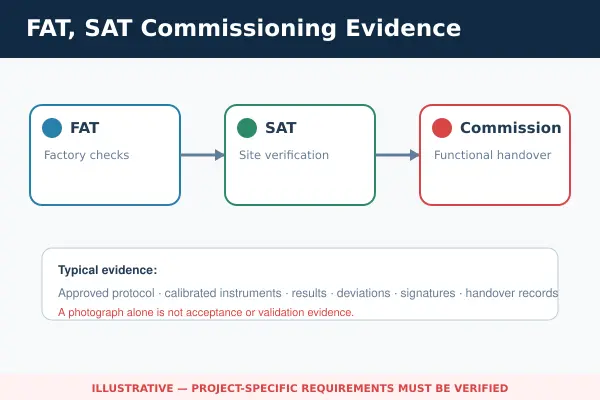
The exact sequence should follow the approved commissioning method, equipment instructions and local requirements.
Punch-List Closure
Final handover should address:
- incomplete installation;
- drawing discrepancies;
- missing calibration;
- alarm problems;
- documentation gaps;
- missing spare parts;
- incomplete training;
- and unresolved test failures.
18. How Should Boiler Performance Be Accepted?
Design values, contractual guarantees and measured results should be recorded separately.
Efficiency should specify:
- calculated or measured;
- LHV or HHV basis;
- fuel specification;
- carga da caldeira;
- temperatura da água de alimentação;
- stack temperature;
- excess air or oxygen;
- economizer inclusion;
- and auxiliary-power treatment.
This guide to eficiência da caldeira a vapor industrial explains the difference between rated boiler efficiency and actual steam-system performance.
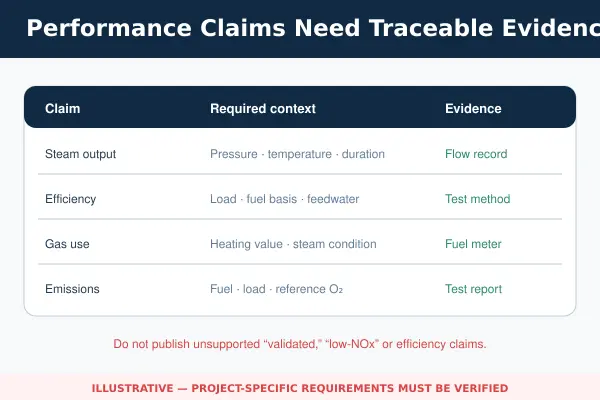
The evidence principle is simple:
Design data, contractual guarantees and measured operating results are three different forms of evidence.
19. Manutenção, Calibration and Change Control
Qualification does not end the system lifecycle.
Manutenção preventiva
The maintenance program may cover:
- queimador;
- gas valves;
- bombas de água de alimentação;
- water-level devices;
- pressure controls;
- safety valves;
- heat-transfer surfaces;
- equipamento de tratamento de água;
- sistema de purga;
- purgadores de vapor;
- and condensate equipment.
Calibration
Potentially critical instruments include:
- medidores de pressão;
- pressure transmitters;
- sensores de temperatura;
- steam-flow meters;
- gas-flow meters;
- feedwater-flow meters;
- water-level instruments;
- conductivity instruments;
- and emissions instruments.
Calibration frequency should be based on:
- instrument criticality;
- manufacturer recommendations;
- operating history;
- quality-system requirements;
- and previous calibration results.
Change Control
Changes to equipment, tubulação, tratamento de água, control logic, software or operating procedures should be assessed for their effect on:
- segurança;
- qualidade do vapor;
- validated state;
- electronic records;
- manutenção;
- and process performance.
Requalification may be necessary when a change materially affects the system.
Critical Spare Parts
A pharmaceutical steam-system spare-parts strategy may include:
- flame detector;
- ignition transformer;
- gas valves;
- pressure switches;
- water-level probes;
- PLC modules;
- HMI components;
- pump seals;
- transmitters;
- controllers;
- and control relays.
20. Completo 2 Ton Pharmaceutical Boiler Validation Checklist
A. Process Requirements
B. Boiler and Burner
C. Water and Steam Quality
D. Sistemas Auxiliares
E. Controls and Safety
F. Compliance and Documentation
21. Information Needed to Quote a 2 Caldeira de Vapor a Gás Tonelada
A project-specific quotation should begin with the following information:
- Demanda mínima de vapor
- Demanda normal de vapor
- Demanda máxima de vapor
- Peak duration
- Required boiler working pressure
- Required point-of-use pressure
- Steam application
- Plant, clean or pure steam requirement
- Saturated or superheated steam requirement
- Gas type and composition
- Valor de aquecimento a gás
- Available gas-pressure range
- Horas de funcionamento por dia
- Dias de operação por ano
- Temperatura da água de alimentação
- Raw-water analysis
- Condensate-return percentage
- Condensate quality
- País de instalação
- Local emissions limits
- Required pressure-equipment certification
- Available electrical supply
- Boiler-room dimensions
- Transport restrictions
- Automation and communication requirements
- Qualification-document requirements
- Data de entrega necessária
Buyers can also review the available configuration options for a 2 caldeira a vapor industrial de tonelada before requesting a project-specific quotation.
These inputs allow the manufacturer to move from a generic 2 ton boiler price to a technically defined pharmaceutical steam-system proposal.
perguntas frequentes
Quanto vapor um 2 produção de caldeira de tonelada?
A 2 ton steam boiler has a nominal capacity of 2,000 kg of steam per hour under its specified rating conditions. Actual output depends on operating load, steam pressure, temperatura da água de alimentação, fuel conditions and equipment performance.
É um 2 ton gas steam boiler suitable for a pharmaceutical plant?
It can be suitable, but capacity alone is insufficient. The boiler must match the facility’s steam-load profile, pressão de trabalho, steam category, gas supply, água de alimentação, controles, safety and compliance requirements.
What is the difference between plant steam and clean steam?
Plant steam is normally used for indirect heating and general utilities. Clean or pure steam is produced and controlled for more critical applications. The exact quality requirements should be defined in the project URS.
Can plant steam directly contact pharmaceutical products?
Plant steam should not automatically be accepted for direct product contact. Direct-contact applications require a documented risk assessment and steam-quality specification appropriate to the product and process.
Can a standard gas boiler produce pure steam?
A standard industrial boiler generally produces plant steam. It may provide the heating energy for a separate clean or pure steam generator when a higher steam category is required.
How much natural gas does a 2 ton steam boiler consume?
Gas consumption depends on steam enthalpy, temperatura da água de alimentação, eficiência da caldeira, gas heating value and operating load. A fixed universal figure is unreliable without these conditions.
Does a pharmaceutical steam boiler need reverse osmosis?
Not automatically. Water treatment should be selected from the raw-water analysis, pressão operacional, steam category, condensate return and manufacturer’s limits.
What documents are required for boiler qualification?
Documents may include the URS, DQ records, datasheets, drawings, P&IDs, material records, inspection reports, calibration certificates, FAT/SAT records, IQ/OQ protocols, PQ data, manuals and training records.
What is checked during boiler IQ?
IQ confirms that the boiler, auxiliaries, utilitários, instruments, piping and documents have been installed or supplied according to the approved design.
What is checked during boiler OQ?
OQ tests normal operation, controles, alarmes, burner modulation, safety interlocks, automatic sequences and defined operating ranges.
Does every pharmaceutical boiler need PQ?
The required qualification extent should follow the pharmaceutical manufacturer’s validation strategy and risk assessment. Systems supporting critical processes normally require documented performance confirmation under representative conditions.
Does every pharmaceutical boiler require clean steam?
Não. General utilities and indirect heating may use plant steam. Clean or pure steam may be required for direct sterilization, product contact or other critical applications.
Does a pharmaceutical boiler need to be GMP certified?
GMP compliance applies to the complete pharmaceutical operation, including facilities, utilitários, procedures and quality systems. A boiler product alone cannot establish GMP compliance.
Does an ASME-authorized manufacturer make every boiler ASME stamped?
Não. Manufacturer authorization and product-specific marking are different. The contract should identify the applicable BPVC section, Certification Mark, equipment scope and required data reports.
Should a pharmaceutical plant install a standby boiler?
Standby capacity depends on the effect of steam interruption on production, limpeza, sterilization and product quality. The decision should be based on a documented risk assessment.
Conclusão: Validate the Complete Pharmaceutical Steam System
A 2 ton gas steam boiler can be a practical energy source for pharmaceutical processing, but its nominal 2,000 kg/h rating is only one part of the selection.
The project should first determine whether each application requires plant steam, clean steam or pure steam. It should then confirm the actual load profile, point-of-use pressure, gas conditions, feedwater quality, equipamento auxiliar, control functions and applicable compliance requirements.
The strongest validation process is:
Define the steam application → classify the steam category → establish the load profile → confirm pressure and fuel → design water treatment → define auxiliaries and controls → assess contamination risk → verify compliance → complete FAT and SAT → execute DQ, QI, OQ and PQ → confirm performance.
A conventional industrial boiler may be suitable for indirect pharmaceutical heating while a separate clean or pure steam generator serves critical users. The correct system architecture must follow the approved URS, process risk and applicable quality requirements.
If you are preparing a 2 ton gas steam boiler project for pharmaceutical processing, provide the steam application, pressão de trabalho, minimum and peak demand, especificação de gás, cronograma operacional, water analysis, installation country and qualification-document requirements for a project-specific engineering proposal.
Referências autorizadas




Vveja as avaliações do nosso cliente
"A caldeira de óleo térmico da Fangkuai é muito fácil de operar e manter. Isso nos ajudou a economizar tempo e dinheiro em manutenção, o que levou a uma economia significativa de custos. A qualidade dos materiais e a construção da caldeira são excepcionais. Também é muito eficiente energeticamente, que nos ajudou a economizar dinheiro em nossas contas de energia. Eu recomendo a caldeira de óleo térmico da Fangkuai ."
Allen
Brasil"A caldeira a vapor da Fangkuai é perfeita para o meu negócio de processamento de alimentos. Atende a todos os nossos requisitos e é muito confiável. A qualidade dos materiais e a construção da caldeira são excepcionais. Também é muito fácil de operar e manter, o que nos ajudou a economizar tempo e dinheiro em manutenção. Eu recomendo as caldeiras a vapor da Fangkuai para qualquer pessoa que precise de soluções de aquecimento confiáveis."
json
Brasil"O atendimento ao cliente da Fangkuai é excelente. Eles me ajudaram a escolher a caldeira perfeita para minhas necessidades e forneceram um ótimo suporte durante todo o processo. O processo de instalação também foi muito tranquilo e a caldeira superou minhas expectativas. É muito fácil de usar e manter, e a eficiência energética é notável. Eu recomendo os produtos da Fangkuai para qualquer pessoa que precise de soluções de aquecimento confiáveis e eficientes."
Juan
México"Comprei uma caldeira a vapor Fangkuai para minha fábrica e ela está funcionando perfeitamente há meses. A qualidade dos materiais e a construção da caldeira são impressionantes. Também é muito eficiente energeticamente, que nos ajudou a economizar dinheiro em nossas contas de energia. Eu recomendo os produtos da Fangkuai para qualquer pessoa que precise de soluções de aquecimento confiáveis e eficientes."
John
EUA"O equipamento auxiliar de Fangkuai tornou meu sistema de caldeira ainda melhor. A qualidade do equipamento é excepcional e os preços são muito razoáveis. O equipamento ajudou a melhorar a eficiência e o desempenho do meu sistema de caldeira, o que levou a uma economia significativa de custos. Eu recomendo o equipamento auxiliar da Fangkuai para qualquer pessoa que precise de acessórios de caldeira de alta qualidade."
Maryk
Reino Unido"Os geradores de vapor de Fangkuai são excelentes. Eles são muito fáceis de usar e requerem manutenção mínima. O atendimento ao cliente da Fangkuai também é excepcional. Eles são muito receptivos e sempre dispostos a ajudar. A eficiência energética dos geradores de vapor também é notável, que me ajudou a economizar dinheiro em minhas contas de energia. Eu recomendo os geradores de vapor da Fangkuai."
maria
Espanha"Há anos que usamos a caldeira de óleo térmico Fangkuai para nossa fábrica de produtos químicos e ela nunca nos decepcionou. A caldeira é muito durável e pode suportar condições adversas. Também é muito fácil de operar e manter, o que nos ajudou a economizar tempo e dinheiro em manutenção. As caldeiras de óleo térmico da Fangkuai são excelentes e eu as recomendo para qualquer pessoa que precise de soluções de aquecimento confiáveis."
Chang
China"O equipamento auxiliar de Fangkuai tornou meu sistema de caldeira ainda melhor. A qualidade do equipamento é excepcional e os preços são muito razoáveis. O equipamento ajudou a melhorar a eficiência e o desempenho do meu sistema de caldeira, o que levou a uma economia significativa de custos. Eu recomendo o equipamento auxiliar da Fangkuai para qualquer pessoa que precise de acessórios de caldeira de alta qualidade."
Maryk
Reino Unido"O atendimento ao cliente da Fangkuai é excelente. Eles me ajudaram a escolher a caldeira perfeita para minhas necessidades e forneceram um ótimo suporte durante todo o processo. O processo de instalação também foi muito tranquilo e a caldeira superou minhas expectativas. É muito fácil de usar e manter, e a eficiência energética é notável. Eu recomendo os produtos da Fangkuai para qualquer pessoa que precise de soluções de aquecimento confiáveis e eficientes."
Juan
México