2 غلاية بخارية تعمل بالغاز للطن لمعالجة الأدوية: قائمة التحقق من الصحة
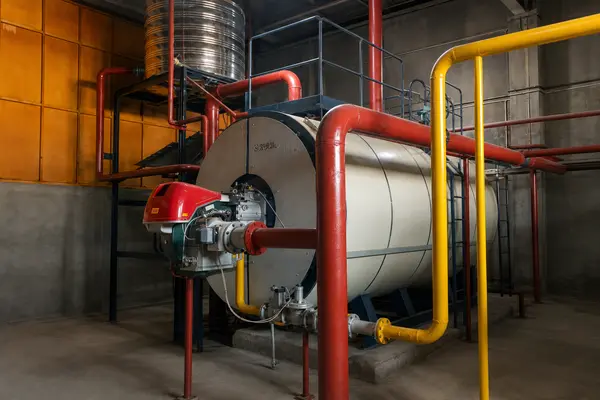
Selecting a 2 ton gas steam boiler for pharmaceutical processing involves much more than confirming that the boiler can produce 2,000 كجم من البخار في الساعة.
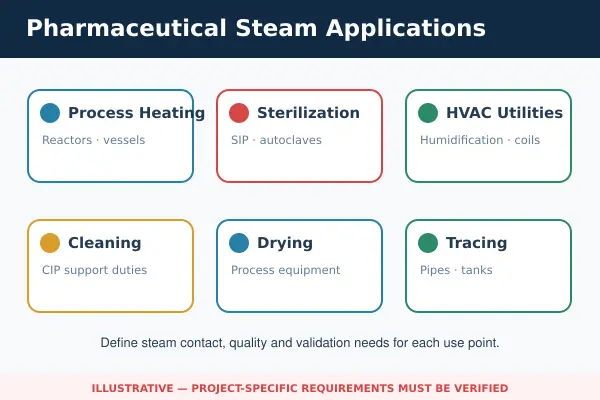
A pharmaceutical facility may use steam for reactor heating, hot-water generation, HVAC humidification, equipment cleaning, sterilization or steam-in-place operations. These applications do not necessarily require the same steam quality.
Plant steam may be suitable for indirect heating and general utilities. Clean or pure steam may be required when steam directly contacts products, materials or critical product-contact surfaces.
The correct selection process must therefore answer four questions:
- يكون 2 t/h the correct capacity for the facility’s actual steam-load profile?
- What steam pressure and quality are required at each point of use?
- Can the proposed boiler, الموقد, water treatment and control system meet the User Requirement Specification?
- What evidence is needed to qualify and validate the complete steam system?
This guide provides a practical validation checklist covering process requirements, boiler sizing, جودة البخار, معالجة المياه, gas consumption, أمان, الأتمتة, supplier documentation, FAT, SAT, DQ, IQ, OQ and PQ.
It does not establish that a specific boiler complies with GMP, FDA, أسمي, CE or another requirement. Compliance must be demonstrated using project-specific documents, qualification records and applicable installation-market requirements.
إجابة سريعة: What Must Be Validated for a 2 Ton Pharmaceutical Steam Boiler?
أ 2 ton gas steam boiler for pharmaceutical processing should be validated against the actual steam application, minimum and peak demand, ضغط العمل, required steam category, gas specification, feedwater quality, نظام المكثفات, مواد, الأتمتة, safety functions, emissions rules and qualification-document requirements.
If steam directly contacts products or critical product-contact surfaces, a conventional industrial boiler may only provide plant steam to a separate clean or pure steam generator.
| Validation Area |
Key Question |
Evidence Required |
| سعة |
Does 2,000 kg/h match actual demand? |
Steam-load profile |
| ضغط |
What pressure must reach each user? |
Process specification |
| Steam grade |
Is plant, clean or pure steam required? |
URS and risk assessment |
| Gas supply |
Can the fuel system support full load? |
Gas specification |
| مياه التغذية |
Is treatment appropriate? |
Raw-water analysis |
| جودة البخار |
Could moisture or contaminants reach the process? |
Steam-quality plan |
| الضوابط |
Can critical operation and alarms be recorded? |
Control narrative and I/O list |
| أمان |
Have protective functions been tested? |
Interlock test records |
| امتثال |
Which codes apply at the installation site? |
Compliance matrix |
| Qualification |
Are DQ, IQ, OQ and PQ defined? |
Approved protocols |
| Performance |
Has actual output been measured? |
Commissioning report |
The key procurement principle is:
Validate the complete steam system—not only the boiler pressure vessel.
1. Where Is Steam Used in Pharmaceutical Processing?
Steam can perform several functions inside a pharmaceutical facility. The point of use determines the required pressure, availability and steam quality.
Reactor and Vessel Heating
Steam is commonly supplied to jackets, coils and heat exchangers used for:
- reactor heating;
- mixing-vessel temperature control;
- solution preparation;
- ingredient dissolution;
- تجفيف;
- and process-temperature maintenance.
Where steam remains physically separated from the product by a suitable heat-transfer surface, plant steam may be acceptable. The facility should still evaluate the consequences of tube leakage, jacket failure or condensate contamination.
Cleaning and Hot-Water Generation
Steam may supply energy to:
- hot-water generators;
- equipment-washing stations;
- tank-cleaning systems;
- clean-in-place systems;
- sanitation processes;
- and general cleaning utilities.
The steam category depends on whether steam, condensate or treatment chemicals could cross the product-contact boundary.
HVAC Heating and Humidification
Pharmaceutical facilities may use steam for air heating or humidification.
Humidification requires careful assessment because boiler-water treatment chemicals or entrained contaminants may enter the air-handling system. The facility should determine whether ordinary plant steam is acceptable or whether a higher-quality steam source is required.
Sterilization and Steam-in-Place
Sterilization and SIP applications can have stricter steam-quality requirements than ordinary process heating.
EU GMP Annex 1 states that feedwater for pure-steam generators should be appropriately purified. It also states that pure-steam generators should be designed, qualified and operated to meet defined chemical and endotoxin requirements. Steam used as a direct sterilizing agent should be of suitable quality and should not contain additives at levels that could contaminate products or equipment. European Commission—EU GMP Annex 1
General Plant Utilities
Other uses may include:
- تسخين الفضاء;
- laundry operations;
- warehouse heating;
- domestic hot-water production;
- non-critical cleaning;
- and indirect utility heating.
The engineering team should prepare a complete steam-consumer list before confirming that a 2 ton gas steam boiler is suitable.
2. Plant Steam vs. Clean Steam vs. Pure Steam
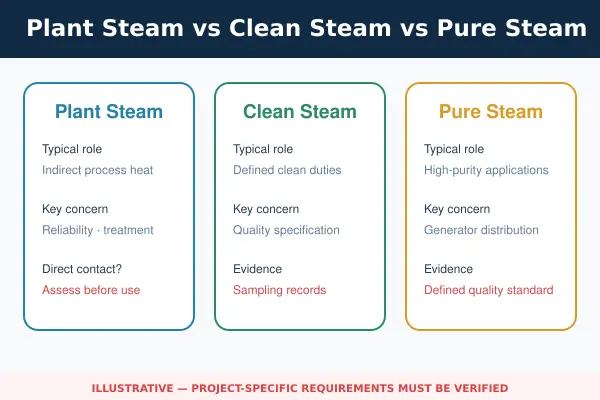
The distinction between plant steam, clean steam and pure steam is central to pharmaceutical steam-system design.
Terminology can vary between companies and markets. Each category should therefore be defined in the project URS instead of being accepted as a marketing label.
What Is Plant Steam?
Plant steam is normally generated in a conventional industrial boiler using treated feedwater and a controlled boiler-water chemistry program.
It is commonly used for:
- indirect process heating;
- building heating;
- hot-water generation;
- non-critical cleaning;
- and general plant utilities.
قد يحتوي بخار النبات على مواد كيميائية معتمدة لمعالجة مياه الغلايات. ولا ينبغي قبوله تلقائيًا للاتصال المباشر بالمنتج, الترطيب الحرج أو التعقيم المباشر.
ما هو البخار النظيف?
يشير البخار النظيف عمومًا إلى البخار الذي يتم إنتاجه في ظل ظروف أكثر تحكمًا للتطبيقات ذات متطلبات التلوث الأكثر صرامة.
قد يتم تحديد مواصفات البخار النظيف:
- feedwater quality;
- تصميم المولد;
- مواد;
- القيود العلاجية الكيميائية;
- الحدود الكيميائية;
- مواقع أخذ العينات;
- تردد المراقبة;
- جودة المكثفات;
- والمتطلبات الميكروبية أو السموم الداخلية حيثما ينطبق ذلك.
إن عبارة "البخار النظيف" وحدها لا تؤكد أن النظام يلبي المتطلبات الفعلية للتطبيقات الصيدلانية.
ما هو البخار النقي?
يرتبط البخار النقي عمومًا بتطبيقات الأدوية والتكنولوجيا الحيوية ذات الأهمية العالية.
Its required quality should be defined from:
- the intended use;
- product-contact risk;
- sterilization requirements;
- applicable pharmacopoeia;
- facility quality standards;
- and regulatory expectations.
EU GMP Annex 1 uses the wording “pure steam (clean steam),” which demonstrates why each project should define its own technical terminology and acceptance criteria.
Can a Standard Gas Boiler Generate Clean or Pure Steam?
A standard industrial gas boiler normally produces plant steam.
For a critical application, the system may use the following arrangement:
Gas-Fired Steam Boiler → Plant Steam → Clean/Pure Steam Generator → Critical Process
In this arrangement, the industrial boiler provides thermal energy to a secondary generator. The secondary generator uses appropriately selected feedwater to produce the required higher-grade steam.
This arrangement is not automatically necessary for every pharmaceutical facility. Its use depends on the steam application and contamination-risk assessment.
| Pharmaceutical Application |
Possible Steam Category |
Main Validation Concern |
| Space heating |
Plant steam |
Pressure and reliability |
| Indirect vessel heating |
Often plant steam |
Leakage risk |
| Hot-water generation |
Application-dependent |
System boundary |
| HVAC humidification |
Project-dependent |
Chemical additives and air quality |
| CIP heating |
Application-dependent |
Product-contact boundary |
| SIP |
Clean or pure steam may be required |
جودة البخار |
| Direct sterilization |
Clean or pure steam may be required |
Purity and condensate quality |
| Direct product contact |
Project-specific high-purity steam |
Contamination control |
3. هو أ 2 Ton Steam Boiler the Correct Capacity?
أ 2 ton steam boiler has a nominal capacity of 2,000 kg of steam per hour under its specified rating conditions.
This rating does not prove that the boiler is correctly sized for a particular pharmaceutical plant.
Build a Steam-Load Profile
The load assessment should document:
- minimum sustained demand;
- normal production demand;
- maximum simultaneous demand;
- peak duration;
- batch-process demand;
- cleaning demand;
- sterilization demand;
- equipment start-up;
- daily operating hours;
- production schedules;
- seasonal changes;
- and future expansion.
| Load Condition |
Required Information |
| Minimum demand |
Lowest sustained facility consumption |
| Normal demand |
Typical consumption during production |
| ذروة الطلب |
Maximum simultaneous requirement |
| Peak duration |
Length of high-demand condition |
| Batch demand |
التدفئة, cleaning or sterilization cycle |
| Start-up demand |
Steam required during plant start-up |
| Future demand |
Credible expansion requirement |
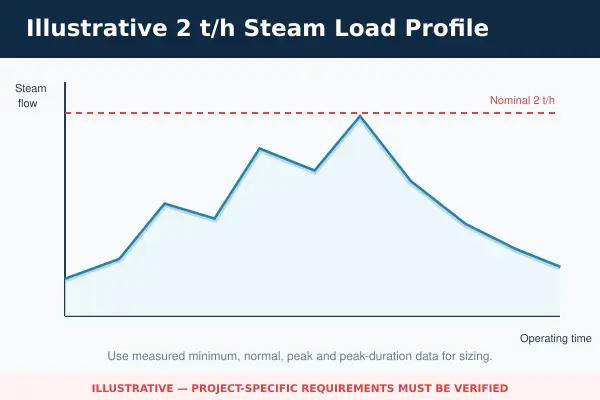
A detailed steam boiler capacity calculation should account for simultaneous demand, batch peaks, operating hours and future production expansion.
Why Pharmaceutical Loads Can Be Difficult to Size
A pharmaceutical plant may combine continuous users with short batch loads.
على سبيل المثال, normal steam demand may remain well below 2 t/h for most of the day but increase rapidly when several vessels, cleaning systems or sterilizers operate simultaneously.
Sizing from the total connected load can produce an oversized boiler. Sizing from average consumption can leave the plant without sufficient steam during a critical peak.
Risks of Oversizing
An oversized boiler may experience:
- frequent burner cycling;
- inefficient low-load operation;
- unnecessary standby losses;
- unstable pressure;
- increased control-component wear;
- and excessive capital cost.
Burner turndown should therefore be evaluated with capacity.
Buyers who are still comparing capacity, ضغط, fuel and lifecycle cost can use this دليل شراء غلايات البخار الصناعية to prepare a more complete project specification.
Risks of Undersizing
An undersized boiler may:
- fail to maintain pressure;
- increase heating time;
- delay cleaning cycles;
- extend sterilization cycles;
- restrict simultaneous equipment operation;
- and limit production capacity.
Where steam continuity is critical, the buyer should also compare one 2 t/h boiler with multiple smaller boilers or a duty/standby arrangement.
4. What Steam Pressure and Temperature Are Required?
Boiler pressure should be derived from the pressure required at the process.
Pressure is lost through:
- steam mains;
- branch piping;
- التركيبات;
- فواصل;
- المرشحات;
- صمامات التحكم;
- pressure-reducing stations;
- ومعدات العملية.
The boiler operating pressure may therefore be higher than the pressure available at a reactor, sterilizer or heat exchanger.
This guide to selecting industrial steam boiler pressure explains how process demand, pressure reduction and distribution losses affect the final operating pressure.
Boiler Operating Pressure vs. Design Pressure
These are separate parameters.
- ضغط التشغيل is the pressure normally maintained during use.
- ضغط التصميم is used for the pressure-equipment design and allowable operating envelope.
The technical agreement should identify both values.
Saturated vs. Superheated Steam
Many pharmaceutical heating and sterilization applications use saturated steam because its temperature is related to pressure and it releases latent heat as it condenses.
Superheated steam should only be specified when required by the process. It should not be selected merely because its temperature is higher.
Why Pressure Stability Matters
Unstable pressure can affect:
- process temperature;
- heating time;
- control-valve performance;
- sterilization cycles;
- batch repeatability;
- and downstream steam quality.
Pressure verification may require:
- an approved P&ID;
- piping calculations;
- calibrated pressure instruments;
- control-loop testing;
- safety-valve records;
- and load-test data.
5. Technical Specifications That Must Be Confirmed
The following schedule should be completed before final equipment approval.
| Technical Parameter |
Project Value |
Required Evidence |
| Rated steam output |
2,000 كجم/ساعة |
Datasheet and nameplate |
| Minimum stable output |
To be confirmed |
Boiler and burner data |
| Normal operating load |
To be confirmed |
Plant load profile |
| ضغط العمل |
To be confirmed |
Technical agreement |
| ضغط التصميم |
To be confirmed |
Design documents |
| درجة حرارة البخار |
To be confirmed |
Process requirement |
| Steam category |
To be confirmed |
URS and risk assessment |
| Gas type |
To be confirmed |
Fuel specification |
| Gas pressure |
To be confirmed |
Site utility data |
| Gas heating value |
To be confirmed |
Gas-supplier data |
| درجة حرارة مياه التغذية |
To be confirmed |
Heat balance |
| Condensate return |
To be confirmed |
System calculation |
| كفاءة المرجل |
To be confirmed |
Defined test basis |
| Burner turndown |
To be confirmed |
Burner datasheet |
| Electrical supply |
To be confirmed |
Electrical drawings |
| الانبعاثات |
To be confirmed |
Guarantee and test basis |
| شهادة |
To be confirmed |
Product-specific documents |
If the boiler construction has not yet been selected, compare the project requirements using this fire-tube vs. water-tube boiler guide.
Important distinctions include:
- Rated output is not average operating output.
- Working pressure is not design pressure.
- Maximum burner input is not average fuel consumption.
- Calculated efficiency is not measured efficiency.
- Plant steam is not automatically clean steam.
- Manufacturer certification does not automatically prove product-specific certification.
6. Why Use a Gas-Fired Steam Boiler?
أ غلاية بخارية تعمل بالغاز may be suitable where a pharmaceutical facility has a stable and adequately sized gas supply.
Potential advantages can include:
- automated fuel control;
- mature burner technology;
- fast load response;
- relatively simple fuel handling;
- compact fuel infrastructure;
- high automation potential;
- and compatibility with economizers.
These are general characteristics, not guaranteed results for every project.
Gas Data Required for Burner Selection
The burner supplier should receive:
- gas type;
- gas composition;
- lower or higher heating value;
- minimum gas pressure;
- maximum gas pressure;
- allowable pressure variation;
- available gas flow;
- and backup-fuel requirements.
The word “gas” alone is not sufficient for burner selection.
Gas-Train Validation
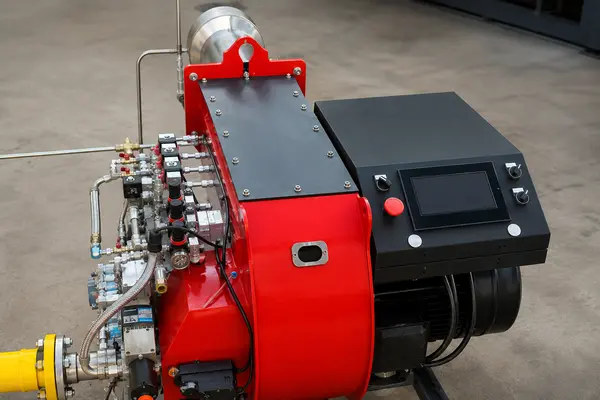
Depending on the applicable design and jurisdiction, the gas train may include:
- manual isolation;
- الترشيح;
- pressure regulation;
- automatic shutoff valves;
- high- and low-pressure protection;
- valve proving;
- leak detection;
- pressure indication;
- and emergency isolation.
The final configuration must follow the selected burner, local code and approved safety design.
7. How Much Natural Gas Does a 2 Ton Steam Boiler Consume?
There is no reliable universal gas-consumption figure for every 2 t/h steam boiler.
A practical calculation is:
Gas consumption = Steam flow × (Steam enthalpy − Feedwater enthalpy) ÷ (Boiler efficiency × Gas heating value)
For a step-by-step example, see this guide to calculating natural gas consumption for a steam boiler.
The calculation requires:
- actual steam flow;
- ضغط البخار;
- saturated or superheated steam condition;
- درجة حرارة مياه التغذية;
- boiler efficiency and its LHV or HHV basis;
- gas heating value on the same basis.
Actual gas consumption is also affected by:
- حمولة المرجل;
- تعديل الموقد;
- الهواء الزائد;
- درجة حرارة المكدس;
- عودة المكثفات;
- انفجار;
- عازلة;
- التحجيم;
- fouling;
- والصيانة.
| Gas-Consumption Data |
Required Evidence |
| Calculated rated consumption |
Formula and assumptions |
| Maximum burner input |
Burner datasheet |
| Commissioning consumption |
Calibrated gas meter |
| Average operating consumption |
Long-term operating records |
| Gas per ton of steam |
Gas and steam-flow measurements |
A fixed gas-consumption value without these conditions creates false precision.
8. Feedwater Quality and Pharmaceutical Water Risk
Feedwater quality influences boiler reliability, نقل الحرارة, تآكل, steam quality and service life.
Before selecting treatment equipment, obtain a recent raw-water analysis covering relevant parameters such as:
- صلابة;
- الرقم الهيدروجيني;
- conductivity;
- total dissolved solids;
- القلوية;
- السيليكا;
- حديد;
- chlorides;
- and site-specific contaminants.
Possible Water-Treatment Technologies
Depending on the analysis and operating conditions, treatment may include:
- الترشيح;
- تليين;
- التناضح العكسي;
- التنقية;
- نزع الهواء;
- oxygen scavenging;
- الجرعات الكيميائية;
- condensate monitoring;
- and automatic blowdown.
Not every boiler automatically requires reverse osmosis. The correct treatment process must follow the water analysis, boiler pressure and manufacturer’s limits.
Treatment Chemicals and Steam Purity
Chemicals suitable for an industrial plant-steam system may not be acceptable for direct product contact, critical humidification or sterilization.
The quality-risk assessment should determine whether boiler chemicals or contaminants could reach:
- the pharmaceutical product;
- raw materials;
- cleanroom air;
- product-contact surfaces;
- a sterilizer;
- or a clean/pure steam generator.
Condensate Return
Returning suitable condensate can reduce:
- استهلاك الوقود;
- ماء المكياج;
- chemical use;
- and thermal losses.
لكن, condensate should only be returned after evaluating potential contamination from process leaks, cleaning chemicals or other utilities.
Monitoring may include:
- conductivity;
- درجة حرارة;
- route identification;
- automatic rejection;
- and scheduled laboratory testing.
| Water-System Item |
سؤال التحقق |
شهادة |
| الماء الخام |
ما هي الملوثات الموجودة? |
تقرير المختبر |
| المياه المعالجة |
هل يلبي حدود المرجل? |
نتائج اختبار المياه |
| مياه التغذية |
يتم التحكم في درجة الحرارة والكيمياء? |
سجلات التشغيل |
| المكثفات |
هل هي آمنة للعودة? |
تقييم المخاطر |
| الجرعات الكيميائية |
هل يتم التحكم في الجرعة? |
SOP وسجلات الجرعات |
| الانفجار |
يتم إدارة تركيز المواد الصلبة الذائبة? |
بيانات الموصلية |
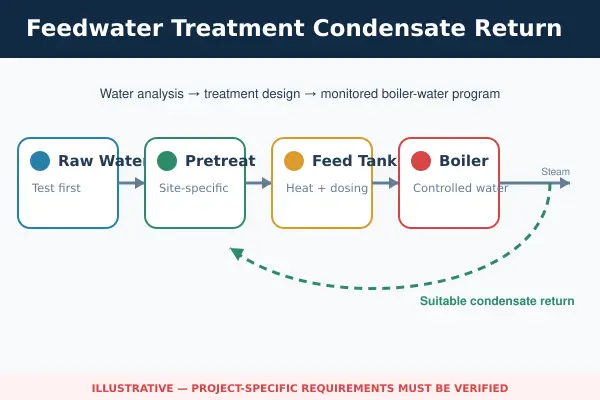
وينبغي اختيار عملية العلاج المطلوبة من التحليل الفعلي والمطبق متطلبات جودة مياه تغذية الغلايات البخارية.
9. مراقبة جودة البخار والتلوث
لا يتم تحديد جودة البخار بالضغط وحده.
جفاف البخار
الرطوبة الزائدة يمكن أن تساهم في ذلك:
- نقل الحرارة غير المستقر;
- مطرقة المياه;
- الأحمال الرطبة;
- سوء توزيع درجة الحرارة;
- وانخفاض أداء التعقيم.
قد يتطلب نظام التوزيع مناسبة:
- تحجيم الأنابيب;
- pipe slope;
- عازلة;
- steam separation;
- drainage;
- and steam trapping.
Boiler-Water Carryover
Carryover may result from:
- high boiler-water concentration;
- رغوة;
- excessive water level;
- rapid load changes;
- poor steam separation;
- or inappropriate chemical treatment.
مستوى الماء, boiler chemistry and blowdown should therefore operate as an integrated control system.
Clean or Pure Steam Testing
Where a higher steam category is required, the validation plan may need to address:
- جودة المكثفات;
- non-condensable gases;
- superheat;
- dryness;
- chemical contamination;
- endotoxin;
- microbiological risk;
- مواقع أخذ العينات;
- and sampling frequency.
The exact tests and acceptance limits should come from the intended use, applicable pharmacopoeia and approved quality-risk assessment.
10. What Auxiliary Equipment Does the Boiler Need?
A boiler pressure vessel alone does not constitute a complete pharmaceutical steam plant.
| معدات |
وظيفة |
Validation Point |
| حارق |
Controls combustion |
Model and turndown |
| Gas train |
Conditions gas supply |
Pressure and safety |
| مضخات مياه التغذية |
Supply boiler water |
Capacity and redundancy |
| Feedwater tank |
Stores feedwater |
Volume and temperature |
| مزيل الهواء |
Reduces dissolved gases |
Operating performance |
| معالجة المياه |
Conditions make-up water |
Test evidence |
| المقتصد |
Recovers flue-gas heat |
Design and bypass |
| Condensate system |
Returns usable condensate |
Contamination control |
| Blowdown system |
Controls boiler-water solids |
Conductivity strategy |
| مدخنة |
Discharges flue gas |
Draft and local rules |
| Control cabinet |
Coordinates boiler operation |
Logic and access |
| Instrumentation |
Measures process variables |
Calibration |
| Clean-steam generator |
Produces higher-grade steam |
If required |
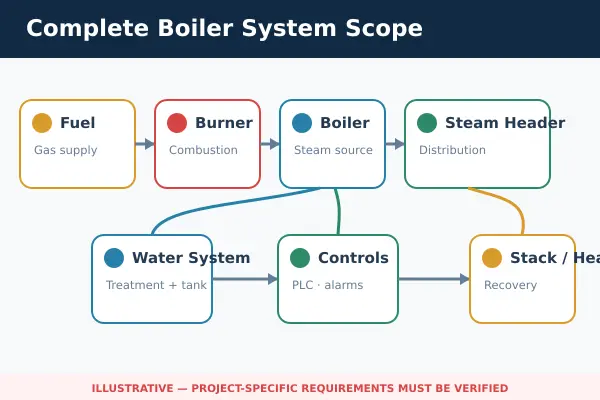
Buyers should request a clear itemized scope identifying:
- quantity;
- نموذج;
- manufacturer;
- material;
- electrical requirement;
- documentation;
- مسؤولية التثبيت;
- and commissioning responsibility.
A quotation for a boiler and burner cannot be compared directly with a quotation for a complete boiler room. This overview of typical المعدات المساعدة للغلايات can help buyers identify missing equipment and compare quotation scopes more accurately.
11. مواد, Hygienic Design and System Boundaries
A pharmaceutical project should clearly separate:
- the industrial boiler;
- the plant-steam network;
- the clean/pure steam generator;
- the higher-purity steam network;
- and the product-contact equipment.
An ordinary industrial boiler should not automatically be described as a sanitary or hygienic component.
For a clean or pure steam system, the project may need to define:
- product-contact materials;
- internal surface requirements;
- welding procedures;
- weld inspection;
- drainability;
- pipe slope;
- dead-leg control;
- passivation;
- تنظيف;
- and documentation.
These requirements should be applied to the correct system boundary rather than copied indiscriminately to every boiler-room component.
12. الأتمتة, Data Integrity and Alarm Management
A basic boiler control system may monitor or control:
- ضغط البخار;
- مستوى المياه;
- burner firing;
- flame status;
- مضخات مياه التغذية;
- gas pressure;
- تشابكات السلامة;
- and alarm conditions.
A more advanced system may collect:
- تدفق البخار;
- تدفق الغاز;
- تدفق مياه التغذية;
- درجة حرارة مياه التغذية;
- درجة حرارة المكدس;
- stack oxygen;
- معدل حرق الموقد;
- blowdown data;
- ساعات العمل;
- تاريخ التنبيه;
- واستهلاك الطاقة.
PLC, واجهة المستخدم البشرية, DCS and SCADA Integration
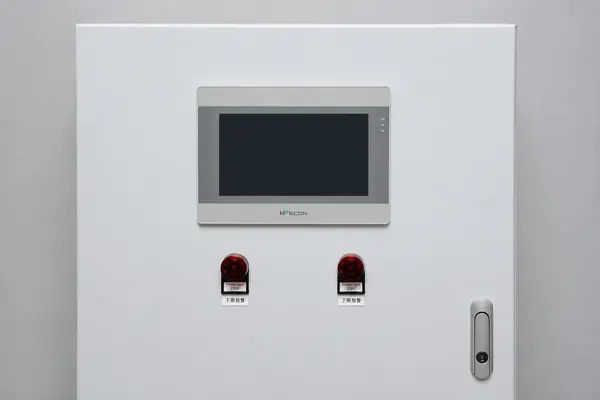
Before integration, define:
- communication protocol;
- required data points;
- read/write permissions;
- control authority;
- user accounts;
- time synchronization;
- alarm management;
- data retention;
- backup;
- and remote access.
Does the Boiler Need 21 CFR Part 11 امتثال?
A boiler PLC should not automatically be marketed as “21 CFR Part 11 compliant.”
FDA guidance explains that Part 11 ينطبق على السجلات الإلكترونية المحفوظة أو المقدمة بموجب متطلبات سجل إدارة الأغذية والعقاقير (FDA).. يعتمد ما إذا كانت بيانات الغلايات تقع ضمن هذا النطاق على كيفية استخدام شركة الأدوية للسجلات والمتطلبات الأساسية المطبقة. ادارة الاغذية والعقاقير – الجزء 11 النطاق والتطبيق
إذا كانت بيانات الغلايات أو نظام البخار تدعم قرارات الجودة, قد يحتاج المستخدم إلى التقييم:
- دقة التسجيل;
- التحكم في الوصول;
- مسارات التدقيق حيثما ينطبق ذلك;
- التحكم بالتعديل;
- النسخ الاحتياطي والاسترجاع;
- الاحتفاظ بالسجل;
- والتوقيعات الإلكترونية حيثما ينطبق ذلك.
بلك, يجب وصف منصة HMI أو SCADA فقط على أنها جزء 11 متوافقة بعد التقييم الخاص بالمشروع للنظام المحوسب الكامل.
13. تقييم السلامة والمخاطر
قد تشمل وظائف سلامة الغلاية النموذجية:
- حماية منخفضة المياه;
- حماية الضغط العالي;
- حماية فشل اللهب;
- حماية ضغط الغاز العالي والمنخفض;
- مراقبة احتراق الهواء;
- ignition-sequence control;
- pump-failure alarms;
- emergency shutdown;
- and safety-valve protection.
The final protection architecture depends on the boiler, الموقد, قطار الغاز, installation code and local jurisdiction.
Pharmaceutical Production Risks
The facility should also evaluate:
- the effect of a boiler trip on production;
- interruption of sterilization;
- interruption of cleaning;
- pressure loss at critical users;
- chemical carryover;
- contaminated condensate;
- gas leakage;
- restart requirements;
- and product disposition after a utility failure.
Redundancy
Redundancy may be justified where steam interruption creates significant production or product-quality consequences.
Possible arrangements include:
- two smaller boilers;
- one duty and one standby boiler;
- redundant feedwater pumps;
- backup fuel;
- critical spare parts;
- or alternative production scheduling.
The decision should follow a documented risk assessment rather than a general rule.
14. Codes, Certification and GMP Requirements
There is no single worldwide certification or emissions standard for every 2 غلاية بخارية تعمل بالغاز طن.
Requirements can depend on:
- بلد التثبيت;
- الولاية القضائية المحلية;
- boiler category;
- ضغط التصميم;
- وقود;
- emissions permit;
- and facility classification.
Pressure-Equipment Certification
If ASME construction is required, the quotation should identify:
- applicable BPVC section;
- Certification Mark and designator;
- certificate holder;
- موقع التصنيع;
- المعدات الدقيقة المغطاة;
- متطلبات التفتيش;
- and required data reports.
ASME states that its BPVC Certification Program evaluates manufacturer or assembler quality-control systems for defined scopes. Products bearing the applicable ASME Certification Mark must comply with the relevant BPVC section. A general statement that a company is “ASME certified” does not prove that a specific boiler will receive the required mark. ASME Boiler and Pressure Vessel Certification
For EU projects, the applicable Pressure Equipment Directive requirements and conformity-assessment scope should be identified before production.
Is a Boiler GMP Certified?
GMP applies to pharmaceutical manufacturing facilities, utilities, processes, documentation and quality systems.
A boiler cannot make an entire pharmaceutical facility GMP-compliant by itself.
Instead of accepting a general “GMP boiler” claim, بسأل:
- Which GMP-related user requirement is addressed?
- Which system boundary is included?
- What materials are supplied?
- What documents are included?
- What qualification support is available?
- What performance is guaranteed?
- Who is responsible for validation?
الانبعاثات
The burner and emissions configuration should be selected for the installation market.
Potential regulated emissions include:
- أكاسيد النيتروجين;
- CO;
- SOx;
- الجسيمات;
- and other jurisdiction-specific pollutants.
A low-NOx claim should identify:
- guaranteed value;
- وقود;
- حمولة المرجل;
- reference oxygen;
- and test method.
15. Supplier and Documentation Validation
Pharmaceutical utility projects normally require more documentation than a generic industrial boiler purchase.
Engineering Documents
Request, as applicable:
- ورقة البيانات الفنية;
- رسم الترتيب العام;
- مخطط تدفق العملية;
- ص&ID;
- heat and mass balance;
- utility-consumption schedule;
- electrical drawings;
- control narrative;
- alarm list;
- قائمة الإدخال/الإخراج;
- component specifications;
- and compliance matrix.
Manufacturing Records
Useful quality records may include:
- material certificates;
- material traceability;
- welding procedures;
- welder qualifications;
- non-destructive examination;
- dimensional inspection;
- hydrostatic testing;
- safety-valve records;
- control-system testing;
- and factory acceptance records.
Operating Documents
The handover package may include:
- دليل التشغيل;
- دليل الصيانة;
- قائمة قطع الغيار الموصى بها;
- calibration certificates;
- training materials;
- troubleshooting procedures;
- ضمان;
- and final as-built drawings.
Supplier Claim Verification
| مطالبة المورد |
Evidence to Request |
| كفاءة عالية |
وقود, حمولة, feedwater temperature and test basis |
| أكاسيد النيتروجين منخفضة |
Guaranteed value and reference conditions |
| Fully automatic |
Control narrative and I/O list |
| بخار نظيف |
Generator design and quality-test protocol |
| GMP suitable |
Requirement-by-requirement evidence |
| ASME or CE |
Exact product and document scope |
| Low gas consumption |
Calculation and operating conditions |
| Pharmaceutical grade |
Defined system boundary and specification |
16. URS, DQ, IQ, OQ and PQ Validation Checklist
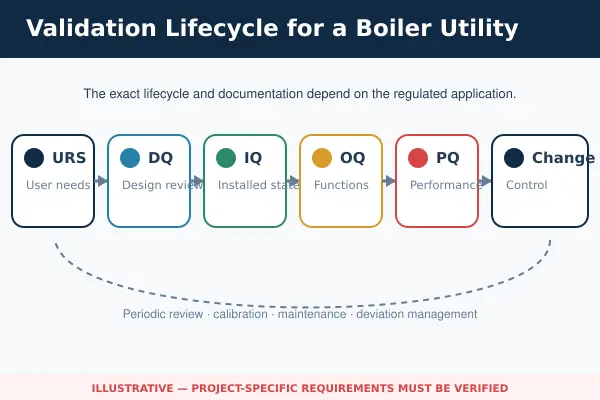
EU GMP Annex 15 sets out lifecycle principles for qualification and validation, including user requirements and equipment qualification. The extent of qualification should be justified through documented risk assessment. European Commission—EU GMP Annex 15
User Requirement Specification—URS
The URS defines what the pharmaceutical user needs the steam system to do.
It should address:
- steam applications;
- required steam category;
- الحد الأدنى, normal and peak demand;
- peak duration;
- ضغط العمل;
- التوفر;
- مياه التغذية;
- عودة المكثفات;
- مواد;
- الأتمتة;
- أمان;
- الانبعاثات;
- documentation;
- qualification support;
- and acceptance criteria.
The URS should ideally be approved before supplier selection.
Design Qualification—DQ
DQ verifies that the proposed design satisfies the approved URS.
Review:
- capacity calculations;
- burner turndown;
- working and design pressure;
- steam category;
- gas-supply conditions;
- معالجة المياه;
- condensate strategy;
- system materials;
- piping arrangement;
- control architecture;
- alarm philosophy;
- safety functions;
- امتثال;
- maintenance access;
- and document scope.
Installation Qualification—IQ
IQ verifies that equipment has been supplied and installed according to the approved design.
Typical IQ checks include:
- manufacturer;
- نموذج;
- serial number;
- equipment location;
- foundation;
- boiler orientation;
- piping connections;
- قطار الغاز;
- التوصيلات الكهربائية;
- instrumentation;
- component materials;
- utility identification;
- calibration status;
- drawing accuracy;
- and document availability.
Operational Qualification—OQ
OQ demonstrates that the boiler and associated systems operate as intended within the defined operating range.
Possible OQ tests include:
- normal start-up;
- normal shutdown;
- حماية منخفضة المياه;
- high-pressure shutdown;
- flame failure;
- high and low gas-pressure trips;
- combustion-air failure;
- pump failure;
- emergency shutdown;
- alarm generation;
- control-loop operation;
- تعديل الموقد;
- automatic sequencing;
- communication;
- user access;
- and data recording.
Performance Qualification—PQ
PQ evaluates the steam system under actual or representative operating conditions.
اعتمادا على التطبيق, it may include:
- إخراج البخار;
- pressure stability;
- استجابة الحمل;
- gas consumption;
- continuous-operation capability;
- batch-cycle performance;
- جودة البخار;
- point-of-use performance;
- جودة المكثفات;
- and clean/pure steam tests where applicable.
Validation Responsibility Matrix
| Qualification Stage |
Pharmaceutical User |
Boiler Supplier |
Installer |
Validation Team |
| URS |
Leads and approves |
Provides technical input |
Reviews interfaces |
Reviews |
| DQ |
Approves |
Supplies design |
Supports |
Verifies |
| IQ |
Verifies installation |
Supplies documents |
Installs |
Executes/reviews |
| OQ |
Witnesses and approves |
Tests and supports |
Supports |
Executes/reviews |
| PQ |
Owns process acceptance |
Provides support |
Supports |
Executes/reviews |
Final responsibilities should be defined in the contract and validation plan.
17. FAT, SAT and Commissioning
Factory Acceptance Test
A FAT may include:
- equipment configuration;
- أبعاد;
- component models;
- nameplate;
- fabrication records;
- hydrostatic-test records;
- control-system operation;
- alarm simulation;
- safety-interlock simulation;
- document review;
- and packing-scope verification.
Not every performance condition can necessarily be tested at the factory. The FAT protocol should clearly identify test limitations and items deferred to site commissioning.
Site Acceptance Test
A SAT may verify:
- installation condition;
- gas pressure;
- feedwater quality;
- electrical supply;
- الأنابيب;
- مدخنة;
- instrumentation;
- calibration;
- communication;
- أنظمة السلامة;
- and site-specific interfaces.
Typical Commissioning Sequence
Site inspection → Utility verification → Water-system check → Gas-system check → Electrical check → Cold commissioning → Burner commissioning → Safety-interlock testing → Load test → Training → Handover
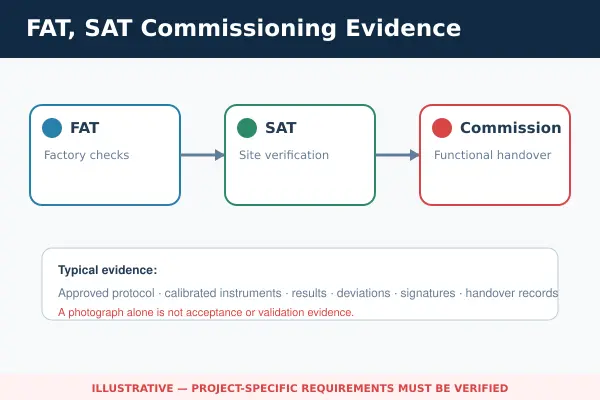
The exact sequence should follow the approved commissioning method, equipment instructions and local requirements.
Punch-List Closure
Final handover should address:
- incomplete installation;
- drawing discrepancies;
- missing calibration;
- alarm problems;
- documentation gaps;
- missing spare parts;
- incomplete training;
- and unresolved test failures.
18. How Should Boiler Performance Be Accepted?
Design values, contractual guarantees and measured results should be recorded separately.
Efficiency should specify:
- calculated or measured;
- LHV or HHV basis;
- fuel specification;
- حمولة المرجل;
- درجة حرارة مياه التغذية;
- درجة حرارة المكدس;
- excess air or oxygen;
- economizer inclusion;
- and auxiliary-power treatment.
This guide to كفاءة الغلايات البخارية الصناعية explains the difference between rated boiler efficiency and actual steam-system performance.
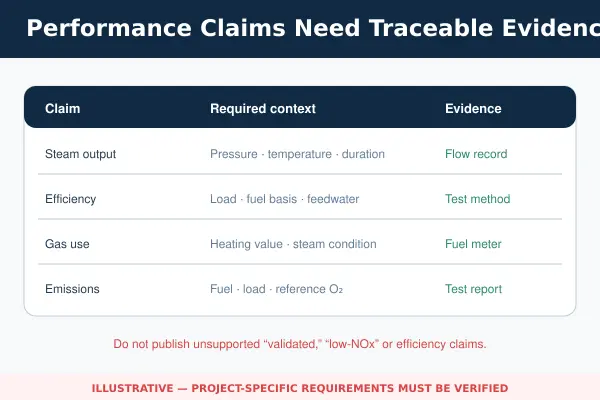
The evidence principle is simple:
Design data, contractual guarantees and measured operating results are three different forms of evidence.
19. صيانة, Calibration and Change Control
Qualification does not end the system lifecycle.
الصيانة الوقائية
The maintenance program may cover:
- الموقد;
- gas valves;
- مضخات مياه التغذية;
- water-level devices;
- pressure controls;
- safety valves;
- heat-transfer surfaces;
- معدات معالجة المياه;
- نظام التفجير;
- مصائد البخار;
- and condensate equipment.
Calibration
Potentially critical instruments include:
- مقاييس الضغط;
- pressure transmitters;
- أجهزة استشعار درجة الحرارة;
- steam-flow meters;
- gas-flow meters;
- feedwater-flow meters;
- water-level instruments;
- conductivity instruments;
- and emissions instruments.
Calibration frequency should be based on:
- instrument criticality;
- manufacturer recommendations;
- operating history;
- quality-system requirements;
- and previous calibration results.
Change Control
Changes to equipment, الأنابيب, معالجة المياه, control logic, software or operating procedures should be assessed for their effect on:
- أمان;
- جودة البخار;
- validated state;
- electronic records;
- صيانة;
- and process performance.
Requalification may be necessary when a change materially affects the system.
Critical Spare Parts
A pharmaceutical steam-system spare-parts strategy may include:
- flame detector;
- ignition transformer;
- gas valves;
- pressure switches;
- water-level probes;
- PLC modules;
- HMI components;
- pump seals;
- transmitters;
- controllers;
- and control relays.
20. Complete 2 Ton Pharmaceutical Boiler Validation Checklist
أ. Process Requirements
ب. Boiler and Burner
ج. Water and Steam Quality
د. Auxiliary Systems
ه. Controls and Safety
ف. Compliance and Documentation
21. Information Needed to Quote a 2 طن غلاية بخار غاز
A project-specific quotation should begin with the following information:
- الحد الأدنى من الطلب على البخار
- الطلب العادي على البخار
- ذروة الطلب على البخار
- Peak duration
- Required boiler working pressure
- Required point-of-use pressure
- Steam application
- Plant, متطلبات البخار النظيف أو النقي
- متطلبات البخار المشبع أو المسخن
- نوع الغاز وتكوينه
- Gas heating value
- نطاق ضغط الغاز المتاح
- ساعات العمل يوميا
- أيام التشغيل في السنة
- درجة حرارة مياه التغذية
- Raw-water analysis
- نسبة عودة المكثفات
- جودة المكثفات
- بلد التثبيت
- حدود الانبعاثات المحلية
- شهادة معدات الضغط المطلوبة
- إمدادات الكهرباء المتاحة
- أبعاد غرفة المرجل
- قيود النقل
- متطلبات الأتمتة والاتصالات
- متطلبات وثيقة التأهيل
- تاريخ التسليم المطلوب
يمكن للمشترين أيضًا مراجعة خيارات التكوين المتاحة لـ 2 طن غلايات بخارية صناعية قبل طلب عرض أسعار خاص بالمشروع.
تسمح هذه المدخلات للشركة المصنعة بالانتقال من عام 2 سعر الغلاية بالطن وفقًا لاقتراح نظام بخار دوائي محدد تقنيًا.
الأسئلة المتداولة
ما مقدار البخار الذي أ 2 إنتاج المراجل طن?
أ 2 ton steam boiler has a nominal capacity of 2,000 kg of steam per hour under its specified rating conditions. يعتمد الإخراج الفعلي على حمل التشغيل, ضغط البخار, درجة حرارة مياه التغذية, ظروف الوقود وأداء المعدات.
هو أ 2 غلاية بخارية تعمل بالغاز طن مناسبة لمصنع أدوية?
يمكن أن تكون مناسبة, but capacity alone is insufficient. The boiler must match the facility’s steam-load profile, ضغط العمل, steam category, gas supply, مياه التغذية, الضوابط, safety and compliance requirements.
What is the difference between plant steam and clean steam?
Plant steam is normally used for indirect heating and general utilities. Clean or pure steam is produced and controlled for more critical applications. The exact quality requirements should be defined in the project URS.
Can plant steam directly contact pharmaceutical products?
Plant steam should not automatically be accepted for direct product contact. Direct-contact applications require a documented risk assessment and steam-quality specification appropriate to the product and process.
Can a standard gas boiler produce pure steam?
A standard industrial boiler generally produces plant steam. It may provide the heating energy for a separate clean or pure steam generator when a higher steam category is required.
How much natural gas does a 2 تستهلك غلايات البخار طنًا?
Gas consumption depends on steam enthalpy, درجة حرارة مياه التغذية, كفاءة المرجل, gas heating value and operating load. A fixed universal figure is unreliable without these conditions.
Does a pharmaceutical steam boiler need reverse osmosis?
Not automatically. Water treatment should be selected from the raw-water analysis, ضغط التشغيل, steam category, condensate return and manufacturer’s limits.
What documents are required for boiler qualification?
Documents may include the URS, DQ records, datasheets, drawings, ص&IDs, material records, inspection reports, calibration certificates, FAT/SAT records, IQ/OQ protocols, PQ data, manuals and training records.
What is checked during boiler IQ?
IQ confirms that the boiler, auxiliaries, utilities, instruments, piping and documents have been installed or supplied according to the approved design.
What is checked during boiler OQ?
OQ tests normal operation, الضوابط, إنذار, تعديل الموقد, تشابكات السلامة, automatic sequences and defined operating ranges.
Does every pharmaceutical boiler need PQ?
The required qualification extent should follow the pharmaceutical manufacturer’s validation strategy and risk assessment. Systems supporting critical processes normally require documented performance confirmation under representative conditions.
Does every pharmaceutical boiler require clean steam?
لا. General utilities and indirect heating may use plant steam. Clean or pure steam may be required for direct sterilization, product contact or other critical applications.
Does a pharmaceutical boiler need to be GMP certified?
GMP compliance applies to the complete pharmaceutical operation, including facilities, utilities, procedures and quality systems. A boiler product alone cannot establish GMP compliance.
Does an ASME-authorized manufacturer make every boiler ASME stamped?
لا. Manufacturer authorization and product-specific marking are different. The contract should identify the applicable BPVC section, Certification Mark, equipment scope and required data reports.
Should a pharmaceutical plant install a standby boiler?
Standby capacity depends on the effect of steam interruption on production, تنظيف, sterilization and product quality. The decision should be based on a documented risk assessment.
خاتمة: Validate the Complete Pharmaceutical Steam System
أ 2 ton gas steam boiler can be a practical energy source for pharmaceutical processing, but its nominal 2,000 kg/h rating is only one part of the selection.
The project should first determine whether each application requires plant steam, clean steam or pure steam. It should then confirm the actual load profile, point-of-use pressure, gas conditions, feedwater quality, المعدات المساعدة, control functions and applicable compliance requirements.
The strongest validation process is:
Define the steam application → classify the steam category → establish the load profile → confirm pressure and fuel → design water treatment → define auxiliaries and controls → assess contamination risk → verify compliance → complete FAT and SAT → execute DQ, IQ, OQ and PQ → confirm performance.
A conventional industrial boiler may be suitable for indirect pharmaceutical heating while a separate clean or pure steam generator serves critical users. يجب أن تتبع بنية النظام الصحيحة URS المعتمدة, مخاطر العملية ومتطلبات الجودة المطبقة.
إذا كنت تقوم بإعداد أ 2 مشروع غلايات غاز طن لتجهيز الأدوية, توفير تطبيق البخار, ضغط العمل, minimum and peak demand, gas specification, جدول التشغيل, تحليل المياه, بلد التثبيت ومتطلبات وثيقة التأهيل للمقترح الهندسي الخاص بالمشروع.
المراجع الرسمية




الخامسiew مراجعات عملائنا
"لقد اشتريت غلاية بخارية Fangkuai لمصنعي وهي تعمل بشكل لا تشوبه شائبة منذ شهور. جودة المواد وبناء المرجل مثير للإعجاب. كما أنها موفرة للطاقة بشكل كبير, مما ساعدنا على توفير المال على فواتير الطاقة لدينا. أوصي بشدة بمنتجات Fangkuai لأي شخص يحتاج إلى حلول تدفئة موثوقة وفعالة."
جون
الولايات المتحدة الأمريكية"خدمة العملاء في Fangkuai من الدرجة الأولى. لقد ساعدوني في اختيار الغلاية المثالية لاحتياجاتي وقدموا دعمًا كبيرًا طوال العملية. كانت عملية التثبيت أيضًا سلسة للغاية وتجاوزت الغلاية توقعاتي. إنه سهل الاستخدام والصيانة, وكفاءة الطاقة رائعة. أوصي بشدة بمنتجات Fangkuai لأي شخص يحتاج إلى حلول تدفئة موثوقة وفعالة."
خوان
المكسيك"أنا معجب جدًا بجودة غلاية الماء الساخن من Fangkuai. لقد تم بناؤه ليدوم وتجاوز توقعاتي. كانت عملية التثبيت سلسة للغاية وكانت خدمة العملاء ممتازة. غلاية الماء الساخن سهلة التشغيل والصيانة, وكفاءة الطاقة رائعة. أوصي بشدة بغلايات الماء الساخن من Fangkuai."
جاك
أستراليا"أنا معجب جدًا بجودة غلاية الماء الساخن من Fangkuai. لقد تم بناؤه ليدوم وتجاوز توقعاتي. كانت عملية التثبيت سلسة للغاية وكانت خدمة العملاء ممتازة. غلاية الماء الساخن سهلة التشغيل والصيانة, وكفاءة الطاقة رائعة. أوصي بشدة بغلايات الماء الساخن من Fangkuai."
جاك
أستراليا"لقد استخدمنا غلاية الزيت الحراري Fangkuai لمصنعنا الكيميائي لسنوات ولم يخذلنا أبدًا. الغلاية متينة للغاية ويمكنها تحمل الظروف القاسية. كما أنها سهلة التشغيل والصيانة, مما ساعدنا على توفير الوقت والمال على الصيانة. غلايات الزيت الحراري من Fangkuai هي من الدرجة الأولى وأنا أوصي بها بشدة لأي شخص يحتاج إلى حلول تدفئة موثوقة."
تشانغ
الصين"مولد البخار من Fangkuai مثالي لأعمالي الصغيرة. إنه سهل الاستخدام للغاية ويتطلب الحد الأدنى من الصيانة. كما أنها موفرة للطاقة بشكل كبير, مما ساعدني على توفير المال على فواتير الطاقة الخاصة بي. خدمة العملاء في Fangkuai ممتازة أيضًا. إنهم متجاوبون للغاية ومستعدون دائمًا للمساعدة. أوصي بشدة بمولدات البخار من Fangkuai."
أحمد
مصر"لقد استخدمنا غلاية الزيت الحراري Fangkuai لمصنعنا الكيميائي لسنوات ولم يخذلنا أبدًا. الغلاية متينة للغاية ويمكنها تحمل الظروف القاسية. كما أنها سهلة التشغيل والصيانة, مما ساعدنا على توفير الوقت والمال على الصيانة. غلايات الزيت الحراري من Fangkuai هي من الدرجة الأولى وأنا أوصي بها بشدة لأي شخص يحتاج إلى حلول تدفئة موثوقة."
تشانغ
الصين"جعلت المعدات المساعدة لـ Fangkuai نظام الغلايات الخاص بي أفضل. جودة المعدات استثنائية والأسعار معقولة جدًا. ساعدت المعدات في تحسين كفاءة وأداء نظام الغلايات الخاص بي, مما أدى إلى توفير كبير في التكاليف. أوصي بشدة بمعدات Fangkuai المساعدة لأي شخص يحتاج إلى ملحقات غلاية عالية الجودة."
ماريك
المملكة المتحدة"غلاية الزيت الحراري من شركة Fangkuai سهلة التشغيل والصيانة. لقد ساعدنا في توفير الوقت والمال على الصيانة, مما أدى إلى توفير كبير في التكاليف. جودة المواد وبناء المرجل استثنائية. كما أنها موفرة للطاقة بشكل كبير, مما ساعدنا على توفير المال على فواتير الطاقة لدينا. أوصي بشدة بغلاية الزيت الحراري من Fangkuai ."
ألين
البرازيل