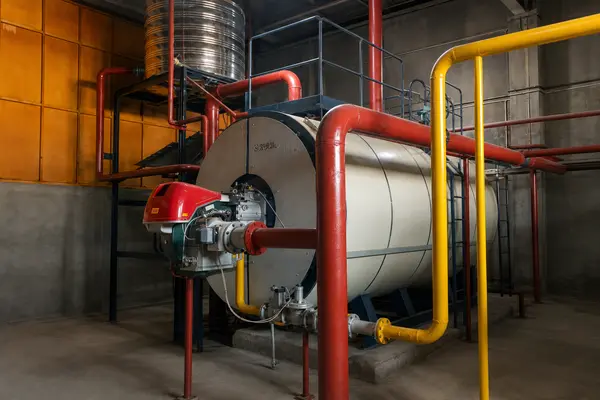
Selecting a 2 ton gas steam boiler for pharmaceutical processing involves much more than confirming that the boiler can produce 2,000 kg di vapore all'ora.
A pharmaceutical facility may use steam for reactor heating, hot-water generation, HVAC humidification, equipment cleaning, sterilization or steam-in-place operations. These applications do not necessarily require the same steam quality.
Plant steam may be suitable for indirect heating and general utilities. Clean or pure steam may be required when steam directly contacts products, materials or critical product-contact surfaces.
The correct selection process must therefore answer four questions:
This guide provides a practical validation checklist covering process requirements, boiler sizing, qualità del vapore, trattamento dell'acqua, gas consumption, sicurezza, automazione, supplier documentation, FAT, SAT, DQ, IQ, OQ and PQ.
It does not establish that a specific boiler complies with GMP, FDA, COME ME, CE or another requirement. Compliance must be demonstrated using project-specific documents, qualification records and applicable installation-market requirements.
UN 2 ton gas steam boiler for pharmaceutical processing should be validated against the actual steam application, minimum and peak demand, Pressione di lavoro, required steam category, specifica del gas, feedwater quality, sistema di condensa, materiali, automazione, safety functions, emissions rules and qualification-document requirements.
If steam directly contacts products or critical product-contact surfaces, a conventional industrial boiler may only provide plant steam to a separate clean or pure steam generator.
| Validation Area | Key Question | Evidence Required |
|---|---|---|
| Capacità | Does 2,000 kg/h match actual demand? | Steam-load profile |
| Pressione | What pressure must reach each user? | Process specification |
| Steam grade | Is plant, clean or pure steam required? | URS and risk assessment |
| Gas supply | Can the fuel system support full load? | Specifica del gas |
| Acqua di alimentazione | Is treatment appropriate? | Raw-water analysis |
| Qualità del vapore | Could moisture or contaminants reach the process? | Steam-quality plan |
| Controlli | Can critical operation and alarms be recorded? | Control narrative and I/O list |
| Sicurezza | Have protective functions been tested? | Interlock test records |
| Conformità | Which codes apply at the installation site? | Compliance matrix |
| Qualification | Are DQ, IQ, OQ and PQ defined? | Approved protocols |
| Prestazione | Has actual output been measured? | Commissioning report |
The key procurement principle is:
Validate the complete steam system—not only the boiler pressure vessel.
Steam can perform several functions inside a pharmaceutical facility. The point of use determines the required pressure, availability and steam quality.
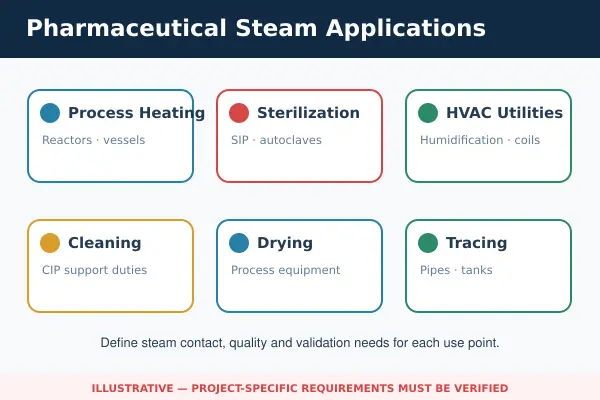
Steam is commonly supplied to jackets, coils and heat exchangers used for:
Where steam remains physically separated from the product by a suitable heat-transfer surface, plant steam may be acceptable. The facility should still evaluate the consequences of tube leakage, jacket failure or condensate contamination.
Steam may supply energy to:
The steam category depends on whether steam, condensate or treatment chemicals could cross the product-contact boundary.
Pharmaceutical facilities may use steam for air heating or humidification.
Humidification requires careful assessment because boiler-water treatment chemicals or entrained contaminants may enter the air-handling system. The facility should determine whether ordinary plant steam is acceptable or whether a higher-quality steam source is required.
Sterilization and SIP applications can have stricter steam-quality requirements than ordinary process heating.
EU GMP Annex 1 states that feedwater for pure-steam generators should be appropriately purified. It also states that pure-steam generators should be designed, qualified and operated to meet defined chemical and endotoxin requirements. Steam used as a direct sterilizing agent should be of suitable quality and should not contain additives at levels that could contaminate products or equipment. European Commission—EU GMP Annex 1
Other uses may include:
The engineering team should prepare a complete steam-consumer list before confirming that a 2 ton gas steam boiler is suitable.
The distinction between plant steam, clean steam and pure steam is central to pharmaceutical steam-system design.
Terminology can vary between companies and markets. Each category should therefore be defined in the project URS instead of being accepted as a marketing label.
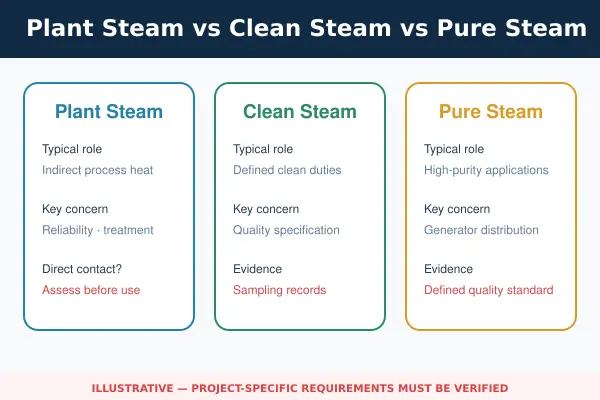
Plant steam is normally generated in a conventional industrial boiler using treated feedwater and a controlled boiler-water chemistry program.
It is commonly used for:
Plant steam may contain approved boiler-water treatment chemicals. It should not automatically be accepted for direct product contact, critical humidification or direct sterilization.
Clean steam generally refers to steam produced under more controlled conditions for applications with stricter contamination requirements.
A clean-steam specification may define:
The expression “clean steam” alone does not confirm that a system meets a pharmaceutical application’s actual requirements.
Pure steam is generally associated with higher-criticality pharmaceutical and biotechnology applications.
Its required quality should be defined from:
EU GMP Annex 1 uses the wording “pure steam (clean steam),” which demonstrates why each project should define its own technical terminology and acceptance criteria.
A standard industrial gas boiler normally produces plant steam.
For a critical application, the system may use the following arrangement:
Gas-Fired Steam Boiler → Plant Steam → Clean/Pure Steam Generator → Critical Process
In this arrangement, the industrial boiler provides thermal energy to a secondary generator. The secondary generator uses appropriately selected feedwater to produce the required higher-grade steam.
This arrangement is not automatically necessary for every pharmaceutical facility. Its use depends on the steam application and contamination-risk assessment.
| Pharmaceutical Application | Possible Steam Category | Main Validation Concern |
|---|---|---|
| Space heating | Plant steam | Pressure and reliability |
| Indirect vessel heating | Often plant steam | Leakage risk |
| Hot-water generation | Dipendente dall'applicazione | System boundary |
| HVAC humidification | Project-dependent | Chemical additives and air quality |
| CIP heating | Dipendente dall'applicazione | Product-contact boundary |
| SIP | Clean or pure steam may be required | Qualità del vapore |
| Direct sterilization | Clean or pure steam may be required | Purity and condensate quality |
| Direct product contact | Project-specific high-purity steam | Contamination control |
UN 2 ton steam boiler has a nominal capacity of 2,000 kg of steam per hour under its specified rating conditions.
This rating does not prove that the boiler is correctly sized for a particular pharmaceutical plant.
The load assessment should document:
| Condizione di carico | Required Information |
|---|---|
| Domanda minima | Lowest sustained facility consumption |
| Domanda normale | Typical consumption during production |
| Picco della domanda | Maximum simultaneous requirement |
| Durata del picco | Length of high-demand condition |
| Batch demand | Riscaldamento, cleaning or sterilization cycle |
| La domanda di avvio | Steam required during plant start-up |
| Domanda futura | Credible expansion requirement |
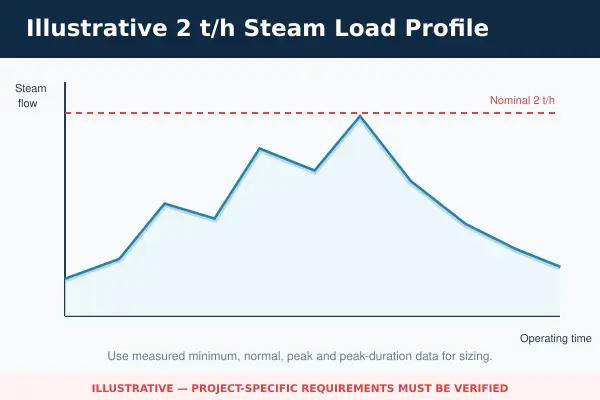
A detailed steam boiler capacity calculation should account for simultaneous demand, batch peaks, operating hours and future production expansion.
A pharmaceutical plant may combine continuous users with short batch loads.
Per esempio, normal steam demand may remain well below 2 t/h for most of the day but increase rapidly when several vessels, cleaning systems or sterilizers operate simultaneously.
Sizing from the total connected load can produce an oversized boiler. Sizing from average consumption can leave the plant without sufficient steam during a critical peak.
An oversized boiler may experience:
Burner turndown should therefore be evaluated with capacity.
Buyers who are still comparing capacity, pressione, fuel and lifecycle cost can use this industrial steam boiler buying guide to prepare a more complete project specification.
An undersized boiler may:
Where steam continuity is critical, the buyer should also compare one 2 t/h boiler with multiple smaller boilers or a duty/standby arrangement.
Boiler pressure should be derived from the pressure required at the process.
Pressure is lost through:
The boiler operating pressure may therefore be higher than the pressure available at a reactor, sterilizer or heat exchanger.
This guide to selecting industrial steam boiler pressure explains how process demand, pressure reduction and distribution losses affect the final operating pressure.
These are separate parameters.
The technical agreement should identify both values.
Many pharmaceutical heating and sterilization applications use saturated steam because its temperature is related to pressure and it releases latent heat as it condenses.
Superheated steam should only be specified when required by the process. It should not be selected merely because its temperature is higher.
Unstable pressure can affect:
Pressure verification may require:
The following schedule should be completed before final equipment approval.
| Parametro tecnico | Valore del progetto | Prove richieste |
|---|---|---|
| Produzione di vapore nominale | 2,000 kg/h | Scheda tecnica e targhetta |
| Minimum stable output | To be confirmed | Dati caldaia e bruciatore |
| Carico operativo normale | To be confirmed | Profilo di carico dell'impianto |
| Pressione di esercizio | To be confirmed | Accordo tecnico |
| Pressione di progetto | To be confirmed | Documenti di progettazione |
| Temperatura del vapore | To be confirmed | Process requirement |
| Steam category | To be confirmed | URS and risk assessment |
| Gas type | To be confirmed | Specifica del carburante |
| Gas pressure | To be confirmed | Dati di utilità del sito |
| Potere calorifico del gas | To be confirmed | Gas-supplier data |
| Temperatura dell'acqua di alimentazione | To be confirmed | Heat balance |
| Condensate return | To be confirmed | System calculation |
| Efficienza della caldaia | To be confirmed | Defined test basis |
| Spegnimento del bruciatore | To be confirmed | Scheda tecnica del bruciatore |
| Alimentazione elettrica | To be confirmed | Disegni elettrici |
| Emissioni | To be confirmed | Guarantee and test basis |
| Certificazione | To be confirmed | Product-specific documents |
If the boiler construction has not yet been selected, compare the project requirements using this fire-tube vs. water-tube boiler guide.
Important distinctions include:
UN caldaia a vapore alimentata a gas may be suitable where a pharmaceutical facility has a stable and adequately sized gas supply.
Potential advantages can include:
These are general characteristics, not guaranteed results for every project.
The burner supplier should receive:
The word “gas” alone is not sufficient for burner selection.
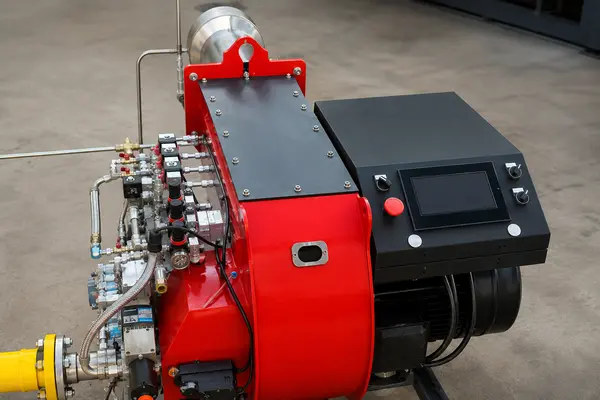
Depending on the applicable design and jurisdiction, the gas train may include:
The final configuration must follow the selected burner, local code and approved safety design.
Non esiste un dato universale affidabile sul consumo di gas per ciascuno 2 t/h steam boiler.
Un calcolo pratico è:
Gas consumption = Steam flow × (Steam enthalpy − Feedwater enthalpy) ÷ (Boiler efficiency × Gas heating value)
For a step-by-step example, see this guide to calculating natural gas consumption for a steam boiler.
The calculation requires:
Actual gas consumption is also affected by:
| Gas-Consumption Data | Prove richieste |
|---|---|
| Calculated rated consumption | Formula and assumptions |
| Maximum burner input | Scheda tecnica del bruciatore |
| Commissioning consumption | Calibrated gas meter |
| Consumo operativo medio | Long-term operating records |
| Gas per ton of steam | Gas and steam-flow measurements |
A fixed gas-consumption value without these conditions creates false precision.
Feedwater quality influences boiler reliability, trasferimento di calore, corrosione, steam quality and service life.
Before selecting treatment equipment, obtain a recent raw-water analysis covering relevant parameters such as:
Depending on the analysis and operating conditions, treatment may include:
Not every boiler automatically requires reverse osmosis. The correct treatment process must follow the water analysis, boiler pressure and manufacturer’s limits.
Chemicals suitable for an industrial plant-steam system may not be acceptable for direct product contact, critical humidification or sterilization.
The quality-risk assessment should determine whether boiler chemicals or contaminants could reach:
Returning suitable condensate can reduce:
Tuttavia, condensate should only be returned after evaluating potential contamination from process leaks, cleaning chemicals or other utilities.
Monitoring may include:
| Water-System Item | Validation Question | Evidence |
|---|---|---|
| Raw water | What contaminants are present? | Laboratory report |
| Treated water | Does it meet boiler limits? | Water-test results |
| Acqua di alimentazione | Are temperature and chemistry controlled? | Operating records |
| Condensate | Is it safe to return? | Risk assessment |
| Chemical dosing | Is dosage controlled? | SOP and dosing records |
| Scarico | Is dissolved-solid concentration managed? | Conductivity data |
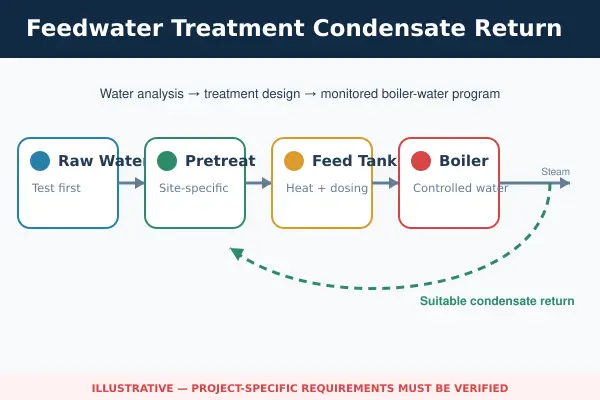
The required treatment process should be selected from the actual analysis and the applicable steam boiler feedwater-quality requirements.
Steam quality is not determined by pressure alone.
Excessive moisture can contribute to:
The distribution system may require suitable:
Carryover may result from:
Livello dell'acqua, boiler chemistry and blowdown should therefore operate as an integrated control system.
Where a higher steam category is required, the validation plan may need to address:
The exact tests and acceptance limits should come from the intended use, applicable pharmacopoeia and approved quality-risk assessment.
A boiler pressure vessel alone does not constitute a complete pharmaceutical steam plant.
| Attrezzatura | Funzione | Validation Point |
|---|---|---|
| Bruciatore | Controls combustion | Model and turndown |
| Gas train | Conditions gas supply | Pressure and safety |
| Pompe per l'acqua di alimentazione | Supply boiler water | Capacity and redundancy |
| Feedwater tank | Stores feedwater | Volume and temperature |
| Disaeratore | Reduces dissolved gases | Operating performance |
| Trattamento delle acque | Condiziona l'acqua di reintegro | Test evidence |
| Economizzatore | Recupera il calore dei fumi | Design and bypass |
| Sistema di condensa | Returns usable condensate | Contamination control |
| Blowdown system | Controls boiler-water solids | Conductivity strategy |
| Camino | Discharges flue gas | Draft and local rules |
| Armadio di controllo | Coordina il funzionamento della caldaia | Logic and access |
| Strumentazione | Measures process variables | Calibration |
| Clean-steam generator | Produces higher-grade steam | If required |
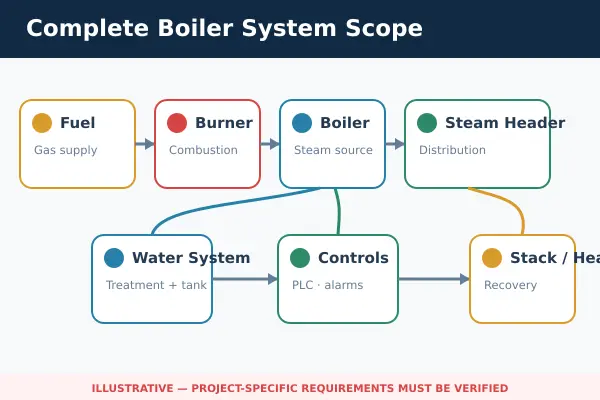
Buyers should request a clear itemized scope identifying:
A quotation for a boiler and burner cannot be compared directly with a quotation for a complete boiler room. This overview of typical apparecchiature ausiliarie della caldaia can help buyers identify missing equipment and compare quotation scopes more accurately.
A pharmaceutical project should clearly separate:
An ordinary industrial boiler should not automatically be described as a sanitary or hygienic component.
For a clean or pure steam system, the project may need to define:
These requirements should be applied to the correct system boundary rather than copied indiscriminately to every boiler-room component.
A basic boiler control system may monitor or control:
A more advanced system may collect:
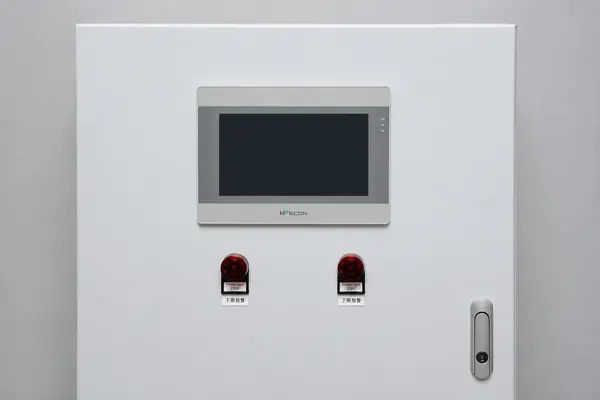
Before integration, define:
A boiler PLC should not automatically be marketed as “21 CFR Part 11 compliant.”
FDA guidance explains that Part 11 applies to electronic records maintained or submitted under FDA record requirements. Whether boiler data falls within that scope depends on how the pharmaceutical company uses the records and which underlying requirements apply. FDA—Part 11 Scope and Application
If boiler or steam-system data support quality decisions, the user may need to assess:
A PLC, HMI or SCADA platform should only be described as Part 11 compliant after a project-specific assessment of the complete computerized system.
Typical boiler safety functions may include:
L'architettura di protezione finale dipende dalla caldaia, bruciatore, treno di gas, codice di installazione e giurisdizione locale.
The facility should also evaluate:
Redundancy may be justified where steam interruption creates significant production or product-quality consequences.
Possible arrangements include:
The decision should follow a documented risk assessment rather than a general rule.
There is no single worldwide certification or emissions standard for every 2 Ton a vapore a gas caldaia.
Requirements can depend on:
Se è richiesta la costruzione ASME, la citazione dovrebbe identificare:
ASME states that its BPVC Certification Program evaluates manufacturer or assembler quality-control systems for defined scopes. Products bearing the applicable ASME Certification Mark must comply with the relevant BPVC section. A general statement that a company is “ASME certified” does not prove that a specific boiler will receive the required mark. ASME Boiler and Pressure Vessel Certification
For EU projects, the applicable Pressure Equipment Directive requirements and conformity-assessment scope should be identified before production.
GMP applies to pharmaceutical manufacturing facilities, utilità, processes, documentation and quality systems.
A boiler cannot make an entire pharmaceutical facility GMP-compliant by itself.
Instead of accepting a general “GMP boiler” claim, chiedere:
The burner and emissions configuration should be selected for the installation market.
Potential regulated emissions include:
A low-NOx claim should identify:
Pharmaceutical utility projects normally require more documentation than a generic industrial boiler purchase.
Request, as applicable:
Useful quality records may include:
The handover package may include:
| Supplier Claim | Evidence to Request |
|---|---|
| Alta efficienza | Carburante, carico, feedwater temperature and test basis |
| Basso NOx | Guaranteed value and reference conditions |
| Fully automatic | Control narrative and I/O list |
| Vapore pulito | Generator design and quality-test protocol |
| GMP suitable | Requirement-by-requirement evidence |
| ASME or CE | Exact product and document scope |
| Low gas consumption | Calculation and operating conditions |
| Pharmaceutical grade | Defined system boundary and specification |
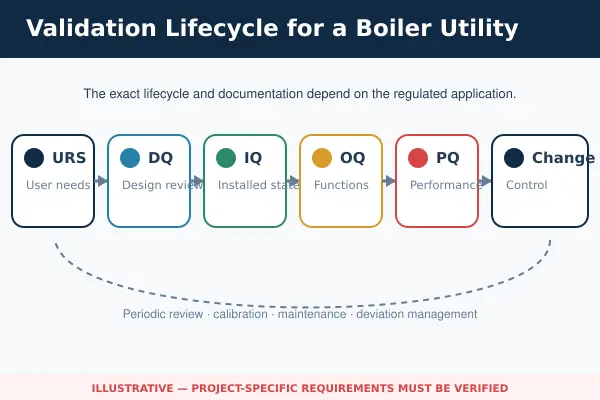
EU GMP Annex 15 sets out lifecycle principles for qualification and validation, including user requirements and equipment qualification. The extent of qualification should be justified through documented risk assessment. European Commission—EU GMP Annex 15
The URS defines what the pharmaceutical user needs the steam system to do.
It should address:
The URS should ideally be approved before supplier selection.
DQ verifies that the proposed design satisfies the approved URS.
Review:
IQ verifies that equipment has been supplied and installed according to the approved design.
Typical IQ checks include:
OQ demonstrates that the boiler and associated systems operate as intended within the defined operating range.
Possible OQ tests include:
PQ evaluates the steam system under actual or representative operating conditions.
Depending on the application, it may include:
| Qualification Stage | Pharmaceutical User | Boiler Supplier | Installer | Validation Team |
|---|---|---|---|---|
| URS | Leads and approves | Provides technical input | Reviews interfaces | Reviews |
| DQ | Approves | Supplies design | Supports | Verifies |
| IQ | Verifies installation | Supplies documents | Installs | Executes/reviews |
| OQ | Witnesses and approves | Tests and supports | Supports | Executes/reviews |
| PQ | Owns process acceptance | Provides support | Supports | Executes/reviews |
Final responsibilities should be defined in the contract and validation plan.
A FAT may include:
Not every performance condition can necessarily be tested at the factory. The FAT protocol should clearly identify test limitations and items deferred to site commissioning.
A SAT may verify:
Site inspection → Utility verification → Water-system check → Gas-system check → Electrical check → Cold commissioning → Burner commissioning → Safety-interlock testing → Load test → Training → Handover
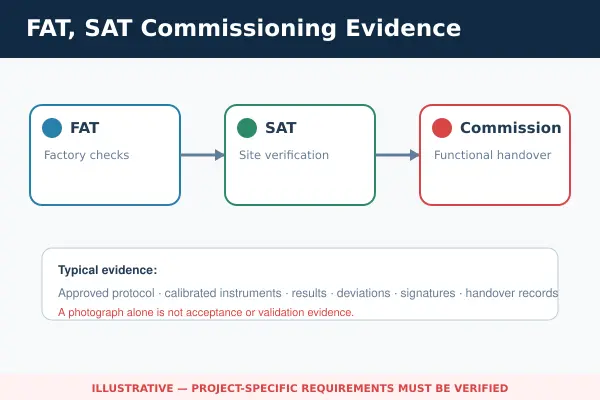
The exact sequence should follow the approved commissioning method, equipment instructions and local requirements.
Final handover should address:
Design values, contractual guarantees and measured results should be recorded separately.
Efficiency should specify:
This guide to efficienza delle caldaie a vapore industriali explains the difference between rated boiler efficiency and actual steam-system performance.
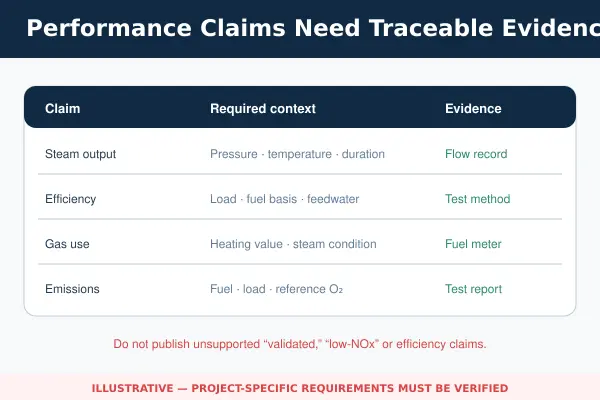
The evidence principle is simple:
Design data, contractual guarantees and measured operating results are three different forms of evidence.
Qualification does not end the system lifecycle.
The maintenance program may cover:
Potentially critical instruments include:
Calibration frequency should be based on:
Changes to equipment, tubazioni, trattamento dell'acqua, control logic, software or operating procedures should be assessed for their effect on:
Requalification may be necessary when a change materially affects the system.
A pharmaceutical steam-system spare-parts strategy may include:
A project-specific quotation should begin with the following information:
Buyers can also review the available configuration options for a 2 tonnellata di caldaia a vapore industriale before requesting a project-specific quotation.
These inputs allow the manufacturer to move from a generic 2 ton boiler price to a technically defined pharmaceutical steam-system proposal.
UN 2 ton steam boiler has a nominal capacity of 2,000 kg of steam per hour under its specified rating conditions. Actual output depends on operating load, pressione del vapore, temperatura dell'acqua di alimentazione, fuel conditions and equipment performance.
It can be suitable, but capacity alone is insufficient. The boiler must match the facility’s steam-load profile, Pressione di lavoro, steam category, gas supply, acqua di alimentazione, controlli, safety and compliance requirements.
Plant steam is normally used for indirect heating and general utilities. Clean or pure steam is produced and controlled for more critical applications. The exact quality requirements should be defined in the project URS.
Plant steam should not automatically be accepted for direct product contact. Direct-contact applications require a documented risk assessment and steam-quality specification appropriate to the product and process.
A standard industrial boiler generally produces plant steam. It may provide the heating energy for a separate clean or pure steam generator when a higher steam category is required.
Gas consumption depends on steam enthalpy, temperatura dell'acqua di alimentazione, Efficienza della caldaia, gas heating value and operating load. A fixed universal figure is unreliable without these conditions.
Non automaticamente. Water treatment should be selected from the raw-water analysis, pressione operativa, steam category, condensate return and manufacturer’s limits.
Documents may include the URS, DQ records, datasheets, drawings, P&IDs, registrazioni materiali, rapporti di ispezione, calibration certificates, FAT/SAT records, IQ/OQ protocols, PQ data, manuals and training records.
IQ confirms that the boiler, auxiliaries, utilità, instruments, piping and documents have been installed or supplied according to the approved design.
OQ tests normal operation, controlli, alarms, modulazione del bruciatore, interblocchi di sicurezza, automatic sequences and defined operating ranges.
The required qualification extent should follow the pharmaceutical manufacturer’s validation strategy and risk assessment. Systems supporting critical processes normally require documented performance confirmation under representative conditions.
NO. General utilities and indirect heating may use plant steam. Clean or pure steam may be required for direct sterilization, product contact or other critical applications.
GMP compliance applies to the complete pharmaceutical operation, including facilities, utilità, procedures and quality systems. A boiler product alone cannot establish GMP compliance.
NO. Manufacturer authorization and product-specific marking are different. The contract should identify the applicable BPVC section, Certification Mark, equipment scope and required data reports.
Standby capacity depends on the effect of steam interruption on production, pulizia, sterilization and product quality. The decision should be based on a documented risk assessment.
UN 2 ton gas steam boiler can be a practical energy source for pharmaceutical processing, but its nominal 2,000 kg/h rating is only one part of the selection.
The project should first determine whether each application requires plant steam, clean steam or pure steam. It should then confirm the actual load profile, point-of-use pressure, gas conditions, feedwater quality, apparecchiature ausiliarie, control functions and applicable compliance requirements.
The strongest validation process is:
Define the steam application → classify the steam category → establish the load profile → confirm pressure and fuel → design water treatment → define auxiliaries and controls → assess contamination risk → verify compliance → complete FAT and SAT → execute DQ, IQ, OQ and PQ → confirm performance.
A conventional industrial boiler may be suitable for indirect pharmaceutical heating while a separate clean or pure steam generator serves critical users. The correct system architecture must follow the approved URS, process risk and applicable quality requirements.
If you are preparing a 2 ton gas steam boiler project for pharmaceutical processing, provide the steam application, Pressione di lavoro, minimum and peak demand, specifica del gas, programma operativo, water analysis, installation country and qualification-document requirements for a project-specific engineering proposal.
PREVENTIVI CALDAIE GRATUITI
Nessun ritardo, Ottenere 3 citazioni oggi Confronta per i migliori prezzi Sicuro e affidabileRECENSIONI
COSA C'È IN QUESTO ARTICOLO?
Miglioramento dell'efficienza delle caldaie a gas: Cause e soluzioni per la combustione incompleta
La migliore centrale elettrica con caldaia a carbone in vendita - Una guida completa
Applicazione di caldaie industriali nel settore manifatturiero chimico
Caldaia a vapore a tubi d'acqua: Vantaggi, Applicazioni

Se ti piace Fang Kuai, per favore lascia il tuo messaggio.



vVisualizza le recensioni dei nostri clienti
"La caldaia per l'acqua calda di Fangkuai è fantastica. Si riscalda in modo rapido ed efficiente, e l'acqua rimane calda per molto tempo. Non abbiamo mai avuto problemi e ha apportato un miglioramento significativo alle nostre operazioni quotidiane. Anche il processo di installazione è stato molto fluido e il servizio clienti è stato eccellente. Consiglio vivamente le caldaie ad acqua calda di Fangkuai."
Sara
Canada"Il generatore di vapore di Fangkuai è perfetto per la mia piccola impresa. È molto facile da usare e richiede una manutenzione minima. È anche molto efficiente dal punto di vista energetico, che mi ha aiutato a risparmiare sulle mie bollette energetiche. Anche il servizio clienti di Fangkuai è eccellente. Sono molto reattivi e sempre disposti ad aiutare. Consiglio vivamente i generatori di vapore di Fangkuai."
Ahmad
Egitto"Sono rimasto molto colpito dalla qualità della caldaia per l'acqua calda di Fangkuai. È costruito per durare e ha superato le mie aspettative. Anche il processo di installazione è stato molto fluido e il servizio clienti è stato eccellente. La caldaia per l'acqua calda è molto facile da usare e manutenere, e l'efficienza energetica è notevole. Consiglio vivamente le caldaie ad acqua calda di Fangkuai."
Jack
Australia"Utilizziamo da anni la caldaia ad olio diatermico Fangkuai per il nostro impianto chimico e non ci ha mai deluso. La caldaia è molto resistente e può resistere a condizioni difficili. È anche molto facile da usare e mantenere, che ci ha aiutato a risparmiare tempo e denaro per la manutenzione. Le caldaie ad olio diatermico Fangkuai sono di prim'ordine e le consiglio vivamente a chiunque necessiti di soluzioni di riscaldamento affidabili."
Chang
Cina"Il servizio clienti di Fangkuai è di prim'ordine. Mi hanno aiutato a scegliere la caldaia perfetta per le mie esigenze e mi hanno fornito un grande supporto durante tutto il processo. Anche il processo di installazione è stato molto fluido e la caldaia ha superato le mie aspettative. È molto facile da usare e mantenere, e l'efficienza energetica è notevole. Consiglio vivamente i prodotti Fangkuai a chiunque necessiti di soluzioni di riscaldamento affidabili ed efficienti."
Giovanni
Messico"Ho acquistato una caldaia a vapore Fangkuai per la mia fabbrica e funziona perfettamente da mesi ormai. La qualità dei materiali e la costruzione della caldaia sono impressionanti. È anche molto efficiente dal punto di vista energetico, che ci ha aiutato a risparmiare sulle nostre bollette energetiche. Consiglio vivamente i prodotti Fangkuai a chiunque necessiti di soluzioni di riscaldamento affidabili ed efficienti."
John
Stati Uniti d'America"Il generatore di vapore di Fangkuai è perfetto per la mia piccola impresa. È molto facile da usare e richiede una manutenzione minima. È anche molto efficiente dal punto di vista energetico, che mi ha aiutato a risparmiare sulle mie bollette energetiche. Anche il servizio clienti di Fangkuai è eccellente. Sono molto reattivi e sempre disposti ad aiutare. Consiglio vivamente i generatori di vapore di Fangkuai."
Ahmad
Egitto"La caldaia ad olio diatermico di Fangkuai è molto facile da usare e manutenere. Ci ha aiutato a risparmiare tempo e denaro sulla manutenzione, che ha portato a notevoli risparmi sui costi. La qualità dei materiali e la costruzione della caldaia sono eccezionali. È anche molto efficiente dal punto di vista energetico, che ci ha aiutato a risparmiare sulle nostre bollette energetiche. Consiglio vivamente la caldaia a olio diatermico di Fangkuai ."
Allen
Brasile"I generatori di vapore di Fangkuai sono eccellenti. Sono molto facili da usare e richiedono una manutenzione minima. Anche il servizio clienti di Fangkuai è eccezionale. Sono molto reattivi e sempre disposti ad aiutare. Notevole anche l'efficienza energetica dei generatori di vapore, che mi ha aiutato a risparmiare sulle mie bollette energetiche. Consiglio vivamente i generatori di vapore di Fangkuai."
Maria
Spagna