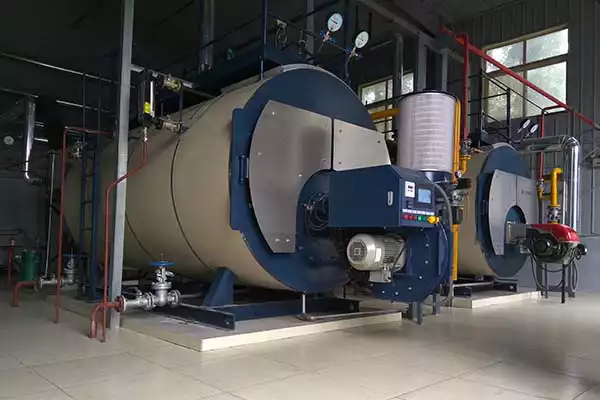
Industrial boiler room auxiliary equipment typically includes the burner or fuel system, pompe dell'acqua di alimentazione, feedwater tank or deaerator, water-treatment system, economizzatore, chimney or stack, condensate-return system, apparecchiature di spurgo, armadio di controllo, valvole e strumentazione.
Depending on the boiler type and local requirements, the system may also require air preheaters, gas trains, biomass feeding and ash-handling equipment, emission-control systems and other project-specific components.
Tuttavia, not every boiler quotation includes all of this equipment. Buyers should always confirm the supplier’s exact scope of supply.
A typical industrial steam boiler installation may include:
| Auxiliary Equipment | Main Function |
|---|---|
| Burner or fuel system | Supplies and controls fuel for combustion |
| Pompa dell'acqua di alimentazione | Delivers water to the boiler |
| Feedwater tank | Stores and supplies boiler feedwater |
| Disaeratore | Helps remove dissolved gases from feedwater |
| Water-treatment system | Controls feedwater quality |
| Economizzatore | Recovers heat from flue gas |
| Condensate-return system | Returns usable condensate to the boiler plant |
| Blowdown system | Gestisce lo scarico dell'acqua della caldaia |
| Chimney or stack | Discharges flue gas |
| Armadio di controllo | Controls and monitors boiler operation |
| Valves and instrumentation | Measure, isolate and control system conditions |
| Emissions-control equipment | Helps meet applicable emission requirements |
| Fuel-handling equipment | Stores, prepares or delivers fuel where required |
The actual configuration depends on boiler capacity, pressione, carburante, condizioni dell'acqua, plant layout, emissions requirements and the required level of automation.
For combustion boilers, the burner or fuel-feeding system is one of the most important apparecchiature ausiliarie della caldaia groups.
A gas-fired system may include a burner, treno di gas, valvole, pressure-control devices and associated combustion controls.
Oil-fired systems can require fuel storage, pompe, filters and fuel-conditioning equipment.
Biomass installations may require more extensive fuel-handling equipment such as:
The exact fuel-system configuration should therefore be selected according to the specified fuel rather than boiler capacity alone.
Feedwater pumps move treated feedwater from the feedwater system into the boiler.
Pump selection must match the required flow and pressure conditions of the boiler system.
Industrial projects may also specify standby or redundant pumps where continuous steam production is important.
The pump itself should not be evaluated separately from the complete feedwater arrangement.
A feedwater tank provides a controlled water supply for the boiler.
A seconda del progetto, a deaerator may also be used to reduce dissolved gases in boiler feedwater and support water-management requirements.
The appropriate arrangement depends on:
A deaerator should therefore be specified as part of the complete feedwater system rather than automatically assumed to be included with every boiler.
Water quality directly affects boiler reliability, heat transfer and maintenance.
A boiler room may require water-treatment equipment such as:
The required treatment system depends on the incoming water analysis and the boiler manufacturer’s water-quality requirements.
Water-treatment equipment should therefore be selected after reviewing actual site water conditions.
An economizer recovers heat from boiler flue gas and uses it to preheat feedwater or another suitable water stream.
Depending on operating conditions, additional heat-recovery equipment may include:
Gli Stati Uniti. Department of Energy Steam Systems resources identify feedwater economizers, condensate return and blowdown heat recovery among the measures that can improve industrial steam-system energy performance.
Whether an economizer should be included depends on boiler design, carburante, flue-gas conditions, temperatura dell'acqua di alimentazione, operating hours and the expected economic benefit.
Steam used by industrial processes may condense into hot water.
Where condensate quality and process conditions allow it to be reused, a condensate-return system can send this water back toward the boiler feedwater system.
A condensate system may include:
Condensate recovery can influence both the plant’s water balance and the energy required to heat boiler feedwater.
Boiler blowdown removes a portion of boiler water to help manage dissolved solids and water chemistry.
Depending on the installation, associated equipment may include:
The exact configuration should follow the boiler design, pressione operativa, water-treatment strategy and local discharge requirements.
Combustion boilers require a suitable path for flue-gas discharge.
The complete system may include:
Chimney dimensions and materials should be determined from the actual boiler, carburante, flue-gas conditions, draft requirements and installation environment.
Modern industrial boiler rooms use control and monitoring equipment to coordinate boiler operation and auxiliary systems.
Depending on the automation level, the system may include:
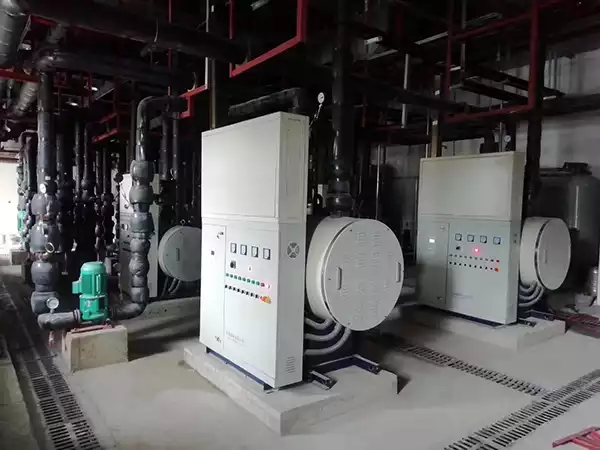
A control cabinet may coordinate the burner, pompe, Livello d'acqua, pressure control and other boiler room equipment.
When comparing quotations, buyers should confirm exactly which controls, sensors and communication functions are included.
Required emissions equipment depends strongly on fuel, boiler capacity and installation location.
Depending on applicable regulations and project conditions, equipment may include:
Biomass and solid-fuel installations can require substantially different flue-gas treatment and ash-handling arrangements from gas-fired boilers.
Emission requirements should therefore be confirmed before the final boiler room configuration is selected.
A complete boiler installation also requires valves, instrumentation and piping connections.
These can include:
Some of these items may be classified as componenti della caldaia a vapore, boiler trim or site piping rather than auxiliary equipment.
This distinction matters during procurement because different suppliers may divide the quotation scope differently.
Non necessariamente.
“Boiler price” E “complete boiler room price” can represent very different scopes.
One supplier may quote the boiler, bruciatore, pompe, economizer and controls, while another quotation may cover only the boiler and basic combustion equipment.
Prima di confrontare i prezzi, request a detailed equipment list showing:
Per questo motivo, the equipment list should be normalized before comparing different boiler quotations.
Start with the actual process and installation requirements.
A boiler manufacturer normally needs to know:
These parameters help determine which auxiliary systems are necessary and how they should be sized.
UN Guida all'acquisto di caldaie a vapore industriali can also help buyers define capacity, pressione, carburante, condizioni dell'acqua, automation and project scope before requesting a complete boiler quotation.
Boiler auxiliary equipment refers to supporting equipment required for boiler operation, trattamento dell'acqua, fornitura di carburante, recupero di calore, control, recupero della condensa, blowdown and flue-gas handling. The exact equipment varies by boiler type and project requirements.
Common steam boiler auxiliaries include the burner, pompe dell'acqua di alimentazione, feedwater tank or deaerator, water-treatment system, economizzatore, sistema di condensa, apparecchiature di spurgo, camino, controlli, valvole e strumentazione.
Non sempre. Water-treatment equipment may be included in a complete steam plant quotation or supplied separately. The required system should be selected according to the actual feedwater analysis and boiler water-quality requirements.
NO. Whether an economizer is appropriate depends on boiler design, carburante, exhaust conditions, temperatura dell'acqua di alimentazione, operating profile and project economics.
Non necessariamente. Deaerator requirements depend on boiler operating conditions, feedwater quality, ritorno della condensa, treatment strategy and the boiler manufacturer’s requirements.
It depends on the supplier’s quotation scope. Buyers should confirm whether the chimney, flue ducting, supports and associated connections are included or must be supplied locally.
UN caldaia a gas installation can require a burner, treno di gas, pompe dell'acqua di alimentazione, sistema di acqua di alimentazione, trattamento dell'acqua, economizzatore, camino, sistema di controllo, apparecchiature di spurgo, condensate system and instrumentation. The final configuration depends on the actual project.
In addition to common feedwater and control equipment, a biomass boiler may require fuel storage, conveying and feeding systems, movimentazione delle ceneri, dust collection and other flue-gas treatment equipment.
Because two boilers with similar rated capacity can have very different scopes of supply. Listing auxiliaries separately makes it easier to compare equipment, identify exclusions and evaluate the complete project cost instead of comparing boiler price alone.
PREVENTIVI CALDAIE GRATUITI
Nessun ritardo, Ottenere 3 citazioni oggi Confronta per i migliori prezzi Sicuro e affidabileRECENSIONI
COSA C'È IN QUESTO ARTICOLO?
I migliori prezzi delle caldaie diesel 2023: La guida definitiva all'acquisto

La migliore guida alle caldaie: Caldaia a olio esausto: una soluzione di riscaldamento ecologica ed economica
Caldaia a vapore vs caldaia ad acqua calda: Scegliere il giusto sistema di riscaldamento
La migliore guida alla manutenzione della caldaia a olio: Mantienilo in funzione in modo efficiente
Se ti piace Fang Kuai, per favore lascia il tuo messaggio.



vVisualizza le recensioni dei nostri clienti
"Sono rimasto molto colpito dalla qualità della caldaia per l'acqua calda di Fangkuai. È costruito per durare e ha superato le mie aspettative. Anche il processo di installazione è stato molto fluido e il servizio clienti è stato eccellente. La caldaia per l'acqua calda è molto facile da usare e manutenere, e l'efficienza energetica è notevole. Consiglio vivamente le caldaie ad acqua calda di Fangkuai."
Jack
Australia"La caldaia a vapore di Fangkuai è perfetta per la mia attività di trasformazione alimentare. Soddisfa tutti i nostri requisiti ed è molto affidabile. La qualità dei materiali e la costruzione della caldaia sono eccezionali. È anche molto facile da usare e mantenere, che ci ha aiutato a risparmiare tempo e denaro per la manutenzione. Consiglio vivamente le caldaie a vapore di Fangkuai a chiunque necessiti di soluzioni di riscaldamento affidabili."
Json
Brasile"Utilizziamo da anni la caldaia ad olio diatermico Fangkuai per il nostro impianto chimico e non ci ha mai deluso. La caldaia è molto resistente e può resistere a condizioni difficili. È anche molto facile da usare e mantenere, che ci ha aiutato a risparmiare tempo e denaro per la manutenzione. Le caldaie ad olio diatermico Fangkuai sono di prim'ordine e le consiglio vivamente a chiunque necessiti di soluzioni di riscaldamento affidabili."
Chang
Cina"Utilizziamo da anni la caldaia ad olio diatermico Fangkuai per il nostro impianto chimico e non ci ha mai deluso. La caldaia è molto resistente e può resistere a condizioni difficili. È anche molto facile da usare e mantenere, che ci ha aiutato a risparmiare tempo e denaro per la manutenzione. Le caldaie ad olio diatermico Fangkuai sono di prim'ordine e le consiglio vivamente a chiunque necessiti di soluzioni di riscaldamento affidabili."
Chang
Cina"La caldaia ad olio diatermico di Fangkuai è molto facile da usare e manutenere. Ci ha aiutato a risparmiare tempo e denaro sulla manutenzione, che ha portato a notevoli risparmi sui costi. La qualità dei materiali e la costruzione della caldaia sono eccezionali. È anche molto efficiente dal punto di vista energetico, che ci ha aiutato a risparmiare sulle nostre bollette energetiche. Consiglio vivamente la caldaia a olio diatermico di Fangkuai ."
Allen
Brasile"I generatori di vapore di Fangkuai sono eccellenti. Sono molto facili da usare e richiedono una manutenzione minima. Anche il servizio clienti di Fangkuai è eccezionale. Sono molto reattivi e sempre disposti ad aiutare. Notevole anche l'efficienza energetica dei generatori di vapore, che mi ha aiutato a risparmiare sulle mie bollette energetiche. Consiglio vivamente i generatori di vapore di Fangkuai."
Maria
Spagna"La caldaia ad olio diatermico di Fangkuai è molto facile da usare e manutenere. Ci ha aiutato a risparmiare tempo e denaro sulla manutenzione, che ha portato a notevoli risparmi sui costi. La qualità dei materiali e la costruzione della caldaia sono eccezionali. È anche molto efficiente dal punto di vista energetico, che ci ha aiutato a risparmiare sulle nostre bollette energetiche. Consiglio vivamente la caldaia a olio diatermico di Fangkuai ."
Allen
Brasile"Il generatore di vapore di Fangkuai è perfetto per la mia piccola impresa. È molto facile da usare e richiede una manutenzione minima. È anche molto efficiente dal punto di vista energetico, che mi ha aiutato a risparmiare sulle mie bollette energetiche. Anche il servizio clienti di Fangkuai è eccellente. Sono molto reattivi e sempre disposti ad aiutare. Consiglio vivamente i generatori di vapore di Fangkuai."
Ahmad
Egitto"Utilizziamo da anni la caldaia ad olio diatermico Fangkuai per il nostro impianto chimico e non ci ha mai deluso. La caldaia è molto resistente e può resistere a condizioni difficili. È anche molto facile da usare e mantenere, che ci ha aiutato a risparmiare tempo e denaro per la manutenzione. Le caldaie ad olio diatermico Fangkuai sono di prim'ordine e le consiglio vivamente a chiunque necessiti di soluzioni di riscaldamento affidabili."
Chang
Cina