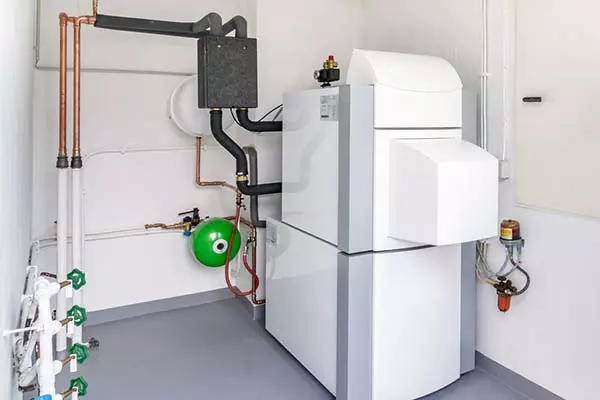
Zu den Zusatzgeräten für Industriekesselräume gehören typischerweise der Brenner oder das Brennstoffsystem, Speisewasserpumpen, Speisewassertank oder Entgaser, Wasseraufbereitungssystem, Ökonom, Schornstein oder Schornstein, Kondensatrückführungssystem, Abblaseausrüstung, Schaltschrank, Ventile und Instrumentierung.
Abhängig vom Kesseltyp und den örtlichen Anforderungen, Das System erfordert möglicherweise auch Luftvorwärmer, Gaszüge, Anlagen zur Biomassezuführung und Aschehandhabung, Emissionskontrollsysteme und andere projektspezifische Komponenten.
Jedoch, Nicht jedes Kesselangebot umfasst die gesamte Ausstattung. Käufer sollten sich stets den genauen Lieferumfang des Lieferanten bestätigen lassen.
Eine typische industrielle Dampfkesselanlage kann Folgendes umfassen::
| Hilfsausrüstung | Hauptfunktion |
|---|---|
| Brenner oder Kraftstoffsystem | Liefert und steuert Brennstoff für die Verbrennung |
| Speisewasserpumpe | Versorgt den Boiler mit Wasser |
| Speisewassertank | Speichert und liefert Kesselspeisewasser |
| Entlüfter | Hilft, gelöste Gase aus dem Speisewasser zu entfernen |
| Wasseraufbereitungssystem | Kontrolliert die Qualität des Speisewassers |
| Economizer | Gewinnt Wärme aus Rauchgas zurück |
| Kondensatrückführungssystem | Führt nutzbares Kondensat zur Kesselanlage zurück |
| Abblasesystem | Verwaltet den Kesselwasserabfluss |
| Schornstein oder Schornstein | Leitet Rauchgas ab |
| Schaltschrank | Steuert und überwacht den Kesselbetrieb |
| Ventile und Instrumente | Messen, Systemzustände isolieren und kontrollieren |
| Ausrüstung zur Emissionskontrolle | Hilft bei der Einhaltung geltender Emissionsanforderungen |
| Ausrüstung zur Kraftstoffhandhabung | Geschäfte, bereitet bei Bedarf Kraftstoff vor oder liefert ihn |
Die tatsächliche Konfiguration hängt von der Kesselkapazität ab, Druck, Kraftstoff, Wasserbedingungen, Anlagenlayout, Emissionsanforderungen und dem erforderlichen Automatisierungsgrad.
Für Verbrennungskessel, Der Brenner oder das Brennstoffzufuhrsystem ist eines der wichtigsten Kesselhilfsausrüstung Gruppen.
Ein gasbefeuertes System kann einen Brenner umfassen, Gaszug, Ventile, Druckregelgeräte und zugehörige Verbrennungssteuerungen.
Ölbefeuerte Systeme können eine Brennstoffspeicherung erfordern, Pumps, Filter und Kraftstoffaufbereitungsgeräte.
Biomasseanlagen erfordern möglicherweise umfangreichere Brennstoffhandhabungsgeräte, wie z:
Die genaue Konfiguration des Brennstoffsystems sollte daher anhand des angegebenen Brennstoffs und nicht nur anhand der Kesselkapazität ausgewählt werden.
Speisewasserpumpen fördern aufbereitetes Speisewasser aus dem Speisewassersystem in den Kessel.
Die Pumpenauswahl muss den erforderlichen Durchfluss- und Druckbedingungen des Kesselsystems entsprechen.
Bei Industrieprojekten können auch Reserve- oder Redundanzpumpen vorgesehen sein, bei denen eine kontinuierliche Dampfproduktion wichtig ist.
Die Pumpe selbst sollte nicht getrennt von der gesamten Speisewasseranlage bewertet werden.
Ein Speisewassertank sorgt für die kontrollierte Wasserversorgung des Kessels.
Je nach Projekt, Ein Entgaser kann auch zur Reduzierung gelöster Gase im Kesselspeisewasser und zur Unterstützung der Wassermanagementanforderungen eingesetzt werden.
Die entsprechende Anordnung hängt davon ab:
Ein Entgaser sollte daher als Teil des gesamten Speisewassersystems spezifiziert werden und nicht automatisch davon ausgegangen werden, dass er in jedem Kessel enthalten ist.
Die Wasserqualität wirkt sich direkt auf die Zuverlässigkeit des Kessels aus, Wärmeübertragung und -wartung.
Für einen Heizraum sind möglicherweise Wasseraufbereitungsgeräte erforderlich, z:
Das erforderliche Aufbereitungssystem hängt von der Eingangswasseranalyse und den Wasserqualitätsanforderungen des Kesselherstellers ab.
Wasseraufbereitungsgeräte sollten daher nach Prüfung der tatsächlichen Wasserbedingungen vor Ort ausgewählt werden.
Ein Economizer gewinnt Wärme aus Kesselrauchgas zurück und nutzt sie zum Vorwärmen von Speisewasser oder einem anderen geeigneten Wasserstrom.
Abhängig von den Betriebsbedingungen, Zusätzliche Geräte zur Wärmerückgewinnung können enthalten sein:
Die USA. Ressourcen des Department of Energy Steam Systems identifizieren Speisewasser-Economizer, Kondensatrückführung und Abschlämmwärmerückgewinnung gehören zu den Maßnahmen, die die Energieleistung industrieller Dampfsysteme verbessern können.
Ob ein Economizer eingebaut werden sollte, hängt von der Kesselkonstruktion ab, Kraftstoff, Rauchgasbedingungen, Speisewassertemperatur, Betriebsstunden und den erwarteten wirtschaftlichen Nutzen.
In industriellen Prozessen verwendeter Dampf kann zu heißem Wasser kondensieren.
Wo Kondensatqualität und Prozessbedingungen eine Wiederverwendung zulassen, Ein Kondensatrückführungssystem kann dieses Wasser zurück zum Kesselspeisesystem leiten.
Ein Kondensatsystem kann umfassen:
Die Kondensatrückgewinnung kann sowohl den Wasserhaushalt der Anlage als auch den Energiebedarf zur Erwärmung des Kesselspeisewassers beeinflussen.
Bei der Kesselabschlämmung wird ein Teil des Kesselwassers entfernt, um die Kontrolle gelöster Feststoffe und die Wasserchemie zu erleichtern.
Abhängig von der Installation, Zugehörige Geräte können Folgendes umfassen::
Die genaue Konfiguration sollte sich an der Kesselkonstruktion orientieren, Betriebsdruck, Wasseraufbereitungsstrategie und örtliche Einleitungsanforderungen.
Verbrennungskessel benötigen einen geeigneten Weg zur Rauchgasableitung.
Das komplette System kann umfassen:
Die Abmessungen und Materialien des Schornsteins sollten anhand des tatsächlichen Kessels ermittelt werden, Kraftstoff, Rauchgasbedingungen, Entwurfsanforderungen und Installationsumgebung.
Moderne Industriekesselräume nutzen Steuerungs- und Überwachungsgeräte, um den Kesselbetrieb und die Hilfssysteme zu koordinieren.
Abhängig vom Automatisierungsgrad, Das System kann umfassen:
Ein Steuerschrank kann den Brenner koordinieren, Pumps, Wasserstand, Druckregelung und andere Heizraumausrüstung.
Beim Vergleich von Angeboten, Käufer sollten sich genau bestätigen lassen, welche Kontrollen, Sensoren und Kommunikationsfunktionen sind enthalten.
Die erforderliche Emissionsausrüstung hängt stark vom Kraftstoff ab, Kesselkapazität und Aufstellungsort.
Abhängig von den geltenden Vorschriften und Projektbedingungen, Ausrüstung kann umfassen:
Biomasse- und Festbrennstoffanlagen erfordern möglicherweise wesentlich andere Rauchgasbehandlungs- und Aschebehandlungsanordnungen als gasbefeuerte Kessel.
Daher sollten die Emissionsanforderungen bestätigt werden, bevor die endgültige Kesselraumkonfiguration ausgewählt wird.
Für eine komplette Kesselinstallation sind auch Ventile erforderlich, Instrumentierung und Rohrleitungsanschlüsse.
Dazu können gehören:
Einige dieser Artikel können als klassifiziert werden Dampfkesselkomponenten, Kesselverkleidung oder bauseitige Verrohrung statt Zusatzausrüstung.
Diese Unterscheidung ist bei der Beschaffung wichtig, da verschiedene Lieferanten den Angebotsumfang unterschiedlich aufteilen können.
Nicht unbedingt.
“Kesselpreis” Und “Kompletter Heizraumpreis” können sehr unterschiedliche Bereiche abbilden.
Ein Lieferant kann den Kessel anbieten, Brenner, Pumps, Economizer und Steuerungen, während ein anderes Angebot möglicherweise nur den Kessel und die grundlegende Verbrennungsausrüstung abdeckt.
Vor dem Preisvergleich, Fordern Sie eine detaillierte Ausstattungsliste an:
Aus diesem Grund, Die Geräteliste sollte vor dem Vergleich verschiedener Kesselangebote normalisiert werden.
Beginnen Sie mit den tatsächlichen Prozess- und Installationsanforderungen.
Ein Kesselhersteller muss es normalerweise wissen:
Mithilfe dieser Parameter lässt sich ermitteln, welche Hilfssysteme erforderlich sind und wie diese dimensioniert werden sollten.
Ein Kaufratgeber für Industriedampfkessel kann Käufern auch dabei helfen, die Kapazität zu definieren, Druck, Kraftstoff, Wasserbedingungen, Informieren Sie sich über die Automatisierung und den Projektumfang, bevor Sie ein vollständiges Kesselangebot anfordern.
Unter Kesselhilfsgeräten versteht man unterstützende Geräte, die für den Kesselbetrieb erforderlich sind, Wasseraufbereitung, Kraftstoffversorgung, Wärmerückgewinnung, Kontrolle, Kondensatrückgewinnung, Abschlämmung und Rauchgasbehandlung. Die genaue Ausstattung variiert je nach Kesseltyp und Projektanforderungen.
Zu den üblichen Zusatzgeräten für Dampfkessel gehört der Brenner, Speisewasserpumpen, Speisewassertank oder Entgaser, Wasseraufbereitungssystem, Ökonom, Kondensatsystem, Abblaseausrüstung, Schornstein, Kontrollen, Ventile und Instrumentierung.
Nicht immer. Wasseraufbereitungsgeräte können in einem kompletten Dampfanlagenangebot enthalten sein oder separat geliefert werden. Das erforderliche System sollte entsprechend der tatsächlichen Speisewasseranalyse und den Anforderungen an die Kesselwasserqualität ausgewählt werden.
NEIN. Ob ein Economizer geeignet ist, hängt von der Kesselkonstruktion ab, Kraftstoff, Abgasbedingungen, Speisewassertemperatur, Betriebsprofil und Projektökonomie.
Nicht unbedingt. Die Anforderungen an den Entgaser hängen von den Betriebsbedingungen des Kessels ab, Speisewasserqualität, Kondensatrückführung, Behandlungsstrategie und den Anforderungen des Kesselherstellers.
Dies hängt vom Angebotsumfang des Lieferanten ab. Käufer sollten bestätigen, ob der Schornstein, Rauchabzugsführung, Stützen und zugehörige Anschlüsse sind im Lieferumfang enthalten oder müssen vor Ort bereitgestellt werden.
A Gaskessel Für die Installation kann ein Brenner erforderlich sein, Gaszug, Speisewasserpumpen, Speisewassersystem, Wasseraufbereitung, Ökonom, Schornstein, Steuerungssystem, Abblaseausrüstung, condensate system and instrumentation. The final configuration depends on the actual project.
In addition to common feedwater and control equipment, a biomass boiler may require fuel storage, conveying and feeding systems, Umgang mit Asche, dust collection and other flue-gas treatment equipment.
Because two boilers with similar rated capacity can have very different scopes of supply. Listing auxiliaries separately makes it easier to compare equipment, identify exclusions and evaluate the complete project cost instead of comparing boiler price alone.
KOSTENLOSE KESSELANGEBOTE
Keine Verzögerung, erhalten 3 Zitate heute Vergleichen Sie für die besten Preise Sicher und zuverlässigBEWERTUNGEN
WAS IN DIESEM ARTIKEL STEHT?
Wenn Sie Fang Kuai mögen, Bitte hinterlassen Sie Ihre Nachricht.



vSehen Sie sich die Bewertungen unserer Kunden an
"Die Dampferzeuger von Fangkuai sind ausgezeichnet. Sie sind sehr einfach zu bedienen und erfordern nur minimale Wartung. Auch der Kundenservice bei Fangkuai ist außergewöhnlich. Sie sind sehr reaktionsschnell und immer bereit zu helfen. Bemerkenswert ist auch die Energieeffizienz der Dampferzeuger, was mir geholfen hat, Geld bei meinen Energierechnungen zu sparen. Ich kann die Dampfgeneratoren von Fangkuai sehr empfehlen."
Maria
Spanien"Der Heißwasserboiler von Fangkuai ist erstaunlich. Es heizt schnell und effizient auf, und das Wasser bleibt lange heiß. Wir hatten nie Probleme damit und es hat unsere täglichen Abläufe erheblich verbessert. Auch die Installation verlief reibungslos und der Kundenservice war ausgezeichnet. Ich kann die Heißwasserboiler von Fangkuai sehr empfehlen."
Sarah
Kanada"Der Kundenservice bei Fangkuai ist erstklassig. Sie halfen mir bei der Auswahl des perfekten Kessels für meine Bedürfnisse und boten während des gesamten Prozesses großartige Unterstützung. Der Installationsprozess verlief auch sehr reibungslos und der Kessel hat meine Erwartungen übertroffen. Es ist sehr einfach zu bedienen und zu warten, und die Energieeffizienz ist bemerkenswert. Ich kann die Produkte von Fangkuai jedem wärmstens empfehlen, der zuverlässige und effiziente Heizlösungen benötigt."
Juan
Mexiko"Die Dampferzeuger von Fangkuai sind ausgezeichnet. Sie sind sehr einfach zu bedienen und erfordern nur minimale Wartung. Auch der Kundenservice bei Fangkuai ist außergewöhnlich. Sie sind sehr reaktionsschnell und immer bereit zu helfen. Bemerkenswert ist auch die Energieeffizienz der Dampferzeuger, was mir geholfen hat, Geld bei meinen Energierechnungen zu sparen. Ich kann die Dampfgeneratoren von Fangkuai sehr empfehlen."
Maria
Spanien"Der Heißwasserboiler von Fangkuai ist erstaunlich. Es heizt schnell und effizient auf, und das Wasser bleibt lange heiß. Wir hatten nie Probleme damit und es hat unsere täglichen Abläufe erheblich verbessert. Auch die Installation verlief reibungslos und der Kundenservice war ausgezeichnet. Ich kann die Heißwasserboiler von Fangkuai sehr empfehlen."
Sarah
Kanada"Der Dampfgenerator von Fangkuai ist perfekt für mein kleines Unternehmen. Es ist sehr einfach zu bedienen und erfordert nur minimale Wartung. Es ist auch sehr energieeffizient, was mir geholfen hat, Geld bei meinen Energierechnungen zu sparen. Der Kundenservice bei Fangkuai ist ebenfalls ausgezeichnet. Sie sind sehr reaktionsschnell und immer bereit zu helfen. Ich kann die Dampfgeneratoren von Fangkuai sehr empfehlen."
Ahmed
Ägypten"Wir verwenden den Fangkuai-Thermalölkessel seit Jahren für unsere Chemieanlage und er hat uns nie im Stich gelassen. Der Kessel ist sehr langlebig und hält rauen Bedingungen stand. Außerdem ist es sehr einfach zu bedienen und zu warten, Das hat uns geholfen, Zeit und Geld bei der Wartung zu sparen. Die Thermalölkessel von Fangkuai sind erstklassig und ich kann sie jedem wärmstens empfehlen, der zuverlässige Heizlösungen benötigt."
Chang
China"Ich habe für meine Fabrik einen Fangkuai-Dampfkessel gekauft, der seit Monaten einwandfrei funktioniert. Die Qualität der Materialien und die Konstruktion des Kessels sind beeindruckend. Es ist auch sehr energieeffizient, was uns geholfen hat, Geld bei unseren Energierechnungen zu sparen. Ich kann die Produkte von Fangkuai jedem wärmstens empfehlen, der zuverlässige und effiziente Heizlösungen benötigt."
John
USA"Der Thermalölkessel von Fangkuai ist sehr einfach zu bedienen und zu warten. Es hat uns geholfen, Zeit und Geld bei der Wartung zu sparen, was zu erheblichen Kosteneinsparungen geführt hat. Die Qualität der Materialien und die Konstruktion des Kessels sind außergewöhnlich. Es ist auch sehr energieeffizient, was uns geholfen hat, Geld bei unseren Energierechnungen zu sparen. Ich kann den Thermalölkessel von Fangkuai sehr empfehlen ."
Allen
Brasilien