Understanding the Main Components Inside a Steam Boiler
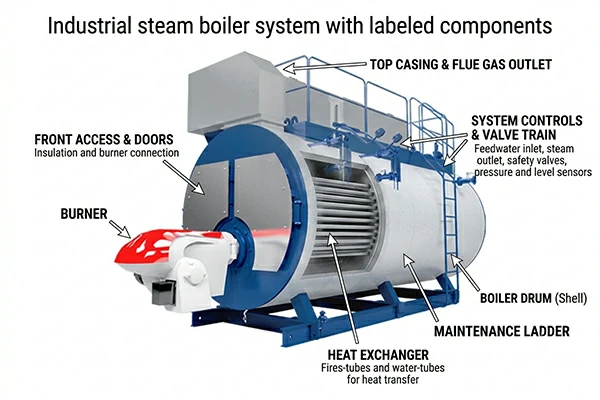
A steam boiler is not just a simple heating device. It is a complete thermal energy system composed of multiple components that work together to convert fuel energy into usable steam.
The main المراجل البخارية components include the burner, غرفة الاحتراق, مبادل حراري, boiler drum, water circulation system, ونظام التحكم. Each component has a specific function, and the performance of the entire boiler depends on how efficiently these parts operate together.
For industrial users, understanding steam boiler components is important when selecting equipment, تحسين كفاءة الطاقة, reducing maintenance costs, and ensuring safe operation.
في هذا الدليل, we will explain the function of each major steam boiler component, how they work together, and why these parts are critical for reliable steam generation.
What Are the Main Components of a Steam Boiler?
Section Overview: This section introduces the main parts of a steam boiler and explains how different components work together to convert fuel energy into usable steam.
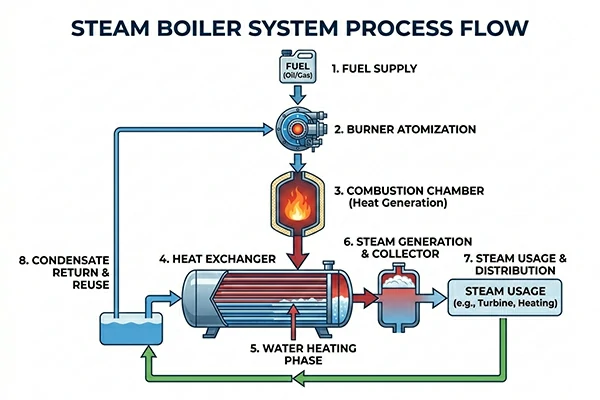
A steam boiler is not a single machine but a complete system consisting of several important mechanical and control components. Although boiler designs vary depending on fuel type, سعة, والتطبيق, most industrial steam boilers include the following basic parts:
| Steam Boiler Component |
الوظيفة الرئيسية |
| حارق |
Produces heat energy by burning fuel such as natural gas, زيت, الكتلة الحيوية, أو الفحم. |
| غرفة الاحتراق |
Provides space for fuel combustion and generates high-temperature gases. |
| مبادل حراري |
Transfers heat from combustion gases to water for steam generation. |
| طبل المرجل |
Stores water and separates steam from water mixture. |
| نظام تداول المياه |
Maintains continuous water flow through heating surfaces. |
| Steam Outlet System |
Delivers generated steam to industrial equipment or heating systems. |
| نظام التحكم |
Monitors pressure, درجة حرارة, مستوى المياه, and combustion conditions. |
| أجهزة السلامة |
Protect the boiler from abnormal pressure, ارتفاع درجة الحرارة, and operating risks. |
Each component has a specific purpose. The failure or poor performance of one part can affect the efficiency, أمان, and service life of the entire steam boiler system.
1. Steam Boiler Burner: The Starting Point of Heat Generation
Section Overview: ال الموقد is the component responsible for creating the heat source required for steam production. Its design directly influences fuel efficiency, الانبعاثات, and boiler performance.
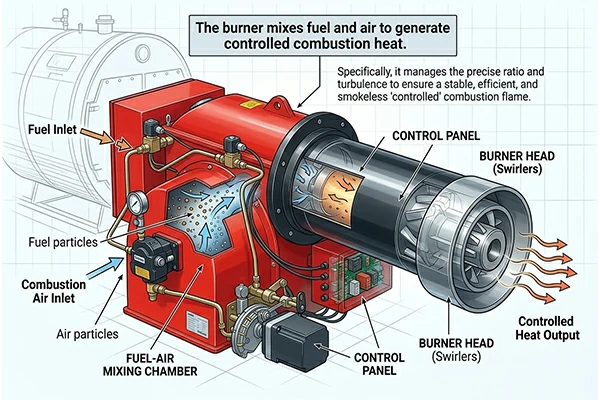
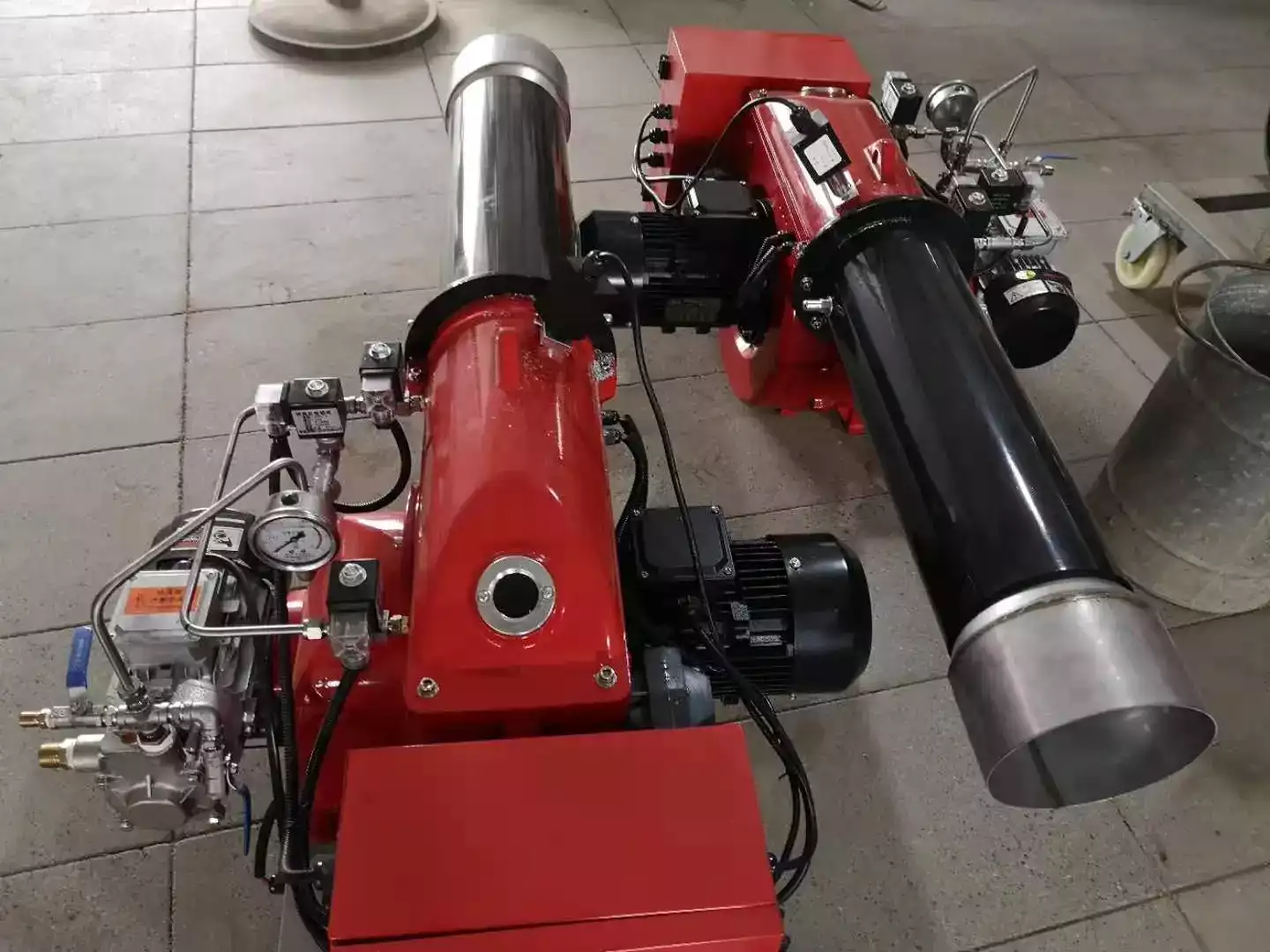
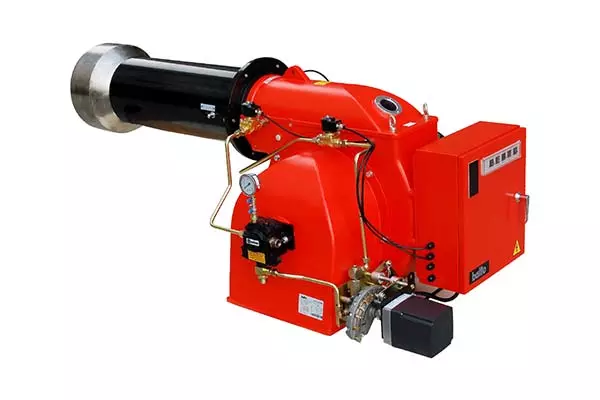
ال steam boiler burner is often considered the heart of a combustion boiler because it controls the process of converting fuel energy into thermal energy.
During operation, the burner mixes fuel and air in the correct ratio, creates a stable flame, and releases heat inside the combustion chamber. The generated heat is then transferred to water through the boiler heating surfaces.
Industrial steam boiler burners can operate with different fuel types, مشتمل:
- غاز طبيعي
- Diesel oil
- Heavy fuel oil
- Biomass fuel
- فحم
A high-quality burner helps the boiler achieve:
- Complete combustion
- Lower fuel consumption
- Reduced exhaust emissions
- Stable flame operation
- Improved thermal efficiency
How Does a Steam Boiler Burner Work?
The working process of a burner usually includes four main steps:
1. إمدادات الوقود
Fuel is transported from the storage system to the burner through dedicated fuel pipelines. The supply system controls the amount of fuel entering the combustion process.
2. Air and Fuel Mixing
The burner combines fuel with combustion air at an optimized ratio. Proper air-fuel mixing ensures complete combustion and reduces unnecessary energy loss.
3. Ignition Process
The ignition system creates a controlled flame inside the combustion chamber. Modern burners usually include automatic ignition and flame monitoring systems to improve safety.
4. إطلاق الحرارة
أثناء الاحتراق, chemical energy stored in the fuel is converted into thermal energy. This heat is then transferred through the boiler heating surfaces to produce steam.
Modern industrial burners often use automatic modulation technology. Instead of operating only at full capacity, the burner can adjust flame intensity according to steam demand, reducing fuel consumption and improving efficiency.
2. غرفة الاحتراق: Where Fuel Energy Becomes Heat
Section Overview: The combustion chamber provides the environment where fuel burns and converts chemical energy into high-temperature heat required for steam generation.
ال غرفة الاحتراق, also known as the furnace or firebox, is the area where fuel combustion takes place. It is one of the most important sections inside a steam boiler because the quality of combustion directly affects efficiency and emissions.
Inside the combustion chamber, the burner produces a high-temperature flame. The released heat is absorbed by the surrounding boiler heating surfaces and transferred to the water system.
A well-designed combustion chamber should provide:
- Sufficient combustion space
- Stable flame conditions
- Complete fuel burning
- Efficient heat release
- Lower pollutant emissions
The temperature inside industrial boiler combustion chambers can reach extremely high levels. لذلك, the chamber is usually constructed with heat-resistant materials and insulation layers to reduce heat loss and protect external structures.
Why Is Combustion Chamber Design Important?
The design of the combustion chamber directly affects boiler operation. Poor combustion conditions may lead to:
- Higher fuel consumption
- Incomplete combustion
- Increased carbon emissions
- Flame instability
- Reduced boiler lifespan
لهذا السبب, industrial boiler manufacturers carefully optimize combustion chamber size, شكل, and heat distribution according to different fuels and operating requirements.
3. مبادل حراري: The Core of Steam Boiler Energy Transfer
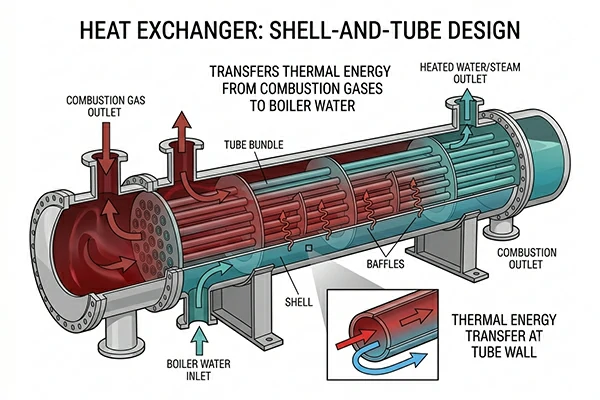
Section Overview: This section explains how the heat exchanger transfers thermal energy from combustion gases to water and why it is one of the most important components affecting steam boiler efficiency.
ال steam boiler heat exchanger is a critical component responsible for transferring heat from hot combustion gases to water without allowing the two fluids to directly mix.
The efficiency of a steam boiler largely depends on how effectively the heat exchanger captures and transfers thermal energy. A well-designed heat exchanger can reduce fuel consumption, improve steam production capacity, and lower operating costs.
أثناء عملية المرجل:
- Fuel combustion produces high-temperature exhaust gases.
- Hot gases pass through heating surfaces or tubes.
- Heat transfers through metal surfaces into boiler water.
- Water absorbs energy and changes into steam.
Different steam boiler designs use different heat exchanger structures. The two most common designs are fire-tube boilers and water-tube boilers.
Fire Tube Boiler Heat Exchanger
في غلاية أنبوب النار, تتدفق غازات الاحتراق الساخنة عبر أنابيب محاطة بالمياه.
The tube walls act as heat transfer surfaces, allowing heat from the gases to transfer into the surrounding water.
Main advantages of fire-tube boiler heat exchangers:
- بنية بسيطة
- انخفاض تكلفة الاستثمار الأولي
- صيانة سهلة
- Suitable for small and medium steam requirements
Fire-tube boilers are commonly used in:
- المباني التجارية
- Laundries
- Small manufacturing facilities
- Heating applications
Water Tube Boiler Heat Exchanger
في غلاية أنبوب مائي, water flows inside tubes while hot combustion gases surround the outside of the tubes.
This design allows water to absorb heat faster and enables the boiler to operate at higher pressures and temperatures.
Main advantages of water-tube boiler heat exchangers:
- Higher pressure capability
- توليد بخار أسرع
- Better thermal efficiency for large systems
- Suitable for continuous industrial operation
Water-tube boilers are widely used in:
- محطات توليد الطاقة
- Chemical industries
- Large manufacturing facilities
- High-pressure steam applications
Fire Tube vs Water Tube Boiler Heat Exchanger Comparison
| ميزة |
غلاية أنبوب النار |
غلاية أنابيب المياه |
| Heat Transfer Method |
Hot gases flow inside tubes while water surrounds them. |
Water flows inside tubes while hot gases heat the outside surface. |
| Pressure Capability |
Low to medium pressure applications. |
High-pressure industrial applications. |
| Steam Generation Speed |
Moderate steam production speed. |
Fast steam generation. |
| صيانة |
Simple maintenance and easier inspection. |
Requires professional maintenance and water treatment. |
| التطبيقات النموذجية |
Commercial heating and small factories. |
Power generation and heavy industries. |
4. طبل المرجل: The Steam Storage and Separation Center
Section Overview: The boiler drum stores water, separates steam from water mixture, and maintains stable steam generation during operation.
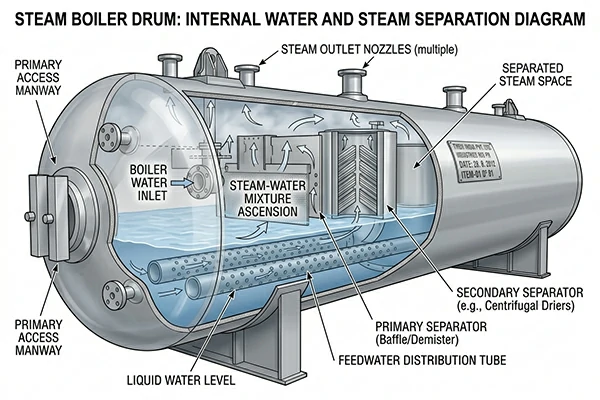
ال boiler drum is a pressure vessel that plays a key role in maintaining steam quality and system stability.
In many industrial steam boilers, the drum performs two important functions:
- Storing feedwater before steam generation.
- Separating steam from water after heating.
During the steam generation process:
- Water enters the boiler heating system.
- Heat from combustion raises the water temperature.
- The water and steam mixture enters the boiler drum.
- The drum separates steam from remaining water.
- Dry steam leaves through the steam outlet.
A properly designed boiler drum improves:
- جودة البخار
- Pressure stability
- Operational safety
- Overall boiler efficiency
Why Is Steam Separation Important?
High-quality steam should contain as little moisture as possible. Excess water carried with steam can cause problems such as:
- Reduced heating efficiency
- Pipeline corrosion
- Equipment damage
- Unstable industrial processes
لذلك, the boiler drum must provide sufficient space and separation performance to produce reliable steam output.
5. نظام تداول المياه: Maintaining Continuous Heat Transfer
Section Overview: The water circulation system ensures continuous movement of water through heated areas, allowing the boiler to maintain stable steam production.
The water circulation system is another essential part of industrial steam boilers. Its main purpose is to move water continuously through heating surfaces so that heat can be transferred efficiently.
Without proper water circulation, some areas of the boiler may become overheated, reducing efficiency and increasing the risk of equipment damage.
Types of Water Circulation Systems
Natural Circulation System
Natural circulation uses the difference in density between hot water and cooler water to create movement inside the boiler.
مزايا:
- بنية بسيطة
- Reliable operation
- متطلبات الصيانة المنخفضة
Natural circulation is commonly used in traditional industrial boiler systems.
Forced Circulation System
Forced circulation uses pumps to control water movement inside the boiler system.
مزايا:
- Better flow control
- Suitable for high-capacity boilers
- Improved heat transfer performance
Forced circulation systems are commonly applied in:
- Large power generation boilers
- High-pressure steam systems
- Large industrial facilities
6. Steam Boiler Control System: The Intelligent Management Center
Section Overview: The control system monitors and adjusts boiler operating conditions to improve efficiency, أمان, and automation.
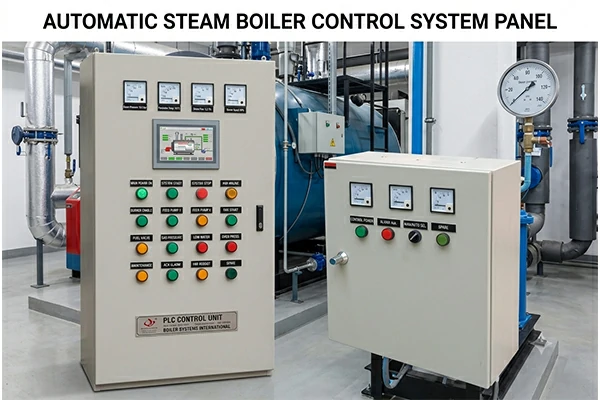
ال steam boiler control system is the intelligent management center of a modern boiler. It continuously monitors important operating parameters and automatically adjusts the equipment according to steam demand.
Typical parameters controlled by the system include:
- ضغط البخار
- مستوى الماء
- Temperature
- إمدادات الوقود
- Combustion condition
A modern boiler control system usually contains the following components:
| Control Component |
الوظيفة الرئيسية |
| Pressure Controller |
Maintains stable steam pressure during operation. |
| Water Level Controller |
Prevents low-water operation and protects boiler safety. |
| Temperature Sensor |
Monitors temperature changes inside the boiler system. |
| Fuel Control Valve |
Adjusts fuel supply according to steam demand. |
| PLC Control System |
Provides automatic monitoring and intelligent operation. |
Advanced control systems provide several benefits:
- Reduce unnecessary fuel consumption
- Improve combustion efficiency
- Increase operational safety
- Reduce manual operation requirements
- Extend boiler service life
7. Safety Components of Steam Boilers
Section Overview:
This section explains the essential safety components installed in steam boilers to control pressure, prevent equipment failure, and ensure safe long-term operation.
Steam boilers operate under high temperature and pressure conditions, which means safety protection is one of the most important aspects of boiler design.
Modern steam boiler systems are equipped with multiple safety devices that continuously monitor operating conditions and automatically respond when abnormal situations occur.
A reliable safety system not only protects the boiler equipment but also reduces operational risks, improves system stability, and extends the service life of key components.
7.1 صمام تخفيف الضغط
The pressure relief valve is one of the most critical safety devices installed on a steam boiler. Its main function is to automatically release excess pressure when the internal boiler pressure exceeds the designed safety limit.
During normal operation, the pressure relief valve remains closed and allows the boiler to maintain stable working pressure. لكن, if the control system fails or steam pressure rises unexpectedly, the valve opens automatically to discharge steam and prevent dangerous overpressure conditions.
Regular inspection and testing of pressure relief valves are necessary because a malfunctioning valve can seriously affect boiler safety.
7.2 Low Water Cut-Off Device
A low water cut-off device protects steam boilers from operating without sufficient water. Maintaining the correct water level inside the boiler is essential because water absorbs heat from the combustion process.
If the water level drops too low, the heating surface may become overheated, causing damage to boiler tubes, deformation of metal components, or even serious equipment failure.
When the water level falls below the safe limit, the low water cut-off system automatically stops the burner operation until the water level returns to normal.
7.3 Boiler Control System
The control system works as the “brain” of a modern steam boiler. It monitors important operating parameters including pressure, درجة حرارة, مستوى المياه, إمدادات الوقود, and combustion conditions.
Advanced boiler control systems use sensors and automation technology to adjust burner output according to steam demand. This helps maintain stable steam production while reducing unnecessary fuel consumption.
| Control Function |
Purpose |
فوائد |
| Pressure Monitoring |
Maintains safe steam pressure levels |
Prevents overpressure operation |
| Water Level Control |
Keeps proper boiler water volume |
Protects heating surfaces from damage |
| Fuel Control |
Adjusts combustion according to demand |
Improves energy efficiency |
| Automatic Shutdown |
Stops operation during abnormal conditions |
Improves operator safety |
7.4 Water Treatment System
Water quality has a direct impact on steam boiler performance and operating life. Untreated water contains minerals such as calcium and magnesium, which can form scale deposits inside boiler tubes and heat transfer surfaces.
Scale buildup reduces heat transfer efficiency and forces the boiler to consume more fuel to produce the same amount of steam. في الحالات الشديدة, excessive scale can cause overheating and damage to pressure components.
A complete water treatment system usually includes filtration, water softening, chemical treatment, and continuous monitoring to maintain suitable boiler water quality.
8. How Steam Boiler Components Work Together
Section Overview:
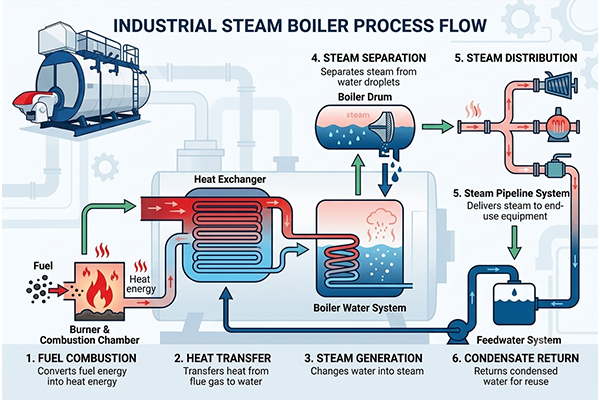
This section explains how different steam boiler components work together as a complete system to convert fuel energy into usable steam for industrial heating and processing applications.
A steam boiler is not a single independent device. It is a complete thermal system where multiple components, بما في ذلك الموقد, غرفة الاحتراق, مبادل حراري, boiler drum, نظام التحكم, and steam pipelines, work together to generate and deliver steam efficiently.
Understanding how these components interact helps operators improve boiler efficiency, تقليل استهلاك الوقود, and maintain safe and stable operation.
The Complete Steam Generation Process
The steam generation process inside an industrial boiler follows a continuous closed-loop cycle. Each component performs a specific function, and the entire system works together to transform fuel energy into high-temperature steam.
خطوة 1: احتراق الوقود
The process begins inside the burner. The burner mixes fuel, مثل الغاز الطبيعي, زيت, الكتلة الحيوية, or other energy sources, with air and creates a controlled combustion process.
أثناء الاحتراق, chemical energy stored in the fuel is converted into thermal energy, producing high-temperature flue gases that provide the heat required for steam production.
A properly designed burner ensures stable combustion, improves fuel utilization, and helps reduce unnecessary emissions.
وقود + Air → Combustion → High Temperature Heat Energy
خطوة 2: Heat Transfer Through Heat Exchanger
After combustion, high-temperature gases flow through the heat exchanger area where thermal energy is transferred to the boiler water.
The heat exchanger acts as the connection point between the combustion system and the water system. It allows heat to move efficiently while preventing combustion gases from mixing with the water or steam.
Different boiler designs use different heat transfer methods. على سبيل المثال, in fire-tube boilers, تمر الغازات الساخنة عبر أنابيب محاطة بالمياه, while in water-tube boilers, water flows inside tubes heated by external combustion gases.
خطوة 3: توليد البخار
As water continuously absorbs heat from the heat exchanger, its temperature gradually increases until it reaches the boiling point.
When sufficient thermal energy is absorbed, the water changes from liquid form into steam. The generated steam contains a large amount of usable thermal energy, making it suitable for industrial processes, أنظمة التدفئة, وتوليد الطاقة.
The quality and quantity of steam produced depend on several factors, مشتمل:
- Boiler design and capacity
- Fuel combustion efficiency
- ضغط التشغيل
- Water quality and treatment
- Heat transfer performance
خطوة 4: Steam Separation Inside Boiler Drum
After steam is generated, the mixture of water and steam enters the boiler drum. The boiler drum plays an important role in separating steam from remaining water particles.
The separated steam collects at the upper section of the drum, while water returns to the circulation system for further heating.
Effective steam separation improves steam quality and prevents excessive moisture from entering downstream equipment.
خطوة 5: Steam Distribution to Industrial Equipment
Once high-quality steam is collected, it leaves the boiler through the main steam outlet and travels through the steam distribution pipeline.
The steam can then be delivered to different applications, مشتمل:
- Industrial production equipment
- Steam turbines for power generation
- مبادلات حرارية
- Food processing systems
- Pharmaceutical sterilization equipment
- Commercial heating systems
A well-designed steam distribution system with proper insulation helps reduce heat loss and improves overall energy efficiency.
خطوة 6: Condensate Return and Recycling
After steam releases its heat energy during the industrial process, it gradually cools and changes back into liquid water, known as condensate.
Instead of being discharged, the condensate is collected and returned to the boiler feedwater system for reuse.
The condensate return process provides several benefits:
- Reduces fresh water consumption
- Lowers fuel requirements because returned water is already warm
- Improves overall boiler efficiency
- Reduces operating costs
| Process Stage |
Main Component Involved |
وظيفة |
| 1. احتراق الوقود |
حارق & غرفة الاحتراق |
Converts fuel energy into heat energy |
| 2. نقل الحرارة |
مبادل حراري |
Transfers heat from flue gas to water |
| 3. توليد البخار |
Boiler Water System |
Changes water into steam |
| 4. Steam Separation |
طبل المرجل |
Separates steam from water droplets |
| 5. Steam Distribution |
Steam Pipeline System |
Delivers steam to end-use equipment |
| 6. Condensate Return |
Feedwater System |
Returns condensed water for reuse |
Why Component Coordination Matters
The performance of a steam boiler depends on how efficiently all components work together. A high-quality burner cannot achieve maximum efficiency if the heat exchanger is poorly maintained. بصورة مماثلة, an efficient boiler drum and control system cannot compensate for improper combustion conditions.
لهذا السبب, industrial users should consider the entire boiler system rather than focusing only on individual components when selecting, upgrading, or maintaining a steam boiler.
A properly designed and maintained steam boiler system can provide reliable thermal energy, انخفاض تكاليف التشغيل, and stable performance for many years.
9. How to Improve Steam Boiler Efficiency
Section Overview:
This section introduces practical methods to improve steam boiler efficiency, تقليل استهلاك الوقود, and lower long-term operating costs.
Improving steam boiler efficiency is not only about selecting a high-efficiency boiler model. Daily operation, ممارسات الصيانة, جودة الوقود, and system optimization all influence the overall energy performance.
For industrial facilities, even a small improvement in boiler efficiency can create significant savings because boilers often operate continuously throughout the year.
9.1 Install an Economizer
An economizer is a heat recovery device installed in the boiler exhaust system. It captures heat from hot flue gases and uses this recovered energy to preheat boiler feedwater.
By recovering waste heat that would normally escape through the chimney, an economizer can reduce fuel consumption and improve overall boiler efficiency.
9.2 Maintain Proper Combustion Conditions
The combustion process directly affects boiler efficiency. Too much air increases heat loss through exhaust gases, while insufficient air can cause incomplete combustion and increased emissions.
Modern burners equipped with automatic combustion control systems can adjust the fuel-air ratio to maintain efficient combustion under different load conditions.
9.3 Perform Regular Boiler Maintenance
Regular maintenance is essential for maintaining steam boiler performance. Common maintenance tasks include cleaning heat transfer surfaces, checking burner operation, inspecting safety valves, and testing control systems.
A well-maintained boiler not only consumes less fuel but also reduces unexpected downtime and extends equipment lifespan.
9.4 Improve Steam Distribution System
Many energy losses occur after steam leaves the boiler. Poor insulation, تسرب البخار, and inefficient condensate recovery systems can significantly reduce overall system efficiency.
Improving steam pipelines, repairing leaks, and recovering condensate water can help facilities maximize the energy value of generated steam.
10. Common Industrial Applications of Steam Boilers
Section Overview:
This section explains where steam boilers are commonly used and why different industries rely on steam as an efficient heat transfer medium.
Steam boilers are widely used because steam can transfer large amounts of thermal energy quickly and efficiently. From manufacturing processes to heating systems, steam remains an important energy source in many industries.
| صناعة |
Steam Boiler Applications |
| معالجة الأغذية |
طبخ, تعقيم, تنظيف, and production heating |
| صناعة الادوية |
تعقيم, clean steam production, and process heating |
| صناعة المنسوجات |
صباغة, تجفيف, and fabric processing |
| الصناعة الكيميائية |
Reaction heating and temperature control |
| توليد الطاقة |
Driving steam turbines for electricity production |
| المستشفيات والمباني التجارية |
التدفئة, hot water supply, والتعقيم |
11. How to Choose the Right Steam Boiler System
Section Overview:
This section provides key factors to consider when selecting a steam boiler for industrial or commercial applications.
Choosing the correct steam boiler requires more than simply comparing prices. The right boiler should match your steam demand, توافر الوقود, operating environment, and future expansion plans.
11.1 Determine Required Steam Capacity
The first step is calculating the required steam output. Boiler capacity is usually measured by tons per hour (TPH), kilograms per hour (كجم/ساعة), or boiler horsepower.
Selecting a boiler that is too small may result in insufficient steam supply, while an oversized boiler can increase investment costs and reduce operating efficiency.
11.2 Consider Fuel Availability
The choice of fuel has a major impact on operating costs. Common steam boiler fuels include natural gas, diesel oil, الكتلة الحيوية, فحم, and electricity.
| نوع الوقود |
Main Advantages |
Suitable Applications |
| غاز طبيعي |
Clean combustion and high efficiency |
Industrial and commercial heating |
| الكتلة الحيوية |
Renewable fuel and lower carbon emissions |
Factories with biomass resources |
| فحم |
Lower fuel cost in some regions |
Large-scale industrial production |
| كهرباء |
Clean operation and easy installation |
Small-scale applications |
12. Steam Boiler Maintenance Checklist
Section Overview:
This section provides a practical steam boiler maintenance checklist to help operators improve reliability, prevent unexpected failures, and extend boiler service life.
Regular maintenance is one of the most important factors affecting steam boiler performance. Even a high-quality boiler system may experience efficiency losses, increased fuel consumption, or safety risks if inspections and maintenance are ignored.
A proper maintenance program should include daily monitoring, regular cleaning, safety inspections, and professional servicing according to the manufacturer’s recommendations.
12.1 Daily Steam Boiler Inspection
Daily inspection allows operators to identify potential problems before they develop into major equipment failures. Operators should monitor important operating parameters and check whether the boiler is running under normal conditions.
| Inspection Item |
What to Check |
Purpose |
| ضغط البخار |
Check whether pressure remains within the designed range |
Ensure safe and stable operation |
| Water Level |
Confirm proper water level inside the boiler drum |
Prevent overheating caused by low water conditions |
| Burner Operation |
Check flame condition and combustion stability |
Maintain efficient fuel combustion |
| Leaks and Noise |
Inspect pipelines, الصمامات, and boiler body |
Detect abnormal conditions early |
12.2 Regular Cleaning and Inspection
During long-term operation, deposits may accumulate inside boiler components. Scale, سخام, and corrosion products can reduce heat transfer efficiency and increase energy consumption.
Regular cleaning should include inspection of heat exchanger surfaces, combustion chambers, boiler tubes, and water circulation systems.
For industrial steam boilers operating continuously, professional inspection is usually recommended at scheduled intervals to ensure all pressure components remain safe and reliable.
12.3 Water Quality Management
Water treatment is a key part of steam boiler maintenance. Poor water quality can lead to scale formation, تآكل, and reduced boiler efficiency.
A proper water management program normally includes water softening, chemical treatment, dissolved oxygen control, and regular testing of water parameters.
Maintaining proper water quality helps protect boiler tubes, improve heat transfer efficiency, and reduce maintenance costs.
13. Advantages and Disadvantages of Steam Boilers
Section Overview:
This section summarizes the major advantages and limitations of steam boiler systems to help users understand whether steam technology fits their application.
Steam boilers have been widely used for more than a century because of their reliability, flexibility, and ability to deliver large amounts of thermal energy. لكن, like any industrial equipment, steam boilers also have certain limitations that should be considered before installation.
Advantages of Steam Boilers
- High Thermal Efficiency:
Steam boilers can transfer large amounts of heat energy efficiently, especially in industrial applications requiring continuous steam supply.
- مجموعة واسعة من التطبيقات:
Steam can be used for heating, تعقيم, توليد الطاقة, تجفيف, and many industrial processes.
- Reliable Energy Supply:
Properly designed steam systems can operate continuously and provide stable thermal energy for demanding applications.
- عمر خدمة طويل:
With proper operation and maintenance, industrial steam boilers can provide reliable service for decades.
- خيارات الوقود المرنة:
Steam boilers can use various fuels, بما في ذلك الغاز الطبيعي, زيت, الكتلة الحيوية, فحم, and electricity.
Disadvantages of Steam Boilers
- Higher Initial Investment:
Industrial steam boiler systems require investment in the boiler unit, piping system, water treatment equipment, and installation.
- Regular Maintenance Required:
Because steam boilers operate under high pressure and temperature, routine inspection and maintenance are necessary.
- Complex Installation:
Large steam systems require professional engineering design, including fuel supply, steam distribution, and safety systems.
- Water Treatment Requirements:
Proper water quality management is essential to prevent corrosion and scale buildup.
14. Frequently Asked Questions About Steam Boilers
Section Overview:
This FAQ section answers common questions about steam boiler operation, كفاءة, التطبيقات, and maintenance to help users better understand steam boiler systems.
14.1 What is the main purpose of a steam boiler?
A steam boiler is designed to convert water into steam by using thermal energy. The generated steam can be used for industrial heating, توليد الطاقة, تعقيم, manufacturing processes, وأنظمة التدفئة التجارية.
14.2 How does a steam boiler generate steam?
A steam boiler generates steam by burning fuel or using electricity to create heat. The heat is transferred to water through heat transfer surfaces, causing the water to reach its boiling point and transform into steam.
14.3 What is the difference between a fire-tube and water-tube steam boiler?
The main difference is the flow direction of water and hot gases. في غلاية أنبوب النار, تتدفق غازات الاحتراق الساخنة عبر أنابيب محاطة بالمياه. في غلاية أنبوب مائي, water flows inside tubes heated by external combustion gases.
Fire-tube boilers are generally suitable for low and medium-pressure applications, while water-tube boilers are preferred for high-pressure and large-capacity industrial applications.
14.4 How long does a steam boiler usually last?
The service life of a steam boiler depends on boiler quality, ظروف التشغيل, ممارسات الصيانة, and water treatment. مع الصيانة المناسبة, many industrial steam boilers can operate reliably for 20 ل 35 years or longer.
14.5 How can I improve steam boiler efficiency?
Steam boiler efficiency can be improved by installing economizers, maintaining proper combustion, تحسين العزل, reducing steam leakage, optimizing water treatment, and performing regular maintenance.
خاتمة: Understanding Steam Boilers for Better Performance
Section Overview:
This section summarizes the key points of steam boiler technology and explains why selecting the right system is important for long-term efficiency and reliability.
Steam boilers remain one of the most important thermal energy solutions used in industrial, تجاري, and power generation applications. Their ability to produce reliable and high-quality steam makes them essential for industries that require continuous heating and processing capabilities.
Understanding how steam boilers work, the function of each component, different boiler types, متطلبات الصيانة, and efficiency improvement methods can help businesses make better decisions when purchasing or upgrading a boiler system.
The best steam boiler solution depends on several factors, including required steam capacity, توافر الوقود, operating environment, energy costs, and future production requirements.
If you are planning to install a new steam boiler system or replace an existing unit, choosing an experienced boiler manufacturer can help ensure better performance, انخفاض تكاليف التشغيل, والموثوقية على المدى الطويل.
Need Help Choosing the Right Steam Boiler?
Our professional boiler engineers can help you select the most suitable steam boiler based on your required capacity, نوع الوقود, ضغط العمل, and application requirements.
For technical consultation, customized boiler solutions, and quotation support, الرجاء الاتصال بنا:
Whatsapp: +86 132-1322-2805.




الخامسiew مراجعات عملائنا
"لقد اشتريت غلاية بخارية Fangkuai لمصنعي وهي تعمل بشكل لا تشوبه شائبة منذ شهور. جودة المواد وبناء المرجل مثير للإعجاب. كما أنها موفرة للطاقة بشكل كبير, مما ساعدنا على توفير المال على فواتير الطاقة لدينا. أوصي بشدة بمنتجات Fangkuai لأي شخص يحتاج إلى حلول تدفئة موثوقة وفعالة."
جون
الولايات المتحدة الأمريكية"أنا معجب جدًا بجودة غلاية الماء الساخن من Fangkuai. لقد تم بناؤه ليدوم وتجاوز توقعاتي. كانت عملية التثبيت سلسة للغاية وكانت خدمة العملاء ممتازة. غلاية الماء الساخن سهلة التشغيل والصيانة, وكفاءة الطاقة رائعة. أوصي بشدة بغلايات الماء الساخن من Fangkuai."
جاك
أستراليا"مولد البخار من Fangkuai مثالي لأعمالي الصغيرة. إنه سهل الاستخدام للغاية ويتطلب الحد الأدنى من الصيانة. كما أنها موفرة للطاقة بشكل كبير, مما ساعدني على توفير المال على فواتير الطاقة الخاصة بي. خدمة العملاء في Fangkuai ممتازة أيضًا. إنهم متجاوبون للغاية ومستعدون دائمًا للمساعدة. أوصي بشدة بمولدات البخار من Fangkuai."
أحمد
مصر"جعلت المعدات المساعدة لـ Fangkuai نظام الغلايات الخاص بي أفضل. جودة المعدات استثنائية والأسعار معقولة جدًا. ساعدت المعدات في تحسين كفاءة وأداء نظام الغلايات الخاص بي, مما أدى إلى توفير كبير في التكاليف. أوصي بشدة بمعدات Fangkuai المساعدة لأي شخص يحتاج إلى ملحقات غلاية عالية الجودة."
ماريك
المملكة المتحدة"خدمة العملاء في Fangkuai من الدرجة الأولى. لقد ساعدوني في اختيار الغلاية المثالية لاحتياجاتي وقدموا دعمًا كبيرًا طوال العملية. كانت عملية التثبيت أيضًا سلسة للغاية وتجاوزت الغلاية توقعاتي. إنه سهل الاستخدام والصيانة, وكفاءة الطاقة رائعة. أوصي بشدة بمنتجات Fangkuai لأي شخص يحتاج إلى حلول تدفئة موثوقة وفعالة."
خوان
المكسيك"الغلاية البخارية من Fangkuai مثالية لأعمال معالجة الطعام الخاصة بي. إنه يلبي جميع متطلباتنا وهو موثوق للغاية. جودة المواد وبناء المرجل استثنائية. كما أنها سهلة التشغيل والصيانة, مما ساعدنا على توفير الوقت والمال على الصيانة. أوصي بشدة بالغلايات البخارية من Fangkuai لأي شخص يحتاج إلى حلول تدفئة موثوقة."
جسون
البرازيل"لقد استخدمنا غلاية الزيت الحراري Fangkuai لمصنعنا الكيميائي لسنوات ولم يخذلنا أبدًا. الغلاية متينة للغاية ويمكنها تحمل الظروف القاسية. كما أنها سهلة التشغيل والصيانة, مما ساعدنا على توفير الوقت والمال على الصيانة. غلايات الزيت الحراري من Fangkuai هي من الدرجة الأولى وأنا أوصي بها بشدة لأي شخص يحتاج إلى حلول تدفئة موثوقة."
تشانغ
الصين"غلاية الماء الساخن من Fangkuai مذهلة. يسخن بسرعة وكفاءة, ويبقى الماء ساخنًا لفترة طويلة. لم نواجه أي مشاكل معه أبدًا وقد حقق تحسنًا كبيرًا في عملياتنا اليومية. كانت عملية التثبيت سلسة للغاية وكانت خدمة العملاء ممتازة. أوصي بشدة بغلايات الماء الساخن من Fangkuai."
ساره
كندا"خدمة العملاء في Fangkuai من الدرجة الأولى. لقد ساعدوني في اختيار الغلاية المثالية لاحتياجاتي وقدموا دعمًا كبيرًا طوال العملية. كانت عملية التثبيت أيضًا سلسة للغاية وتجاوزت الغلاية توقعاتي. إنه سهل الاستخدام والصيانة, وكفاءة الطاقة رائعة. أوصي بشدة بمنتجات Fangkuai لأي شخص يحتاج إلى حلول تدفئة موثوقة وفعالة."
خوان
المكسيك