بھاپ بوائلر کے اندر اہم اجزاء کو سمجھنا
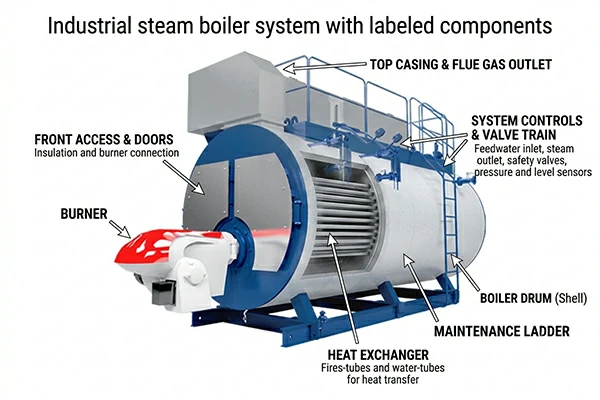
بھاپ بوائلر صرف ایک سادہ حرارتی آلہ نہیں ہے۔. یہ ایک مکمل تھرمل انرجی سسٹم ہے جو متعدد اجزاء پر مشتمل ہے جو ایندھن کی توانائی کو قابل استعمال بھاپ میں تبدیل کرنے کے لیے مل کر کام کرتا ہے۔.
اہم بھاپ بوائلر اجزاء میں برنر شامل ہے۔, دہن چیمبر, گرمی ایکسچینجر, بوائلر ڈرم, پانی کی گردش کا نظام, اور کنٹرول سسٹم. ہر جزو کا ایک مخصوص فنکشن ہوتا ہے۔, اور پورے بوائلر کی کارکردگی کا انحصار اس بات پر ہے کہ یہ پرزے ایک ساتھ کتنے موثر طریقے سے کام کرتے ہیں۔.
صنعتی صارفین کے لیے, سامان کا انتخاب کرتے وقت بھاپ بوائلر کے اجزاء کو سمجھنا ضروری ہے۔, توانائی کی کارکردگی کو بہتر بنانا, بحالی کے اخراجات کو کم کرنا, اور محفوظ آپریشن کو یقینی بنانا.
اس گائیڈ میں, ہم بھاپ بوائلر کے ہر ایک بڑے جزو کے کام کی وضاحت کریں گے۔, وہ کیسے مل کر کام کرتے ہیں, اور یہ پرزے قابل اعتماد بھاپ پیدا کرنے کے لیے کیوں اہم ہیں۔.
بھاپ بوائلر کے اہم اجزاء کیا ہیں؟?
سیکشن کا جائزہ: یہ حصہ بھاپ کے بوائلر کے اہم حصوں کا تعارف کرتا ہے اور یہ بتاتا ہے کہ ایندھن کی توانائی کو قابل استعمال بھاپ میں تبدیل کرنے کے لیے مختلف اجزاء کیسے مل کر کام کرتے ہیں۔.
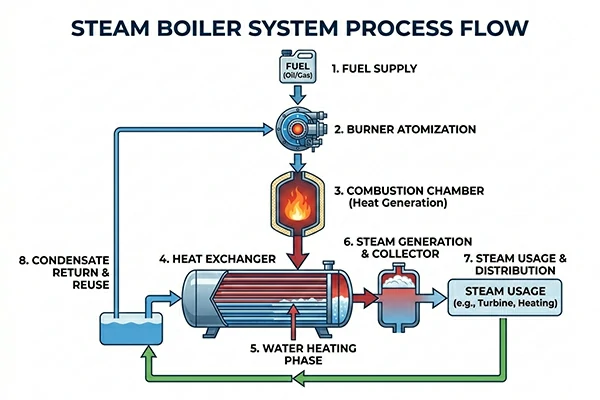
بھاپ بوائلر ایک مشین نہیں ہے بلکہ ایک مکمل نظام ہے جو کئی اہم مکینیکل اور کنٹرول اجزاء پر مشتمل ہوتا ہے۔. اگرچہ بوائلر کے ڈیزائن ایندھن کی قسم کے لحاظ سے مختلف ہوتے ہیں۔, صلاحیت, اور درخواست, زیادہ تر صنعتی بھاپ بوائلرز میں درج ذیل بنیادی حصے شامل ہوتے ہیں۔:
| بھاپ بوائلر اجزاء |
مین فنکشن |
| برنر |
قدرتی گیس جیسے ایندھن کو جلا کر حرارت کی توانائی پیدا کرتا ہے۔, تیل, بایوماس, یا کوئلہ. |
| کمبشن چیمبر |
ایندھن کے دہن کے لیے جگہ فراہم کرتا ہے اور زیادہ درجہ حرارت والی گیسیں پیدا کرتا ہے۔. |
| ہیٹ ایکسچینجر |
بھاپ پیدا کرنے کے لیے دہن گیسوں سے گرمی کو پانی میں منتقل کرتا ہے۔. |
| بوائلر ڈرم |
پانی ذخیرہ کرتا ہے اور پانی کے مرکب سے بھاپ کو الگ کرتا ہے۔. |
| پانی کی گردش کا نظام |
حرارتی سطحوں کے ذریعے مسلسل پانی کے بہاؤ کو برقرار رکھتا ہے۔. |
| بھاپ آؤٹ لیٹ سسٹم |
صنعتی آلات یا حرارتی نظاموں کو بھاپ پیدا کرتا ہے۔. |
| کنٹرول سسٹم |
دباؤ کی نگرانی کرتا ہے۔, درجہ حرارت, پانی کی سطح, اور دہن کے حالات. |
| حفاظتی آلات |
بوائلر کو غیر معمولی دباؤ سے بچائیں۔, زیادہ گرمی, اور آپریٹنگ خطرات. |
ہر جزو کا ایک خاص مقصد ہوتا ہے۔. ایک حصے کی ناکامی یا خراب کارکردگی کارکردگی کو متاثر کر سکتی ہے۔, حفاظت, اور پورے بھاپ بوائلر سسٹم کی سروس لائف.
1. بھاپ بوائلر برنر: حرارت پیدا کرنے کا نقطہ آغاز
سیکشن کا جائزہ: The برنر بھاپ کی پیداوار کے لیے درکار حرارت کا ذریعہ بنانے کا ذمہ دار جزو ہے۔. اس کا ڈیزائن براہ راست ایندھن کی کارکردگی کو متاثر کرتا ہے۔, اخراج, اور بوائلر کی کارکردگی.
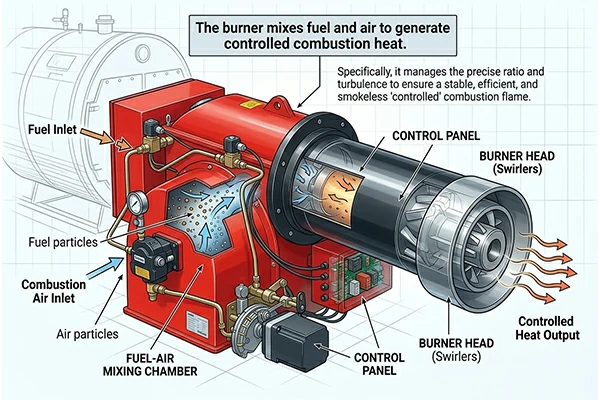
The بھاپ بوائلر برنر اسے اکثر دہن والے بوائلر کا دل سمجھا جاتا ہے کیونکہ یہ ایندھن کی توانائی کو تھرمل توانائی میں تبدیل کرنے کے عمل کو کنٹرول کرتا ہے۔.
آپریشن کے دوران, برنر ایندھن اور ہوا کو صحیح تناسب میں ملاتا ہے۔, ایک مستحکم شعلہ بناتا ہے۔, اور کمبشن چیمبر کے اندر حرارت جاری کرتا ہے۔. اس کے بعد پیدا ہونے والی حرارت کو بوائلر حرارتی سطحوں کے ذریعے پانی میں منتقل کیا جاتا ہے۔.
صنعتی بھاپ بوائلر برنر مختلف ایندھن کی اقسام کے ساتھ کام کر سکتے ہیں۔, سمیت:
- قدرتی گیس
- ڈیزل کا تیل
- بھاری ایندھن کا تیل
- بایوماس ایندھن
- کوئلہ
ایک اعلیٰ معیار کا برنر بوائلر کو حاصل کرنے میں مدد کرتا ہے۔:
- مکمل دہن
- کم ایندھن کی کھپت
- کم اخراج اخراج
- مستحکم شعلہ آپریشن
- تھرمل کارکردگی میں بہتری
بھاپ بوائلر برنر کیسے کام کرتا ہے۔?
برنر کے کام کرنے کے عمل میں عام طور پر چار اہم مراحل شامل ہوتے ہیں۔:
1. ایندھن کی فراہمی
ایندھن کو اسٹوریج سسٹم سے برنر تک ایندھن کی مخصوص پائپ لائنوں کے ذریعے منتقل کیا جاتا ہے۔. سپلائی سسٹم دہن کے عمل میں داخل ہونے والے ایندھن کی مقدار کو کنٹرول کرتا ہے۔.
2. ہوا اور ایندھن کا اختلاط
برنر ایندھن کو دہن ہوا کے ساتھ ایک بہترین تناسب میں جوڑتا ہے۔. ہوا میں ایندھن کا مناسب اختلاط مکمل دہن کو یقینی بناتا ہے اور توانائی کے غیر ضروری نقصان کو کم کرتا ہے۔.
3. اگنیشن کا عمل
اگنیشن سسٹم دہن چیمبر کے اندر ایک کنٹرول شدہ شعلہ پیدا کرتا ہے۔. جدید برنرز میں عام طور پر حفاظت کو بہتر بنانے کے لیے خودکار اگنیشن اور شعلہ نگرانی کے نظام شامل ہوتے ہیں۔.
4. گرمی کی رہائی
دہن کے دوران, ایندھن میں ذخیرہ شدہ کیمیائی توانائی تھرمل توانائی میں بدل جاتی ہے۔. اس گرمی کو پھر بھاپ پیدا کرنے کے لیے بوائلر حرارتی سطحوں کے ذریعے منتقل کیا جاتا ہے۔.
جدید صنعتی برنرز اکثر خودکار ماڈیولیشن ٹیکنالوجی استعمال کرتے ہیں۔. صرف پوری صلاحیت پر کام کرنے کے بجائے, برنر بھاپ کی طلب کے مطابق شعلے کی شدت کو ایڈجسٹ کرسکتا ہے۔, ایندھن کی کھپت کو کم کرنا اور کارکردگی کو بہتر بنانا.
2. کمبشن چیمبر: Where Fuel Energy Becomes Heat
سیکشن کا جائزہ: The combustion chamber provides the environment where fuel burns and converts chemical energy into high-temperature heat required for steam generation.
The دہن چیمبر, also known as the furnace or firebox, is the area where fuel combustion takes place. It is one of the most important sections inside a steam boiler because the quality of combustion directly affects efficiency and emissions.
Inside the combustion chamber, the burner produces a high-temperature flame. The released heat is absorbed by the surrounding boiler heating surfaces and transferred to the water system.
A well-designed combustion chamber should provide:
- Sufficient combustion space
- Stable flame conditions
- Complete fuel burning
- Efficient heat release
- Lower pollutant emissions
The temperature inside industrial boiler combustion chambers can reach extremely high levels. لہذا, the chamber is usually constructed with heat-resistant materials and insulation layers to reduce heat loss and protect external structures.
Why Is Combustion Chamber Design Important?
The design of the combustion chamber directly affects boiler operation. Poor combustion conditions may lead to:
- Higher fuel consumption
- Incomplete combustion
- Increased carbon emissions
- Flame instability
- Reduced boiler lifespan
اس وجہ سے, industrial boiler manufacturers carefully optimize combustion chamber size, شکل, and heat distribution according to different fuels and operating requirements.
3. ہیٹ ایکسچینجر: The Core of Steam Boiler Energy Transfer
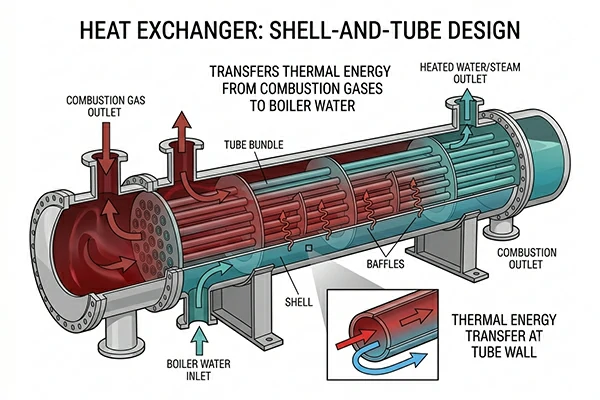
سیکشن کا جائزہ: This section explains how the heat exchanger transfers thermal energy from combustion gases to water and why it is one of the most important components affecting steam boiler efficiency.
The steam boiler heat exchanger is a critical component responsible for transferring heat from hot combustion gases to water without allowing the two fluids to directly mix.
The efficiency of a steam boiler largely depends on how effectively the heat exchanger captures and transfers thermal energy. A well-designed heat exchanger can reduce fuel consumption, improve steam production capacity, and lower operating costs.
بوائلر آپریشن کے دوران:
- Fuel combustion produces high-temperature exhaust gases.
- Hot gases pass through heating surfaces or tubes.
- Heat transfers through metal surfaces into boiler water.
- Water absorbs energy and changes into steam.
Different steam boiler designs use different heat exchanger structures. The two most common designs are fire-tube boilers and water-tube boilers.
Fire Tube Boiler Heat Exchanger
فائر ٹیوب بوائلر میں, گرم دہن گیسیں پانی سے گھری ہوئی ٹیوبوں کے ذریعے بہتی ہیں۔.
The tube walls act as heat transfer surfaces, allowing heat from the gases to transfer into the surrounding water.
Main advantages of fire-tube boiler heat exchangers:
- سادہ ڈھانچہ
- کم ابتدائی سرمایہ کاری کی لاگت
- آسان دیکھ بھال
- Suitable for small and medium steam requirements
Fire-tube boilers are commonly used in:
- تجارتی عمارتیں۔
- Laundries
- Small manufacturing facilities
- Heating applications
Water Tube Boiler Heat Exchanger
In a water-tube boiler, water flows inside tubes while hot combustion gases surround the outside of the tubes.
This design allows water to absorb heat faster and enables the boiler to operate at higher pressures and temperatures.
Main advantages of water-tube boiler heat exchangers:
- Higher pressure capability
- تیز تر بھاپ کی پیداوار
- Better thermal efficiency for large systems
- مسلسل صنعتی آپریشن کے لیے موزوں ہے ۔
Water-tube boilers are widely used in:
- پاور پلانٹس
- Chemical industries
- Large manufacturing facilities
- High-pressure steam applications
Fire Tube vs Water Tube Boiler Heat Exchanger Comparison
| خصوصیت |
فائر ٹیوب بوائلر |
واٹر ٹیوب بوائلر |
| Heat Transfer Method |
Hot gases flow inside tubes while water surrounds them. |
Water flows inside tubes while hot gases heat the outside surface. |
| Pressure Capability |
Low to medium pressure applications. |
High-pressure industrial applications. |
| Steam Generation Speed |
Moderate steam production speed. |
Fast steam generation. |
| دیکھ بھال |
Simple maintenance and easier inspection. |
Requires professional maintenance and water treatment. |
| عام ایپلی کیشنز |
Commercial heating and small factories. |
Power generation and heavy industries. |
4. بوائلر ڈرم: The Steam Storage and Separation Center
سیکشن کا جائزہ: The boiler drum stores water, separates steam from water mixture, and maintains stable steam generation during operation.
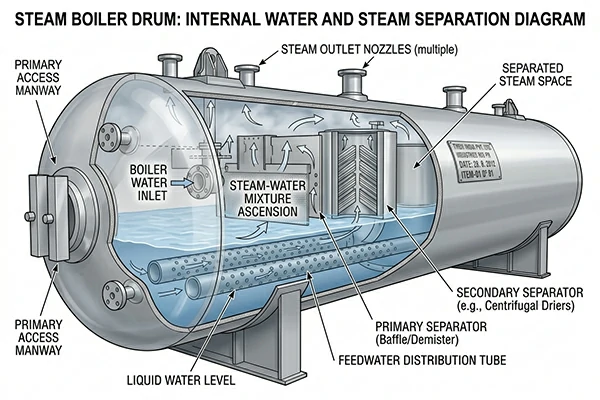
The بوائلر ڈرم is a pressure vessel that plays a key role in maintaining steam quality and system stability.
In many industrial steam boilers, the drum performs two important functions:
- Storing feedwater before steam generation.
- Separating steam from water after heating.
During the steam generation process:
- Water enters the boiler heating system.
- Heat from combustion raises the water temperature.
- The water and steam mixture enters the boiler drum.
- The drum separates steam from remaining water.
- Dry steam leaves through the steam outlet.
A properly designed boiler drum improves:
- Steam quality
- Pressure stability
- Operational safety
- Overall boiler efficiency
Why Is Steam Separation Important?
High-quality steam should contain as little moisture as possible. Excess water carried with steam can cause problems such as:
- Reduced heating efficiency
- Pipeline corrosion
- Equipment damage
- Unstable industrial processes
لہذا, the boiler drum must provide sufficient space and separation performance to produce reliable steam output.
5. پانی کی گردش کا نظام: Maintaining Continuous Heat Transfer
سیکشن کا جائزہ: The water circulation system ensures continuous movement of water through heated areas, allowing the boiler to maintain stable steam production.
The water circulation system is another essential part of industrial steam boilers. Its main purpose is to move water continuously through heating surfaces so that heat can be transferred efficiently.
Without proper water circulation, some areas of the boiler may become overheated, reducing efficiency and increasing the risk of equipment damage.
Types of Water Circulation Systems
Natural Circulation System
Natural circulation uses the difference in density between hot water and cooler water to create movement inside the boiler.
فوائد:
- سادہ ڈھانچہ
- Reliable operation
- Lower maintenance requirements
Natural circulation is commonly used in traditional industrial boiler systems.
Forced Circulation System
Forced circulation uses pumps to control water movement inside the boiler system.
فوائد:
- Better flow control
- Suitable for high-capacity boilers
- Improved heat transfer performance
Forced circulation systems are commonly applied in:
- Large power generation boilers
- High-pressure steam systems
- Large industrial facilities
6. Steam Boiler Control System: The Intelligent Management Center
سیکشن کا جائزہ: The control system monitors and adjusts boiler operating conditions to improve efficiency, حفاظت, and automation.
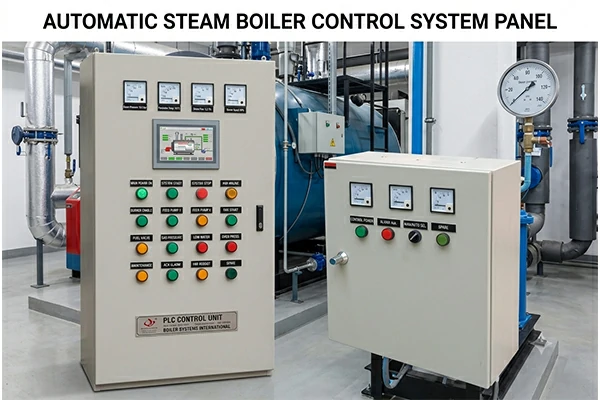
The steam boiler control system is the intelligent management center of a modern boiler. It continuously monitors important operating parameters and automatically adjusts the equipment according to steam demand.
Typical parameters controlled by the system include:
- بھاپ کا دباؤ
- Water level
- درجہ حرارت
- ایندھن کی فراہمی
- Combustion condition
A modern boiler control system usually contains the following components:
| Control Component |
مین فنکشن |
| Pressure Controller |
Maintains stable steam pressure during operation. |
| Water Level Controller |
Prevents low-water operation and protects boiler safety. |
| Temperature Sensor |
Monitors temperature changes inside the boiler system. |
| Fuel Control Valve |
Adjusts fuel supply according to steam demand. |
| PLC Control System |
Provides automatic monitoring and intelligent operation. |
Advanced control systems provide several benefits:
- Reduce unnecessary fuel consumption
- Improve combustion efficiency
- Increase operational safety
- Reduce manual operation requirements
- Extend boiler service life
7. Safety Components of Steam Boilers
سیکشن کا جائزہ:
This section explains the essential safety components installed in steam boilers to control pressure, prevent equipment failure, and ensure safe long-term operation.
Steam boilers operate under high temperature and pressure conditions, which means safety protection is one of the most important aspects of boiler design.
Modern steam boiler systems are equipped with multiple safety devices that continuously monitor operating conditions and automatically respond when abnormal situations occur.
A reliable safety system not only protects the boiler equipment but also reduces operational risks, improves system stability, and extends the service life of key components.
7.1 پریشر ریلیف والو
The pressure relief valve is one of the most critical safety devices installed on a steam boiler. Its main function is to automatically release excess pressure when the internal boiler pressure exceeds the designed safety limit.
During normal operation, the pressure relief valve remains closed and allows the boiler to maintain stable working pressure. البتہ, if the control system fails or steam pressure rises unexpectedly, the valve opens automatically to discharge steam and prevent dangerous overpressure conditions.
Regular inspection and testing of pressure relief valves are necessary because a malfunctioning valve can seriously affect boiler safety.
7.2 Low Water Cut-Off Device
A low water cut-off device protects steam boilers from operating without sufficient water. Maintaining the correct water level inside the boiler is essential because water absorbs heat from the combustion process.
If the water level drops too low, the heating surface may become overheated, causing damage to boiler tubes, deformation of metal components, or even serious equipment failure.
When the water level falls below the safe limit, the low water cut-off system automatically stops the burner operation until the water level returns to normal.
7.3 Boiler Control System
The control system works as the “brain” of a modern steam boiler. It monitors important operating parameters including pressure, درجہ حرارت, پانی کی سطح, ایندھن کی فراہمی, اور دہن کے حالات.
Advanced boiler control systems use sensors and automation technology to adjust burner output according to steam demand. This helps maintain stable steam production while reducing unnecessary fuel consumption.
| Control Function |
Purpose |
فوائد |
| Pressure Monitoring |
Maintains safe steam pressure levels |
Prevents overpressure operation |
| Water Level Control |
Keeps proper boiler water volume |
Protects heating surfaces from damage |
| Fuel Control |
Adjusts combustion according to demand |
Improves energy efficiency |
| Automatic Shutdown |
Stops operation during abnormal conditions |
Improves operator safety |
7.4 Water Treatment System
Water quality has a direct impact on steam boiler performance and operating life. Untreated water contains minerals such as calcium and magnesium, which can form scale deposits inside boiler tubes and heat transfer surfaces.
Scale buildup reduces heat transfer efficiency and forces the boiler to consume more fuel to produce the same amount of steam. شدید حالتوں میں, excessive scale can cause overheating and damage to pressure components.
A complete water treatment system usually includes filtration, water softening, chemical treatment, and continuous monitoring to maintain suitable boiler water quality.
8. How Steam Boiler Components Work Together
سیکشن کا جائزہ:
This section explains how different steam boiler components work together as a complete system to convert fuel energy into usable steam for industrial heating and processing applications.
A steam boiler is not a single independent device. It is a complete thermal system where multiple components, برنر سمیت, دہن چیمبر, گرمی ایکسچینجر, بوائلر ڈرم, کنٹرول سسٹم, and steam pipelines, work together to generate and deliver steam efficiently.
Understanding how these components interact helps operators improve boiler efficiency, ایندھن کی کھپت کو کم کریں, and maintain safe and stable operation.
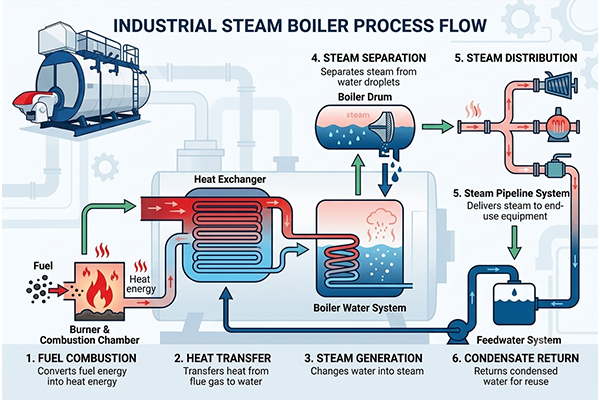
The Complete Steam Generation Process
The steam generation process inside an industrial boiler follows a continuous closed-loop cycle. Each component performs a specific function, and the entire system works together to transform fuel energy into high-temperature steam.
مرحلہ 1: ایندھن کا دہن
The process begins inside the burner. The burner mixes fuel, جیسے قدرتی گیس, تیل, بایوماس, or other energy sources, with air and creates a controlled combustion process.
دہن کے دوران, ایندھن میں ذخیرہ شدہ کیمیائی توانائی تھرمل توانائی میں بدل جاتی ہے۔, producing high-temperature flue gases that provide the heat required for steam production.
A properly designed burner ensures stable combustion, improves fuel utilization, and helps reduce unnecessary emissions.
ایندھن + Air → Combustion → High Temperature Heat Energy
مرحلہ 2: Heat Transfer Through Heat Exchanger
After combustion, high-temperature gases flow through the heat exchanger area where thermal energy is transferred to the boiler water.
The heat exchanger acts as the connection point between the combustion system and the water system. It allows heat to move efficiently while preventing combustion gases from mixing with the water or steam.
Different boiler designs use different heat transfer methods. مثال کے طور پر, in fire-tube boilers, گرم گیسیں پانی سے گھرا ہوا نلکوں سے گزرتی ہیں, while in water-tube boilers, water flows inside tubes heated by external combustion gases.
مرحلہ 3: بھاپ نسل
As water continuously absorbs heat from the heat exchanger, its temperature gradually increases until it reaches the boiling point.
When sufficient thermal energy is absorbed, the water changes from liquid form into steam. The generated steam contains a large amount of usable thermal energy, making it suitable for industrial processes, حرارتی نظام, اور بجلی کی پیداوار.
The quality and quantity of steam produced depend on several factors, سمیت:
- Boiler design and capacity
- Fuel combustion efficiency
- آپریٹنگ دباؤ
- Water quality and treatment
- Heat transfer performance
مرحلہ 4: Steam Separation Inside Boiler Drum
After steam is generated, the mixture of water and steam enters the boiler drum. The boiler drum plays an important role in separating steam from remaining water particles.
The separated steam collects at the upper section of the drum, while water returns to the circulation system for further heating.
Effective steam separation improves steam quality and prevents excessive moisture from entering downstream equipment.
مرحلہ 5: Steam Distribution to Industrial Equipment
Once high-quality steam is collected, it leaves the boiler through the main steam outlet and travels through the steam distribution pipeline.
The steam can then be delivered to different applications, سمیت:
- Industrial production equipment
- Steam turbines for power generation
- ہیٹ ایکسچینجرز
- Food processing systems
- Pharmaceutical sterilization equipment
- Commercial heating systems
A well-designed steam distribution system with proper insulation helps reduce heat loss and improves overall energy efficiency.
مرحلہ 6: Condensate Return and Recycling
After steam releases its heat energy during the industrial process, it gradually cools and changes back into liquid water, known as condensate.
Instead of being discharged, the condensate is collected and returned to the boiler feedwater system for reuse.
The condensate return process provides several benefits:
- Reduces fresh water consumption
- Lowers fuel requirements because returned water is already warm
- Improves overall boiler efficiency
- Reduces operating costs
| Process Stage |
Main Component Involved |
فنکشن |
| 1. ایندھن کا دہن |
برنر & کمبشن چیمبر |
Converts fuel energy into heat energy |
| 2. گرمی کی منتقلی |
ہیٹ ایکسچینجر |
Transfers heat from flue gas to water |
| 3. بھاپ نسل |
Boiler Water System |
Changes water into steam |
| 4. Steam Separation |
بوائلر ڈرم |
Separates steam from water droplets |
| 5. بھاپ کی تقسیم |
Steam Pipeline System |
Delivers steam to end-use equipment |
| 6. کنڈینسیٹ ریٹرن |
Feedwater System |
Returns condensed water for reuse |
Why Component Coordination Matters
The performance of a steam boiler depends on how efficiently all components work together. A high-quality burner cannot achieve maximum efficiency if the heat exchanger is poorly maintained. اسی طرح, an efficient boiler drum and control system cannot compensate for improper combustion conditions.
اس وجہ سے, industrial users should consider the entire boiler system rather than focusing only on individual components when selecting, upgrading, or maintaining a steam boiler.
A properly designed and maintained steam boiler system can provide reliable thermal energy, کم آپریٹنگ اخراجات, and stable performance for many years.
9. How to Improve Steam Boiler Efficiency
سیکشن کا جائزہ:
This section introduces practical methods to improve steam boiler efficiency, ایندھن کی کھپت کو کم کریں, and lower long-term operating costs.
Improving steam boiler efficiency is not only about selecting a high-efficiency boiler model. Daily operation, بحالی کے طریقوں, ایندھن کا معیار, and system optimization all influence the overall energy performance.
For industrial facilities, even a small improvement in boiler efficiency can create significant savings because boilers often operate continuously throughout the year.
9.1 Install an Economizer
An economizer is a heat recovery device installed in the boiler exhaust system. It captures heat from hot flue gases and uses this recovered energy to preheat boiler feedwater.
By recovering waste heat that would normally escape through the chimney, an economizer can reduce fuel consumption and improve overall boiler efficiency.
9.2 Maintain Proper Combustion Conditions
The combustion process directly affects boiler efficiency. Too much air increases heat loss through exhaust gases, while insufficient air can cause incomplete combustion and increased emissions.
Modern burners equipped with automatic combustion control systems can adjust the fuel-air ratio to maintain efficient combustion under different load conditions.
9.3 Perform Regular Boiler Maintenance
Regular maintenance is essential for maintaining steam boiler performance. Common maintenance tasks include cleaning heat transfer surfaces, checking burner operation, inspecting safety valves, and testing control systems.
A well-maintained boiler not only consumes less fuel but also reduces unexpected downtime and extends equipment lifespan.
9.4 Improve Steam Distribution System
Many energy losses occur after steam leaves the boiler. Poor insulation, steam leakage, and inefficient condensate recovery systems can significantly reduce overall system efficiency.
Improving steam pipelines, repairing leaks, and recovering condensate water can help facilities maximize the energy value of generated steam.
10. Common Industrial Applications of Steam Boilers
سیکشن کا جائزہ:
This section explains where steam boilers are commonly used and why different industries rely on steam as an efficient heat transfer medium.
Steam boilers are widely used because steam can transfer large amounts of thermal energy quickly and efficiently. From manufacturing processes to heating systems, steam remains an important energy source in many industries.
| صنعت |
Steam Boiler Applications |
| فوڈ پروسیسنگ |
کھانا پکانا, نس بندی, صفائی, and production heating |
| دواسازی کی صنعت |
نسبندی, clean steam production, and process heating |
| ٹیکسٹائل انڈسٹری |
رنگنے, خشک کرنا, and fabric processing |
| کیمیائی صنعت |
Reaction heating and temperature control |
| پاور جنریشن |
Driving steam turbines for electricity production |
| ہسپتال اور تجارتی عمارتیں۔ |
حرارتی, hot water supply, اور نسبندی |
11. How to Choose the Right Steam Boiler System
سیکشن کا جائزہ:
This section provides key factors to consider when selecting a steam boiler for industrial or commercial applications.
Choosing the correct steam boiler requires more than simply comparing prices. The right boiler should match your steam demand, ایندھن کی دستیابی, operating environment, and future expansion plans.

11.1 Determine Required Steam Capacity
The first step is calculating the required steam output. Boiler capacity is usually measured by tons per hour (ٹی پی ایچ), kilograms per hour (کلوگرام/ایچ), or boiler horsepower.
Selecting a boiler that is too small may result in insufficient steam supply, while an oversized boiler can increase investment costs and reduce operating efficiency.
11.2 Consider Fuel Availability
The choice of fuel has a major impact on operating costs. Common steam boiler fuels include natural gas, ڈیزل کا تیل, بایوماس, کوئلہ, and electricity.
| ایندھن کی قسم |
Main Advantages |
Suitable Applications |
| قدرتی گیس |
Clean combustion and high efficiency |
Industrial and commercial heating |
| بایوماس |
Renewable fuel and lower carbon emissions |
Factories with biomass resources |
| کوئلہ |
Lower fuel cost in some regions |
Large-scale industrial production |
| بجلی |
Clean operation and easy installation |
Small-scale applications |
12. Steam Boiler Maintenance Checklist
سیکشن کا جائزہ:
This section provides a practical steam boiler maintenance checklist to help operators improve reliability, prevent unexpected failures, and extend boiler service life.
Regular maintenance is one of the most important factors affecting steam boiler performance. Even a high-quality boiler system may experience efficiency losses, increased fuel consumption, or safety risks if inspections and maintenance are ignored.
A proper maintenance program should include daily monitoring, regular cleaning, safety inspections, and professional servicing according to the manufacturer’s recommendations.
12.1 Daily Steam Boiler Inspection
Daily inspection allows operators to identify potential problems before they develop into major equipment failures. Operators should monitor important operating parameters and check whether the boiler is running under normal conditions.
| Inspection Item |
What to Check |
Purpose |
| بھاپ کا دباؤ |
Check whether pressure remains within the designed range |
Ensure safe and stable operation |
| Water Level |
Confirm proper water level inside the boiler drum |
Prevent overheating caused by low water conditions |
| Burner Operation |
Check flame condition and combustion stability |
Maintain efficient fuel combustion |
| Leaks and Noise |
Inspect pipelines, والوز, and boiler body |
Detect abnormal conditions early |
12.2 Regular Cleaning and Inspection
During long-term operation, deposits may accumulate inside boiler components. Scale, کاج, and corrosion products can reduce heat transfer efficiency and increase energy consumption.
Regular cleaning should include inspection of heat exchanger surfaces, combustion chambers, boiler tubes, and water circulation systems.
For industrial steam boilers operating continuously, professional inspection is usually recommended at scheduled intervals to ensure all pressure components remain safe and reliable.
12.3 Water Quality Management
Water treatment is a key part of steam boiler maintenance. Poor water quality can lead to scale formation, سنکنرن, and reduced boiler efficiency.
A proper water management program normally includes water softening, chemical treatment, dissolved oxygen control, and regular testing of water parameters.
Maintaining proper water quality helps protect boiler tubes, improve heat transfer efficiency, and reduce maintenance costs.
13. Advantages and Disadvantages of Steam Boilers
سیکشن کا جائزہ:
This section summarizes the major advantages and limitations of steam boiler systems to help users understand whether steam technology fits their application.
Steam boilers have been widely used for more than a century because of their reliability, flexibility, and ability to deliver large amounts of thermal energy. البتہ, like any industrial equipment, steam boilers also have certain limitations that should be considered before installation.
Advantages of Steam Boilers
- High Thermal Efficiency:
Steam boilers can transfer large amounts of heat energy efficiently, especially in industrial applications requiring continuous steam supply.
- ایپلی کیشنز کی وسیع رینج:
Steam can be used for heating, نس بندی, بجلی کی پیداوار, خشک کرنا, and many industrial processes.
- Reliable Energy Supply:
Properly designed steam systems can operate continuously and provide stable thermal energy for demanding applications.
- طویل خدمت زندگی:
With proper operation and maintenance, industrial steam boilers can provide reliable service for decades.
- لچکدار ایندھن کے اختیارات:
Steam boilers can use various fuels, قدرتی گیس سمیت, تیل, بایوماس, کوئلہ, and electricity.
Disadvantages of Steam Boilers
- Higher Initial Investment:
Industrial steam boiler systems require investment in the boiler unit, piping system, water treatment equipment, and installation.
- Regular Maintenance Required:
Because steam boilers operate under high pressure and temperature, routine inspection and maintenance are necessary.
- Complex Installation:
Large steam systems require professional engineering design, including fuel supply, steam distribution, and safety systems.
- Water Treatment Requirements:
Proper water quality management is essential to prevent corrosion and scale buildup.
14. Frequently Asked Questions About Steam Boilers
سیکشن کا جائزہ:
This FAQ section answers common questions about steam boiler operation, کارکردگی, درخواستیں, and maintenance to help users better understand steam boiler systems.
14.1 What is the main purpose of a steam boiler?
A steam boiler is designed to convert water into steam by using thermal energy. The generated steam can be used for industrial heating, بجلی کی پیداوار, نس بندی, manufacturing processes, اور تجارتی حرارتی نظام.
14.2 How does a steam boiler generate steam?
بھاپ کا بوائلر ایندھن جلا کر یا گرمی پیدا کرنے کے لیے بجلی کا استعمال کرکے بھاپ پیدا کرتا ہے۔. گرمی کو حرارت کی منتقلی کی سطحوں کے ذریعے پانی میں منتقل کیا جاتا ہے۔, جس سے پانی اپنے ابلتے مقام تک پہنچ جاتا ہے اور بھاپ میں تبدیل ہوتا ہے۔.
14.3 فائر ٹیوب اور واٹر ٹیوب اسٹیم بوائلر میں کیا فرق ہے؟?
بنیادی فرق پانی اور گرم گیسوں کے بہاؤ کی سمت ہے۔. فائر ٹیوب بوائلر میں, گرم دہن گیسیں پانی سے گھری ہوئی ٹیوبوں کے ذریعے بہتی ہیں۔. In a water-tube boiler, water flows inside tubes heated by external combustion gases.
فائر ٹیوب بوائلر عام طور پر کم اور درمیانے دباؤ والے ایپلی کیشنز کے لیے موزوں ہوتے ہیں۔, جبکہ واٹر ٹیوب بوائلرز کو ہائی پریشر اور بڑی صلاحیت والے صنعتی استعمال کے لیے ترجیح دی جاتی ہے۔.
14.4 بھاپ بوائلر عام طور پر کتنی دیر تک چلتا ہے۔?
بھاپ بوائلر کی سروس لائف بوائلر کے معیار پر منحصر ہے۔, آپریٹنگ حالات, بحالی کے طریقوں, اور پانی کا علاج. مناسب دیکھ بھال کے ساتھ, بہت سے صنعتی بھاپ بوائلر قابل اعتماد طریقے سے کام کر سکتے ہیں۔ 20 to 35 سال یا اس سے زیادہ.
14.5 میں بھاپ بوائلر کی کارکردگی کو کیسے بہتر بنا سکتا ہوں۔?
Steam boiler efficiency can be improved by installing economizers, maintaining proper combustion, موصلیت کو بہتر بنانا, reducing steam leakage, optimizing water treatment, and performing regular maintenance.
نتیجہ: Understanding Steam Boilers for Better Performance
سیکشن کا جائزہ:
This section summarizes the key points of steam boiler technology and explains why selecting the right system is important for long-term efficiency and reliability.
Steam boilers remain one of the most important thermal energy solutions used in industrial, تجارتی, and power generation applications. Their ability to produce reliable and high-quality steam makes them essential for industries that require continuous heating and processing capabilities.
Understanding how steam boilers work, the function of each component, different boiler types, بحالی کی ضروریات, and efficiency improvement methods can help businesses make better decisions when purchasing or upgrading a boiler system.
The best steam boiler solution depends on several factors, including required steam capacity, ایندھن کی دستیابی, operating environment, energy costs, and future production requirements.
If you are planning to install a new steam boiler system or replace an existing unit, choosing an experienced boiler manufacturer can help ensure better performance, کم آپریٹنگ اخراجات, اور طویل مدتی وشوسنییتا.
Need Help Choosing the Right Steam Boiler?
Our professional boiler engineers can help you select the most suitable steam boiler based on your required capacity, ایندھن کی قسم, کام کرنے کا دباؤ, and application requirements.
For technical consultation, customized boiler solutions, and quotation support, براہ کرم ہم سے رابطہ کریں۔:
واٹس ایپ: +86 132-1322-2805.




ویہمارے گاہک کے جائزے
"میں نے اپنی فیکٹری کے لیے فینگکوئی اسٹیم بوائلر خریدا اور یہ مہینوں سے بے عیب کام کر رہا ہے۔. مواد کا معیار اور بوائلر کی تعمیر متاثر کن ہے۔. یہ بہت توانائی کی بچت بھی ہے۔, جس نے ہمیں اپنے توانائی کے بلوں پر رقم بچانے میں مدد کی ہے۔. میں Fangkuai کی مصنوعات کی ہر اس شخص کو سفارش کرتا ہوں جسے قابل اعتماد اور موثر حرارتی حل کی ضرورت ہو۔"
جان
امریکا"Fangkuai سے بھاپ جنریٹر میرے چھوٹے کاروبار کے لیے بہترین ہے۔. یہ استعمال کرنا بہت آسان ہے اور کم سے کم دیکھ بھال کی ضرورت ہوتی ہے۔. یہ بہت توانائی کی بچت بھی ہے۔, جس نے مجھے اپنے توانائی کے بلوں پر پیسے بچانے میں مدد کی ہے۔. Fangkuai میں کسٹمر سروس بھی بہترین ہے۔. وہ بہت ذمہ دار ہیں اور ہمیشہ مدد کرنے کو تیار ہیں۔. میں Fangkuai کے بھاپ جنریٹرز کی انتہائی سفارش کرتا ہوں۔"
احمد
مصر"میں Fangkuai کے گرم پانی کے بوائلر کے معیار سے بہت متاثر ہوں۔. یہ قائم رہنے کے لیے بنایا گیا ہے اور میری توقعات سے بڑھ گیا ہے۔. تنصیب کا عمل بھی بہت ہموار تھا اور کسٹمر سروس بہترین تھی۔. گرم پانی کا بوائلر چلانے اور برقرار رکھنے میں بہت آسان ہے۔, اور توانائی کی کارکردگی قابل ذکر ہے۔. میں Fangkuai کے گرم پانی کے بوائلرز کی بہت زیادہ سفارش کرتا ہوں۔"
جیک
آسٹریلیا"Fangkuai سے بھاپ جنریٹر میرے چھوٹے کاروبار کے لیے بہترین ہے۔. یہ استعمال کرنا بہت آسان ہے اور کم سے کم دیکھ بھال کی ضرورت ہوتی ہے۔. یہ بہت توانائی کی بچت بھی ہے۔, جس نے مجھے اپنے توانائی کے بلوں پر پیسے بچانے میں مدد کی ہے۔. Fangkuai میں کسٹمر سروس بھی بہترین ہے۔. وہ بہت ذمہ دار ہیں اور ہمیشہ مدد کرنے کو تیار ہیں۔. میں Fangkuai کے بھاپ جنریٹرز کی انتہائی سفارش کرتا ہوں۔"
احمد
مصر"Fangkuai کے معاون آلات نے میرے بوائلر سسٹم کو اور بھی بہتر بنا دیا ہے۔. سامان کا معیار غیر معمولی ہے اور قیمتیں بہت مناسب ہیں۔. آلات نے میرے بوائلر سسٹم کی کارکردگی اور کارکردگی کو بہتر بنانے میں مدد کی ہے۔, جس کی وجہ سے لاگت میں نمایاں بچت ہوئی ہے۔. میں Fangkuai کے معاون آلات کی سفارش کرتا ہوں کسی ایسے شخص کو جو اعلیٰ معیار کے بوائلر لوازمات کی ضرورت ہو۔"
میریک
برطانیہ"میں نے اپنی فیکٹری کے لیے فینگکوئی اسٹیم بوائلر خریدا اور یہ مہینوں سے بے عیب کام کر رہا ہے۔. مواد کا معیار اور بوائلر کی تعمیر متاثر کن ہے۔. یہ بہت توانائی کی بچت بھی ہے۔, جس نے ہمیں اپنے توانائی کے بلوں پر رقم بچانے میں مدد کی ہے۔. میں Fangkuai کی مصنوعات کی ہر اس شخص کو سفارش کرتا ہوں جسے قابل اعتماد اور موثر حرارتی حل کی ضرورت ہو۔"
جان
امریکا"Fangkuai سے گرم پانی کا بوائلر حیرت انگیز ہے۔. یہ تیزی سے اور مؤثر طریقے سے گرم ہوتا ہے۔, اور پانی زیادہ دیر تک گرم رہتا ہے۔. ہمیں اس کے ساتھ کبھی کوئی مسئلہ نہیں ہوا اور اس نے ہمارے روزمرہ کے کاموں میں نمایاں بہتری لائی ہے۔. تنصیب کا عمل بھی بہت ہموار تھا اور کسٹمر سروس بہترین تھی۔. میں Fangkuai کے گرم پانی کے بوائلرز کی بہت زیادہ سفارش کرتا ہوں۔"
سارہ
کینیڈا"Fangkuai کے معاون آلات نے میرے بوائلر سسٹم کو اور بھی بہتر بنا دیا ہے۔. سامان کا معیار غیر معمولی ہے اور قیمتیں بہت مناسب ہیں۔. آلات نے میرے بوائلر سسٹم کی کارکردگی اور کارکردگی کو بہتر بنانے میں مدد کی ہے۔, جس کی وجہ سے لاگت میں نمایاں بچت ہوئی ہے۔. میں Fangkuai کے معاون آلات کی سفارش کرتا ہوں کسی ایسے شخص کو جو اعلیٰ معیار کے بوائلر لوازمات کی ضرورت ہو۔"
میریک
برطانیہ"Fangkuai سے تھرمل آئل بوائلر چلانے اور برقرار رکھنے میں بہت آسان ہے۔. اس نے دیکھ بھال پر وقت اور پیسہ بچانے میں ہماری مدد کی ہے۔, جس کی وجہ سے لاگت میں نمایاں بچت ہوئی ہے۔. مواد کا معیار اور بوائلر کی تعمیر غیر معمولی ہے۔. یہ بہت توانائی کی بچت بھی ہے۔, جس نے ہمیں اپنے توانائی کے بلوں پر رقم بچانے میں مدد کی ہے۔. میں Fangkuai کے تھرمل آئل بوائلر کی بہت زیادہ سفارش کرتا ہوں۔ ."
ایلن
برازیل