Panduan Membeli Ketel Uap Industri 2026: Kapasitas, Tekanan, Bahan Bakar dan TCO
Membeli ketel uap industri di 2026 bukan sekadar soal memilih kapasitas, menanyakan harga, dan membandingkan kutipan.
Boiler yang terlihat menarik pada lembar data mungkin tidak cocok setelah dihubungkan dengan proses produksi sebenarnya. Permintaan uap berubah sepanjang hari. Harga bahan bakar bervariasi berdasarkan lokasi. Kondisi air umpan mempengaruhi efisiensi dan keandalan. Aturan emisi bergantung pada pasar instalasi. Persyaratan otomasi berbeda dari satu pabrik ke pabrik lainnya, dan harga awal yang rendah dapat diimbangi dengan konsumsi bahan bakar yang lebih tinggi selama bertahun-tahun, pemeliharaan, atau waktu henti.
Bagi sebagian besar pembeli industri, pemilihan boiler yang lebih baik dimulai dengan empat pertanyaan:
- Berapa banyak uap yang sebenarnya dibutuhkan oleh proses tersebut?
- Berapa tekanan dan suhu uap yang dibutuhkan?
- Bahan bakar mana yang secara realistis tersedia di lokasi?
- Berapa biaya kepemilikan dan pengoperasian sistem boiler yang lengkap?
Keempat variabel ini—kapasitas, tekanan, bahan bakar dan total biaya kepemilikan (TCO)—Membentuk dasar strategi pembelian ketel uap industri yang praktis.
Panduan ini menjelaskan cara mengevaluasinya, informasi apa yang diminta dari pemasok, dan bagaimana membandingkan proposal ketel uap industri berdasarkan teknik yang konsisten.
Jawaban Cepat: Bagaimana Anda Memilih Ketel Uap Industri?
Untuk memilih ketel uap industri, pertama-tama tentukan minimum pabrik, kebutuhan uap normal dan puncak. Kemudian tentukan tekanan kerja yang dibutuhkan, suhu uap, bahan bakar yang tersedia, kondisi air umpan, jam operasional, persyaratan emisi dan sertifikasi yang berlaku.
After that, compare boiler designs based on:
- part-load performance;
- konsumsi bahan bakar;
- burner turndown;
- steam pressure and quality;
- water-treatment requirements;
- heat-recovery options;
- otomatisasi;
- Peralatan tambahan;
- pemeliharaan;
- instalasi;
- supplier support;
- dan total biaya kepemilikan.
The best boiler is not necessarily the largest, cheapest or highest-rated-efficiency option. It is the boiler system that most reliably matches the plant’s actual operating conditions.
1. What Should You Know Before Buying an Industrial Steam Boiler?
A useful boiler quotation starts with useful process data.
Requests such as “I need a 10-ton boiler” atau “Please quote a gas boiler” provide too little information for accurate engineering selection.
Before contacting an industrial boiler manufacturer, prepare the following information.
| Parameter |
What the Buyer Should Provide |
Why It Matters |
| Kapasitas uap |
Minimum, normal and peak demand |
Determines boiler sizing |
| Tekanan kerja |
Required process pressure |
Affects boiler design |
| Suhu uap |
Jenuh atau terlalu panas |
Mendefinisikan kondisi uap |
| Bahan bakar |
Gas, minyak, biomassa, listrik, dll.. |
Menentukan sistem pembakaran/energi |
| Profil operasi |
Jam/hari dan hari/tahun |
Mempengaruhi biaya operasional tahunan |
| Air umpan |
Suhu dan kualitas air |
Mempengaruhi efisiensi dan pengobatan |
| Pengembalian kondensat |
Persentase/aliran yang diharapkan |
Mempengaruhi keseimbangan panas dan air |
| Lokasi instalasi |
Negara dan wilayah |
Menentukan persyaratan peraturan |
| Emisi |
Batasan lokal yang berlaku |
Mempengaruhi peralatan pembakar/kontrol |
| Sertifikasi |
Persyaratan khusus proyek |
Mempengaruhi desain dan dokumentasi |
| Otomatisasi |
Plc, SCADA, pemantauan jarak jauh |
Mendefinisikan ruang lingkup kontrol |
| Batasan situs |
Ruang angkasa, mengakses, ketinggian, mengangkut |
Mempengaruhi konfigurasi fisik |
Semakin dini variabel-variabel ini didefinisikan, semakin mudah untuk membandingkan proposal boiler pesaing secara adil.
2. Bagaimana Cara Menentukan Kapasitas Steam Boiler Yang Benar?
Steam boiler capacity is normally selected from process steam demand—not simply from the maximum theoretical capacity of the production line.
Industrial steam demand may be expressed in:
- kg/jam;
- th;
- lb/h;
- boiler horsepower;
- or thermal power.
Regardless of the unit, the important question is how much steam the plant needs at different operating conditions.
Minimum, Normal and Peak Steam Demand
A useful steam-load profile should identify:
- minimum steam demand;
- normal steam demand;
- peak steam demand;
- duration of peak demand;
- daily operating hours;
- shift patterns;
- batch processes;
- simultaneous equipment operation;
- seasonal changes;
- and expected future production expansion.
Consider a simplified example.
A factory may have a calculated maximum requirement of 10 t/h but operate at only 4–6 t/h during most production hours. Puncak produksi yang pendek terkadang mendekat 10 th.
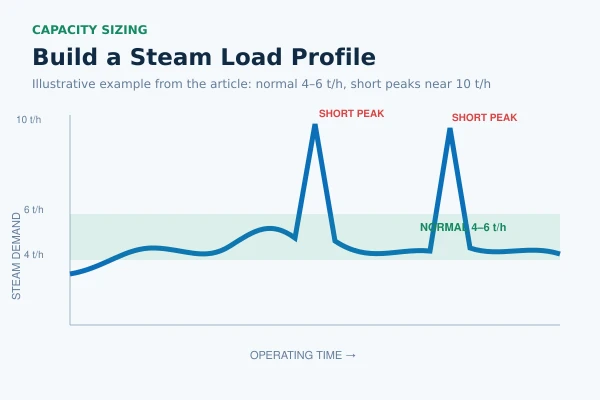
Hal ini tidak secara otomatis berarti bahwa kapasitas maksimum harus diabaikan. Ini berarti pemilihan boiler harus mempertimbangkan kondisi beban puncak dan beban sebagian yang lebih umum.
Mengapa Ukuran Boiler yang Terlalu Besar Bisa Mahal
Ketel yang terlalu besar dapat menimbulkan beberapa masalah.
Jika burner tidak dapat memodulasi untuk memenuhi kebutuhan uap yang lebih rendah, ketel dapat hidup dan mati berulang kali. Sering bersepeda dapat meningkatkan kerugian yang bisa dihindari, menciptakan fluktuasi tekanan dan menambah keausan pengoperasian.
Kebesaran juga bisa berarti:
- investasi awal yang tidak perlu;
- peralatan bantu yang lebih besar;
- ruang instalasi tambahan;
- kerugian siaga yang berlebihan;
- dan pemanfaatan yang lebih buruk dari sistem yang diinstal.
Mengapa Meremehkan Ukuran Juga Merupakan Risiko
Ketel yang terlalu kecil mungkin:
- gagal mempertahankan tekanan uap yang dibutuhkan;
- membatasi kapasitas produksi;
- beroperasi terus menerus mendekati penembakan maksimum;
- berjuang dengan periode beban tinggi yang singkat;
- dan menyisakan sedikit cadangan untuk perubahan produksi di masa depan.
Oleh karena itu, tujuannya bukan untuk meminimalkan atau memaksimalkan kapasitas. Hal ini untuk mencocokkan kapasitas dan konfigurasi boiler dengan profil beban yang terdokumentasi.
Untuk pembangkit dengan beban variabel, pembeli juga harus mengevaluasi penghentian kompor, pengurutan boiler dan apakah beberapa boiler kecil akan memberikan fleksibilitas yang lebih baik daripada satu unit besar.
3. Berapa Tekanan Uap yang Dibutuhkan Proses Anda?
Kapasitas menjawab pertanyaan itu “Berapa banyak uap?”
Tekanan menjawab pertanyaan lain:
Pada kondisi apa uap tersebut harus mencapai proses?
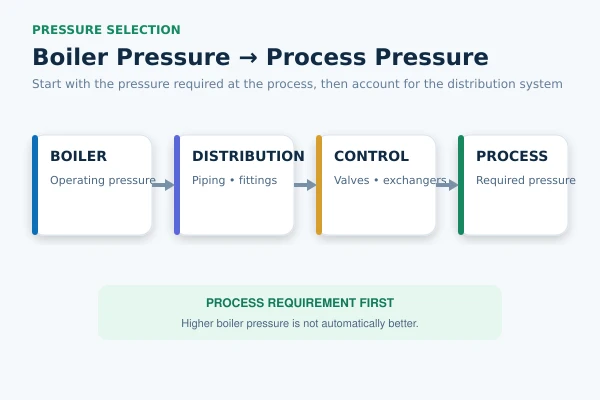
Tekanan boiler tidak boleh dipilih hanya karena model dengan tekanan yang lebih tinggi tampaknya lebih mampu.
Tekanan yang diperlukan harus datang dari proses tersebut.
Tekanan Boiler vs. Tekanan Proses
The boiler’s operating pressure and the pressure available at the steam-consuming equipment are not always identical.
Pressure can be lost through:
- steam piping;
- katup;
- perlengkapan;
- penukar panas;
- katup kontrol;
- jarak distribusi;
- and changing steam flow.
A buyer should therefore identify the pressure required at the actual process and allow the system designer to evaluate reasonable distribution losses and control requirements.
Unnecessarily high boiler pressure can increase equipment requirements and may create operating conditions that the process does not need.
Saturated Steam vs. Superheated Steam
Most process-heating applications use saturated steam, while some specialized industrial and power applications may require superheated steam.
| Faktor |
Saturated Steam |
Superheated Steam |
| Suhu |
Related to saturation pressure |
Above saturation temperature |
| Common role |
Proses pemanasan |
Specialized processes/power |
| Heat-transfer behavior |
Kuat untuk banyak tugas pemanasan |
Bergantung pada aplikasi |
| Kompleksitas sistem |
Umumnya lebih sederhana |
Umumnya lebih tinggi |
| Dasar seleksi |
Persyaratan proses |
Persyaratan teknik khusus |
Oleh karena itu, pemasok harus mengetahui kapasitasnya, persyaratan tekanan dan suhu uap sebelum merekomendasikan konfigurasi boiler.
4. Bahan Bakar Mana yang Harus Anda Pilih untuk Ketel Uap Industri?
Tidak ada bahan bakar boiler industri yang terbaik secara universal.
Pemilihan bahan bakar semakin menjadi keputusan ekonomi dan teknis yang spesifik lokasi.
Pembeli harus membandingkan:
- harga bahan bakar lokal;
- keandalan pasokan jangka panjang;
- persyaratan penyimpanan;
- infrastruktur;
- kompleksitas pembakar/sistem bahan bakar;
- persyaratan emisi;
- pemeliharaan;
- otomatisasi;
- dan jam operasional yang diharapkan.
Ketel Uap Berbahan Bakar Gas
Ketel uap berbahan bakar gas tetap dapat diterapkan secara luas jika gas alam atau bahan bakar gas lain yang sesuai tersedia secara andal.
Potensi keuntungannya antara lain:
- teknologi pembakar yang matang;
- penanganan bahan bakar yang relatif sederhana;
- respon beban yang kuat;
- high automation potential;
- compact fuel infrastructure;
- and compatibility with heat-recovery equipment.
But buyers should still investigate gas-price exposure, supply pressure, local emissions requirements and the long-term availability of the fuel.
Oil and Diesel-Fired Boilers
Liquid-fuel systems may be useful where gas infrastructure is unavailable or where a site requires an independent or backup fuel supply.
The procurement scope may need to include:
- fuel tanks;
- pumping;
- filtration;
- fuel heating where applicable;
- burner configuration;
- spill-control measures;
- and local environmental requirements.
A lower boiler purchase price should not be considered separately from the cost of the complete fuel system.
Ketel Uap Listrik
Ketel uap listrik eliminate combustion at the point of use and can provide precise load control.
Namun, the boiler itself is only part of the decision.
Pembeli harus memeriksa:
- kapasitas listrik yang tersedia;
- kapasitas transformator;
- permintaan maksimum tanaman;
- tegangan koneksi;
- persyaratan peningkatan jaringan;
- tarif listrik;
- biaya permintaan;
- dan jadwal operasi yang diharapkan.
Badan Energi Internasional mencatat bahwa boiler listrik tersedia secara komersial untuk panas dan uap industri, sementara rasio harga listrik terhadap gas dan kendala sambungan jaringan listrik dapat berdampak besar terhadap penerapannya.
Inilah sebabnya mengapa boiler listrik harus dievaluasi sebagai bagian dari sistem kelistrikan pabrik, bukan sebagai peralatan yang terisolasi.
Ketel Uap Biomassa
Ketel uap berbahan bakar biomassa mungkin menarik secara ekonomi jika konsisten, bahan bakar biomassa yang sesuai dan harga bersaing tersedia secara lokal.
Tetapi “biomassa” bukanlah spesifikasi bahan bakar yang lengkap.
Pembeli harus menyediakan data untuk:
- kelembaban;
- nilai kalori;
- kandungan abu;
- ukuran partikel;
- kepadatan massal;
- kontaminan;
- and seasonal variation.
The project may also require:
- fuel storage;
- conveying;
- feeding;
- penanganan abu;
- dust collection;
- and additional maintenance.
A cheap biomass fuel can become expensive if inconsistent quality reduces useful steam output or causes operating problems.
Dual-Fuel and Multi-Fuel Boilers
Fuel flexibility may be valuable where fuel prices fluctuate or where uninterrupted steam production is critical.
Namun, flexibility also adds complexity.
Compare:
- burner capability;
- penyimpanan;
- switching procedure;
- efficiency on each fuel;
- emissions on each fuel;
- control logic;
- dan pemeliharaan.
Fuel flexibility is valuable when it solves a real supply or operating risk—not simply because “more fuels” sounds better on a specification sheet.
5. Gas vs. Electric vs. Boiler biomassa: Which Is Better?
The answer depends on the site.
| Faktor |
Boiler gas |
Ketel Listrik |
Ketel Biomassa |
| Energy infrastructure |
Gas supply |
Electrical capacity |
Biomass supply/storage |
| On-site combustion |
Ya |
TIDAK |
Ya |
| Fuel handling |
Relatif sederhana |
Sangat sederhana |
Lebih kompleks |
| Potensi otomatisasi |
Tinggi |
Sangat tinggi |
Tinggi |
| Kompleksitas pemeliharaan |
Sedang |
Umumnya lebih rendah |
Umumnya lebih tinggi |
| Peralatan emisi lokal |
Bergantung pada pasar |
Tidak ada sistem pembakaran |
Seringkali lebih luas |
| Paparan harga energi |
pasar gas |
Pasar listrik |
Rantai pasokan biomassa |
| Paling cocok |
Penggunaan industri yang luas |
Ekonomi kelistrikan yang menguntungkan |
Ketersediaan biomassa yang dapat diandalkan |
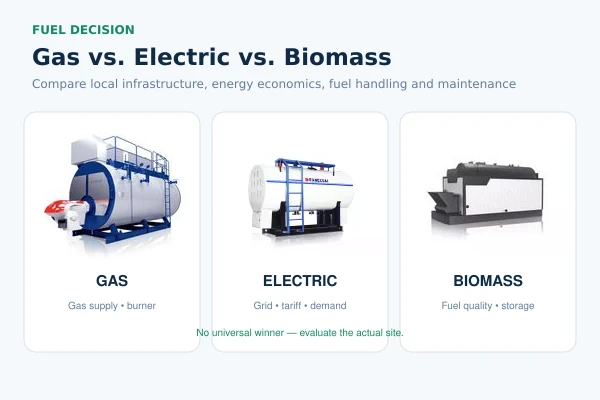
Daripada menanyakan bahan bakar mana yang paling murah secara universal, menghitung biaya yang diharapkan dari uap yang berguna berdasarkan kondisi aktual pembangkit listrik.
Hal ini memerlukan harga energi aktual, jam operasional, permintaan uap dan efisiensi sistem yang realistis.
6. Tabung Api vs. Ketel Tabung Air: Desain Mana Yang Harus Anda Pilih?
Konstruksi boiler adalah keputusan pembelian penting lainnya.
Tidak ada desain yang secara otomatis lebih unggul.
Boiler tabung api
Di boiler tabung api, gas pembakaran panas melewati tabung yang dikelilingi oleh air.
Tergantung pada proyeknya, desain tabung api dapat menawarkan pengoperasian yang relatif mudah dan solusi ringkas untuk banyak aplikasi uap industri.
Boiler tabung air
Di boiler tabung air, air/uap mengalir melalui tabung yang dipanaskan secara eksternal oleh gas pembakaran.
Sistem pipa air sering dipertimbangkan untuk aplikasi yang melibatkan kapasitas lebih tinggi, tekanan atau kondisi pengoperasian yang menuntut, namun pemilihan yang benar tetap spesifik pada proyek.
Sebuah detail tabung api vs. perbandingan boiler pipa air harus mempertimbangkan:
| Faktor Seleksi |
Pertanyaan untuk Ditanyakan |
| Kapasitas |
Berapa minimalnya, normal and peak demand? |
| Tekanan |
Tekanan proses apa yang diperlukan? |
| Muat perubahan |
Seberapa cepat perubahan permintaan uap? |
| Ruang angkasa |
Berapa dimensi ruang ketel yang tersedia? |
| Kualitas air |
Sistem pengobatan apa yang tersedia? |
| Pemeliharaan |
Kemampuan layanan apa yang ada secara lokal? |
| Instalasi |
Apakah ada batasan transportasi atau lokasi? |
| Ekspansi |
Apakah pertumbuhan permintaan uap di masa depan diharapkan?? |
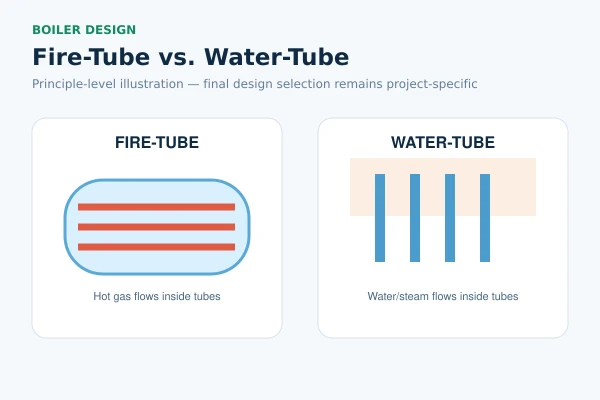
Jenis boiler harus mengikuti persyaratan proses, not the other way around.
7. How Should Industrial Steam Boiler Efficiency Be Compared?
“Efisiensi ketel: 95%.”
By itself, that number tells a buyer surprisingly little.
A meaningful efficiency figure should state the conditions under which it was calculated or tested.
Ask:
- Which fuel was used?
- Was the calculation based on LHV or HHV?
- What boiler load was assumed?
- What was the feedwater temperature?
- What was the stack temperature?
- What excess-air or O₂ condition was used?
- Was an economizer included?
- Was auxiliary electricity included?
- Was the value measured or calculated?
Rated Efficiency vs. Real Operating Efficiency
A boiler operates inside a steam system.
Real annual fuel consumption can be affected by:
- burner modulation;
- excess air;
- short cycling;
- scaling or fouling;
- suhu air umpan;
- pengembalian kondensat;
- blowdown;
- isolasi;
- steam leakage;
- economizer performance;
- and operator settings.
Itu KITA. Sumber daya sistem uap Departemen Energi mengidentifikasi peluang peningkatan tingkat sistem termasuk optimalisasi pembakaran, pengembalian kondensat, kontrol ledakan, pembakar yang efisien dan pemulihan limbah panas.
Ini adalah pelajaran pengadaan yang penting.
Efisiensi tertinggi yang dikutip tidak secara otomatis merupakan biaya bahan bakar tahunan terendah.
Teknologi Pemulihan Panas yang Patut Dievaluasi
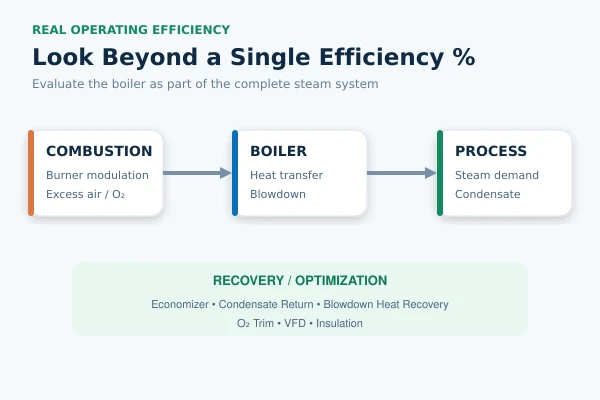
Tergantung pada proyeknya, pilihan mungkin termasuk:
- penghemat air umpan;
- penghemat kondensasi jika secara teknis cocok;
- pemanasan awal udara pembakaran;
- pemulihan panas blowdown;
- pemulihan kondensat;
- kontrol blowdown otomatis;
- kuartal O₂;
- penggerak frekuensi variabel;
- dan isolasi yang lebih baik.
Setiap opsi harus dievaluasi berdasarkan kondisi pengoperasian sebenarnya.
8. Mengapa Kualitas Air Umpan Penting Sebelum Anda Membeli Boiler
Air umpan bukanlah masalah sekunder.
Kondisi air mempengaruhi keandalan boiler, efisiensi, masa pemeliharaan dan pelayanan.
Tergantung pada sistemnya, insinyur mungkin perlu mengevaluasi:
- kekerasan;
- padatan terlarut;
- oksigen terlarut;
- alkalinitas;
- pH;
- silika;
- air riasan;
- kualitas kondensat;
- dan bahan kimia pengobatan.
Pengelolaan air yang buruk dapat menyebabkan skala, korosi, sisa dan blowdown yang tidak perlu.
Skala pada permukaan perpindahan panas dapat mengurangi perpindahan panas efektif, sementara korosi dapat menimbulkan masalah keandalan yang serius.
Oleh karena itu, proyek yang lengkap mungkin memerlukan:
- perawatan awal;
- pelunakan;
- osmosis balik jika diperlukan;
- dosis kimia;
- deaerasi;
- penyimpanan air umpan;
- pemulihan kondensat;
- dan kontrol blowdown.
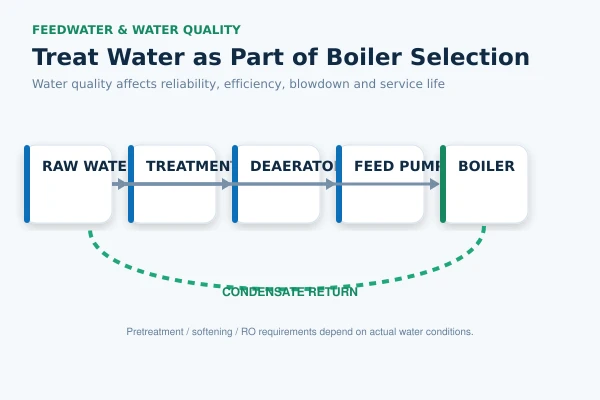
Pabrikan boiler harus menerima informasi dasar air umpan sebelum pemilihan peralatan akhir daripada menemukan masalah kualitas air yang parah selama commissioning.
9. Peralatan Bantu Apa yang Dibutuhkan Ketel Uap Industri?
Sebuah kutipan untuk “satu ketel” tidak harus mencakup pembangkit listrik tenaga uap yang lengkap.
Ini adalah salah satu cara termudah agar dua penawaran harga pemasok terlihat serupa namun sebenarnya mencakup cakupan yang sangat berbeda.
Tergantung pada proyeknya, peralatan bantu mungkin termasuk:
- pembakar;
- pompa air umpan;
- tangki air umpan;
- deaerator;
- peralatan pengolahan air;
- penghemat;
- air preheater;
- cerobong asap;
- sistem bahan bakar;
- kereta gas;
- peralatan pemberian pakan biomassa;
- penanganan abu;
- peralatan peniupan;
- sistem kondensat;
- kabinet kendali;
- peralatan pengendalian emisi;
- katup dan instrumentasi.
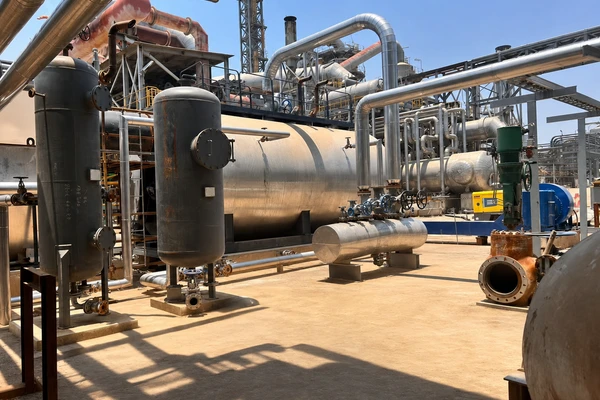
Pembeli harus meminta daftar penyertaan dan pengecualian yang jelas.
Jika Pemasok A menyertakan boiler, pembakar, penghemat, pompa dan kontrol sementara Pemasok B hanya mengutip bejana tekan dan pembakar dasar, harga mereka tidak dapat dibandingkan secara langsung.
10. Otomatisasi Boiler Apa yang Harus Anda Tentukan 2026?
Boiler yang dikontrol PLC tidak secara otomatis a “ketel pintar.”
Pertanyaan pengadaan seharusnya:
Apa yang diukur oleh sistem kendali, catatan, berkomunikasi dan mengoptimalkan?
Minimal, otomatisasi boiler industri mungkin perlu dikontrol atau dipantau:
- pengoperasian pembakar;
- tekanan uap;
- level air;
- air umpan;
- interlock keselamatan;
- kondisi alarm.
Sistem yang lebih canggih mungkin memantau:
- aliran uap;
- aliran bahan bakar;
- aliran air umpan;
- suhu air umpan;
- suhu tumpukan;
- tumpukan O₂;
- laju pembakaran pembakar;
- blowdown;
- jam operasional;
- riwayat alarm;
- dan konsumsi energi.
Integrasi dapat meluas hingga:
Sensor → PLC → HMI → SCADA → Penyimpanan Data → Pemantauan Jarak Jauh
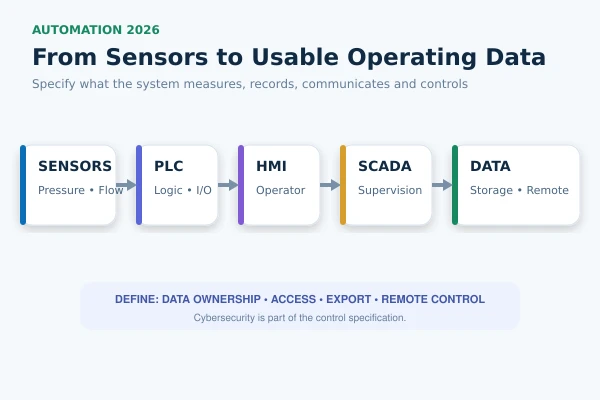
Sebelum memesan pemantauan jarak jauh, juga mendefinisikan:
- siapa yang memiliki data operasi;
- siapa yang dapat mengaksesnya;
- berapa lama data disimpan;
- apakah bisa diekspor;
- yang dapat mengubah pengaturan PLC;
- dan apakah akses jarak jauh dapat dinonaktifkan oleh instalasi.
Untuk sistem industri yang terhubung, keamanan siber harus menjadi bagian dari spesifikasi kontrol. NIST SP 800-82 Putaran. 3 memberikan panduan untuk keamanan teknologi operasional, termasuk lingkungan pengendalian industri.
11. Emisi dan Sertifikasi: Check the Installation Market First
There is no single global emissions limit that applies to every industrial steam boiler.
Requirements may vary by:
- country;
- state/province;
- local jurisdiction;
- kapasitas ketel;
- bahan bakar;
- process;
- jam operasional;
- and environmental permit.
Misalnya, itu KITA. EPA’s industrial, commercial and institutional boiler rules illustrate how boiler requirements can depend on facility and fuel category.
For an export project, buyers should identify the applicable emissions requirement before final burner and emissions-control selection.
Potential regulated emissions can include:
- NOx;
- CO;
- materi partikulat;
- SOx;
- and other market-specific pollutants.
The required solution may involve low-NOx burners, flue-gas recirculation, combustion controls, dust collection or other technologies depending on fuel and local requirements.
Certification Requirements
Certification also depends on destination and project scope.
Examples can include applicable requirements under the ASME Boiler and Pressure Vessel Code atau, for relevant EU pressure equipment, itu Pressure Equipment Directive.
Do not simply ask a supplier:
“Do you have CE/ASME?”
Instead ask:
- Which equipment is covered?
- Which manufacturer is named?
- What is the certificate scope?
- Does it apply to the exact equipment being quoted?
- What project documentation will be supplied?
Certification should be verified before production.
12. How Much Does an Industrial Steam Boiler Cost?
There is no reliable universal price for an industrial steam boiler.
Price depends on much more than nominal capacity.
Major cost drivers include:
- kapasitas uap;
- tekanan desain;
- suhu uap;
- boiler construction;
- bahan bakar;
- pembakar;
- bahan;
- otomatisasi;
- pemulihan panas;
- pengolahan air;
- emissions equipment;
- certification;
- auxiliary systems;
- mengangkut;
- instalasi;
- and commissioning.
This creates three different numbers:
Boiler Purchase Price ≠ Installed Project Cost ≠ Lifecycle Cost
A low equipment quotation can become expensive when important systems are excluded.
Instead of asking only:
“How much is a 10-ton steam boiler?”
ask:
“What is included in the complete 10 t/h steam system for my specified pressure, bahan bakar, air umpan, emissions requirements and operating profile?”
That question produces a much more useful quotation.
13. How Do You Calculate Industrial Boiler Total Cost of Ownership?
Total cost of ownership considers what the boiler will cost throughout an evaluation period—not only what it costs to purchase.
A practical model is:
Boiler TCO = Equipment + Bahan bakar + Listrik + Air + Chemicals + Pemeliharaan + Suku cadang + Emissions Compliance + Instalasi + Downtime − Recoverable Energy Savings
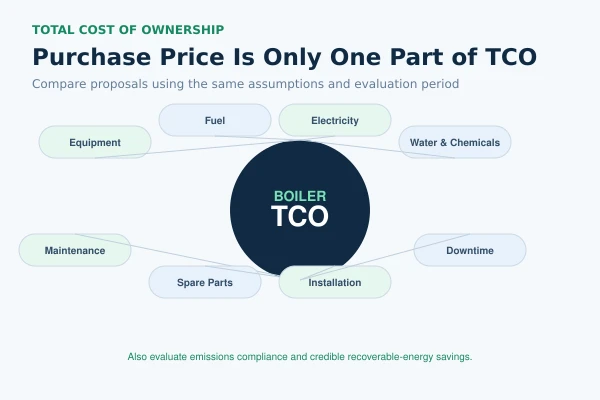
A five-, ten- or longer-year model can be used depending on the company’s investment process.
Biaya Peralatan
Include the boiler and all equipment necessary to achieve the defined scope.
Biaya Bahan Bakar
For many steam plants, fuel becomes one of the largest lifecycle expenses.
Annual fuel calculations should use realistic steam demand and operating hours rather than assuming continuous operation at nameplate capacity.
Important inputs include:
- annual operating hours;
- steam load profile;
- suhu air umpan;
- fuel heating value;
- boiler efficiency basis;
- pengembalian kondensat;
- and local fuel price.
Listrik
Include electrical consumption from:
- penggemar;
- pompa;
- kontrol;
- penanganan bahan bakar;
- pengolahan air;
- emissions equipment;
- and related auxiliaries.
For electric boilers, electricity becomes the primary energy input and tariff structure becomes particularly important.
Water and Chemicals
Mempertimbangkan:
- air riasan;
- feedwater treatment;
- chemical consumption;
- pemulihan kondensat;
- and blowdown.
Maintenance and Spare Parts
Estimate:
- burner service;
- tube cleaning;
- refractory maintenance where applicable;
- sensors;
- katup;
- pompa;
- water-treatment consumables;
- and critical spare parts.
Downtime
Waktu henti sering kali diremehkan.
Di beberapa fasilitas manufaktur, satu jam tanpa proses steam dapat menghabiskan biaya yang jauh lebih mahal dibandingkan perbedaan kecil dalam efisiensi boiler.
Oleh karena itu, proses-proses penting harus dievaluasi:
- redundansi;
- kapasitas cadangan;
- ketersediaan suku cadang;
- respons layanan;
- dan perencanaan pemeliharaan.
14. Lembar Kerja Praktis Perbandingan TCO Boiler 10 Tahun
Saat membandingkan pemasok ketel uap industri, kebanyakan pembeli membuat kesalahan kritis: mereka hanya membandingkan harga penawaran, bukan membandingkannya biaya siklus hidup penuh dengan asumsi operasi yang sama.
Untuk membuat keputusan yang adil, semua pemasok harus dievaluasi menggunakan dasar teknis dan ekonomi yang sama:
- profil permintaan uap yang identik
- jam operasional yang identik
- asumsi harga bahan bakar yang identik
- kondisi air umpan yang identik
- dasar efisiensi yang identik (LHV atau HHV)
- strategi pemeliharaan yang identik
Tanpa normalisasi ini, perbandingannya menjadi tidak berarti.
Contoh: 10-Perbandingan TCO Tahun (10 t/jam Kotak Boiler Gas)
Asumsi untuk contoh ini:
- Permintaan uap: 10 th (rata-rata 6.5 th)
- Jam operasional: 6,000 jam/tahun
- Bahan bakar: Gas Alam
- harga bensin: 0.35 USD/Nm³
- Efisiensi ketel: 90% (Pemasok A), 92% (Pemasok B), 94% (Pemasok C)
- Kehidupan proyek: 10 bertahun-tahun
10-Tabel Perbandingan TCO Tahun (Contoh Diisi)
| Barang TCO |
Pemasok A (Sistem Dasar) |
Pemasok B (Sistem yang Dioptimalkan) |
Pemasok C (Sistem Efisiensi Tinggi) |
| Biaya peralatan |
$180,000 |
$210,000 |
$260,000 |
| Pembantu (pompa, tangki, kontrol) |
$45,000 |
$60,000 |
$85,000 |
| Instalasi & komisioning |
$50,000 |
$55,000 |
$70,000 |
| Subtotal Belanja Modal |
$275,000 |
$325,000 |
$415,000 |
| Biaya bahan bakar tahunan |
$310,000 |
$295,000 |
$275,000 |
| 10-biaya bahan bakar tahun |
$3,100,000 |
$2,950,000 |
$2,750,000 |
| Listrik tahunan |
$18,000 |
$16,000 |
$15,000 |
| 10-listrik tahun |
$180,000 |
$160,000 |
$150,000 |
| Air & bahan kimia |
$25,000 |
$22,000 |
$20,000 |
| 10-tahun air/bahan kimia |
$250,000 |
$220,000 |
$200,000 |
| Pemeliharaan tahunan |
$20,000 |
$18,000 |
$16,000 |
| 10-pemeliharaan tahun |
$200,000 |
$180,000 |
$160,000 |
| Suku cadang (10-tahun) |
$60,000 |
$55,000 |
$50,000 |
| Biaya kepatuhan emisi |
$30,000 |
$25,000 |
$20,000 |
| Perkiraan biaya waktu henti |
$120,000 |
$80,000 |
$50,000 |
| Manfaat pemulihan panas |
-$50,000 |
-$90,000 |
-$130,000 |
| 10-total TCO tahun |
$4,165,000 |
$3,925,000 |
$3,665,000 |
Wawasan Utama dari Perbandingan
Meskipun Pemasok C memiliki investasi awal tertinggi, itu memberikan total biaya siklus hidup terendah karena:
- efisiensi yang lebih tinggi (konsumsi bahan bakar yang lebih rendah)
- integrasi pemulihan panas yang lebih baik
- risiko waktu henti yang lebih rendah
- peningkatan stabilitas otomatisasi
Sementara itu, Pemasok A tampak menarik pada tahap pembelian tetapi menjadi yang paling menarik pilihan termahal berakhir 10 bertahun-tahun karena inefisiensi bahan bakar.
Kesimpulan Rekayasa
Keputusan TCO yang benar tidaklah benar:
“Boiler mana yang paling murah?”
Dia:
“Boiler mana yang menghasilkan uap dengan biaya per ton terendah selama masa operasi sebenarnya?”
Dalam sebagian besar kasus industri, biaya bahan bakar mewakili 70–85% dari total biaya siklus hidup, artinya perbedaan efisiensi sebesar 2–3% pun dapat melebihi perbedaan harga seluruh peralatan dalam beberapa tahun.
15. Bagaimana Seharusnya Pembeli Membandingkan Kutipan Ketel Uap Industri?
Kutipan boiler industri seringkali menyesatkan karena pemasoknya berbeda:
- mencakup cakupan peralatan yang berbeda
- mengasumsikan kondisi operasi yang berbeda
- menggunakan definisi efisiensi yang berbeda
- mengecualikan sistem bantu kritis
- atau mengalihkan tanggung jawab kepada pembeli
Karena itu, the first step is not price comparison — it is scope normalization.
Melangkah 1: Normalize Technical Assumptions
Before comparing prices, force all suppliers to use the same baseline:
- Kapasitas uap: identical (MISALNYA., 10 th)
- Tekanan: identical (MISALNYA., 10 batang / 16 batang)
- Bahan bakar: same specification and price basis
- Jam operasional: same annual runtime
- Feedwater temperature: same assumption
- Pengembalian kondensat: same percentage
- Efficiency basis: LHV or HHV clearly defined
If suppliers refuse to align assumptions, their quotations are not comparable.
Melangkah 2: Compare “System Scope”, Not Just Boiler
A real industrial steam system includes more than the pressure vessel.
A proper comparison must include:
- boiler body
- burner system
- feedwater system
- pengolahan air
- penghemat (jika berlaku)
- Sistem Kontrol (PLC/HMI)
- safety valves and instrumentation
- sistem bahan bakar (kereta gas / oil system / biomass feeding)
- chimney and flue system
- installation and commissioning scope
Melangkah 3: Real Engineering Comparison Table
| Item |
Pemasok A |
Pemasok B |
Pemasok C |
| Boiler type |
Fire-tube |
Fire-tube |
Water-tube |
| Rated efficiency |
90% |
92% |
94% |
| Part-load efficiency |
Not specified |
Sedang |
High stability |
| Burner turndown ratio |
1:3 |
1:5 |
1:8 |
| Economizer included |
TIDAK |
Ya |
Ya (high efficiency type) |
| Condensate recovery system |
Optional |
Included |
Included + optimized |
| Sistem Kontrol |
Basic PLC |
Plc + HMI |
Plc + SCADA + pemantauan jarak jauh |
| Emissions system |
Standard burner |
Low-NOx burner |
Ultra-low NOx + FGR |
| Pengolahan air |
Not included |
Included |
Fully integrated system |
| Installation scope |
Equipment only |
Partial installation |
Full turnkey |
| Commissioning |
Not included |
Included |
Full performance guarantee |
| Jaminan |
12 months |
18 months |
24 months + performance guarantee |
| Suku cadang |
Limited |
Standard kit |
Full 2-year critical kit |
| Dokumentasi |
Basic manual |
Full technical package |
Full + digital twin model |
Melangkah 4: Identify Hidden Cost Gaps
Many low-price quotations exclude critical systems such as:
- water treatment system
- condensate return system
- pemulihan panas blowdown
- Buruh instalasi
- control integration
- emissions compliance equipment
These exclusions often shift 20–40% of total project cost back to the buyer.
Melangkah 5: Final Decision Rule
After normalization, the decision should follow this logic:
- Does the system meet process requirements?
- Does it minimize lifecycle cost (TCO)?
- Apakah itu mengurangi risiko operasional (waktu henti, ketidakstabilan)?
- Apakah itu mematuhi aturan emisi dan sertifikasi?
- Apakah dukungan pemasok dapat diandalkan untuk 10+ bertahun-tahun?
Hanya ketika kelima jawaban positif maka harga menjadi faktor penentu.
Wawasan Teknik Akhir
Keputusan pengadaan boiler yang profesional bukanlah latihan perbandingan harga.
Ini adalah sebuah masalah optimasi rekayasa sistem melibatkan:
- termodinamika (efisiensi)
- rekayasa proses (permintaan uap)
- ekonomi (biaya bahan bakar dari waktu ke waktu)
- rekayasa keandalan (risiko waktu henti)
- rekayasa kepatuhan (emisi + certification)
Jika kamu mau, Saya selanjutnya dapat meningkatkan artikel ini lebih jauh menjadi a “versi generasi prospek” (seo + CTA + pemosisian produk untuk MakeBoiler) atau mengubahnya menjadi a struktur laman landas untuk lalu lintas Google Ads.
16. Apa yang Harus Disertakan dalam Kutipan Boiler Industri?
A professional industrial steam boiler quotation should clearly define the technical and commercial scope.
Tergantung pada proyeknya, request:
Boiler Data
- model;
- kapasitas;
- operating/design pressure;
- suhu uap;
- bahan bakar;
- efficiency and calculation/test basis.
Major Equipment
- ketel;
- pembakar;
- penghemat;
- pompa air umpan;
- deaerator/feedwater system;
- pengolahan air;
- sistem bahan bakar;
- kontrol;
- emissions equipment.
Dokumentasi
- technical datasheet;
- general arrangement drawing;
- process flow diagram;
- P&ID where required;
- electrical drawings;
- control description;
- applicable certificates;
- operating manual;
- maintenance manual;
- spare-parts list;
- factory test records.
Commercial Scope
- harga;
- delivery time;
- packing;
- transportation responsibility;
- installation responsibility;
- komisioning;
- pelatihan;
- jaminan;
- after-sales support;
- exclusions.
A clear quotation reduces misunderstandings later in the project.
17. How Do You Evaluate an Industrial Steam Boiler Manufacturer?
Price alone is not enough to evaluate a boiler supplier.
An industrial boiler is a pressure system expected to operate for many years, often inside a production process where steam availability is critical.
Evaluate the supplier in several areas.
Engineering Capability
Can the supplier explain why a particular capacity, tekanan, burner and auxiliary configuration has been selected?
Manufacturing Capability
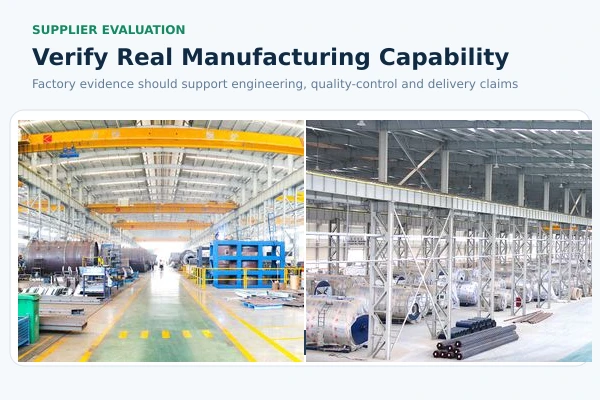
Ask about:
- manufacturing process;
- welding;
- material traceability;
- inspeksi;
- pressure testing;
- factory acceptance testing;
- and quality-control documentation.
Performance Evidence
For statements such as:
“Efisiensi tinggi”
ask for:
Calculation/test basis + bahan bakar + memuat + suhu air umpan.
Untuk:
“Low NOx”
ask for:
Guaranteed value + bahan bakar + memuat + reference conditions + test method.
Untuk:
“Smart boiler”
ask for:
PLC architecture + I/O list + monitored parameters + communication functions.
International Project Capability
Untuk proyek ekspor, also evaluate:
- packaging;
- shipping experience;
- documentation;
- installation coordination;
- remote technical support;
- spare-parts delivery;
- language capability;
- and commissioning responsibility.
A good supplier should be able to explain what it will deliver, apa yang harus disediakan oleh pembeli dan di mana tanggung jawab masing-masing pihak dimulai dan diakhiri.
18. Ketel Uap Industri Membeli Bendera Merah
Tim pengadaan harus menyelidiki lebih lanjut jika melihat hal-hal berikut ini.
1. Efisiensi Tanpa Kondisi Pengujian
Persentase saja tidak cukup.
2. Ukuran Hanya Berdasarkan Kapasitas Maksimum
Pemasok harus menanyakan tentang beban normal dan minimum.
3. Tidak Ada Diskusi Profil Muatan
Permintaan yang bervariasi mempengaruhi pengoperasian burner dan boiler.
4. Emisi Dijamin Tanpa Kondisi Referensi
Minta bahan bakar, memuat, referensi oksigen dan dasar pengujian.
5. Peralatan Bantu Penting Tidak Ada
Harga yang rendah mungkin mencerminkan cakupan yang tidak lengkap.
6. Cakupan Sertifikasi Tidak Jelas
Verifikasi produsennya, peralatan dan penerapannya.
7. Pemasok Tidak Pernah Bertanya Tentang Air Umpan
Kondisi air mempengaruhi pengoperasian dan umur boiler.
8. Tanggung Jawab Instalasi Tidak Didefinisikan
International projects need clear interface boundaries.
9. There Is No Spare-Parts Plan
Critical spares should be identified before shipment.
10. The Price Is Extremely Low but Exclusions Are Vague
Compare scope before comparing price.
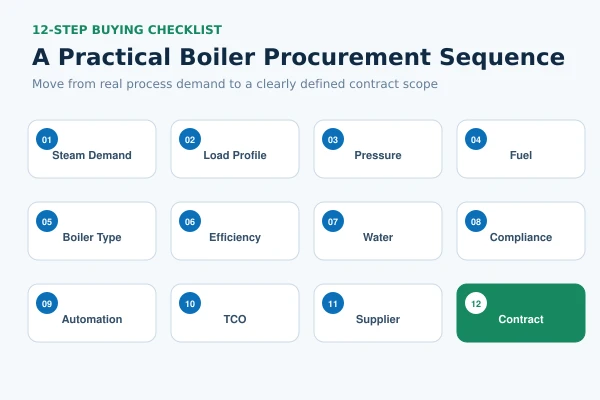
19. 12-Step Industrial Steam Boiler Buying Checklist for 2026
Use this process before placing an order.
Melangkah 1: Define Steam Demand
Determine capacity, tekanan, temperature and steam quality.
Melangkah 2: Build a Load Profile
Identify minimum, normal and peak demand.
Melangkah 3: Define Required Pressure
Include process requirements and distribution considerations.
Melangkah 4: Evaluate Fuel Options
Compare price, infrastruktur, supply reliability and storage.
Melangkah 5: Select the Appropriate Boiler Design
Evaluate fire-tube, water-tube or another configuration against actual requirements.
Melangkah 6: Compare Real Efficiency
Use consistent test/calculation assumptions and examine part-load operation.
Melangkah 7: Confirm Feedwater Conditions
Define treatment, deaerasi, condensate return and blowdown requirements.
Melangkah 8: Verify Emissions and Certification
Use requirements applicable to the installation market.
Melangkah 9: Define Automation
Specify measurements, PLC/HMI/SCADA integration, alarms and remote access.
Melangkah 10: Calculate TCO
Compare lifecycle operating costs—not just purchase price.
Melangkah 11: Evaluate the Supplier
Review engineering, manufaktur, pengujian, documentation and service.
Melangkah 12: Confirm Contract Scope
Clearly define inclusions, exclusions, instalasi, komisioning, pelatihan, spare parts and warranty.
Pendeknya:
Steam Demand → Load Profile → Pressure → Fuel → Boiler Type → Efficiency → Water → Compliance → Automation → TCO → Supplier → Contract
20. What Information Should You Send to a Boiler Manufacturer?
To receive a useful engineering quotation, prepare the following information.
Essential Boiler RFQ Data
- Required steam capacity
- Minimum steam demand
- Normal steam demand
- Permintaan uap puncak
- Tekanan kerja
- Suhu uap yang dibutuhkan
- Jenis dan spesifikasi bahan bakar
- Jam operasional per hari
- Hari operasional per tahun
- Feedwater temperature
- Kualitas air umpan
- Pengembalian kondensat yang diharapkan
- Industri/aplikasi
- Negara instalasi
- Persyaratan emisi lokal
- Sertifikasi yang diperlukan
- Ketinggian lokasi jika relevan
- Listrik yang tersedia
- Pembatasan ruang/transportasi
- Tanggal pengiriman yang diperlukan
Menyediakan parameter ini memungkinkan tim teknik untuk mengevaluasi sistem boiler yang sebenarnya alih-alih membuat penawaran harga umum.
Pertanyaan Yang Sering Diajukan Tentang Membeli Ketel Uap Industri
Berapa ukuran ketel uap industri yang saya butuhkan?
Ukuran yang benar tergantung pada minimum, permintaan uap normal dan puncak daripada kapasitas produksi maksimum saja. Pembeli harus membuat profil muatan uap yang juga mempertimbangkan jam operasional harian, muatan batch, seasonal changes and future production requirements.
How do I calculate industrial steam boiler capacity?
Start by determining steam consumption from all relevant process equipment and identifying which loads operate simultaneously. Separate normal demand from short peak loads and include reasonable system requirements. Final sizing should be verified through an engineering heat and mass balance rather than relying only on a simple rule of thumb.
What pressure should an industrial steam boiler operate at?
The boiler should supply sufficient pressure for the process after accounting for steam-distribution and control requirements. Tekanan yang lebih tinggi tidak serta merta menjadi lebih baik. Define the pressure required at the process first, then select an appropriate boiler operating and design pressure.
Is a gas or electric steam boiler better?
Neither is universally better. Electric boilers eliminate point-of-use combustion and offer precise control, but electricity prices, grid capacity and demand charges can affect operating cost. Gas boilers may offer favorable economics where gas is readily available. Compare both using actual local energy prices and steam demand.
Is a biomass boiler cheaper than a gas boiler?
It can be in locations with reliable low-cost biomass, but fuel price alone is not enough. Biomass moisture, nilai kalori, abu, penyimpanan, feeding, dust control and maintenance must also be included in the economic comparison.
What is the difference between fire-tube and water-tube boilers?
Fire-tube boilers pass hot gases through tubes surrounded by water, while water-tube boilers circulate water/steam through tubes heated externally. The appropriate design depends on capacity, tekanan, load response, ruang angkasa, water conditions and process requirements.
How should industrial boiler efficiency be compared?
Compare suppliers using the same fuel basis, boiler load, feedwater temperature and test/calculation method. Also evaluate burner turndown, suhu tumpukan, excess air, economizer configuration, condensate recovery and blowdown because these influence real operating cost.
What auxiliary equipment does an industrial steam boiler need?
Tergantung pada proyeknya, auxiliary systems may include burners, pompa, pengolahan air, deaerators, penghemat, cerobong, sistem bahan bakar, condensate systems, blowdown systems, controls and emissions equipment. Always confirm quotation inclusions and exclusions.
How much does an industrial steam boiler cost?
There is no reliable universal price. Cost varies with capacity, tekanan, bahan bakar, boiler design, pembakar, kontrol, pemulihan panas, pengolahan air, certification, emissions equipment and auxiliary-system scope. Installed project cost should be evaluated separately from boiler purchase price.
How do I calculate boiler total cost of ownership?
Add equipment, bahan bakar, listrik, air, bahan kimia, pemeliharaan, suku cadang, instalasi, emissions compliance and expected downtime over the selected evaluation period. Subtract credible recovered-energy savings where appropriate. Compare all proposals using the same assumptions.
What information does a manufacturer need to quote a boiler?
Minimal, provide capacity, memuat profil, tekanan kerja, suhu uap, bahan bakar, jam operasional, kondisi air umpan, pengembalian kondensat, application, negara instalasi, emissions requirements and certification requirements.
How should I compare industrial boiler manufacturers?
Compare engineering capability, manufacturing quality, ruang lingkup sertifikasi, documented efficiency and emissions performance, factory testing, otomatisasi, project experience, documentation, commissioning support, spare-parts availability and after-sales service—not only price.
Kesimpulan: Buy the Boiler That Fits the Process
The best industrial steam boiler in 2026 is not automatically the one with the highest capacity, highest quoted efficiency or lowest purchase price.
A successful boiler project begins with the production process.
Ask:
- How much steam is really required?
- How does demand change during the day?
- What pressure must reach the process?
- Which fuels are locally available?
- What does each fuel actually cost?
- What is the feedwater quality?
- What emissions rules apply?
- What automation is needed?
- What equipment is included?
- Who will install and commission the system?
- What happens if the boiler stops?
- What will the system cost over ten years?
The strongest purchasing strategy is therefore:
Tentukan kapasitas → buat profil beban → tentukan tekanan → bandingkan bahan bakar → pilih jenis boiler → evaluasi efisiensi nyata → konfirmasi persyaratan air dan kepatuhan → tentukan otomatisasi → hitung TCO → verifikasi bukti pemasok → konfirmasi cakupan proyek secara lengkap.
Jika Anda sedang mempersiapkan proyek ketel uap industri, mulai dengan lima parameter:
Kapasitas uap + tekanan kerja + bahan bakar + jam operasional + negara instalasi
Dengan masukan tersebut—dan lebih disukai profil beban uap yang sebenarnya—produsen boiler dapat melampaui kuotasi umum dan mulai merekayasa sistem yang sesuai dengan proses sebenarnya..
Butuh bantuan memilih ketel uap industri yang tepat? Kirimkan kapasitas Anda, tekanan, bahan bakar dan negara pemasangan kepada kami di WhatsApp untuk rekomendasi dan penawaran boiler khusus proyek. Get a Boiler Quote on WhatsApp → +86-132-1322-2805。
Authoritative References




View Ulasan Pelanggan kami
"Thermal oil boiler dari Fangkuai sangat mudah dioperasikan dan dirawat. Ini telah membantu kami menghemat waktu dan uang untuk pemeliharaan, yang telah menyebabkan penghematan biaya yang signifikan. Kualitas bahan dan konstruksi boiler luar biasa. Ini juga sangat hemat energi, yang telah membantu kami menghemat uang untuk tagihan energi kami. Saya sangat merekomendasikan boiler minyak termal Fangkuai ."
Allen
Brazil"Saya sangat terkesan dengan kualitas ketel air panas Fangkuai. Itu dibangun untuk bertahan dan telah melebihi harapan saya. Proses instalasi juga sangat lancar dan layanan pelanggan sangat baik. Ketel air panas sangat mudah dioperasikan dan dirawat, dan efisiensi energinya luar biasa. Saya sangat merekomendasikan boiler air panas Fangkuai."
Mendongkrak
Australia"Layanan pelanggan di Fangkuai adalah yang terbaik. Mereka membantu saya memilih boiler yang sempurna untuk kebutuhan saya dan memberikan dukungan yang luar biasa selama proses berlangsung. Proses pemasangannya juga sangat lancar dan ketelnya melebihi ekspektasi saya. Sangat mudah digunakan dan dirawat, dan efisiensi energinya luar biasa. Saya sangat merekomendasikan produk Fangkuai kepada siapa pun yang membutuhkan solusi pemanasan yang andal dan efisien."
Juan
Meksiko"Steam boiler dari Fangkuai sangat cocok untuk usaha pengolahan makanan saya. Ini memenuhi semua persyaratan kami dan sangat dapat diandalkan. Kualitas bahan dan konstruksi boiler luar biasa. Pengoperasian dan pemeliharaannya juga sangat mudah, yang telah membantu kami menghemat waktu dan uang untuk pemeliharaan. Saya sangat merekomendasikan ketel uap Fangkuai kepada siapa pun yang membutuhkan solusi pemanasan yang andal."
Jason
Brazil"Layanan pelanggan di Fangkuai adalah yang terbaik. Mereka membantu saya memilih boiler yang sempurna untuk kebutuhan saya dan memberikan dukungan yang luar biasa selama proses berlangsung. Proses pemasangannya juga sangat lancar dan ketelnya melebihi ekspektasi saya. Sangat mudah digunakan dan dirawat, dan efisiensi energinya luar biasa. Saya sangat merekomendasikan produk Fangkuai kepada siapa pun yang membutuhkan solusi pemanasan yang andal dan efisien."
Juan
Meksiko"Saya membeli ketel uap Fangkuai untuk pabrik saya dan telah berfungsi dengan sempurna selama berbulan-bulan sekarang. Kualitas bahan dan konstruksi boiler sangat mengesankan. Ini juga sangat hemat energi, yang telah membantu kami menghemat uang untuk tagihan energi kami. Saya sangat merekomendasikan produk Fangkuai kepada siapa pun yang membutuhkan solusi pemanasan yang andal dan efisien."
Yohanes
Amerika Serikat"Steam boiler dari Fangkuai sangat cocok untuk usaha pengolahan makanan saya. Ini memenuhi semua persyaratan kami dan sangat dapat diandalkan. Kualitas bahan dan konstruksi boiler luar biasa. Pengoperasian dan pemeliharaannya juga sangat mudah, yang telah membantu kami menghemat waktu dan uang untuk pemeliharaan. Saya sangat merekomendasikan ketel uap Fangkuai kepada siapa pun yang membutuhkan solusi pemanasan yang andal."
Jason
Brazil"Peralatan bantu Fangkuai telah membuat sistem ketel saya menjadi lebih baik. Kualitas peralatannya luar biasa dan harganya sangat masuk akal. Peralatan tersebut telah membantu meningkatkan efisiensi dan kinerja sistem ketel saya, yang telah menyebabkan penghematan biaya yang signifikan. Saya sangat merekomendasikan peralatan bantu Fangkuai kepada siapa pun yang membutuhkan aksesori boiler berkualitas tinggi."
Maryk
Inggris"Saya sangat terkesan dengan kualitas ketel air panas Fangkuai. Itu dibangun untuk bertahan dan telah melebihi harapan saya. Proses instalasi juga sangat lancar dan layanan pelanggan sangat baik. Ketel air panas sangat mudah dioperasikan dan dirawat, dan efisiensi energinya luar biasa. Saya sangat merekomendasikan boiler air panas Fangkuai."
Mendongkrak
Australia